
Bastille Day Worksheets
All About These 15 Worksheets
These worksheets invite students to journey into the heart of French history, culture, and national pride by celebrating Bastille Day. Through a rich tapestry of activities-from reading and comprehension to word play and reflective writing-they explore the ideals of freedom, equality, and unity born from the French Revolution. Whether it’s comparing historical events, solving puzzles, or crafting poetry, each worksheet weaves learning with meaning.
This collection is intentionally diverse in its approaches, balancing narrative, factual content, and creative expression. Students might analyze the storming of the Bastille one minute, then enjoy a word scramble celebrating French symbols the next. This variety keeps lessons dynamic and accessible, offering students several entry points-from facts and figures to emotional reflection.
Rooted in both context and celebration, the worksheets highlight not only the historical significance but also the cultural spirit of Bastille Day. As students engage-think through “why this matters,” recall key facts, or create their own seasonal poem-they gain both knowledge and a sense of connection across borders. These are more than worksheets-they’re a window into history that helps cultivate global awareness and civic empathy.
Have a Look Inside Each Worksheet
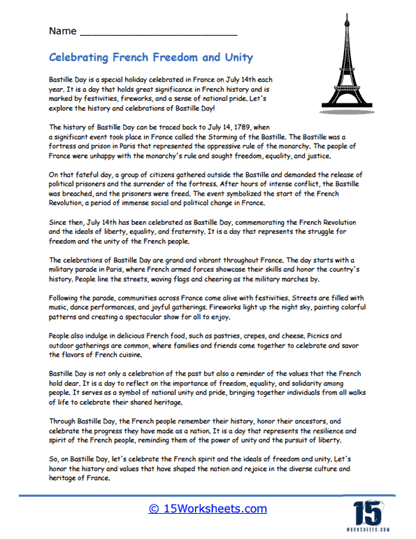
Celebrating French Freedom and Unity
Students learn how Bastille Day represents liberty and national pride in France. They’ll explore the connection between revolution and celebration. This worksheet shows how history and culture come together in one important day.
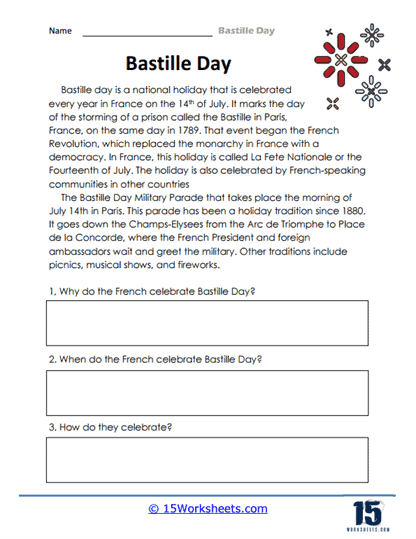
Reading Comprehension
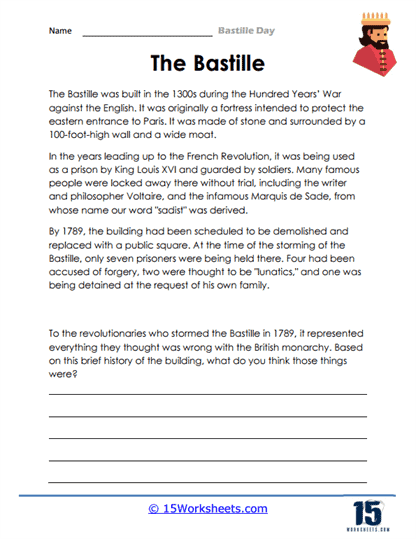
Kids read a passage about Bastille Day and answer questions. This builds comprehension while reinforcing historical details. It’s a straightforward way to check understanding of both facts and ideas.
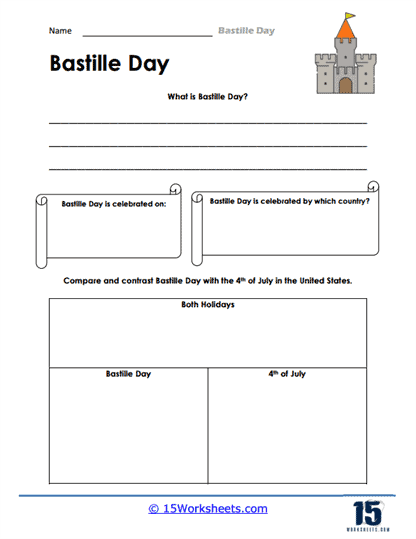
July 4th Comparison
Students compare Bastille Day to America’s Independence Day. They identify similarities and differences between the two celebrations. This helps kids see how nations celebrate freedom in unique ways.
The Significance
Learners dive into why Bastille Day is important. They reflect on values like liberty, equality, and fraternity. The worksheet turns history into a discussion about ideals that still matter today.
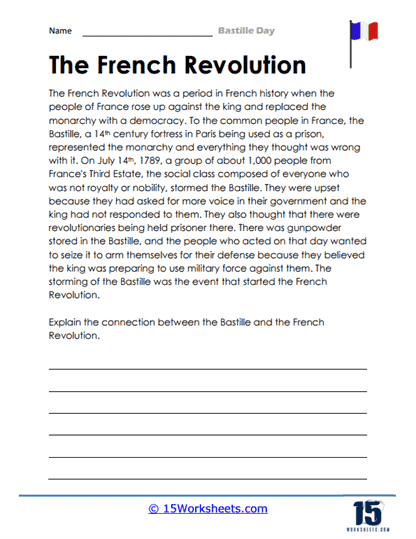
The French Revolution
This page introduces the key events of the French Revolution. Students connect the storming of the Bastille to broader changes in France. It’s a history snapshot that explains how one moment reshaped a nation.
Bastille Day Word Scramble
Kids unscramble French-themed and holiday words. It’s a fun way to practice spelling while reviewing key terms. The puzzle adds playfulness to learning about history.
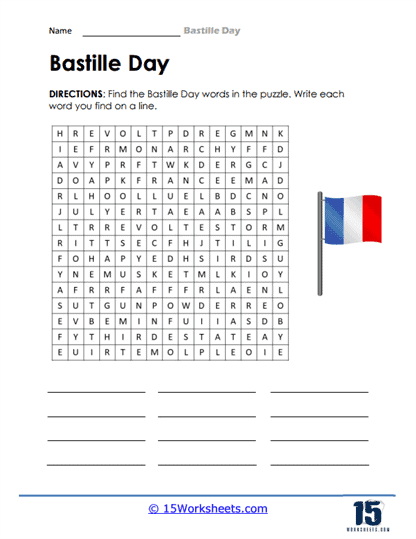
Word Find Challenge
Students search for Bastille Day vocabulary hidden in a grid. It strengthens word recognition and reinforces topic-specific terms. The challenge makes reviewing facts feel like a game.
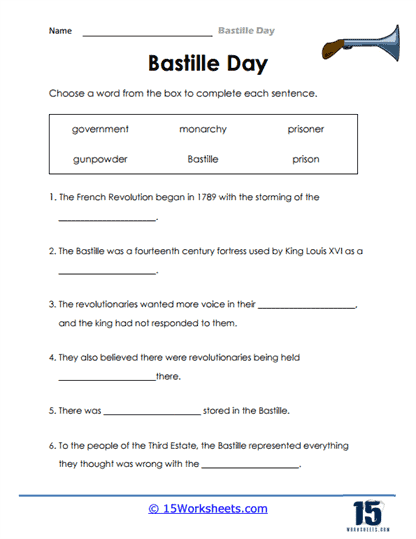
Sentence Completion
Learners finish sentences with the right words or phrases about Bastille Day. This checks comprehension and helps with recall. It’s quick, effective practice for solidifying knowledge.
Critical Thinking
Students answer open-ended questions about the revolution and holiday. They consider how events shaped freedom and national identity. It builds reasoning skills and invites thoughtful discussion.
Basic Facts
This worksheet covers the who, what, when, and why of Bastille Day. Students review the essentials in a clear, accessible way. It’s a perfect introduction for younger learners.
Bastille Day Trivia
Kids answer trivia-style questions about the holiday. This sharpens recall while keeping learning lighthearted. It feels like a quiz show about history.
Bastille Day Word Game
Students rearrange letters or words to create new ones tied to the theme. It mixes creativity with vocabulary review. The game makes history more interactive and playful.
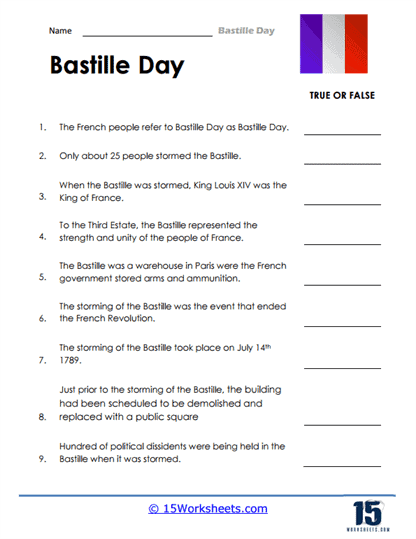
True or False
Learners decide if statements about Bastille Day are correct. This helps clear up common misconceptions and reinforces accuracy. It’s a simple but powerful check for understanding.
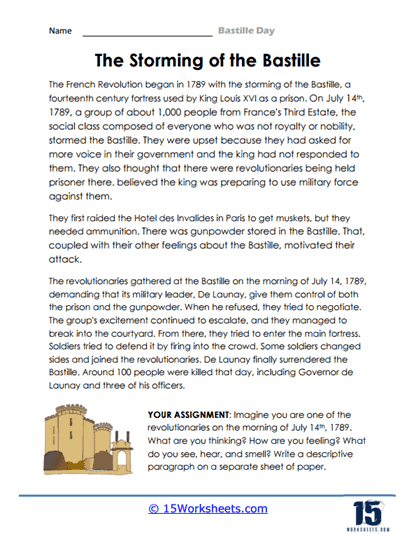
The Storming of the Bastille
Students explore the dramatic event of July 14, 1789. They learn why the storming symbolized the fight against tyranny. It turns one day in history into a story of courage and change.
Important Day
This activity emphasizes why Bastille Day remains significant in France today. Students connect historical events to modern celebrations. It bridges past and present in a kid-friendly way.
Bastille Day Poem
Kids write a poem inspired by Bastille Day themes. It encourages creative expression while reflecting on freedom and unity. Poetry turns history into something personal and imaginative.
What is Bastille Day?
Bastille Day, known as “La Fete Nationale” in French, is a national holiday in France celebrated annually on July 14th. It commemorates the Storming of the Bastille on July 14, 1789, which was a turning point in the French Revolution. The Bastille was a fortress and prison in Paris that symbolized the oppression and tyranny of the French monarchy. Its storming by the revolutionaries marked the beginning of the struggle for freedom and democracy in France.
Bastille Day is a day of national pride and unity in France, and it is celebrated with various events and activities throughout the country. The most famous celebration takes place in Paris with the military parade on the Champs-Elysees, which is the oldest and largest regular military parade in Europe. The President of France and other high-ranking officials attend the parade, and the French Air Force performs a spectacular flyover.
In addition to the military parade, there are fireworks displays, concerts, dances, and communal meals held across the country. The Eiffel Tower is often the centerpiece of a dazzling fireworks display in Paris. Bastille Day is an opportunity for French citizens to come together and celebrate their national identity, history, and the values of liberty, equality, and fraternity that emerged from the French Revolution.
While Bastille Day is not an official holiday in the United States, it is celebrated in various ways by French expatriates, Francophiles, and people interested in French culture. Many major cities with significant French populations, such as New York City, San Francisco, and New Orleans, hold events to mark the occasion.