
Ground Hog Day Worksheets





About These 15 Worksheets
Groundhog Day might only come once a year, but the learning opportunities it brings last much longer! This worksheet collection gives students a fun, engaging way to explore the legends, science, and history behind this famous February event. Whether they’re writing from a groundhog’s point of view, making predictions about the weather, or decoding fact from folklore, every activity helps them think critically while having a good laugh. Teachers will love how easily these sheets blend literacy, science, and creative thinking into one cheerful lesson set.
Each page turns the quirky celebration into a chance to practice key skills – reading comprehension, writing fluency, phonics, and even research and reasoning. Kids won’t just learn what Groundhog Day is; they’ll explore why we celebrate it and how it connects to nature and seasonal change. The mix of fun puzzles, writing prompts, and art activities keeps students of all levels engaged and curious. It’s the perfect mix of history, humor, and hands-on learning.
Have a Look Inside Each Worksheet
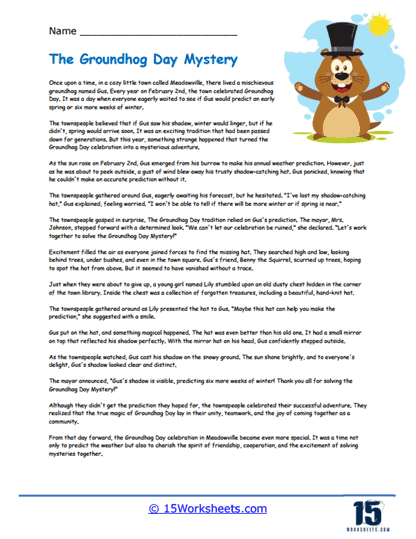
The Groundhog Day Mystery
Students dive into a fun reading passage that unravels the mystery behind this quirky February tradition. As they read, they’ll practice comprehension skills and make inferences about folklore and weather predictions. The worksheet invites kids to think critically about how myths become part of culture. It’s the perfect mix of storytelling and scientific curiosity.
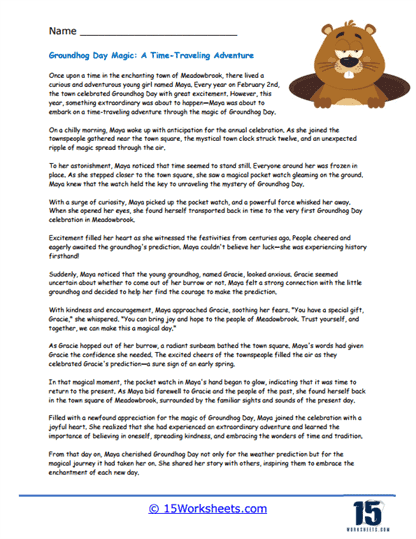
A Time-Traveling Adventure
In this creative writing activity, students imagine what would happen if they could travel through time like a groundhog predicting the weather of the past or future. They’ll build writing fluency and narrative structure while exploring cause and effect. It’s a playful exercise that turns imagination into learning. Expect plenty of laughs and thoughtful storytelling!
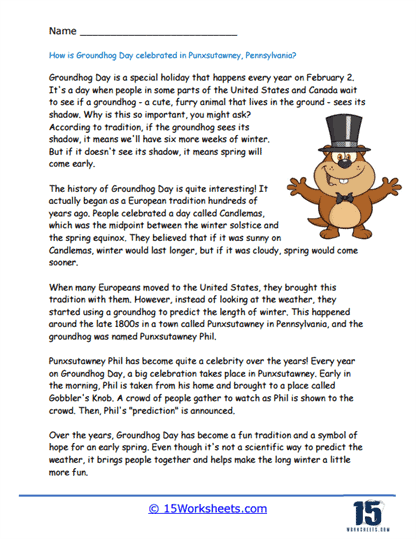
How is Groundhog Day Celebrated?
This worksheet teaches kids how people across the U.S. celebrate Groundhog Day in both traditional and modern ways. Students match customs to locations and learn about famous celebrations like Punxsutawney Phil’s big debut. Reading and geography skills combine to paint a full picture of this festive winter event. It’s cultural learning that feels like a field trip on paper.
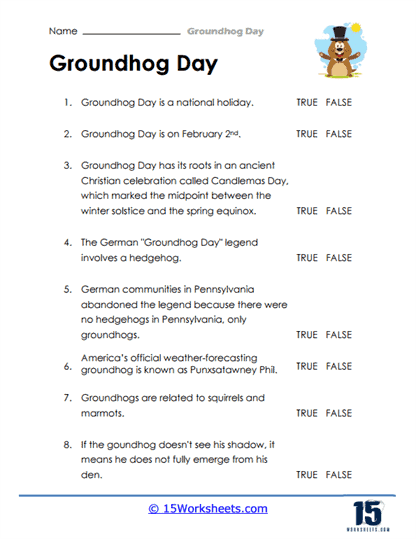
True Or False Quiz
Learners put their knowledge to the test with a quick and engaging quiz about Groundhog Day facts and legends. The statements spark curiosity and conversation as kids determine what’s real and what’s folklore. It’s an easy way to check comprehension while adding a dash of fun competition. Teachers will love how this reinforces key points from earlier lessons.
Test Your Knowledge
Students answer a variety of questions that review everything they’ve learned about Groundhog Day – from origins to weather connections. The mix of short answers and multiple-choice items keeps the pace lively. It’s a great assessment tool that doubles as a confidence booster. Kids will enjoy proving how much they know about this famous furry forecaster.
Word-Picture Match-Up
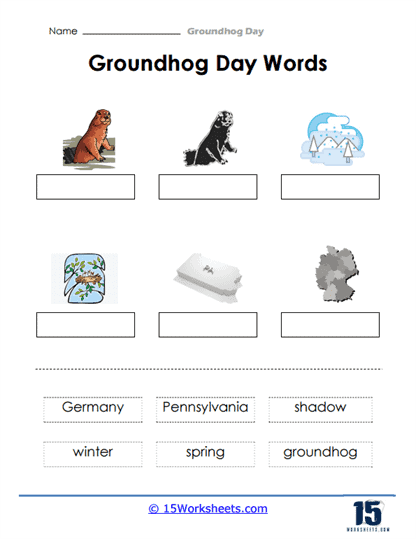
In this visual vocabulary challenge, learners match words related to Groundhog Day with colorful images. They’ll strengthen reading comprehension, vocabulary, and visual recognition. The playful design keeps younger students especially engaged. It’s perfect for reinforcing new words in a way that sticks.
Count The Syllables
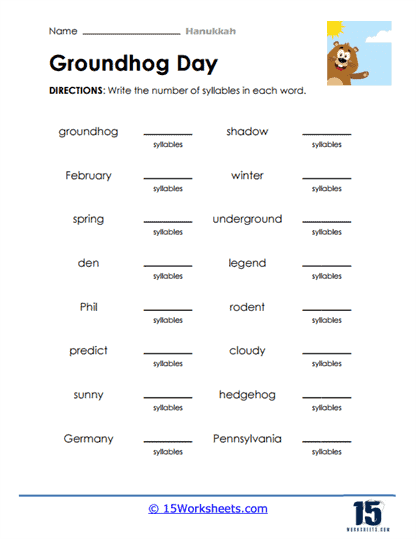
This literacy worksheet blends language practice with seasonal fun as students count syllables in Groundhog Day-themed words. They’ll clap, count, and record, building phonological awareness as they go. It’s an energetic way to strengthen reading readiness skills. Plus, who doesn’t love a little rhythm in their learning?
A Research On Groundhogs
Students become mini-scientists as they gather and record facts about real groundhogs. They’ll learn about habitats, diets, hibernation, and more while practicing research and note-taking skills. The activity supports informational writing and critical thinking. It’s science meets folklore in one adorable package.
The Origins
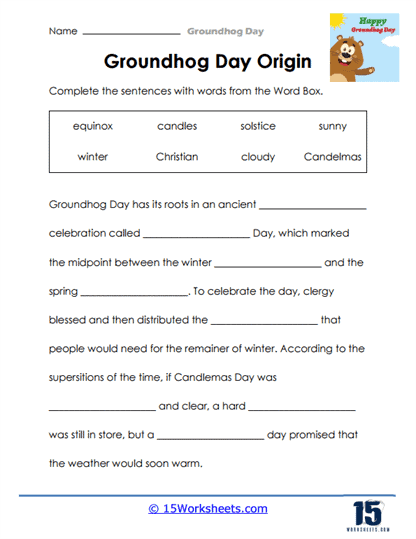
This history-focused worksheet explores how Groundhog Day began and evolved from ancient weather traditions. Students trace its roots from European Candlemas celebrations to today’s American festivities. They’ll connect history, geography, and culture in one lesson. It’s a fascinating look at how old beliefs shape modern traditions.
Breaking News!
Kids become journalists reporting on Groundhog Day as if they were covering it live! They’ll practice writing headlines, facts, and short summaries while using creative thinking. This task develops nonfiction writing and media literacy skills. Every student becomes their own news anchor for the day.
Making A Prediction
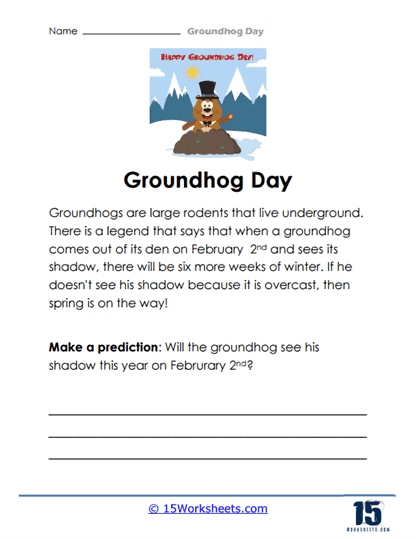
Students play meteorologist as they predict whether the groundhog will see its shadow or not – and why. The worksheet helps them use reasoning and evidence to make logical guesses about the weather. It’s a perfect way to blend critical thinking with seasonal fun. Science and superstition collide in the best way possible!
Draw To Explain
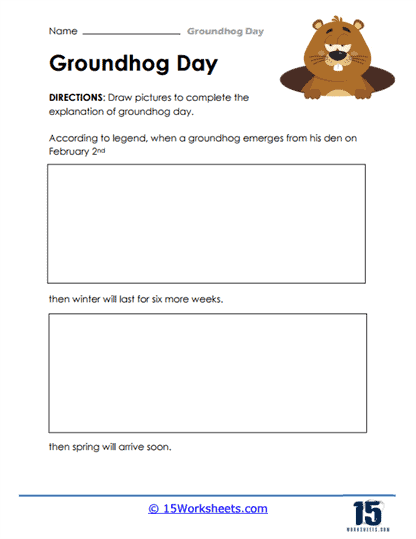
In this art-meets-writing worksheet, learners illustrate what happens when the groundhog does or doesn’t see its shadow. They’ll explain their drawings in simple sentences or short paragraphs. This promotes comprehension through visual storytelling. It’s great for mixed-ability classrooms and creative expression.
Illustrate What Happened
Students recall and draw scenes from a short Groundhog Day story or passage. The task enhances reading comprehension and sequencing skills. It also gives kids a chance to show understanding through art instead of words alone. A fun and inclusive approach to learning!
All About Groundhog Day
This all-in-one overview worksheet introduces or reviews the holiday’s key facts, traditions, and meanings. Students summarize what they know and discover new tidbits through short reading and writing tasks. It’s the perfect foundation or wrap-up activity for the unit. Simple, informative, and full of charm.
A Groundhog’s POV
Kids step into the shoes (or rather, the paws!) of the groundhog and write from its point of view. They’ll imagine what it’s like to face a cheering crowd and make a big weather prediction. This creative writing piece boosts empathy, voice, and narrative skill. Expect some hilarious and heartwarming results!
Coloring And Writing Practice
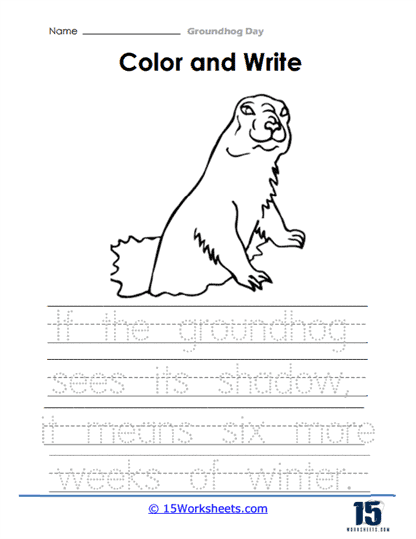
This worksheet blends fine motor skills with literacy as students color Groundhog Day scenes and practice writing themed words. Perfect for younger learners, it keeps hands and minds equally busy. It reinforces vocabulary and builds confidence with handwriting. Every page turns into a cheerful, colorful keepsake.
What Would You Do?
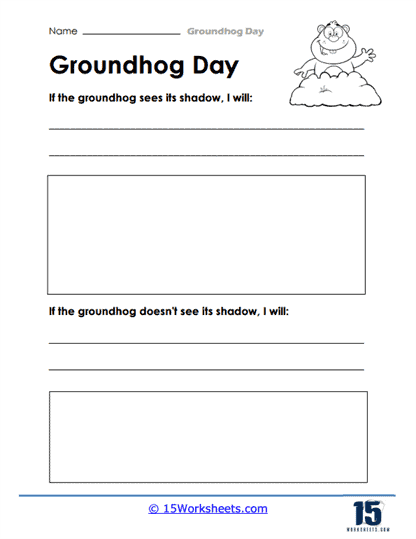
Students think critically and creatively by answering fun hypothetical questions about being a groundhog or hosting the holiday. The prompts inspire decision-making, empathy, and reflection. Writing responses encourages self-expression and humor. It’s a great warm-up or journaling exercise for any classroom level.
Out The Den
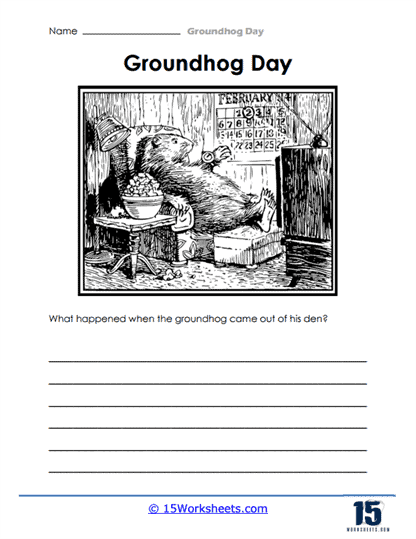
This imaginative worksheet has students describe what the groundhog sees and feels as it emerges from its den. They’ll practice descriptive writing and sensory language. The task helps kids visualize scenes vividly while linking back to the weather prediction theme. It’s storytelling with a touch of seasonal magic.
What Is Groundhog Day?
Groundhog Day is a lighthearted holiday celebrated every February 2nd, where a small, furry groundhog becomes an unexpected weather forecaster! According to tradition, if the groundhog sees its shadow when it emerges from its burrow, there will be six more weeks of winter. But if it doesn’t see its shadow, that means spring is right around the corner. The most famous celebration takes place in Punxsutawney, Pennsylvania, with the legendary groundhog, Punxsutawney Phil.
The holiday actually has deep roots – it grew from ancient European customs that used animal behavior to predict seasonal changes. When German settlers brought those traditions to America, the groundhog stepped into the starring role. Today, it’s a mix of folklore, fun, and community celebration that brightens up the middle of winter.
These worksheets bring that magic into the classroom by helping kids explore both the science and the story behind the day. Through reading, writing, and creative play, they’ll discover how this small animal became such a big part of American culture. By the end, they’ll see that Groundhog Day isn’t just about the weather – it’s about curiosity, tradition, and the joy of learning something new every year.