
Comparing Arguments Worksheets
About Our Comparing Arguments Worksheets
Every day, students encounter different opinions about the same issue, whether they’re reading articles, watching videos, listening to debates, or participating in classroom discussions. Our Comparing Arguments Worksheets help learners examine how different authors and speakers support their positions, use evidence, and persuade their audiences. By analyzing multiple viewpoints side by side, students learn that understanding an argument involves more than simply agreeing or disagreeing with it. These activities encourage thoughtful evaluation and deeper critical thinking.
This collection introduces students to a wide range of argument analysis skills. Some worksheets focus on claims and evidence, while others explore credibility, counterarguments, persuasive techniques, reasoning, organization, and source evaluation. Students learn how to identify similarities and differences between arguments, assess the quality of supporting evidence, and determine which arguments are most effective. The variety of organizers and activities helps learners approach argument analysis from multiple perspectives while building confidence in their reasoning abilities.
Comparing arguments is an important skill both inside and outside the classroom. It helps students become more informed readers, stronger writers, and more thoughtful decision-makers. Whether evaluating news articles, researching a topic, or preparing an argumentative essay, students benefit from understanding how different viewpoints are constructed and defended. These worksheets strengthen critical reading, analytical thinking, and evidence-based reasoning while encouraging students to engage respectfully with multiple perspectives.
About Each Worksheet
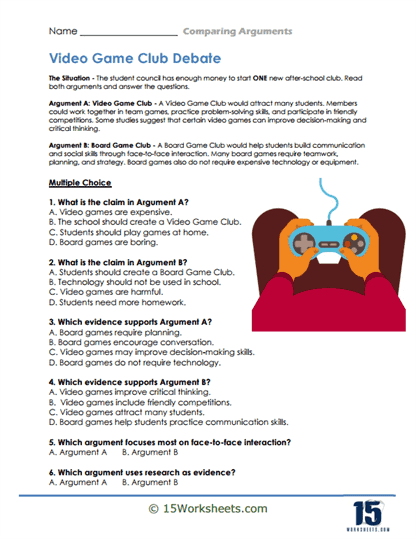
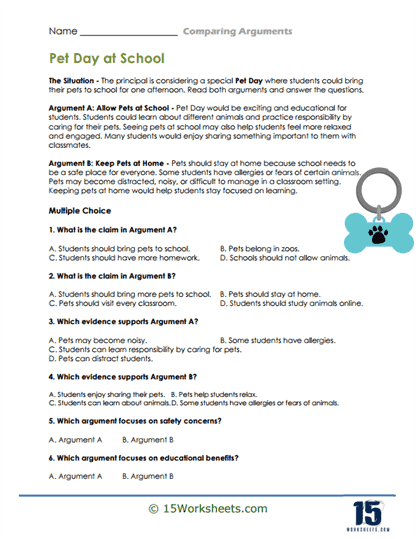
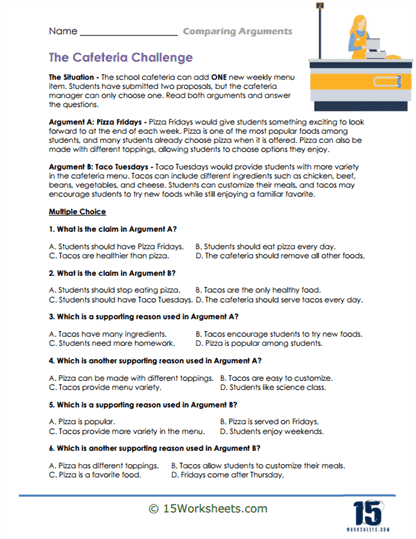
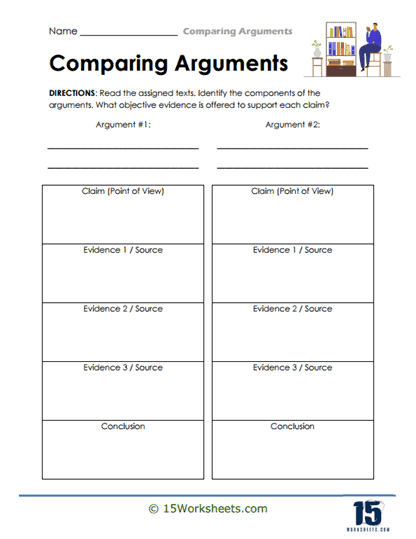
Argument Matchup
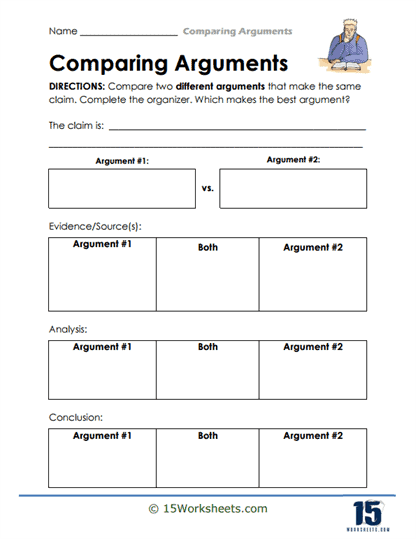
This worksheet gives students a front-row seat to two competing arguments and asks them to break each one apart piece by piece. The side-by-side format makes it easy to spot which claims and evidence pack the biggest punch.
Evidence Tracker
Students become evidence detectives as they trace how different authors support their claims. The organizer helps them keep track of sources, supporting details, and conclusions without getting lost in the information.
Claim Clash
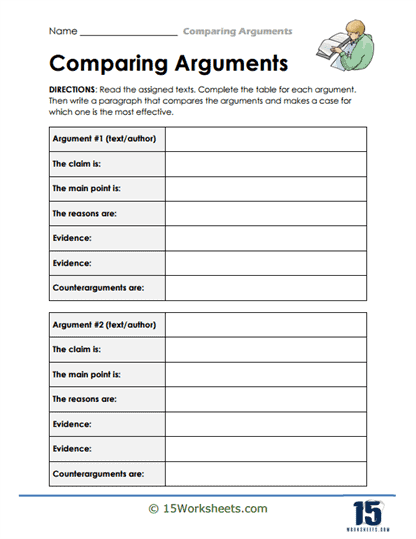
This activity combines analysis and writing in one engaging challenge. Students gather evidence from two arguments and then use their findings to craft a thoughtful comparison paragraph.
Authority Check
Not every source deserves the same level of trust, and this worksheet encourages students to investigate why. By looking closely at expertise and credibility, learners discover how authority can influence an argument’s strength.
Author Lens
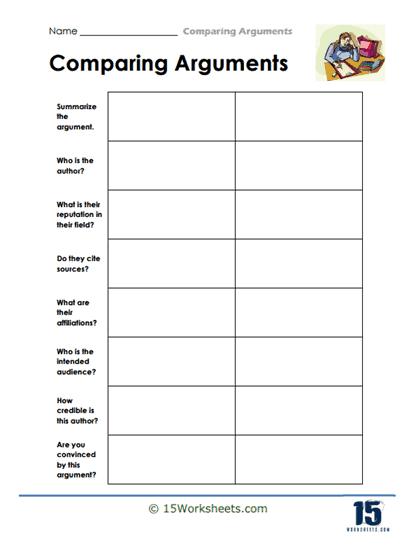
This worksheet shifts attention from the argument itself to the person making it. Students explore how an author’s background, reputation, and intended audience can shape the message being presented.
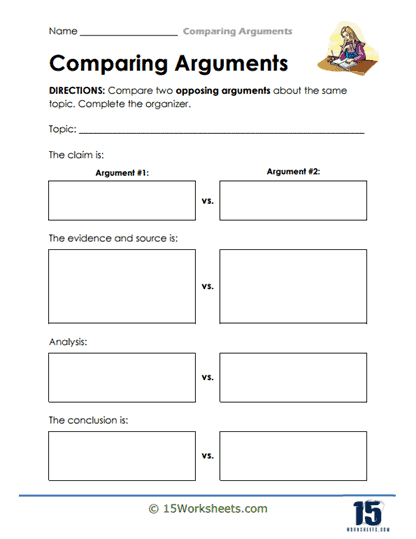
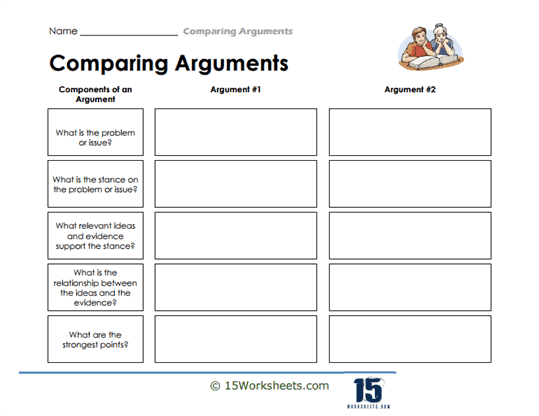
Reason Breakdown
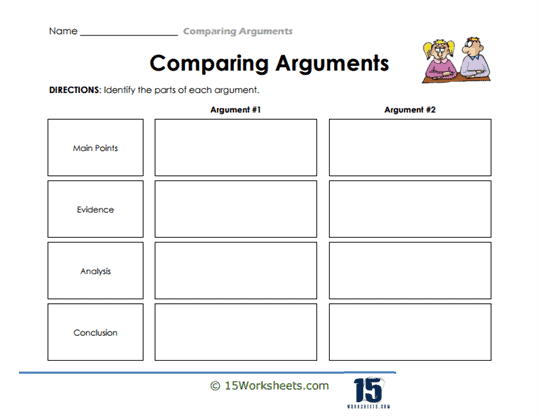
Arguments are built from several moving parts, and this organizer helps students see how those pieces fit together. Breaking claims, evidence, analysis, and conclusions into separate sections makes complex arguments much easier to understand.
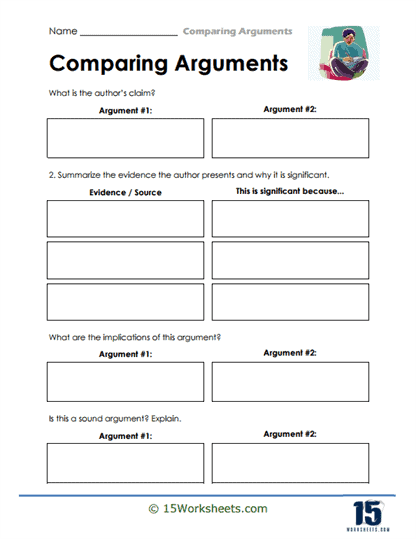
Evidence Explorer
Students dig beneath the surface and evaluate whether evidence actually supports an author’s claim. The activity encourages them to think critically instead of accepting information at face value.
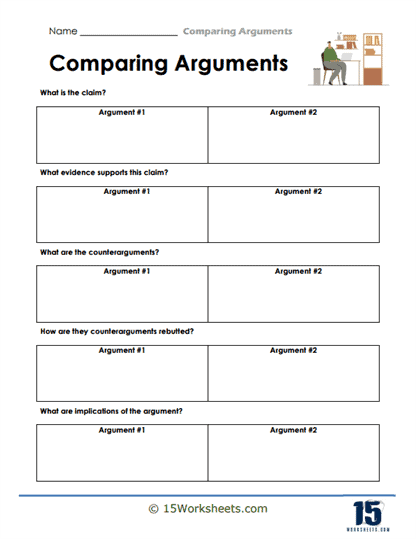
Claim Comparator
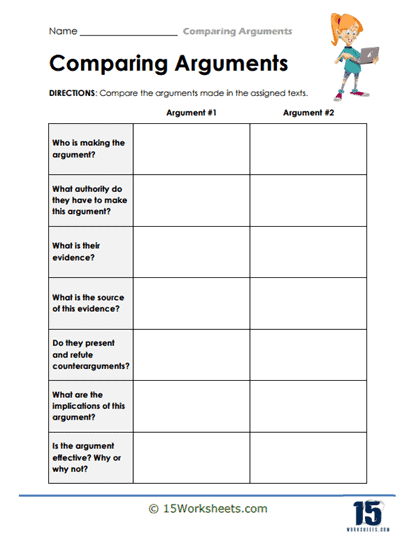
This worksheet helps students examine how two authors defend their positions and respond to opposing viewpoints. Comparing rebuttals and counterarguments adds an extra layer of analytical thinking.
Opposition Organizer
When two arguments completely disagree, things get interesting. This activity helps students fairly examine both sides before deciding which position is more convincing.
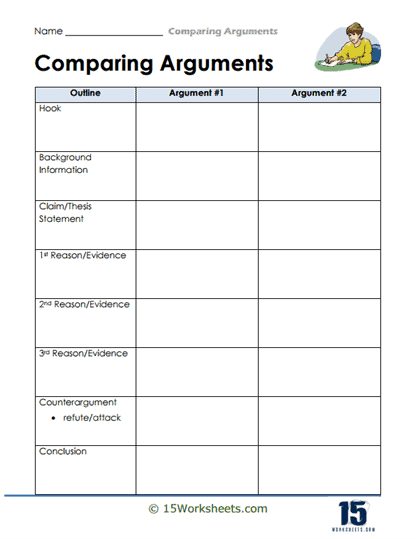
Outline Showdown
Students get a behind-the-scenes look at how persuasive writing is structured. By comparing introductions, claims, supporting reasons, and conclusions, they begin to see the blueprint behind effective arguments.
Evidence Faceoff
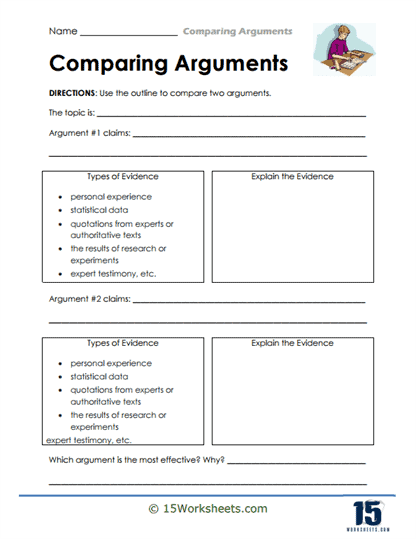
Not all evidence is created equal, and this worksheet challenges students to figure out why. Comparing statistics, expert opinions, research, and personal experiences helps learners evaluate evidence quality.
Persuasion Patterns
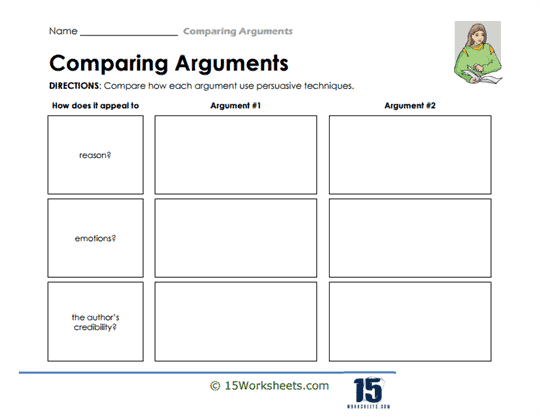
This activity explores the techniques authors use to influence readers and listeners. Students analyze emotional appeals, logical reasoning, and credibility to see which persuasive strategies are most effective.
Argument Venn
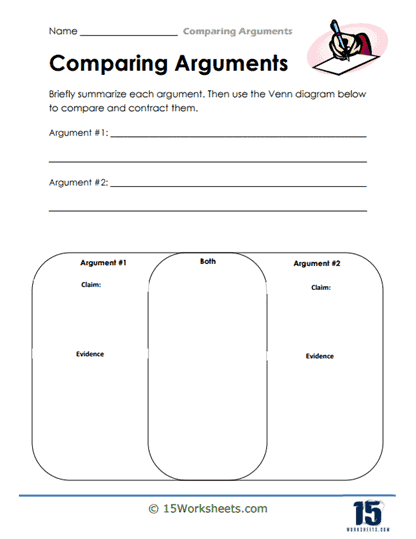
The familiar Venn diagram becomes a powerful comparison tool in this worksheet. Students organize similarities and differences visually, making it easier to identify common ground and key distinctions.
Argument Balance
Two authors may agree on a claim but support it in completely different ways. This worksheet encourages students to look beyond agreement and evaluate which argument provides stronger evidence and reasoning.
Debate Builder
Students compare opposing positions before deciding which side makes the stronger case. The process helps them practice weighing evidence carefully before forming an opinion.
Reasoning Review
This worksheet focuses on the logic that connects claims and evidence together. Students learn that strong arguments rely not only on facts but also on sound reasoning.
Perspective Pairing
Different viewpoints can reveal different aspects of the same issue, and this activity helps students explore both. The organizer encourages open-minded analysis before reaching a final judgment.
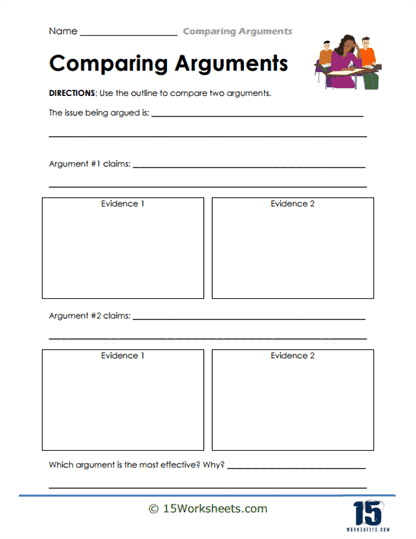
Argument Analyzer
Students take a deep dive into the mechanics of persuasion as they evaluate claims, evidence, and conclusions. The structured format helps them develop the habits of careful and thoughtful readers.
What is Comparing Arguments?
Comparing arguments is the process of examining two or more viewpoints on the same topic and evaluating how each position is supported. Instead of focusing only on what an author believes, students look at the evidence, reasoning, sources, and persuasive techniques used to support the claim. This allows readers to understand not only the conclusions being presented but also how those conclusions were reached. Comparing arguments helps learners think more critically about information rather than simply accepting it.
When comparing arguments, students often look for similarities and differences between claims, evidence, counterarguments, and conclusions. They may evaluate the credibility of sources, assess the quality of evidence, and determine whether the reasoning is logical and convincing. This process encourages students to consider multiple perspectives and recognize that complex issues often have more than one side. The goal is not necessarily to choose a winner but to understand how arguments are constructed and supported.
Learning to compare arguments helps students become stronger readers, writers, and critical thinkers. It prepares them to analyze news articles, research sources, debates, opinion pieces, and persuasive texts with greater confidence. These skills are valuable in academic settings, future careers, and everyday life where people regularly encounter competing viewpoints. By evaluating arguments thoughtfully, students learn to make informed decisions based on evidence and reasoning rather than assumptions alone.