
Grade 8 Reading Comprehension Worksheets
All About These 15 Worksheets
By 8th grade, reading comprehension is about more than just remembering what happened in a passage-it’s about analyzing, connecting, and thinking critically. These worksheets give students a mix of literature, poetry, history, and science to stretch their skills. From Frost’s The Road Not Taken to the story of Malala Yousafzai, kids are challenged to interpret, evaluate, and reflect on deeper themes. It’s reading practice that feels purposeful and thought-provoking.
The collection balances classic works with engaging nonfiction. Students explore civil rights history, dive into scientific mysteries like the multiverse, and break down foundational texts like the U.S. Constitution. On the poetry side, they get to wrestle with the symbolism in Paul Laurence Dunbar’s We Wear the Mask and feel the power of Maya Angelou’s Still I Rise. This variety ensures that every student finds something meaningful while also building versatility across genres.
Most importantly, these worksheets prepare students for the reading demands of high school and beyond. By practicing analysis, inference, and critical response, they learn to approach texts with confidence and curiosity. These activities don’t just sharpen comprehension-they encourage students to see reading as a way to understand both the world’s history and their own place in it.
Have a Look Inside Each Worksheet
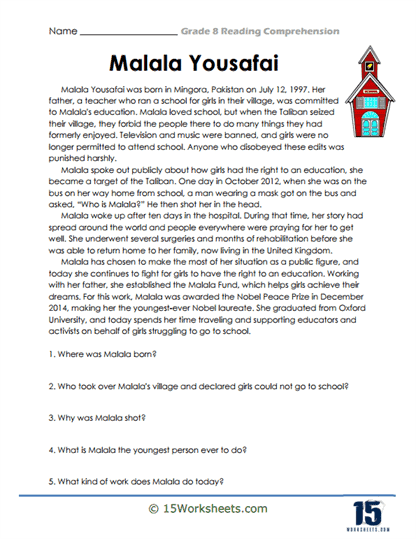
Malala Yousafzai
Students read about Malala’s courageous stand for education. The passage highlights her bravery and the risks she faced. Comprehension questions push readers to think about justice, sacrifice, and what it means to speak truth to power. It’s history and inspiration rolled into one.
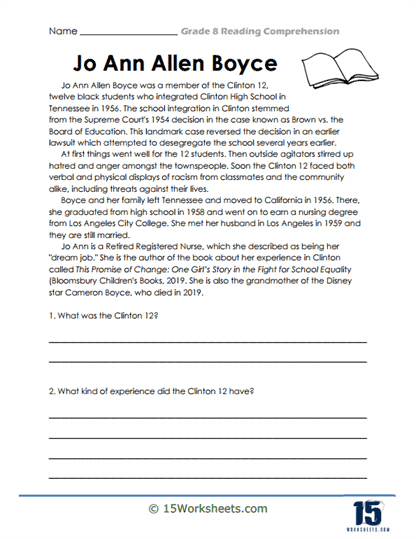
Jo Ann Allen Boyce
This worksheet tells the story of Jo Ann Allen Boyce, one of the Clinton 12 who helped desegregate schools. Students examine her role in a pivotal civil rights moment. The questions encourage reflection on courage and community. A powerful way to connect personal stories with history.
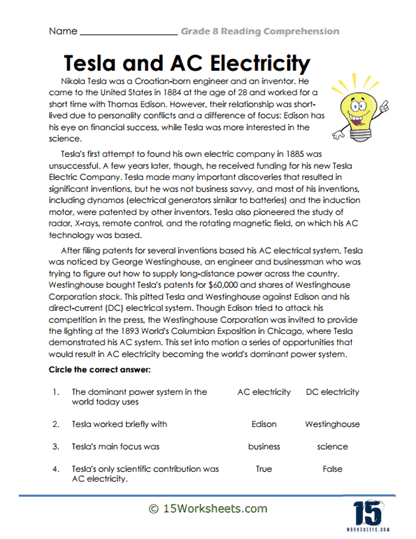
Tesla and AC Electricity
Here, kids learn about Nikola Tesla and his battle to promote alternating current. The passage blends science with biography, showing Tesla’s eccentric genius. Students answer questions about innovation and persistence. A fascinating mix of physics and storytelling.
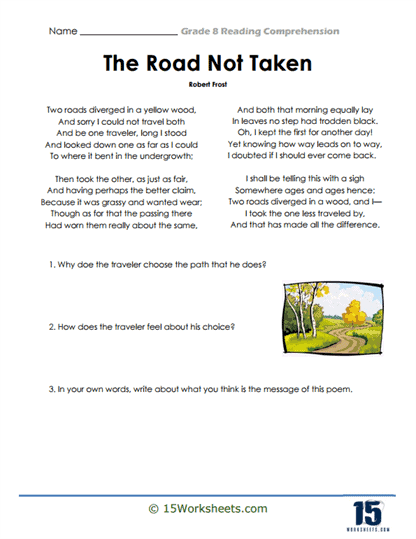
The Road Not Taken
Robert Frost’s classic poem challenges students to reflect on choices and consequences. They’ll analyze metaphor, tone, and theme. The questions guide them toward deeper interpretations. A timeless way to explore literature and life decisions.
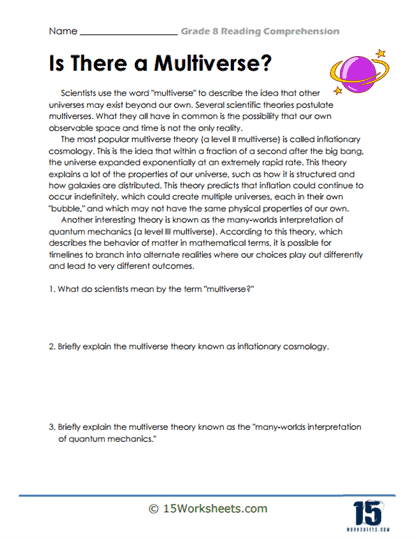
Multiverse Mysteries
Students dive into the idea of multiple universes. The passage blends science, imagination, and philosophy. Questions encourage critical thinking and “what if” curiosity. It’s a fun, mind-bending way to connect reading with science concepts.
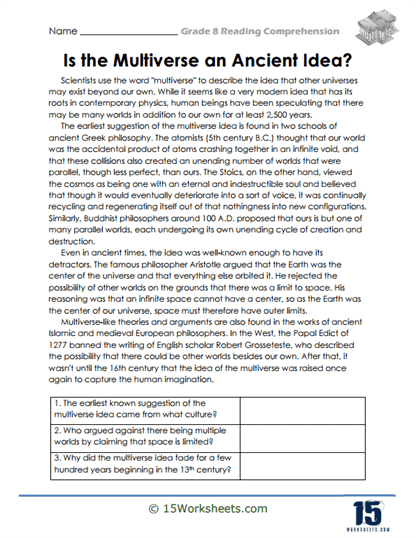
The Multiverse, An Ancient Idea?
This worksheet takes the multiverse concept further, exploring historical and cultural origins. Students compare modern science with old beliefs. The activity builds connections across time and disciplines. A thoughtful extension of the “mystery” theme.
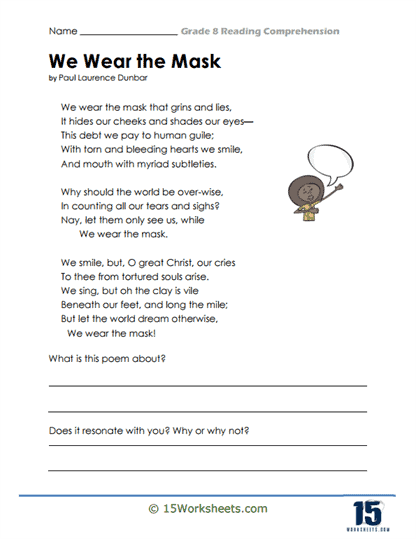
We Wear the Mask
Students read Paul Laurence Dunbar’s poem about hidden emotions and social identity. The questions highlight symbolism, metaphor, and context. It encourages empathy and deep reading. A moving introduction to poetry’s emotional depth.
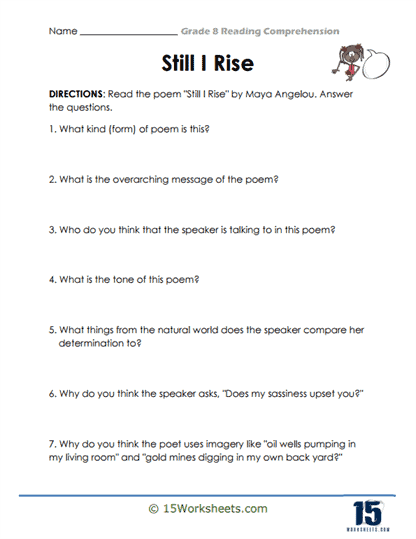
Still I Rise
Maya Angelou’s famous poem shines a light on resilience and empowerment. Students explore tone, repetition, and theme. The activity sparks discussion about confidence and perseverance. It’s both a literary and motivational lesson.
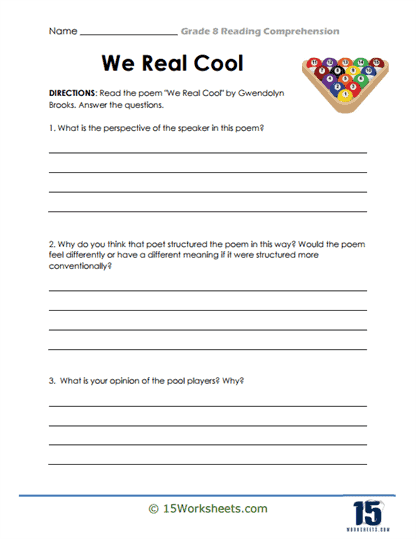
We Real Cool
This worksheet uses Gwendolyn Brooks’ short, sharp poem to explore rhythm and meaning. Students analyze language choices and cultural context. The activity shows how a few words can carry powerful messages. A compact but impactful poetry study.
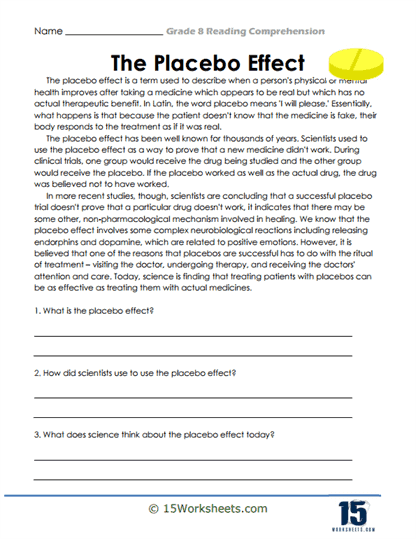
The Placebo Effect
Students learn about the science behind the placebo effect. The passage mixes psychology and medical studies. Questions challenge them to think about belief, health, and evidence. A perfect blend of nonfiction and critical thinking.
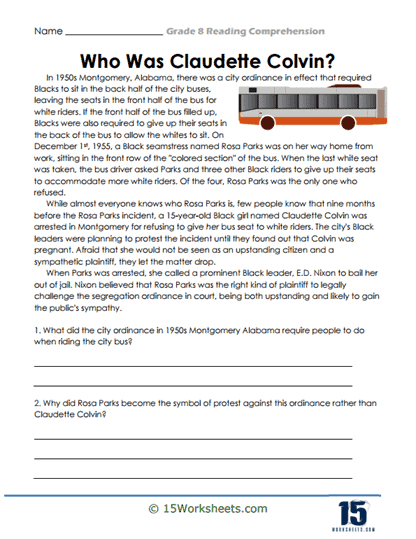
Who Was Claudette Colvin?
This worksheet introduces Claudette Colvin, a young civil rights activist who refused to give up her bus seat before Rosa Parks. Students see how one person’s stand can spark bigger change. The questions encourage analysis of courage and recognition. A valuable addition to civil rights history.
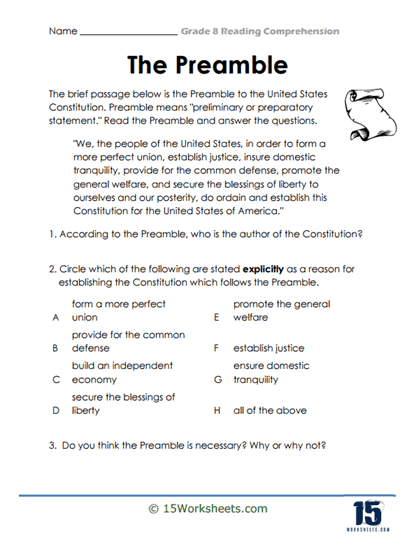
The Preamble
Students read and analyze the Preamble of the U.S. Constitution. They’ll break down its meaning, purpose, and promises. The questions tie civics to modern life. A foundational worksheet for understanding government.
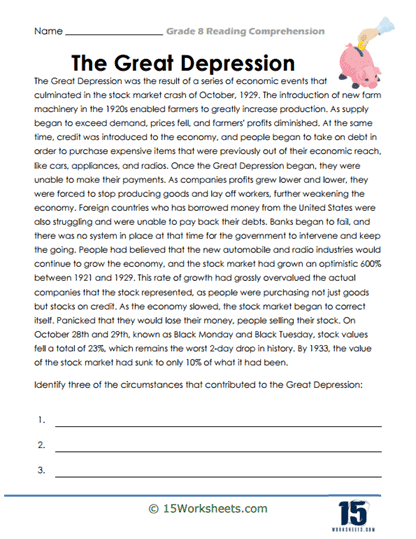
The Great Depression
This passage explains the causes and effects of the Great Depression. Students answer comprehension questions that focus on economics and society. It builds background knowledge while sharpening critical thinking. A clear introduction to an important era.
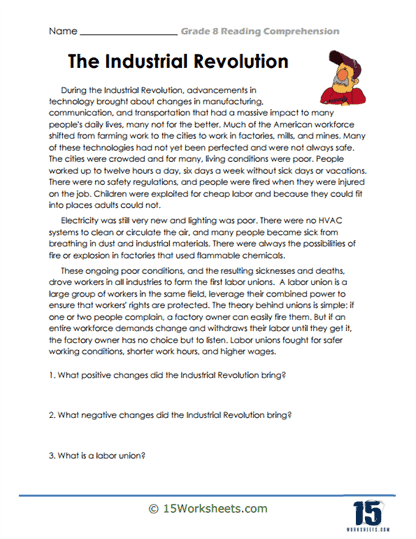
The Industrial Revolution
Here, students explore how industry transformed work, cities, and society. The passage connects inventions to cultural shifts. Questions encourage reflection on progress and challenges. A key link between history and modern life.
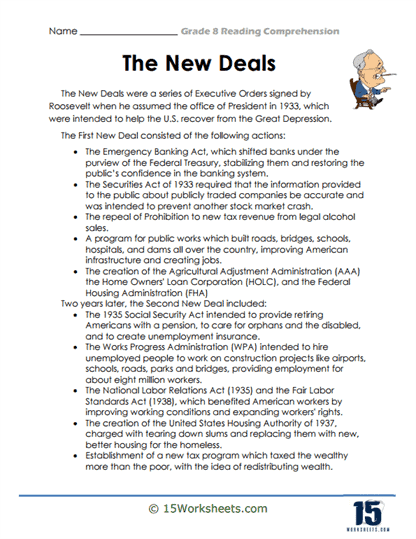
The New Deals
Students learn about the New Deal programs that responded to the Great Depression. They’ll explore successes, struggles, and lasting impacts. The questions go beyond recall, asking for interpretation and evaluation. A thoughtful look at history’s attempts to solve big problems.
Cracking the Code of Reading in Eighth Grade
By the time students reach eighth grade, reading is no longer just about “getting the gist.” At this level, readers are expected to dig beneath the surface and figure out what an author is really saying. They practice identifying themes-those big life lessons hidden in stories-and learn how authors use things like symbolism, tone, and figurative language to get their point across. Instead of just following the plot, eighth graders start to recognize the craft behind the writing.
Another big skill in eighth grade is analyzing how texts are structured. Students look at how an argument is built, how evidence is used, and how different perspectives shape the story or essay. They don’t just accept what they read at face value-they’re taught to question it, compare it with other sources, and decide whether it’s convincing. This critical lens helps them become sharper thinkers and better debaters in and out of the classroom.
And of course, eighth graders get plenty of chances to respond creatively to what they read. They might write essays, lead group discussions, or connect a text to real-world issues. This helps them build a personal relationship with reading, where books and articles aren’t just assignments but sparks for new ideas and conversations. By the end of eighth grade, students are moving from “reading to understand” toward “reading to interpret and evaluate”-a leap that sets them up for high school and beyond.