
Nonfiction Passages with Questions Worksheets
About These 15 Worksheets
These worksheets are versatile tools that not only improve reading comprehension and language arts skills but also prepare students for academic success across many subjects. By working with short nonfiction passages with questions, students strengthen critical thinking, build analytical skills, and gain a deeper understanding of the world through a variety of informational texts.
These worksheets consist of a series of nonfiction texts followed by a set of questions designed to test comprehension, analyze the content, and develop critical thinking skills. The content of these passages can range from historical texts, scientific reports, biographies, to news articles, each offering a different perspective and type of information.
One thing parents and teachers often appreciate about nonfiction reading is that students are learning about the world while they practice reading. Throughout this collection, students explore science, history, geography, technology, nature, and human achievement. Along the way, they learn how to identify key details, understand main ideas, build vocabulary, and connect information across a text. The variety of topics helps keep students interested because there’s usually something that captures every reader’s curiosity.
About Each Worksheet
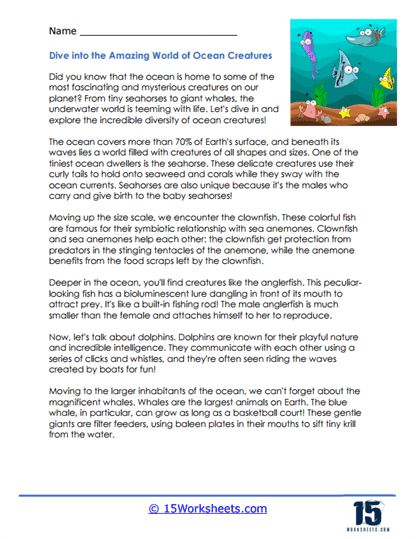
Ocean Creatures
The ocean is filled with some of the most fascinating animals on Earth, and this passage introduces students to many of them. Readers learn about everything from tiny seahorses to enormous whales while discovering how marine animals survive and interact. It’s a great choice for students who love animals and underwater adventures.
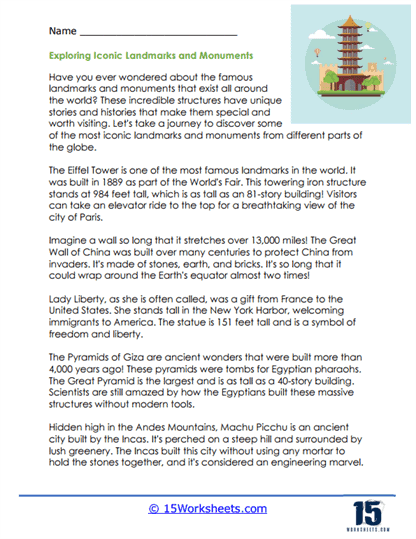
Iconic Landmarks and Monuments
Students travel around the world as they learn about famous landmarks that have stood the test of time. From the Eiffel Tower to the Great Wall of China, each location has its own unique story and historical significance. This passage helps students appreciate both history and human creativity.
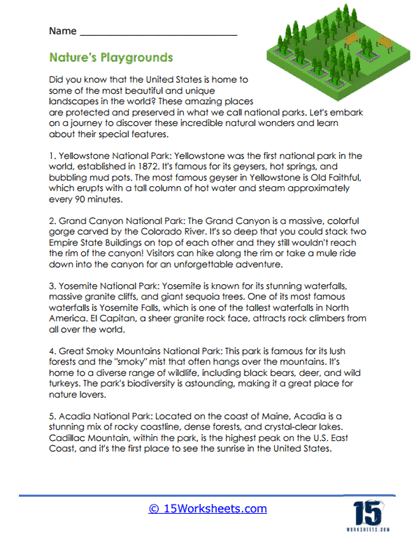
Nature’s Playgrounds
America’s national parks are some of the most beautiful places on Earth, and this worksheet highlights several of the most famous. Students explore towering mountains, deep canyons, giant trees, and incredible wildlife habitats. It’s the kind of passage that makes readers want to pack a backpack and head outdoors.
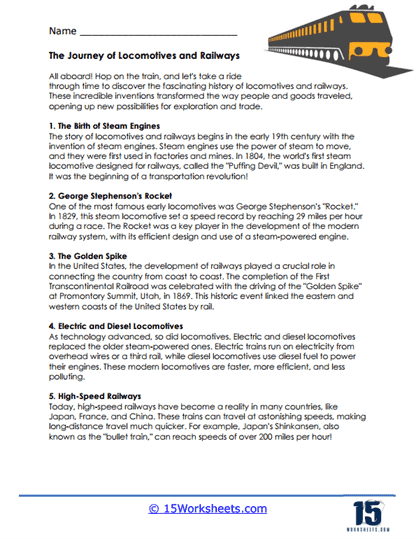
History of Locomotives and Railways
Before airplanes and highways connected the world, railroads transformed transportation. This passage takes students on a journey through the history of trains, from early steam engines to modern high-speed rail systems. Along the way, they learn how innovation changed the way people and goods travel.
Nuclear Power Plants Explained
Nuclear energy can sound complicated, but this worksheet breaks it down into student-friendly language. Readers learn how nuclear power plants generate electricity and why safety plays such an important role in the process. It’s an excellent introduction to one of today’s most important energy sources.
Why is the Sky Blue?
It’s a question most children ask at some point, and this passage provides the scientific answer. Students discover how sunlight interacts with Earth’s atmosphere and why the sky appears blue during the day. The explanation is both educational and surprisingly interesting.
The Science Behind Rainbows
Few natural phenomena capture attention like a rainbow. This worksheet explains how sunlight and water droplets work together to create the colorful arcs we see after rainstorms. Students get a fascinating look at the science hidden behind one of nature’s most beautiful displays.
The Science of How Birds Soar
Birds make flying look effortless, but there’s a lot of science behind every flap of a wing. This passage explores the special adaptations that allow birds to fly and migrate across great distances. It’s perfect for students who enjoy learning how animals are uniquely designed for survival.
The Importance of Sleep
Sleep may seem simple, but it’s one of the most important things our bodies do every day. Students learn how sleep helps with growth, memory, health, and learning. After reading this passage, many students gain a new appreciation for getting a good night’s rest.
Nature’s Electric Show
Thunderstorms can be exciting, powerful, and sometimes a little scary. This worksheet explains the science behind thunder and lightning in a way that’s easy to understand. Students also learn useful safety information and fun facts about these dramatic weather events.
What Makes Stars?
The stars we see in the night sky are much more than tiny points of light. This passage explores how stars form, how they produce energy, and what happens during different stages of their life cycles. It’s a great introduction to astronomy and the wonders of space.
History of Money
Money wasn’t always paper bills, coins, or digital payments. Students trace the fascinating journey from bartering goods to the complex financial systems we use today. The passage offers a glimpse into how trade and commerce have evolved throughout history.
Hibernate or Celebrate
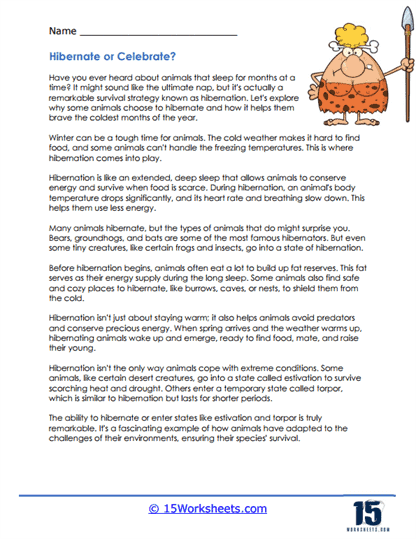
When winter arrives, different animals respond in different ways. This worksheet introduces students to hibernation, torpor, and other survival strategies animals use when conditions become difficult. It’s a fascinating look at nature’s ability to adapt.
Journey of Chocolate Bars
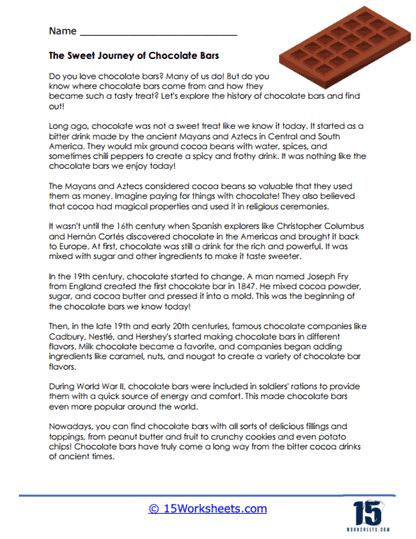
Chocolate has quite a story behind it. Students learn how a bitter drink enjoyed by ancient civilizations eventually became one of the world’s favorite treats. This passage combines history, culture, and food in a way that’s sure to capture attention.
Great Barrier Reef
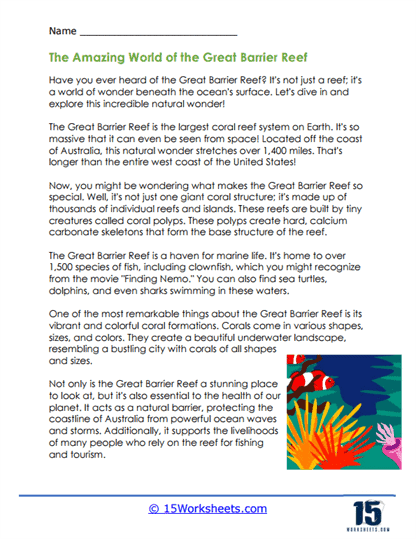
The Great Barrier Reef is one of the most extraordinary ecosystems on the planet. Students discover how coral reefs form, the incredible marine life they support, and the challenges they face today. The passage helps readers understand why protecting natural wonders is so important.