
Book Reports Worksheets
All About These 15 Worksheets
Book reports can sometimes feel overwhelming for students because there are so many things to think about at once. They have to remember characters, settings, important events, themes, and their own opinions about what they read. That’s why these Book Reports Worksheets break the process into smaller, manageable pieces. Instead of staring at a blank page wondering where to begin, students get clear prompts that help them organize their thoughts and build confidence as readers.
One thing I really like about this collection is the variety. Some worksheets focus on fiction books, while others help students explore biographies or non-fiction texts. There are activities that encourage drawing, analyzing characters, identifying themes, learning new vocabulary, and even deciding whether a book is worth recommending. Because each worksheet approaches book reporting a little differently, students stay engaged while practicing important reading and writing skills.
Book reports do much more than check whether a student finished a book. They help students think about what they read, explain their ideas, and make meaningful connections to the text. As students work through these activities, they become stronger readers, better communicators, and more thoughtful thinkers. Most importantly, they learn that every book has something worth discovering.
About Each Worksheet
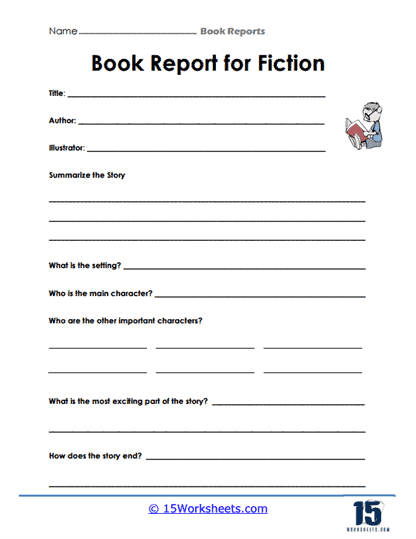
Fictional Escapades
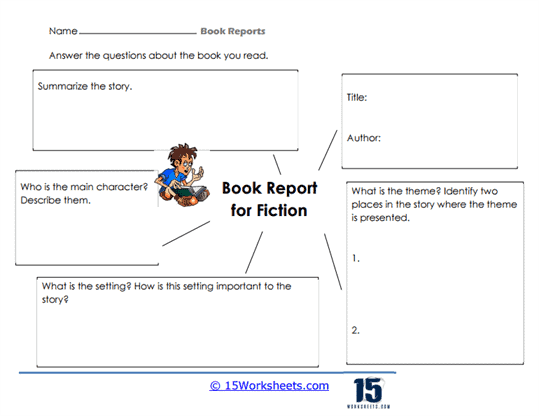
This worksheet gives students a chance to look at the big picture after finishing a fiction book. They’ll explore the characters, setting, major events, and ending while thinking about what made the story memorable. It’s a great all-around book report for helping students organize their thoughts.
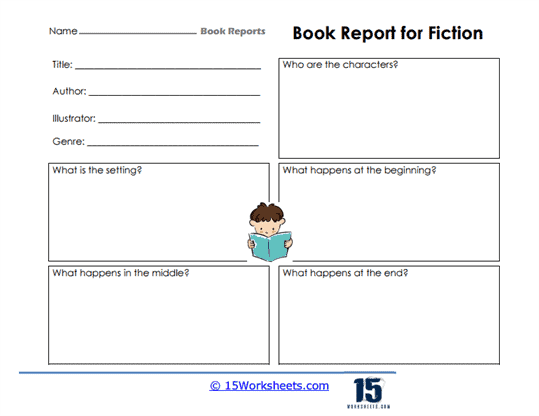
Title, Author, Genre, And More
Sometimes students need a little structure to help them talk about a book. This worksheet guides them through important details like genre, setting, characters, and plot progression. It helps turn scattered thoughts into a well-organized book report.
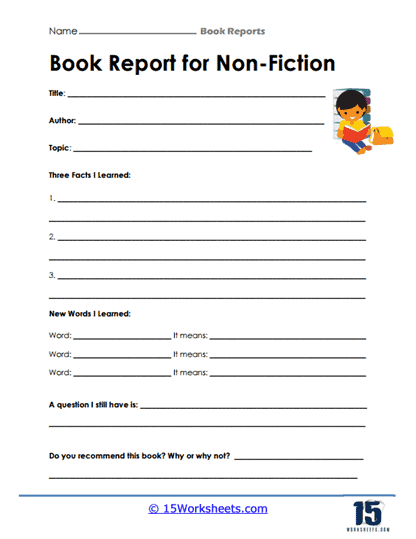
Knowledge And Vocabulary
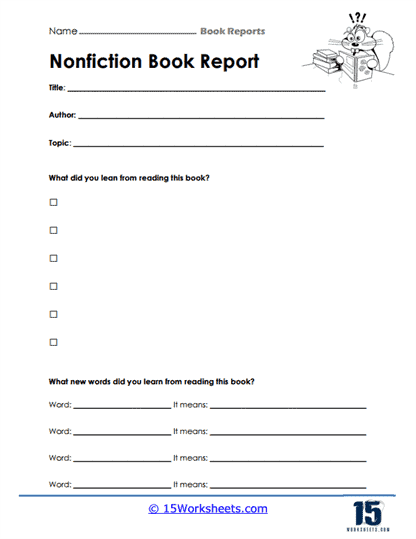
Non-fiction books are packed with information, and this worksheet helps students pull out the most important pieces. They’ll identify interesting facts, learn new vocabulary, and reflect on what they found most valuable. It’s a great way to turn reading into learning that sticks.
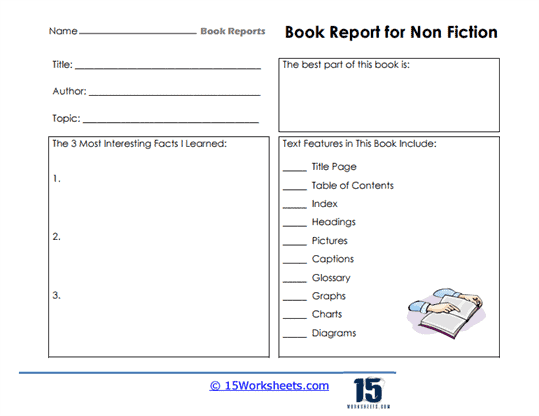
Text Feature Trek
Many students focus on the words in a non-fiction book but overlook all the helpful features around them. This worksheet encourages them to explore things like indexes, headings, captions, and tables of contents. It’s a fun reminder that these tools are part of the reading experience too.
Takeaways And New Words
This activity encourages students to think about what they actually learned from a non-fiction book. Along with summarizing important information, they’ll build vocabulary by identifying and defining new words. It’s especially useful for strengthening both comprehension and language skills.
Learn And Recommend
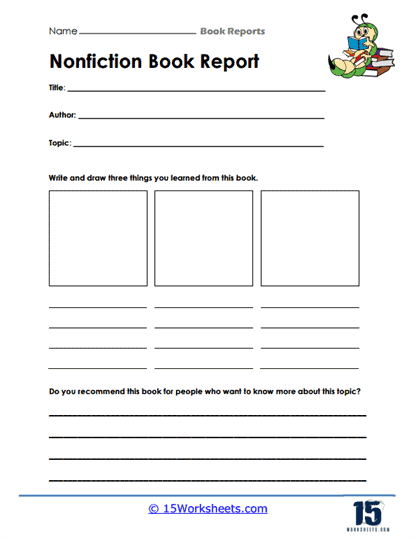
Students don’t just report on what they learned-they decide whether they’d recommend the book to someone else. The mix of writing and drawing makes this worksheet feel creative while still focusing on comprehension. It’s a nice option for students who enjoy expressing ideas in different ways.
Draw The Characters
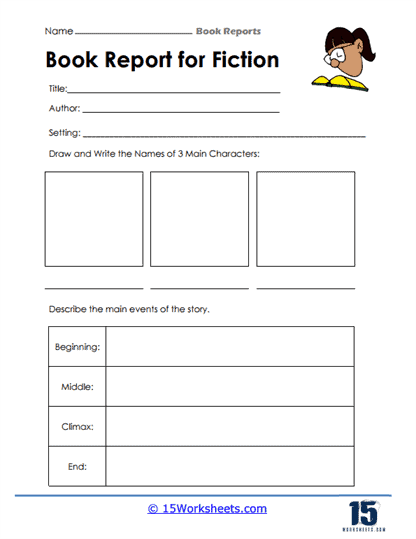
Some students connect with stories best through the characters, and this worksheet taps right into that strength. They’ll draw important characters while also describing the major events of the story. The visual element makes the book report feel a little less like work and a little more like fun.
Familiarity And Curiosity
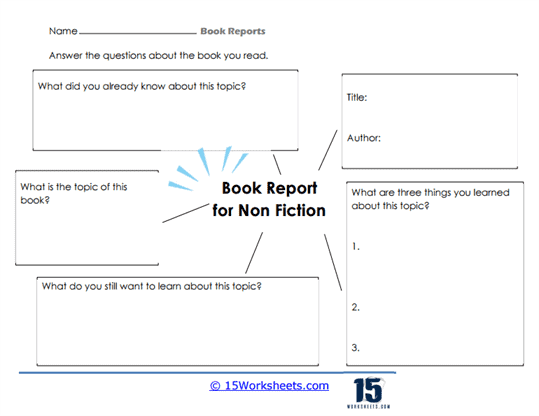
Good readers often finish a book with even more questions than they started with. This worksheet encourages students to think about what they already knew, what they learned, and what they still want to discover. It helps nurture curiosity instead of treating reading as something with a final answer.
Elements And Themes
This worksheet asks students to look beyond the plot and think about the bigger ideas hidden within a story. They’ll examine characters, setting, and theme while finding examples that support their thinking. It’s a great introduction to deeper literary analysis.
Biographical Insights
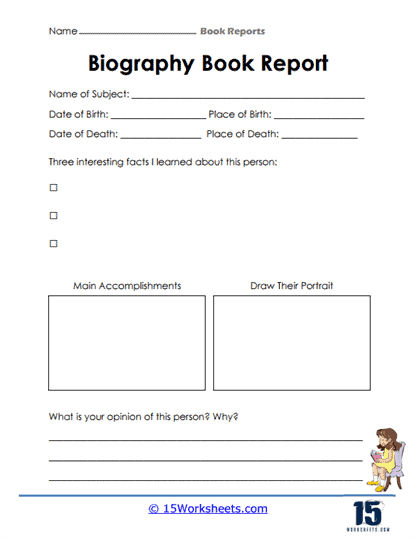
Learning about real people can be just as exciting as reading fiction. This worksheet helps students explore important facts, accomplishments, and interesting details about someone’s life. The drawing component adds a creative touch that many students enjoy.
Fictional Worlds And Conflicts
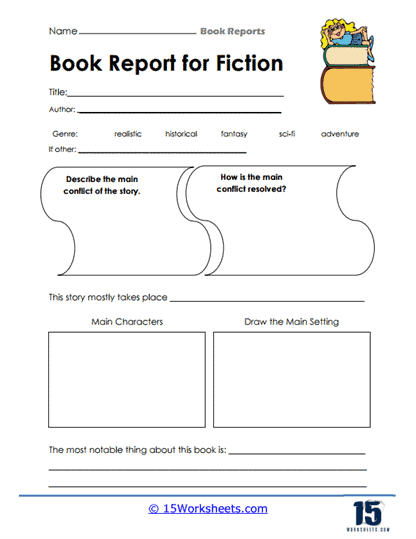
Every good story has a problem that needs solving, and this worksheet puts that conflict in the spotlight. Students examine the challenges characters face, how those challenges are resolved, and why the setting matters. It’s an excellent way to explore what keeps a story moving forward.
What I Like And Dislike
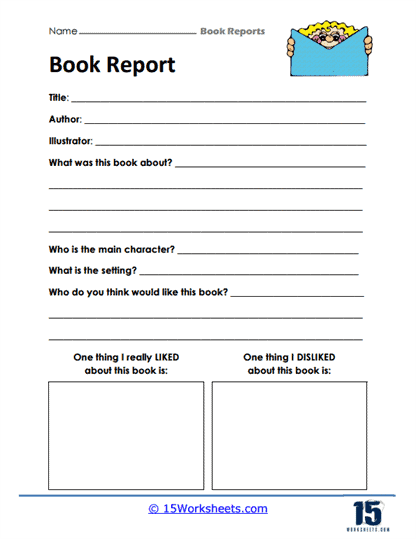
Not every reader will love every book, and that’s perfectly okay. This worksheet encourages students to share both positive and negative opinions while supporting their ideas with reasons. It helps them become thoughtful readers who can explain their preferences clearly.
Prompt Completion
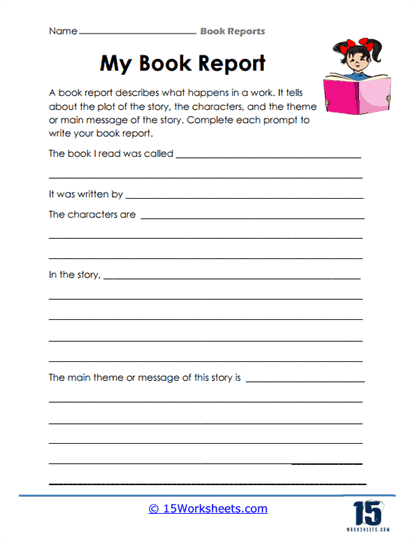
For students who need a little guidance, this worksheet provides straightforward prompts that cover the most important parts of a book. They’ll discuss characters, plot, and theme in a simple, organized format. It’s a reliable choice for building confidence with book reports.
Literary Adventure
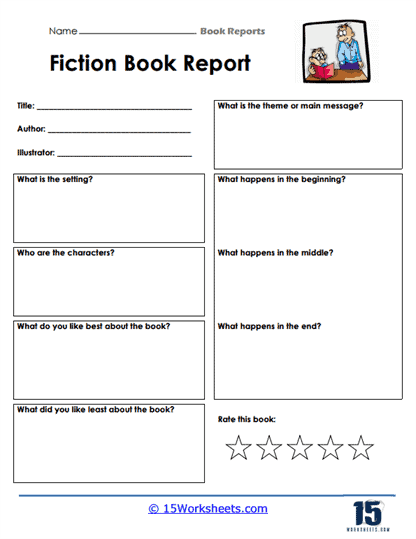
This worksheet gives students plenty of room to reflect on both the story and their personal reading experience. They’ll explore characters, setting, theme, favorite moments, and even give the book a rating. It feels a little like writing a review and a little like sharing a recommendation with a friend.
Settings, Styles, And Endings
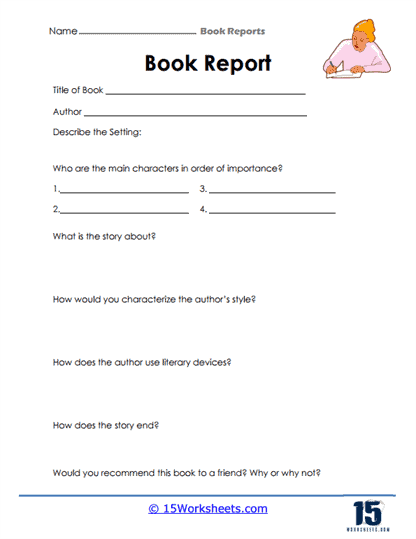
This worksheet goes beyond basic comprehension and asks students to think like literary critics. They’ll examine the author’s style, analyze characters, reflect on the ending, and decide whether they would recommend the book. It’s a strong choice for readers who are ready for a deeper discussion about literature.
What Are Book Reports?
A book report is a way for students to share what they learned from a book they’ve read. It usually includes information about the characters, setting, plot, main ideas, and the student’s personal thoughts about the book. Book reports help teachers, parents, and students themselves see how well a story or text was understood.
While many people think book reports are just summaries, they’re actually much more than that. A strong book report asks students to think about why events happened, how characters changed, what lessons were learned, and whether the book was enjoyable or meaningful. It encourages students to move beyond simply remembering details and begin analyzing what they read.
Book reports also help students develop important communication skills. As they organize information, explain ideas, and support opinions, they practice writing clearly and thinking critically. Whether they’re reading fiction, non-fiction, biographies, or informational texts, book reports help students become more engaged readers who can talk thoughtfully about what they’ve learned.