
More or Less Worksheets
About These 15 Worksheets
At the heart of early math is a simple question: Which one has more? Which one has less? This collection of worksheets gives children many ways to explore those ideas using everyday objects like bananas, candy jars, rockets, animals, and raindrops. As they practice, kids learn to compare what’s different and understand how amounts change from one group to another. By seeing these patterns clearly, they begin to realize that numbers represent real quantities they can observe and describe.
The activities range from straightforward comparisons (circling which group has more) to slightly more advanced challenges, like using number lines, simple addition or subtraction, and even puzzles. This variety keeps the learning fresh and helps children approach the concept from multiple angles, making it more likely to “stick.” Some worksheets emphasize counting, while others stress recognizing number symbols or comparing sets visually.
What makes this collection special is how it builds math thinking while still feeling playful. Kids aren’t just memorizing rules-they’re learning to notice, sort, and explain why one group is bigger or smaller than another. That skill is the foundation for bigger math ideas like place value, arithmetic, and problem solving. These worksheets give young learners the confidence to talk about quantities, think critically, and see math in the world around them.
Have a Look Inside Each Worksheet
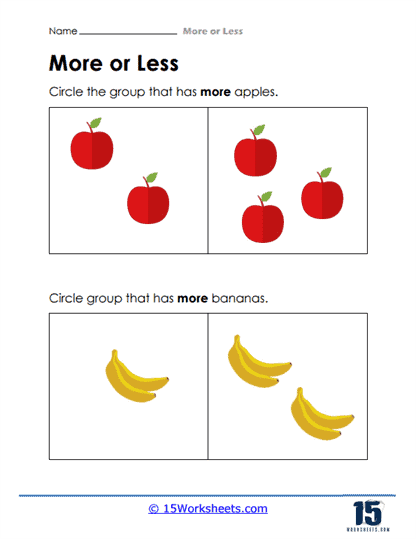
Bananas and Oranges
Children compare quantities of bananas and oranges in pictures to determine which group has more or less. It’s a bright, fruity activity that makes counting fun. They practice comparing two sets using visual cues and simple numbers. It builds the foundation of comparison through everyday items.
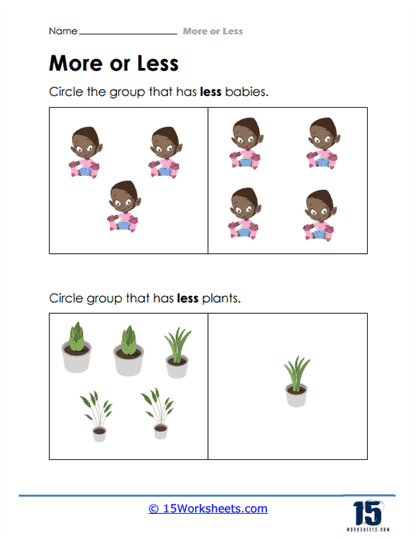
Babies and Plants
This worksheet has kids compare images of babies versus plants-spotting which group has more or fewer items. It blends biology and math in a sweet visual mix. Kids count, compare, and choose the correct comparative word. It strengthens number sense through familiar images.
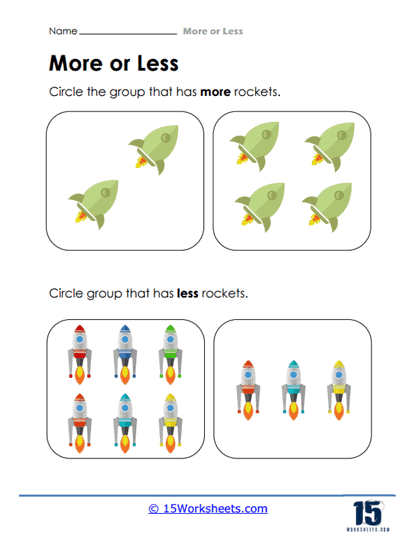
Groups of Rocket
Here, learners compare groups of rockets, counting how many and figuring out which group is larger or smaller. It’s a space-themed counting activity that keeps them engaged. They build comparison skills while launching into dot-fueled fun. It adds a playful twist to learning “more and less.”
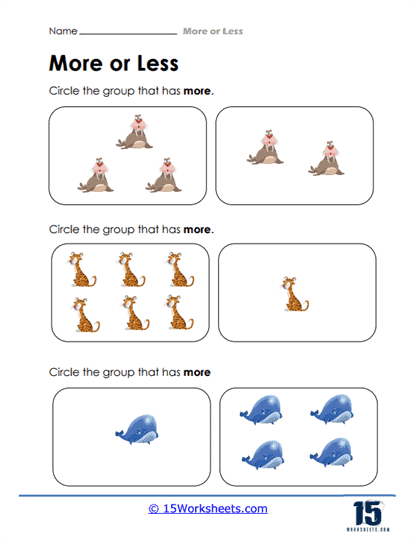
Groups of Animals
Students compare different groups of animals, counting and deciding which group has more or fewer creatures. It brings wildlife scenes into math practice. They boost their counting accuracy and visual comparison skills. It nurtures both observation and number recognition.
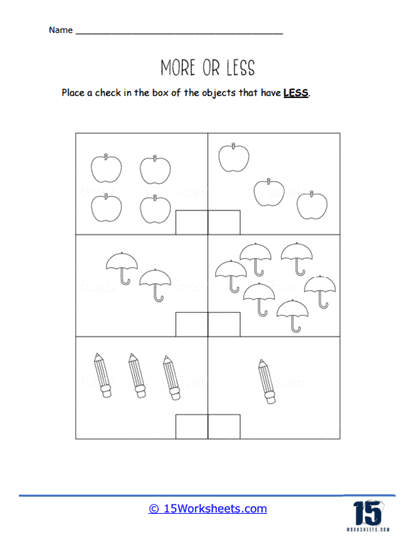
Who Has Less?
This worksheet asks kids to find which character or set of objects has fewer items. It’s like a little detective game where students hunt for the smaller quantity. They sharpen attention to detail and comparison thinking. And it reinforces vocabulary like “less,” “fewer,” and “least.”
Insect Checks
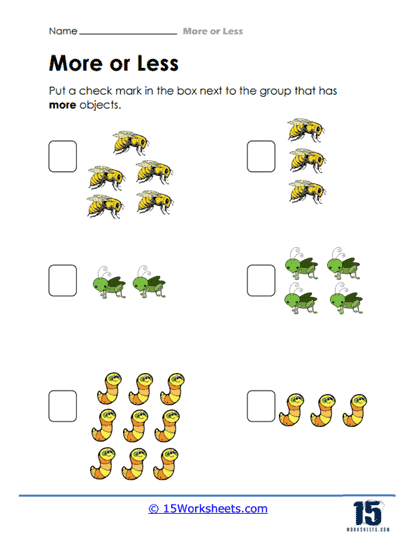
Children count and compare insects to decide whether one group has more or less than another. Dragonflies, ladybugs, or ants become math helpers here. It’s a bug-filled comparison task with a fun twist. It combines nature interest with early numeracy skills.
Compare Vehicles
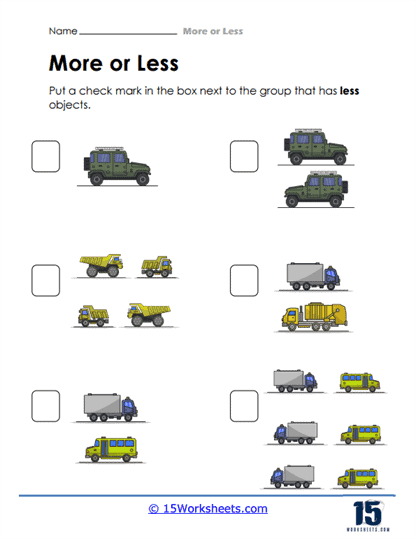
Learners compare numbers of vehicles-maybe cars, buses, or bikes-and decide which group has more or fewer. It’s a drive-through math exercise with real-world imagery. They reinforce counting and comparing in a traffic-themed setting. It helps make the abstract “more/less” concept concrete.
Has More
This page presents two sets side by side, asking students to identify which one “has more.” It’s a clear, direct way to practice comparison in a single glance. Kids develop quick number sense by choosing the larger group. It’s simple, fast, and effective for early learners.
Greater Sets
Here, learners compare sets and circle or label the one that’s “greater.” It’s a visual tally of quantity that’s easy to read and respond to. They practice recognizing bigger groups using comparison words. It builds strong number intuition through clear visual grouping.
Which Row is Greater?
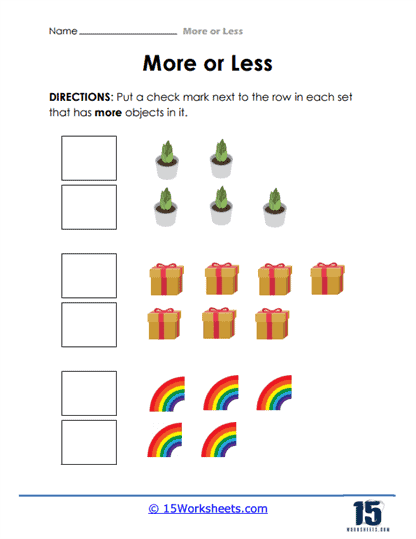
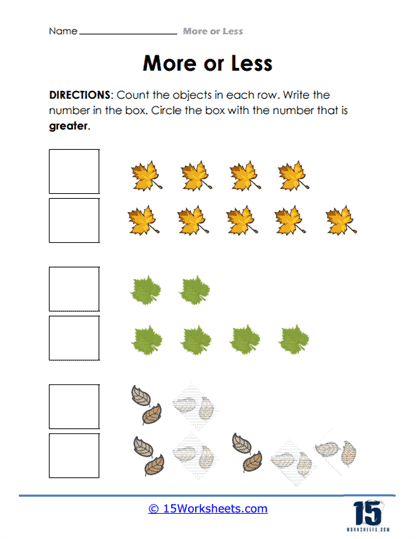
Students compare two rows of items and select which row has more items. It’s like a visual quantity race across the page. They hone their observational and analytical skills in a simple layout. It reinforces comparative language in context.
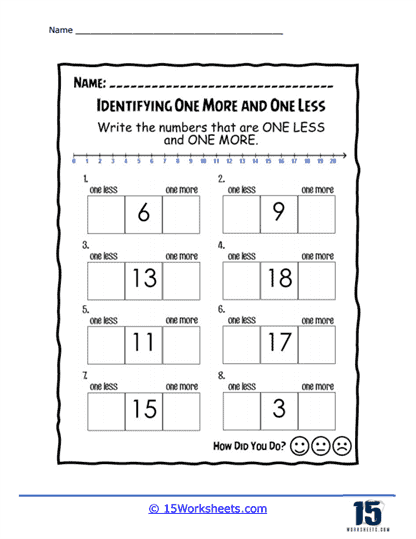
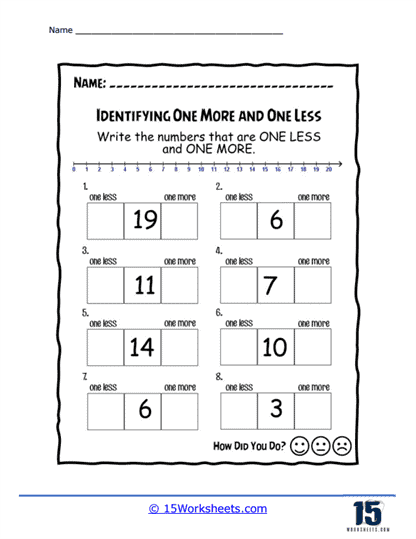
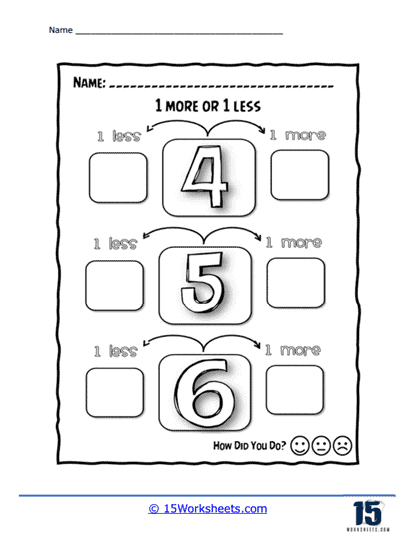
Add or Remove 1
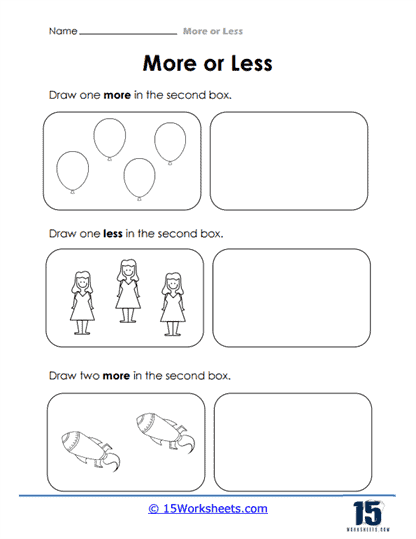
Kids either add one more item to a group or remove one to match a target number. It’s a hands-on and board-game-like activity that teaches quantity change. They learn how “more” and “less” can be created by simple changes. It gently introduces addition and subtraction basics.
Amount of Dots
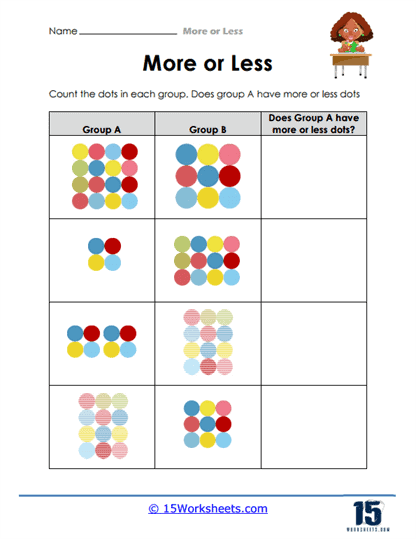
This worksheet has kids count dots in groups and determine which has more or less. It’s a visual and pattern-based approach to comparison. They build counting accuracy and comparative thinking simultaneously. And it’s a tactile way to explore numeracy.
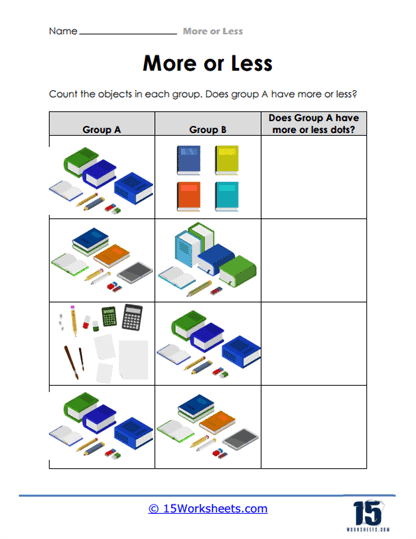
Group A and B
Kids compare two labeled groups-A and B-and pick the one with more or less items. It’s straightforward and perfect for early learners to practice comparison. They develop quick decision-making based on count. And it reinforces alphabetic labeling along with math.
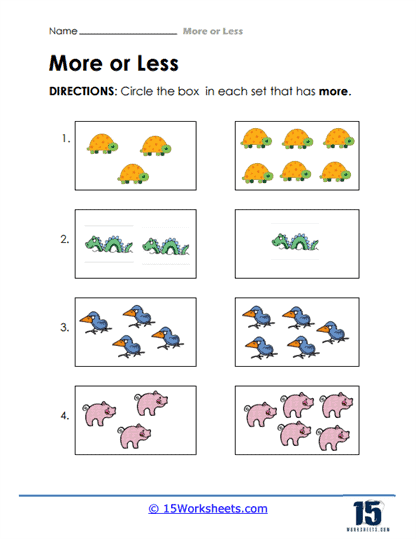
Turtles, Dragons, and Birds
This fun worksheet features groups of turtles, dragons, and birds-kids decide which group has the most or the fewest. It’s whimsical and imaginative, adding fantasy to counting practice. They sharpen comparison skills with fun icons. It makes math feel like a storybook.
Bigger Box
Students compare images of boxes or containers and choose which one is bigger or smaller. It’s great for building visual comparison in terms of shape and size. They practice identifying relative size along with quantity concepts. It bridges counting and measurement thinking.
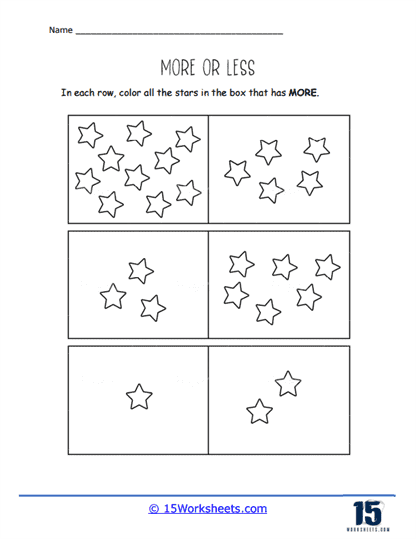
More Stars
Kids compare groups of stars and determine which group has more. It’s a night-sky-themed counting challenge. They build comparative vocabulary along with pattern recognition. It adds a celestial twist to simple math tasks.
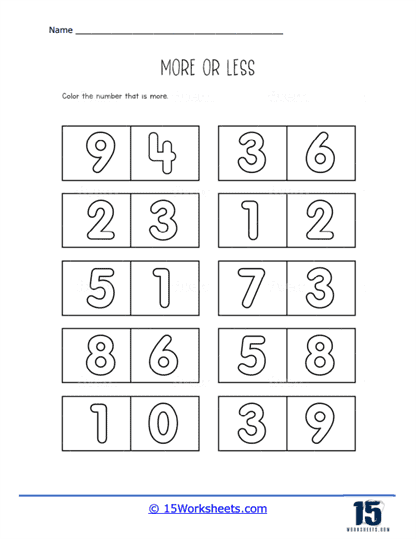
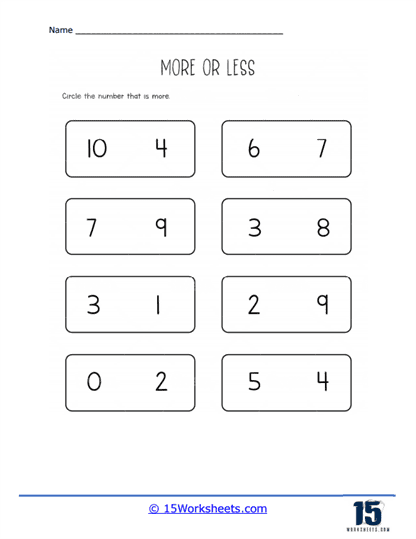
Bigger Digits
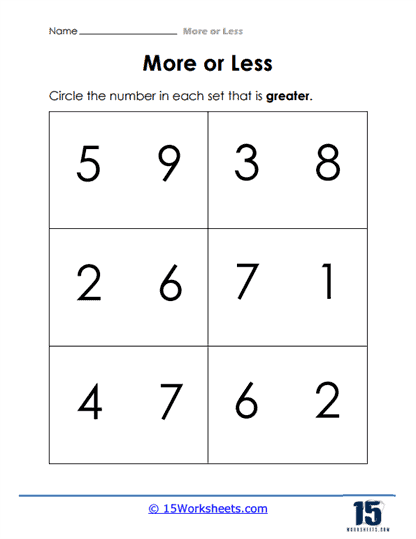
Learners compare numbers (digits) and circle the larger one. It directly connects symbol recognition with number magnitude. It’s perfect for early numeracy-reading digits and comparing values in one step. And it strengthens place-value awareness subtly.
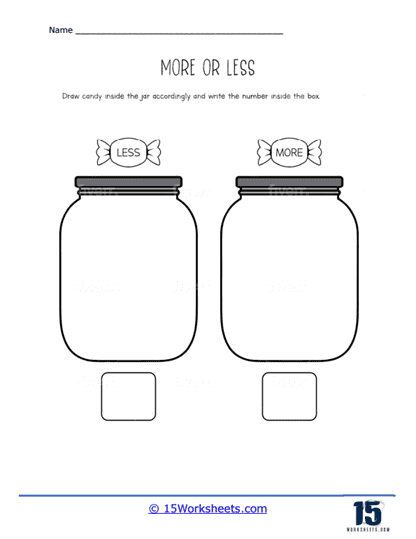
Candy Jars
This worksheet shows different jars filled with candy and asks which has more or fewer candies. It’s irresistible to young learners who love sweets. They practice counting and comparing in a colorful, fun scenario. It ties math to meaningful real objects.
Comparing Numbers
Kids compare pairs of numbers-selecting the larger or smaller number. It’s a classic numeric comparison exercise. They enhance digit sense and the concept of “greater than” and “less than.” It lays groundwork for number line understanding.
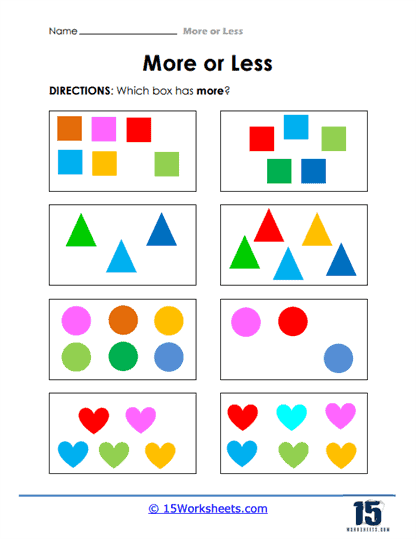
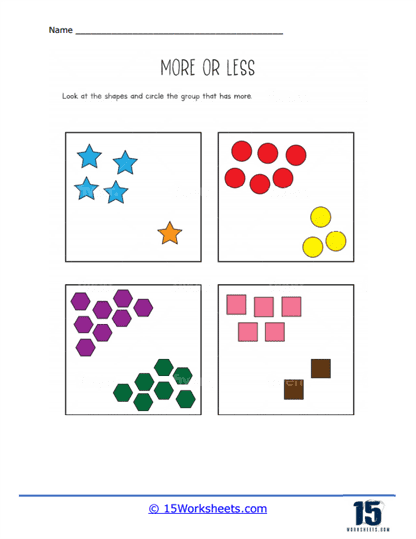
Shapes and Colors
Students compare shapes (in both form and color) and decide which group is more abundant or less present. It combines visual discrimination with counting skills. They practice dual recognition-form and quantity-in a single task. And it supports early geometry awareness.
Less Objects
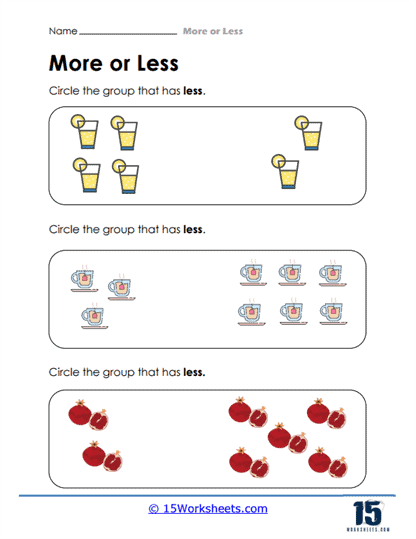
Here, children identify which set has fewer objects. It’s a focused way to reinforce understanding of “less” versus “more.” They practice identifying smaller quantities quickly and confidently. It’s simple, to the point, and highly effective.
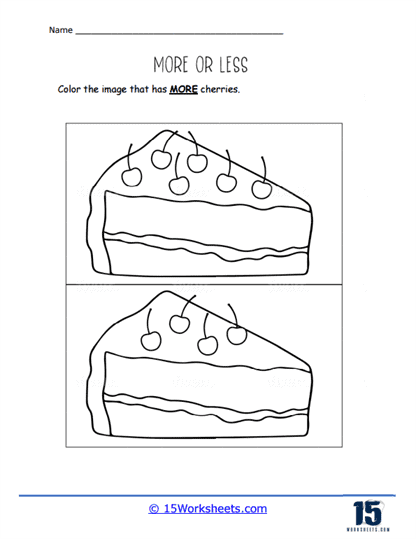
Cherries On Top
Kids count cherries on cupcakes or in bowls, then decide which has more or fewer. It’s a sweet treat turned into a counting game. They learn to visually differentiate by group size using appealing graphics. It merges dessert imagery with number sense.
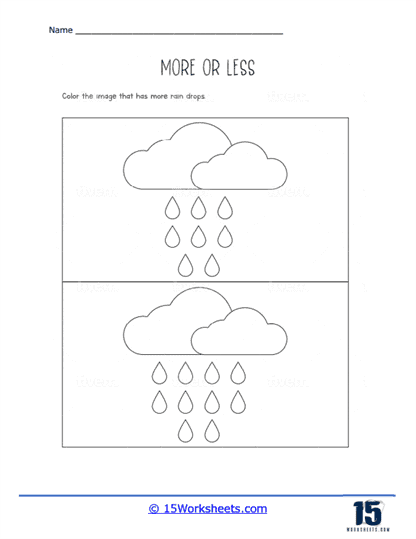
Raindrops
This worksheet features raindrop groupings-students compare quantities and select the more or less group. The rainy theme makes counting feel playful and weather-inspired. They practice pattern recognition and comparison simultaneously. It adds mood and season to math.
More or Less Puzzle
A puzzle layout asks children to determine if groups have more or less-perhaps by filling in blanks or connecting items. It adds a problem-solving twist to basic comparison. They use logic and counting in tandem to find answers. It makes math feel like a game.
Using the Digit Scale
Kids use a scale of numbers-like a visual line-to compare quantities or digits. It’s a conceptual introduction to number scales and greater/less relationships. They learn how numbers stand in relation to each other visually. It builds number sense and early number line familiarity.
On the Line
This worksheet asks children to place items on a number line or compare positions based on value. It helps them see the difference between greater and lesser through spatial placement. They develop a foundational sense of how numbers relate in order. It’s an early mapping of math on paper.
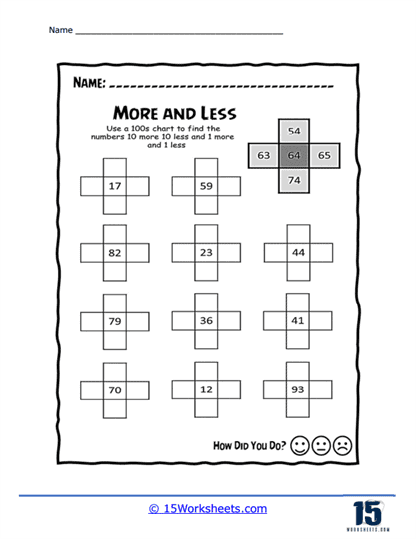
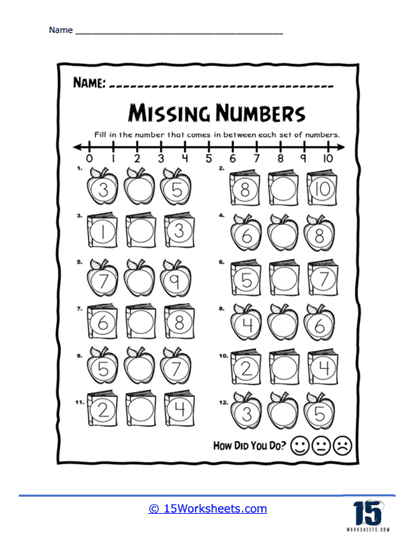
Skip Forward and Back
Students skip forward or back across sequences-like jumping “more” or “less” along numbers. It practices counting in steps (like addition and subtraction in disguise). They reinforce numeric order and value progression. It makes “more” and “less” into movement on paper.
Missing Hooks
This page may show items with missing parts and ask which group has fewer complete objects. It adds complexity by mixing completeness with quantity. Learners practice careful counting and comparative judgment. It strengthens attention to detail alongside number sense.
School Bus Math
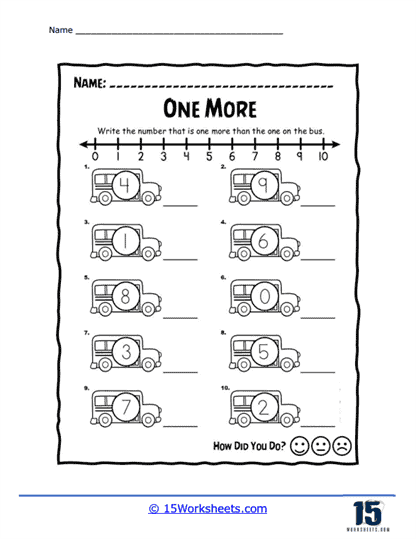
Features school buses (or seats/children) for counting-students compare which has more or fewer. It’s a relatable back-to-school theme. They sharpen quantity comparison in a familiar scene. And it reinforces counting with educational context.
Plus or Minus
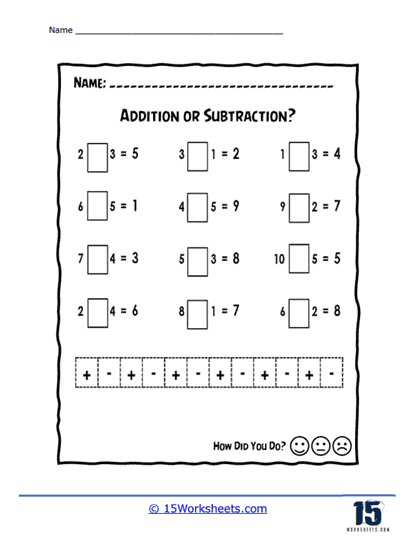
This worksheet incorporates simple addition or subtraction to create more or less situations-kids solve to see which group changes. It bridges the concept of “more” and “less” with arithmetic operations. Students see how addition creates “more” and subtraction leads to “less.” It’s a smart way to link counting and operations.