
Sort By Color Worksheets

About These 15 Worksheets
These worksheets are all about helping young learners sharpen one of the most foundational visual skills: knowing and recognizing colors, and then using that recognition to organize. What makes them really work is how they combine fun with purpose-kids aren’t just naming colors, they’re grouping, comparing shades, and doing matching and sorting colors activities that build strong early thinking skills. Some tasks even include cutting and pasting, which keeps learning hands-on and engaging. That mix of tasks helps the learning stick because it uses visual, physical, and logical thinking all at once.
Also, the variety here is key: some are simple (“find the red things”), others more subtle (“darker shades”, “sorting hues”). That means students can start with confidence-boosting easier tasks and gradually take on more challenging ones without frustration. It builds both precision (seeing fine color differences) and flexibility (identifying color in different contexts, lighting, shapes, etc.).
Beyond the worksheets themselves, being good at sorting by color isn’t just a preschool whim-it’s something that shows up all over life. Think: organizing art supplies, choosing clothes, identifying warning signs, even reading graphs or maps. When kids get comfortable categorizing by color early, it helps them notice patterns elsewhere, think more carefully, and feel more confident in tasks where visual cues matter.
Have a Look Inside Each Worksheet
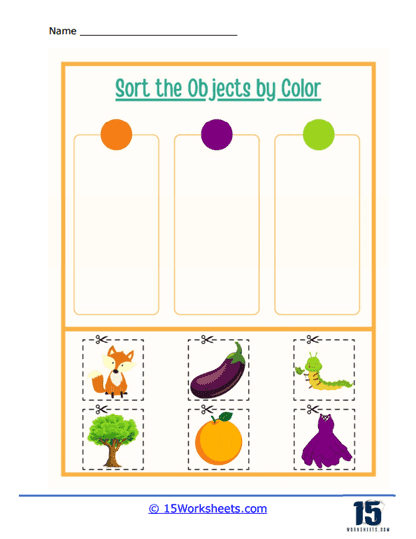
Orange, Purple, and Green
In this worksheet, students practice sorting a variety of objects into three distinct color groups: orange, purple, and green. They’ll have to pay close attention to visual details to correctly identify each color. The activity strengthens observation, builds vocabulary, and reinforces how grouping works. Kids will love spotting colors they know and learning to organize them in a structured way.
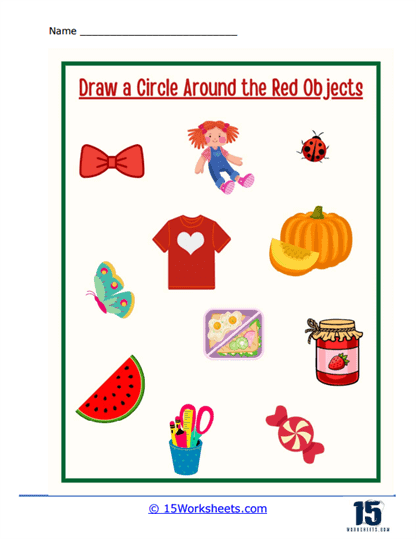
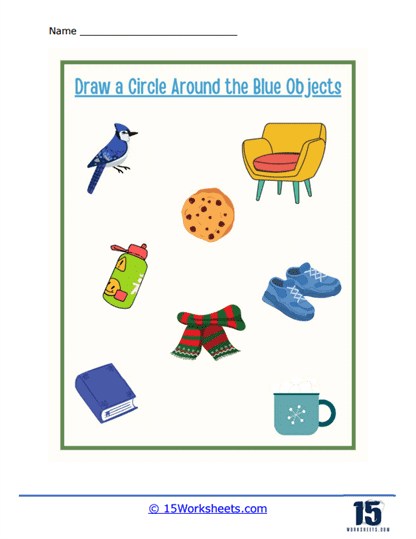
What’s Red
This activity has students pick out all the objects that are red from a mix of colors. It’s a simple but powerful way to reinforce recognition of one color. Children develop sharper attention to detail as they scan and compare. It’s a great way to build confidence in naming and identifying colors accurately.
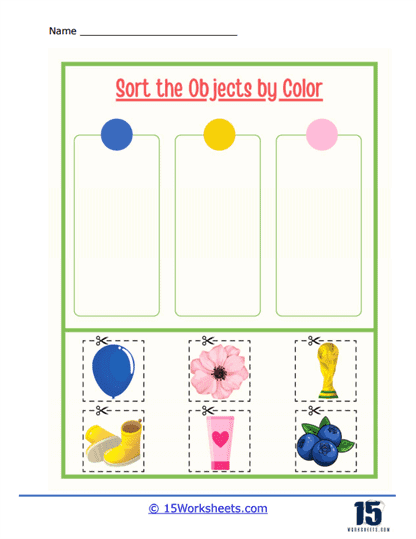
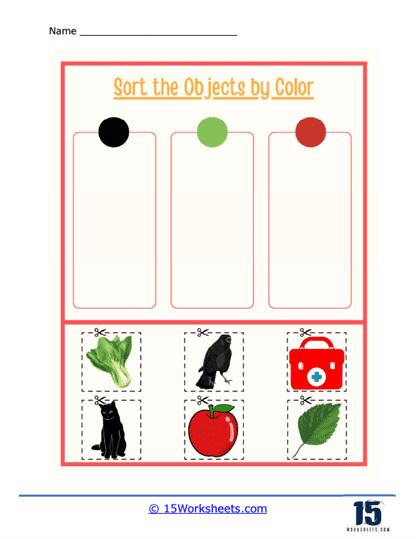
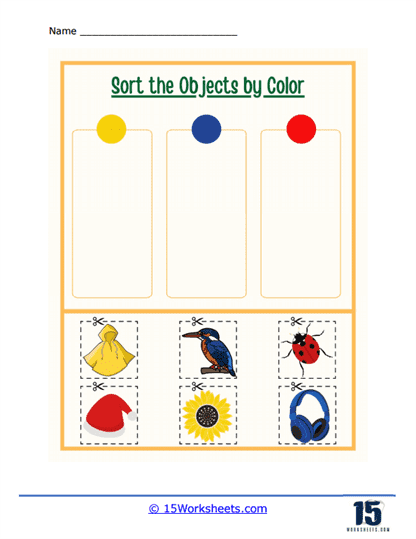
Cut and Sort
Students cut out colorful shapes or pictures and then sort them by color into the correct groups. This combines fine motor practice with visual sorting skills. The cutting part keeps hands engaged while the sorting builds reasoning. It’s hands-on, active, and perfect for kids who learn best by doing.
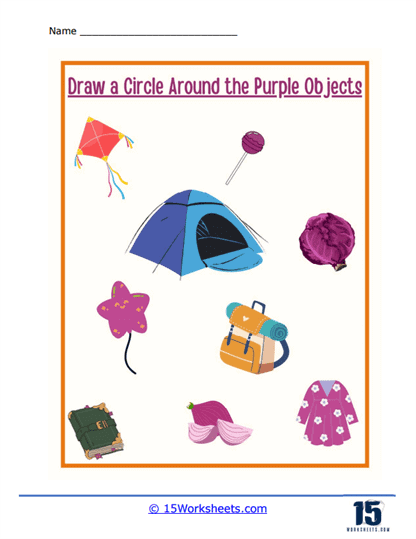
Purple Circles
Here, kids focus on finding purple circles hidden among other shapes and colors. It requires double discrimination: noticing the correct shape and the correct color. The task boosts multitasking and careful attention. Students strengthen both geometry (shape recognition) and early art/color skills.
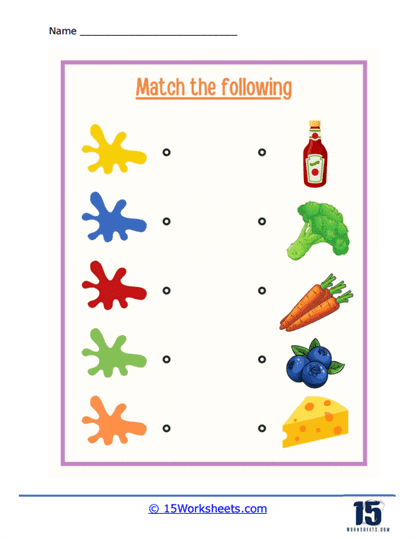
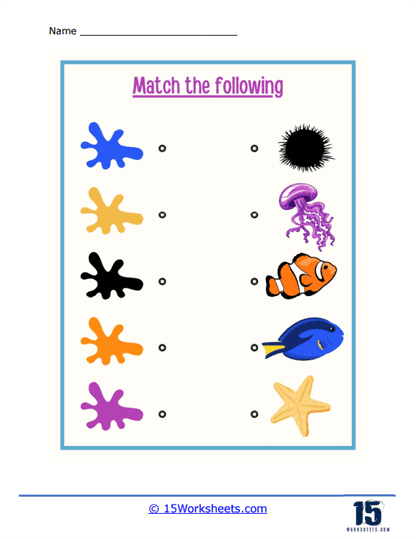
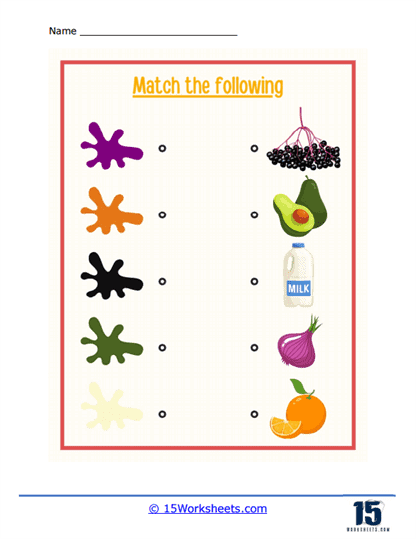
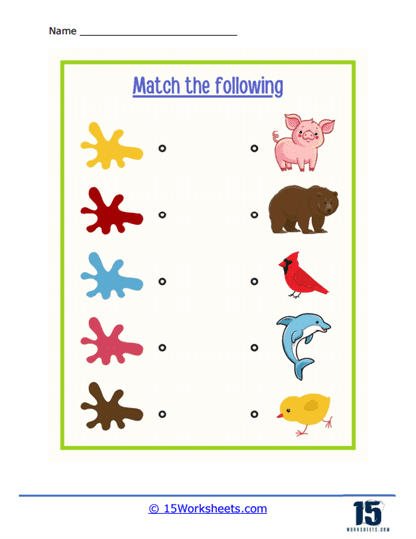
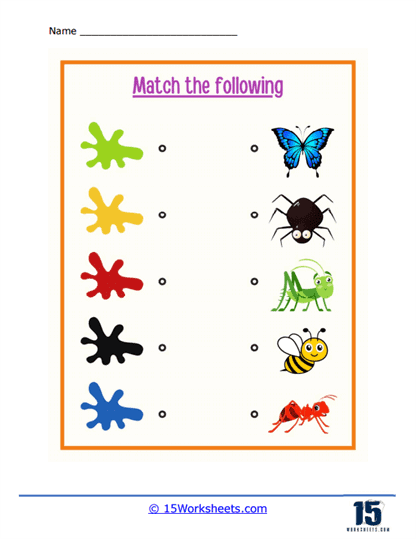
Matching Splats
This worksheet has students match bright paint-splats of the same color or match them to their color names. It’s a playful way to learn and remember colors. The matching format adds a memory challenge that deepens learning. Kids get to practice quick recognition while enjoying bold, fun visuals.
Darker Color Sorts
Students explore light vs. dark shades of the same color and learn how to tell them apart. They’ll sort objects into “lighter” and “darker” piles. This sharpens their ability to notice subtleties beyond just “red vs. blue.” It also builds vocabulary for describing shades and tones.
Sorting Hues
This worksheet takes color learning a step further by having students sort items by hues across a spectrum. They might organize colors in order (yellow → orange → red) or group similar hues together. It encourages critical thinking and pattern recognition. Students start to see that colors can relate to each other, not just stand alone.
Animal Color Sort
Students group animals based on the color of their bodies or features. It’s a fun way to mix science and color recognition. Kids enjoy working with animals they recognize while still practicing classification. The task builds both observation skills and science connections.
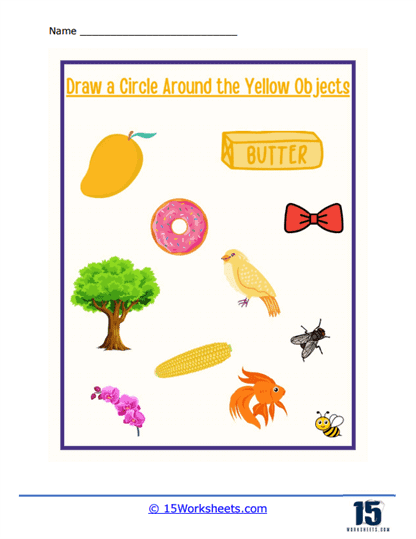
Yellow Palette
This worksheet focuses on finding and sorting items that are yellow. Students learn to identify a specific color in different objects and contexts. It builds consistency in recognition, even when shades vary slightly. It also reinforces vocabulary by linking “yellow” to real-world items.
How to Teach Students Color Sorting
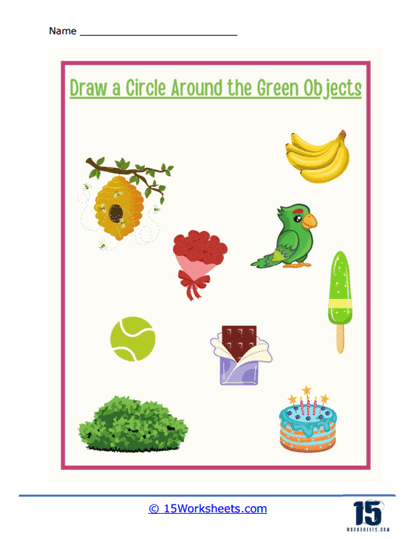
Color sorting is one of the easiest (and most fun) skills to introduce to young learners, and it sets the stage for later sorting and classifying in math and science. The trick is to make it hands-on-kids learn color best when they can touch, move, and play with objects. Start with familiar items like blocks, buttons, or toys, and have them place everything red in one bin, everything blue in another. Once they master basics, you can move into shades, hues, or even objects that are multi-colored to push their thinking further.
One great method is to “gamify” the task. Try giving kids a basket of mixed objects and set a timer to see how quickly they can sort all the greens. Or, turn it into a scavenger hunt: “Find three things in the classroom that are yellow.” Adding movement and excitement keeps the practice fresh and memorable.
Tie color sorting to everyday life so kids see why it matters. Sorting laundry by colors, organizing crayons, or even noticing traffic light colors are natural opportunities to connect the skill. When students realize they already use sorting in real life, they feel proud and capable. Teaching color sorting this way doesn’t just build early learning skills-it gives kids a tool they’ll use every day.