
Heavy vs. Light Worksheets
About These 15 Worksheets
These Heavy vs. Light worksheets introduce one of the most fun and visual concepts in early science-comparing weight! Each activity helps young learners explore the idea of mass and balance through pictures, sorting tasks, and real-world examples. Whether it’s a balloon, a bird, or a watermelon, students learn how to tell which object is heavier or lighter in a hands-on, age-appropriate way. It’s the perfect combination of observation, reasoning, and discovery.
What makes this collection engaging is its mix of themes and visuals. Worksheets like Cake vs. Cupcake and Apple vs. Watermelon use familiar items, while others like Tool Weights and In the Boxes spark curiosity and imagination. Students mark answers, draw comparisons, or even think up their own examples-all while practicing key comparison words such as heavier, lighter, weight, and balance. The activities are simple enough for independent work but flexible for guided exploration or group discussion.
Beyond vocabulary and visual reasoning, these worksheets help children make connections to the physical world. By thinking about what makes objects heavy or light, learners begin to understand material, size, and density-concepts that prepare them for more advanced science later on. The Heavy vs. Light collection turns everyday objects into exciting opportunities for inquiry, critical thinking, and hands-on learning.
Have a Look Inside Each Worksheet
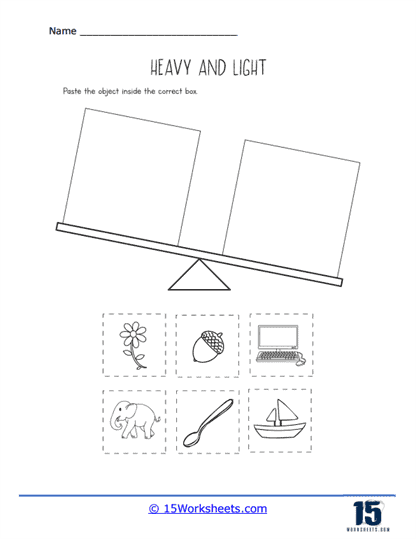
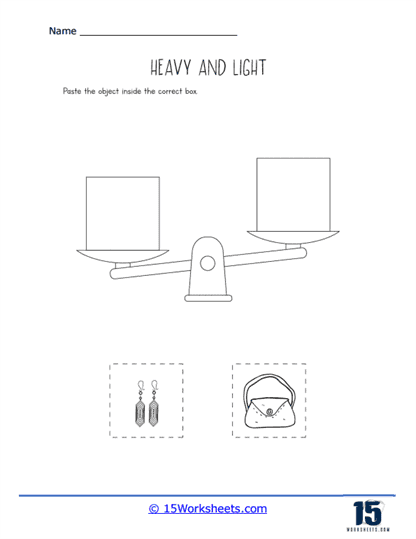
Tilted Boxes
Students observe pictures of boxes on a balance scale and decide which one is heavier or lighter. The worksheet helps them visualize weight comparison in a simple, hands-on way. It builds observation, reasoning, and early measurement vocabulary. A great first step into understanding balance and weight!
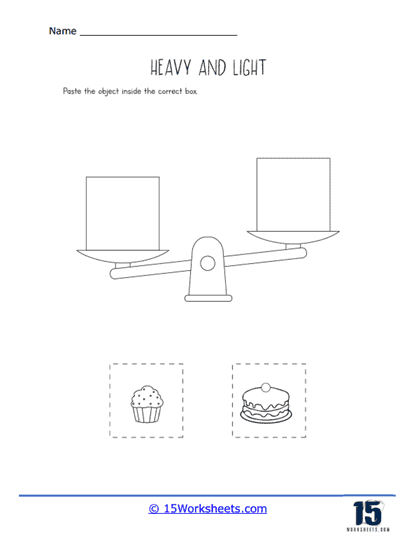
Cake vs. Cupcake
Learners compare the sizes and weights of a cake and a cupcake to determine which is heavier or lighter. The fun, food-themed images make the concept easy and engaging. It introduces comparative language in a familiar, visual context. A “sweet” way to explore early science and math skills!
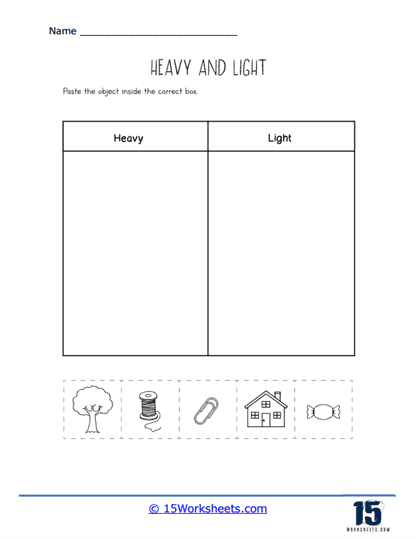
Sort By Weight
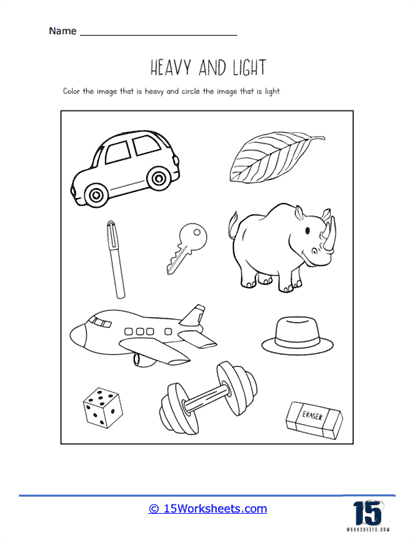
Students sort pictures of everyday objects into “heavy” and “light” categories. The activity encourages reasoning and classification skills. It’s simple, visual, and tactile when used with cut-and-paste or sorting cards. A perfect foundational worksheet for measurement and comparison lessons!
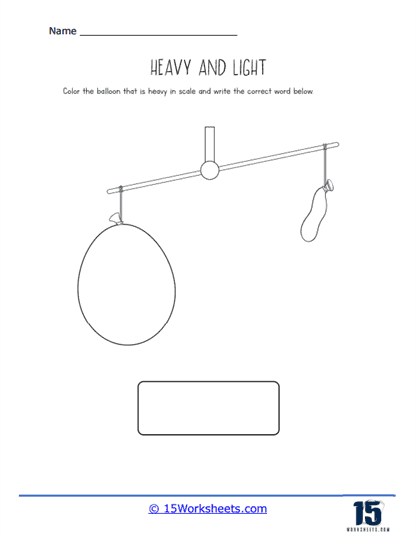
Deflated Balloon
Learners study two balloons-one full and one deflated-and decide which weighs more. The worksheet helps students connect real-world experiences to science concepts. It builds awareness that weight can change even when objects look similar. A fun and relatable experiment in print!
Colors and Circles
This activity combines sorting and comparison skills by asking students to identify colored circles that represent heavier or lighter items. It strengthens visual discrimination and critical thinking. The colorful layout keeps learners engaged while reinforcing the concept of weight differences. A bright and clever twist on comparison learning!
The Check Off
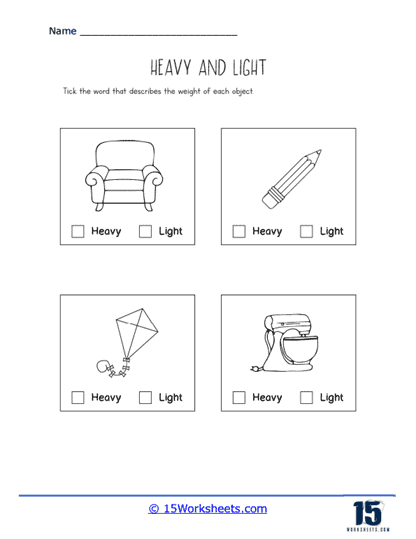
Students check off which of two pictured objects is heavier in each pair. The repetitive structure helps reinforce comparison logic through practice. It’s easy for independent learners to follow and boosts confidence in identifying “heavier” and “lighter.” A straightforward and satisfying activity for early learners!
Apple vs. Watermelon
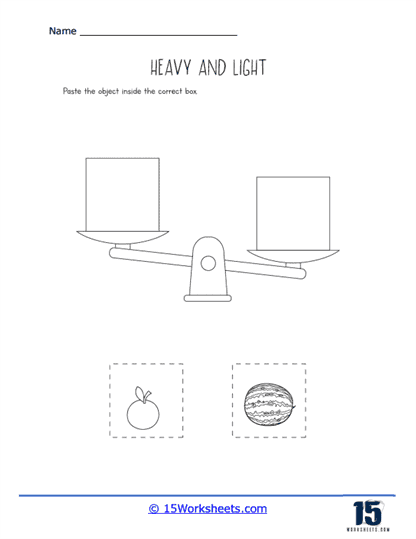
Learners compare an apple and a watermelon, deciding which one is heavier. The worksheet uses familiar fruits to make weight comparison intuitive. It also encourages students to think about size and mass together. A fresh and juicy way to introduce measurable differences!
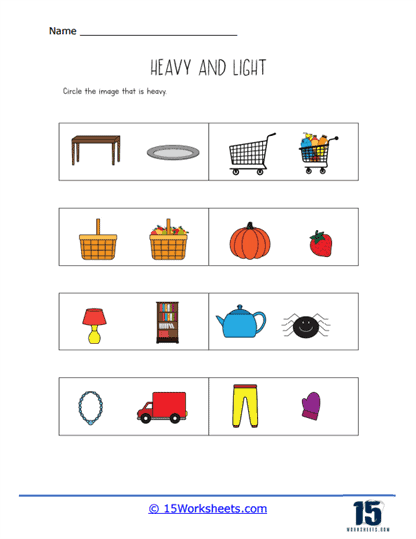
Heavier
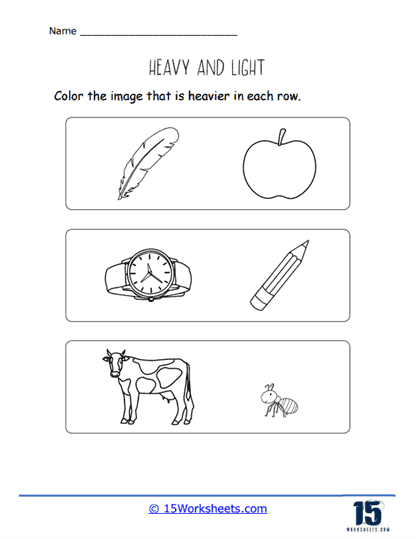
This worksheet focuses on identifying which object in each pair is heavier. Students circle, color, or mark their answers as they learn the meaning of “heavier.” It builds clear vocabulary understanding and observation skills. A quick and simple practice sheet that packs a lot of learning!
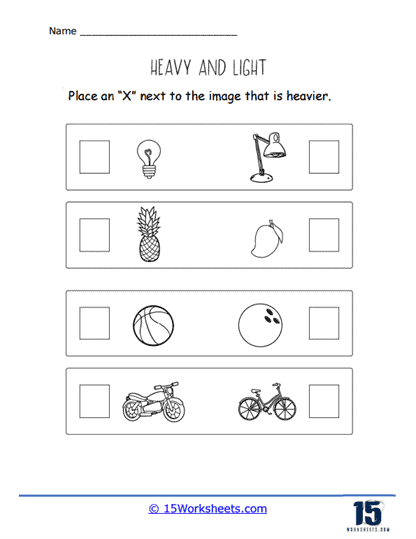
X The Big One
Students “X” the picture of the heavier object in each pair. The easy instructions and playful visuals make it perfect for independent practice. It reinforces decision-making and comparison through repetition. A fun, confidence-boosting activity that keeps little learners engaged!
Women’s Accessories
Learners compare items like handbags, jewelry, and shoes to determine which are heavier or lighter. The worksheet connects learning to real-world, relatable objects. It promotes thinking about material, size, and weight in everyday life. A stylish and smart way to teach observation and reasoning!
In the Boxes
Students imagine what could be inside each box and predict which would weigh more based on clues or pictures. The activity encourages critical thinking and inference skills. It’s a creative way to discuss unseen weight differences. Perfect for developing imagination alongside logic!
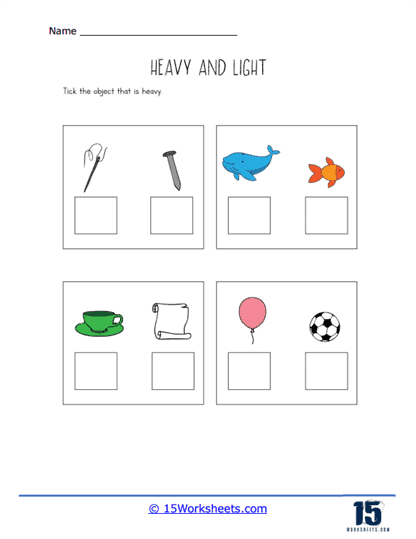
Tick It
Learners look at pairs of objects and tick the one that weighs more. The worksheet builds fluency with weight vocabulary and decision-making. It’s simple enough for independent learning but structured for focused repetition. A clear, visual task that reinforces comparison with every check mark!
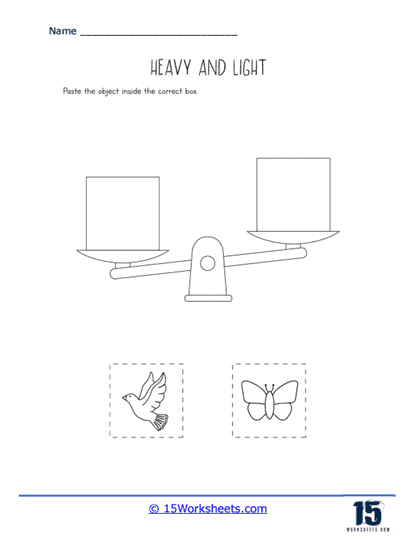
Butterfly vs. Birds
Students compare a butterfly and various birds, deciding which is heavier. The worksheet introduces comparisons between animals in a playful, visual way. It helps develop reasoning about size, mass, and nature. A lovely blend of science, observation, and literacy!
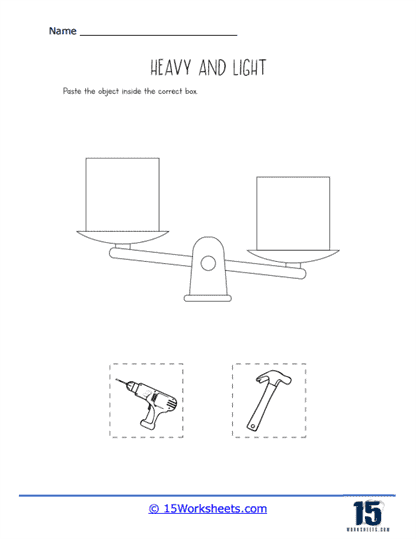
Tool Weights
Learners identify which tools-like hammers, wrenches, or nails-are heavier or lighter. The worksheet connects classroom learning to real-world applications. It builds vocabulary and critical thinking through practical examples. A great STEM tie-in for young learners exploring physical science!
Think and Draw
Students think of their own examples of heavy and light objects, then draw them in labeled spaces. The worksheet encourages creative thinking and real-life connections. It helps teachers assess comprehension while letting kids express themselves artistically. A thoughtful and imaginative way to wrap up the unit!
Teaching Kids the Math Concept of Heavy vs. Light
Real Objects – Use real objects of different weights, such as toys, fruits, or books, and ask children to identify which ones are heavy or light. Encourage them to use words like “heavy,” “heavier,” “light,” and “lighter.”
Balance Scales – Use balance scales to compare the weight of different objects. This helps children understand the concept of weight and balance.
Sorting Activities – Provide children with a variety of objects and ask them to sort them into groups based on their weight. This activity helps them understand the concept of classification.
Estimation – Ask children to estimate the weight of different objects before measuring them. This helps them develop their estimation skills and understand the concept of weight.
Songs and Rhymes – Use catchy songs and rhymes that emphasize the concept of heavy and light. This makes learning fun and engaging for children.