
1 More or Less Worksheets
About These 15 Worksheets
Learning “one more” and “one less” is one of the first big steps in number sense. These worksheets make the idea concrete by using visuals like apples, cupcakes, dice, and even spiders on a web. Kids see numbers as part of everyday life, which helps them connect abstract math to the real world. Each worksheet is designed to be playful, colorful, and engaging, so practice never feels like a chore.
What’s great about this collection is the variety of approaches. Some pages keep it simple with straightforward number drills, while others use fun themes like birthdays, animals, and candy to keep kids curious. By mixing in both “more” and “less,” learners practice moving up and down the number line with ease. This balance helps kids build fluency and confidence in counting, addition, and subtraction.
Beyond early math, these worksheets encourage logical thinking and sequencing skills. Understanding how numbers change by one prepares students for bigger concepts like comparing numbers, working with tens, and basic arithmetic. With consistent practice, kids won’t just learn to solve problems-they’ll develop a natural feel for how numbers work together.
Have a Look Inside Each Worksheet
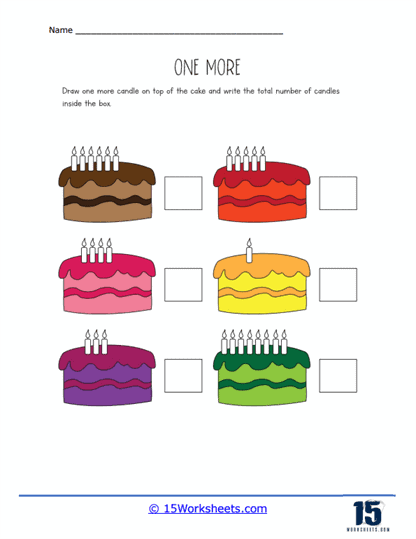
Birthday Cake Candles
Students count the candles on a cake and figure out what one more or one less would look like. The festive theme makes math feel like a celebration. Kids practice adding and subtracting one in a very visual way. It’s a sweet way to build number sense.
Square Around It
This worksheet asks learners to find one more or one less and then place the answer inside a square. The simple shapes keep the focus on the numbers. It turns basic math into a neat, organized puzzle. Kids gain both accuracy and confidence.
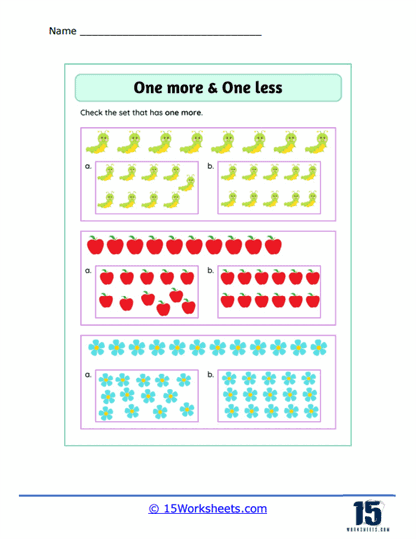
Living Things
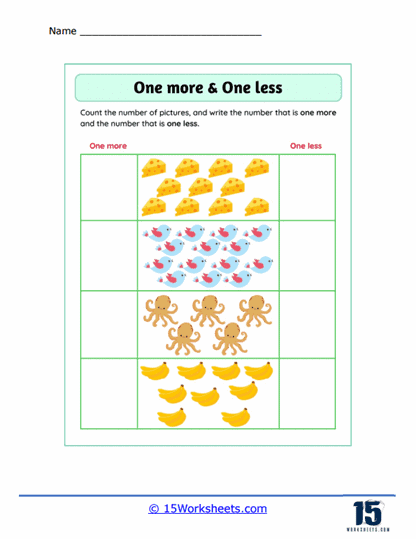
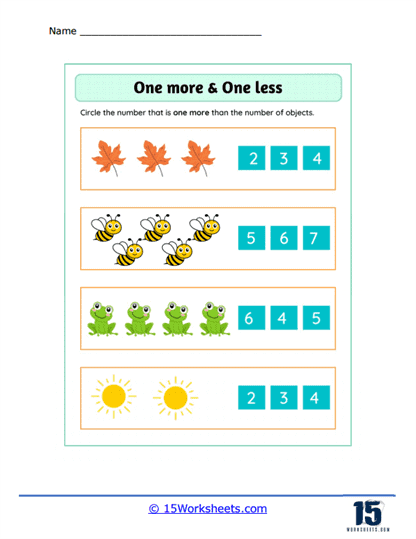
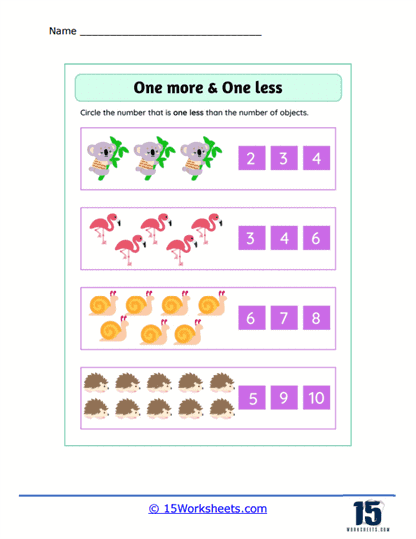
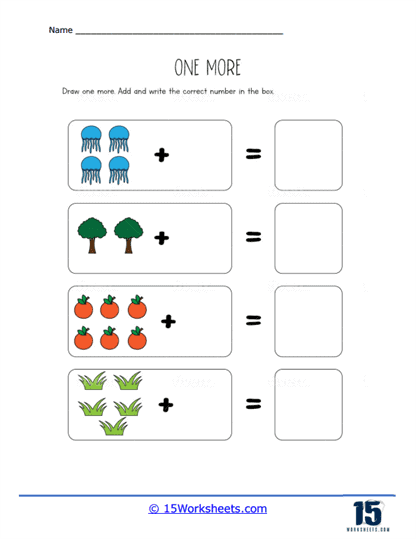
Students count items like animals or plants and then figure out one more or less. The real-life theme makes numbers meaningful and connected to the world around them. It feels like a nature walk with math built in. This worksheet blends counting skills with observation.
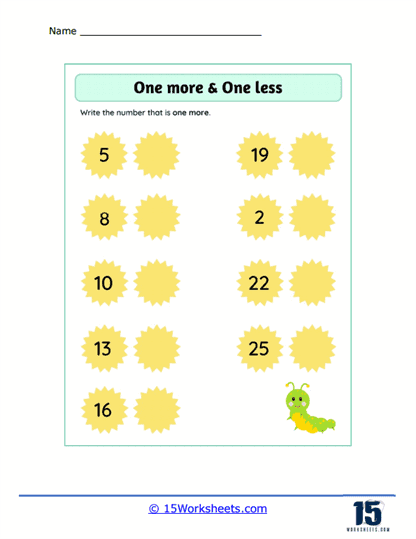
One More Award
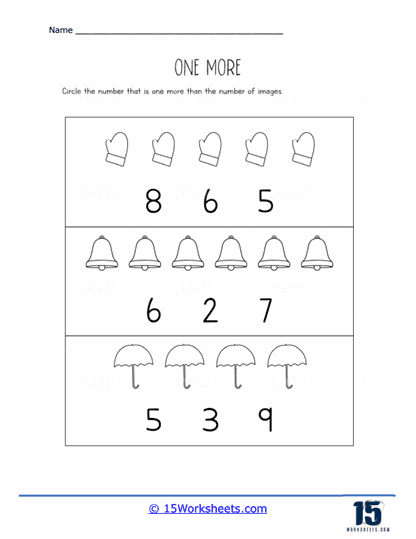
Here kids solve problems where they always find “one more.” The worksheet builds strong forward-counting skills. It feels like earning a little award with each correct answer. Students enjoy the positivity while reinforcing math basics.
One Less Award
This worksheet focuses only on “one less” situations. It gives learners repeated practice in counting backwards by one. The design makes subtracting one less intimidating. Kids strengthen subtraction thinking in a simple, approachable way.
Ahead and Behind
Students figure out what number comes ahead and which comes behind a given one. It’s a practical way to see numbers in sequence. The activity feels like moving along a number line. This worksheet sharpens understanding of number order.
In the Middle
Here kids identify the number that sits right in between two others. It reinforces both “one more” and “one less” at the same time. The puzzle format makes learners think critically about placement. It’s excellent for boosting sequencing skills.
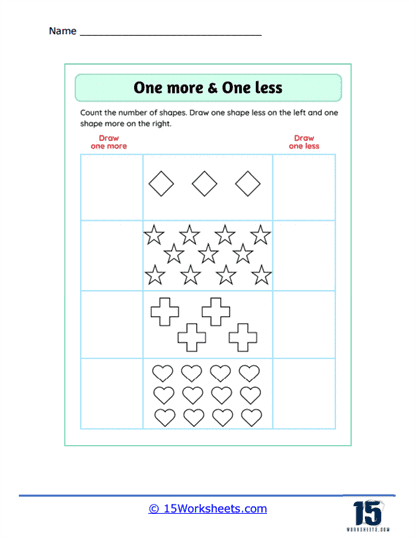
More and Less Shapes
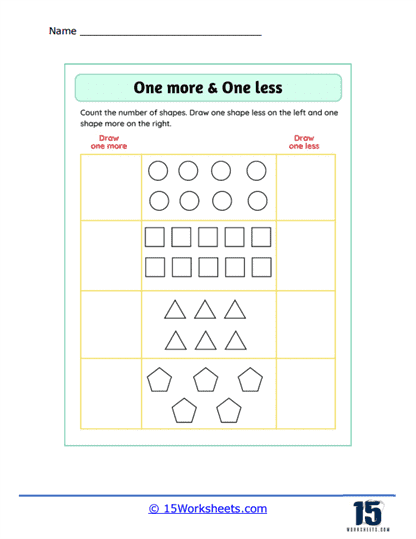
Students count shapes and then decide which has one more or one less. The visuals turn abstract math into something concrete and colorful. It feels like sorting toys or blocks. This worksheet connects numbers to everyday objects.
Unique Shapes
Learners count special shapes and figure out one more or one less. The twist is that each shape looks a little different. This keeps kids alert and engaged while practicing. It’s a fun way to balance recognition with math.
Next Integer
This worksheet introduces the idea of finding the next number in a sequence. Kids focus on moving forward by one step at a time. The clear layout helps them spot patterns easily. It builds confidence in sequential thinking.
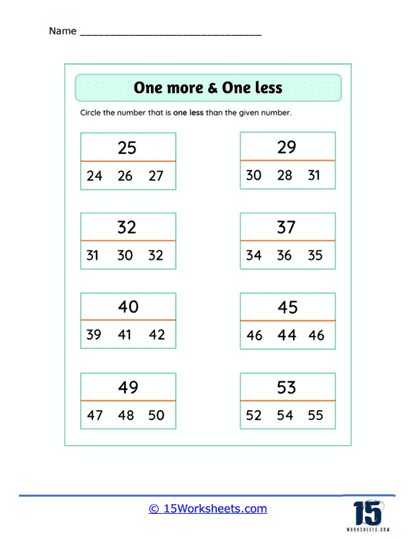
Last Integer
Students practice identifying the number that comes just before another. It’s focused “one less” practice in a structured way. The repetition makes subtraction by one second nature. Kids grow stronger in both counting and sequencing.
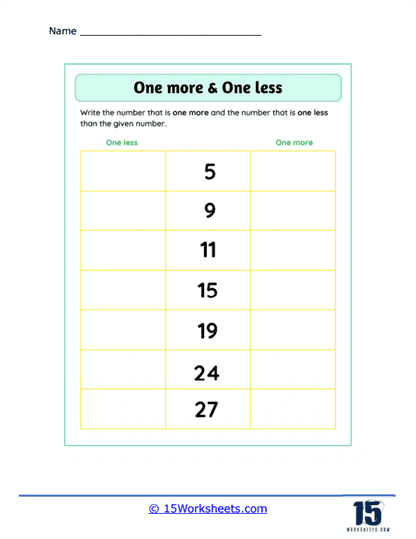
Both Integers
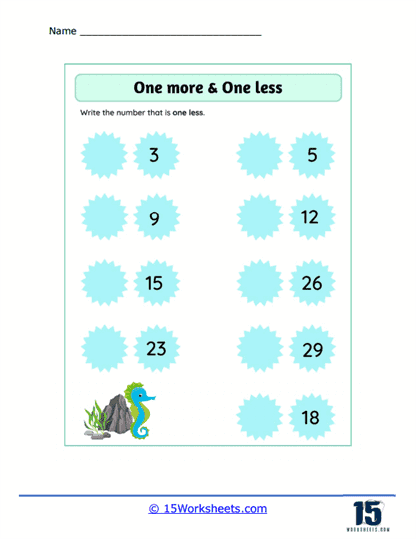
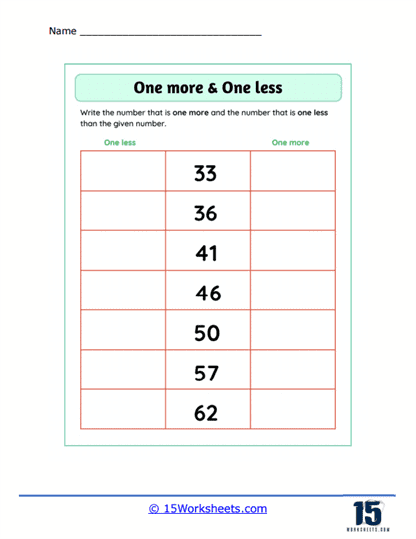
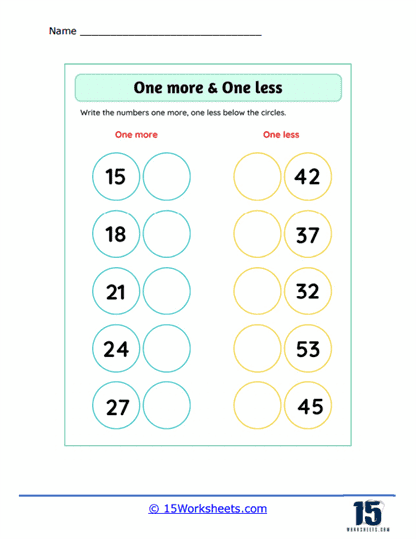
This worksheet asks learners to find both one more and one less for each number. It’s a balanced way to practice forward and backward counting. The design reinforces number relationships. Students leave with a stronger grasp of number neighbors.
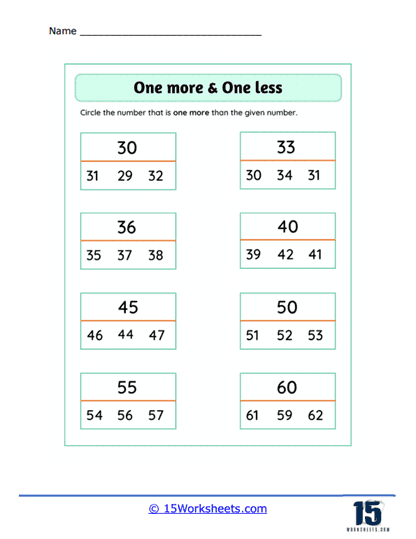
Double Digits
Here kids practice one more or less with two-digit numbers. The activity pushes them beyond simple single digits. It makes bigger numbers less scary by breaking them into small steps. Learners grow more comfortable working with tens and ones.
More/Less
Students identify whether a group has more or less by just one. It’s a mix of comparison and counting. The activity sharpens observation while reinforcing math basics. This worksheet keeps things simple but effective.
What’s Next
Kids look at a sequence and decide what number comes next. It’s essentially forward-counting with “one more.” The practice feels like finishing a pattern. This worksheet helps with fluency and prediction skills.
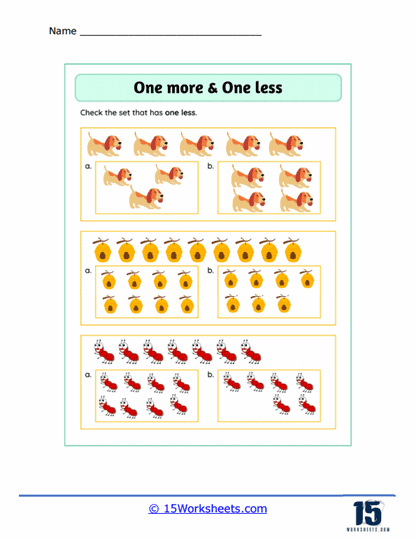
Next Animal
Learners count animals and figure out what one more or one less would look like. The fun animal theme makes math lively and engaging. It connects numbers to familiar objects kids love. This worksheet keeps practice playful.
Coverings
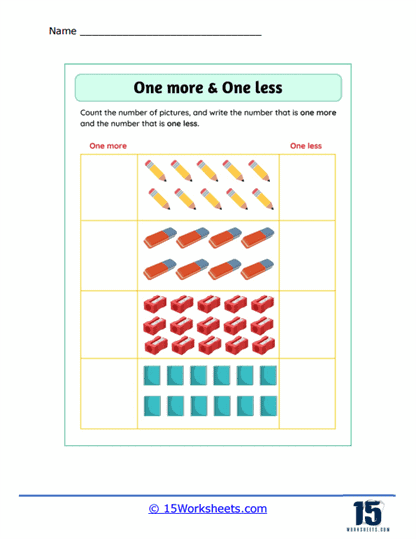
Students count coverings (like dots or patterns) and then find one more or less. The visual cues keep them focused on detail. It feels like filling in or removing pieces of a puzzle. The worksheet supports careful counting.
Just Another
This worksheet gives simple, straightforward problems about one more and one less. The clean design avoids distractions. It’s great for reinforcing basics without extra frills. Learners get steady, reliable practice.
Flower Petals
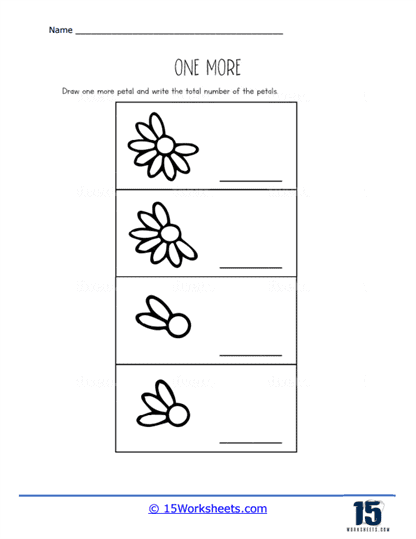
Kids count flower petals and figure out what happens with one more or less. The nature theme makes the math feel cheerful. The visuals make abstract numbers concrete. This worksheet blends counting with creativity.
Apples on a Tree
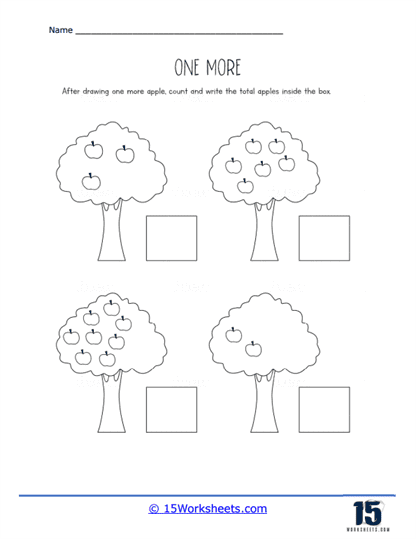
Students count apples on a tree and then add or subtract one. It’s a familiar and cozy way to practice. The theme makes numbers feel like part of daily life. Kids strengthen number sense while “picking apples.”
Pair of Dice
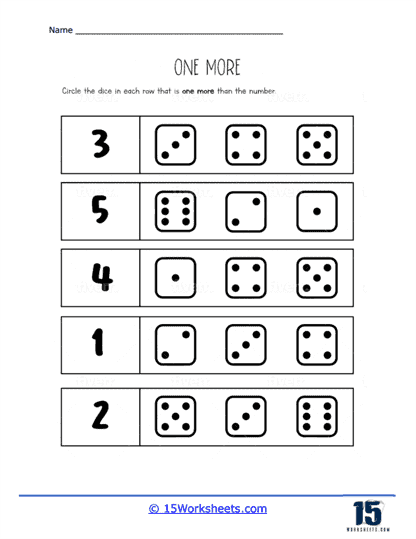
Here kids roll with dice and figure out what’s one more or one less. The game-like feel adds excitement to the math. It’s playful but still solid practice. Learners see numbers in a hands-on way.
Dots in the Field
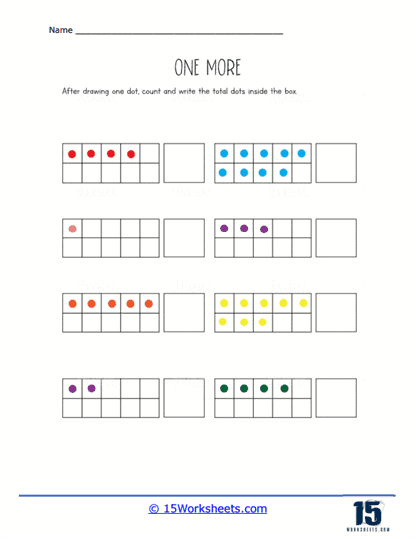
Students count dots spread out in a field and then find one more or less. The scattered layout makes them pay close attention. It’s like a counting scavenger hunt. This worksheet boosts accuracy and focus.
Gumballs
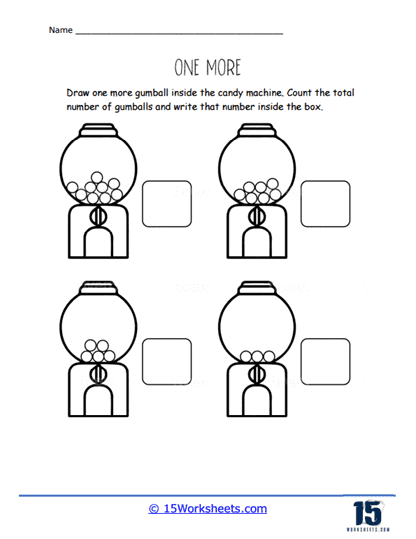
Learners count colorful gumballs and work out one more or less. The candy theme makes practice irresistible. It feels like a math treat rather than a chore. Kids happily reinforce number basics.
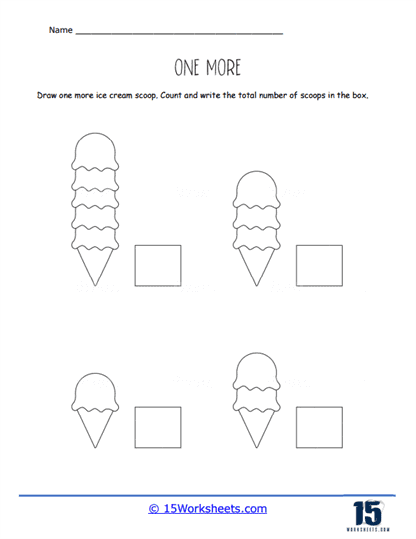
Ice Cream Cones
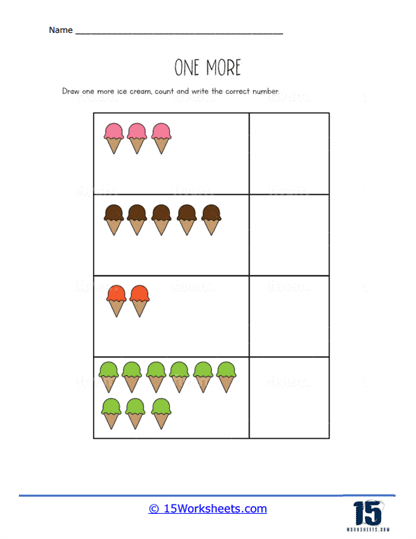
Here kids count scoops of ice cream and find one more or less. The playful theme makes math sweet and inviting. The activity combines visuals with number skills. Learners stay engaged while practicing sequencing.
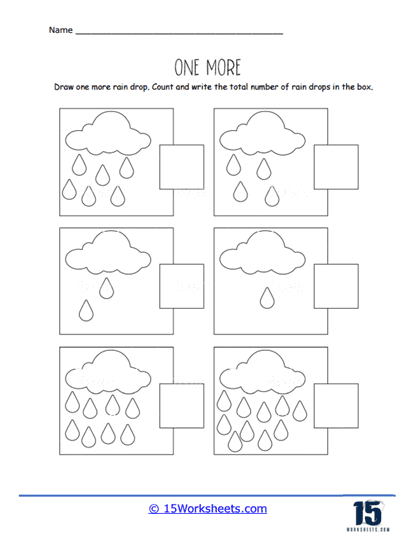
Raindrops
Students count raindrops and determine one more or one less. The weather theme feels calming and relatable. It connects numbers to everyday experiences. This worksheet makes abstract math skills concrete.
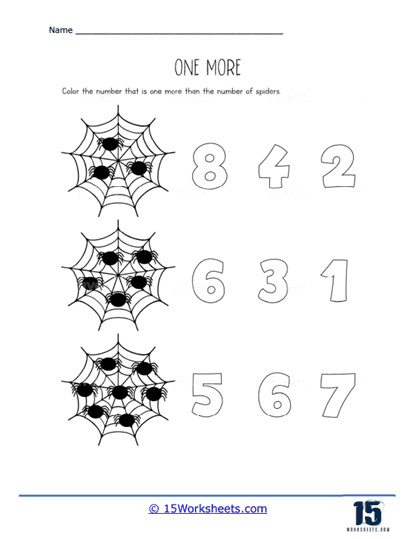
Spiders on a Web
Kids count spiders on a web and figure out one more or less. The slightly spooky theme adds variety and fun. It’s perfect for keeping learners engaged during practice. The worksheet builds confidence in sequencing numbers.
Scoops
Students count scoops (like ice cream or piles) and then calculate one more or less. The clear visuals support hands-on thinking. It feels like a playful stacking game. This worksheet combines math with fun imagery.
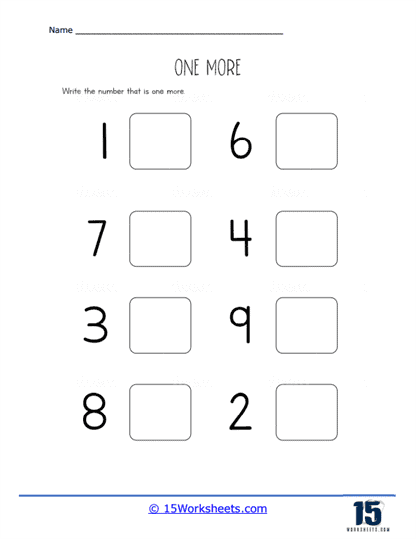
Next Number
This worksheet focuses on finding the immediate next number in a sequence. It’s straightforward one-more practice. The repetition cements the concept. Kids gain fluency in forward counting.
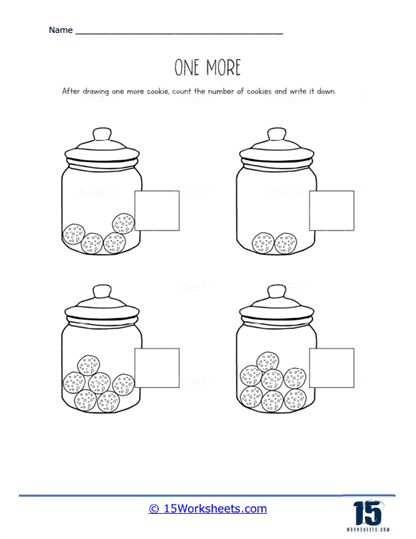
Cookie Jar
Learners count cookies in a jar and then figure out one more or one less. The tasty theme makes practice enjoyable. It turns counting into a real-life situation. Students practice math in a fun, relatable way.
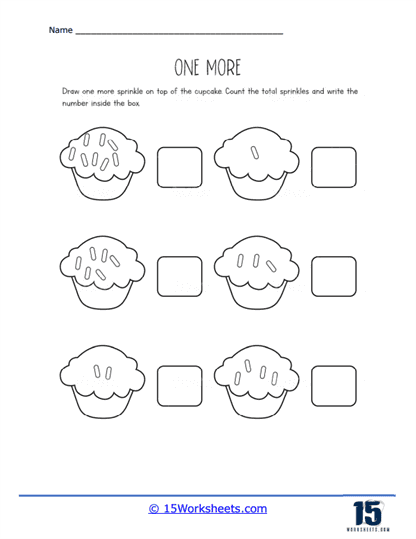
Sprinkles on Cupcakes
Students count sprinkles and determine one more or less. The worksheet blends visuals with simple math. It feels festive and cheerful. Kids reinforce sequencing skills while having fun.