
Dinosaurs Worksheets
About These Dinosaurs Worksheets
Dinosaurs have a way of capturing a child’s imagination like almost nothing else. From towering T. rexes to flying pterodactyls, these prehistoric creatures spark curiosity, questions, and plenty of excitement. Our dinosaur worksheet collection takes that natural interest and turns it into meaningful learning opportunities that help students build skills while exploring the fascinating world of dinosaurs. Whether your child is already a dinosaur expert or just beginning to learn about them, there is something here to keep them engaged.
This collection goes far beyond simply naming dinosaurs. Students will practice reading comprehension, spelling, vocabulary, writing, research, critical thinking, math, and science skills through a variety of dinosaur-themed activities. Some worksheets encourage hands-on learning with coloring, cutting, sorting, and labeling, while others invite students to investigate facts, solve problems, and express their ideas through writing. The variety helps keep learning fresh and enjoyable while reinforcing important academic concepts.
Dinosaurs also provide a wonderful introduction to the work of scientists, researchers, and paleontologists who study Earth’s history. As students learn about extinction theories, dinosaur species, habitats, diets, and evolution, they gain a better understanding of how scientists gather evidence and make discoveries. Along the way, children build research skills, strengthen their curiosity, and learn that asking questions is often the first step toward finding exciting answers.
About Each Worksheet
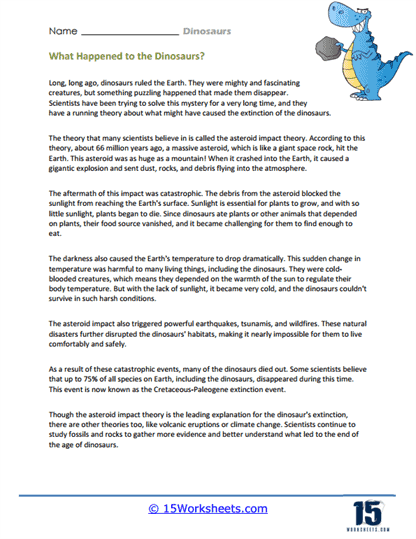
What Happened to the Dinosaurs?
Kids are naturally curious about dinosaurs, and this worksheet dives into one of the biggest questions of all-what happened to them? As they read and answer questions, they’ll learn about asteroid theories and other ideas scientists still explore today. It’s a great way to build reading skills while feeding that dinosaur fascination.
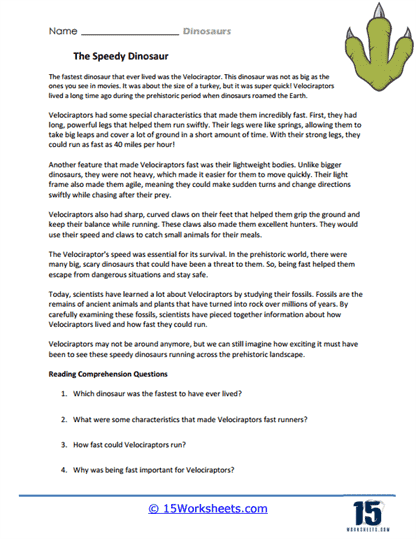
The Speedy Dinosaur
Most kids are surprised to learn that Velociraptors weren’t giant movie monsters. This reading activity introduces them to a fast little dinosaur while giving them practice with comprehension and learning key facts from a nonfiction text. It’s a fun pick for dinosaur fans who love action and adventure.
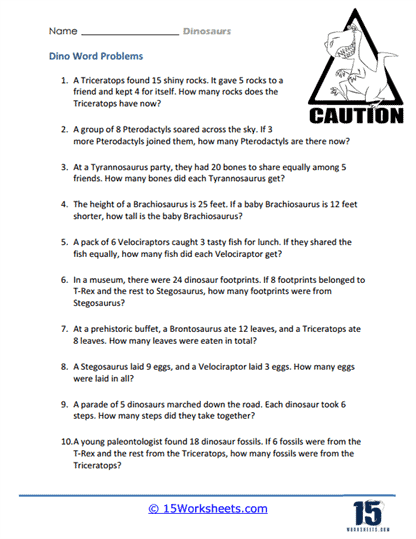
Dino Word Problems
Math feels a lot more exciting when dinosaurs are involved. These word problems give students practice with basic operations while imagining footprints, fossils, and prehistoric creatures. It’s great for building problem-solving skills without feeling like another page of math drills.
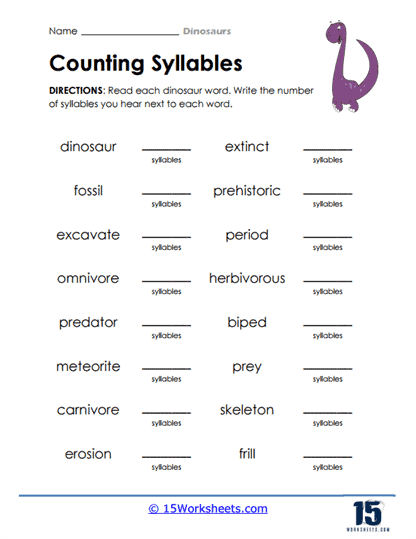
Counting Syllables
This worksheet sneaks in phonics practice using dinosaur-themed vocabulary. Some words are short and simple, while others give students a chance to stretch their listening skills as they count syllables. It’s a fun mix of language learning and prehistoric fun.
Naming Dinosaurs
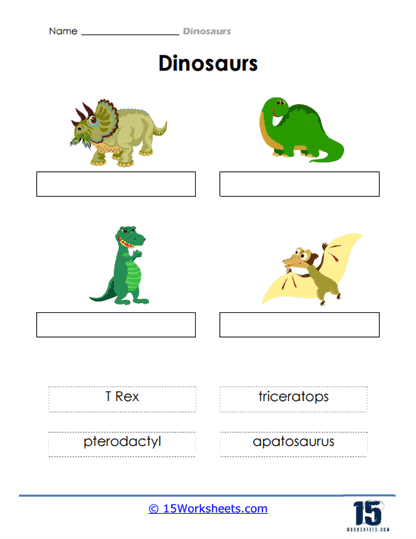
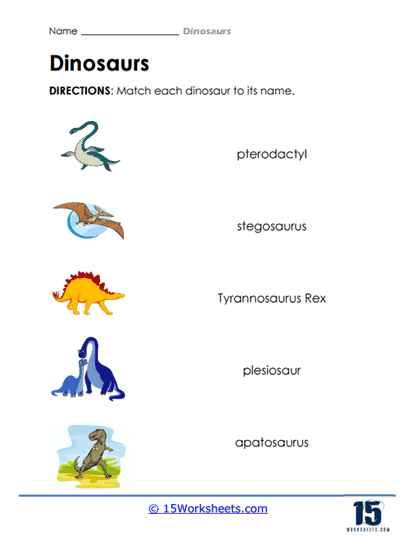
If your child loves spotting dinosaurs in books and movies, they’ll enjoy this matching activity. Students look closely at each dinosaur and connect it to the correct name, helping them become more familiar with popular species. It’s simple, engaging, and perfect for younger learners.
Label the Dinosaur
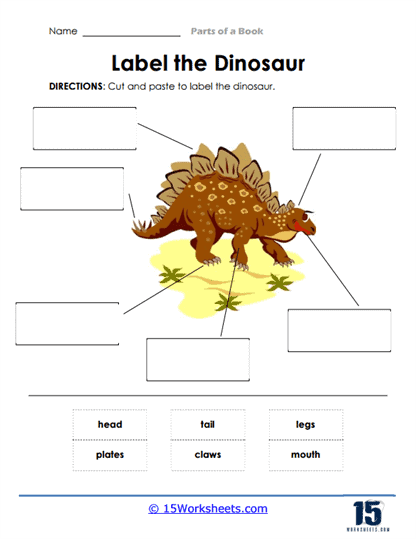
This cut-and-paste activity helps children learn the different parts of a dinosaur’s body. As they match each label to the correct spot, they’re also practicing important vocabulary and fine motor skills. It’s hands-on learning that keeps little learners busy and engaged.
Which Dinosaur?
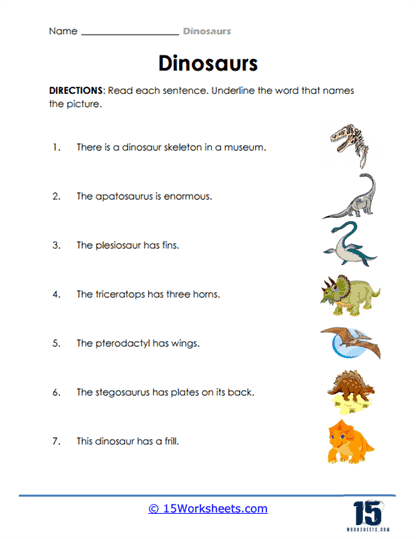
Students become dinosaur detectives as they match pictures to names. The activity encourages careful observation while helping children recognize the unique features of different species. It’s a simple way to build confidence with both science and vocabulary.
Species of Dinosaurs
This worksheet asks students to read clues and figure out which dinosaur is being described. It combines reading comprehension with dinosaur knowledge, making learning feel more like solving a puzzle. Kids often enjoy the challenge of using hints to crack the answer.
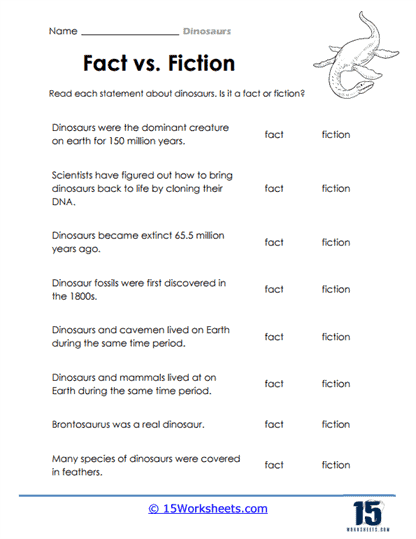
Fact vs. Fiction
Dinosaurs are surrounded by all kinds of myths, and this worksheet helps students sort out what’s true and what’s not. They’ll read statements and decide whether they’re based on facts or misconceptions. It’s a great activity for encouraging critical thinking and discussion.
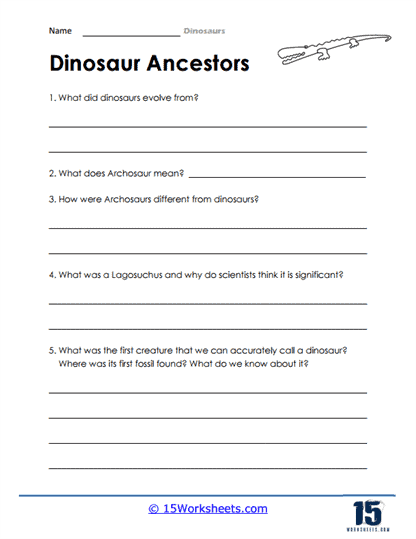
Ancestors
For kids who love asking “where did dinosaurs come from?”, this worksheet explores that question in a kid-friendly way. Students research early ancestors and important moments in dinosaur history while practicing finding and organizing information. It’s a nice introduction to scientific research skills.
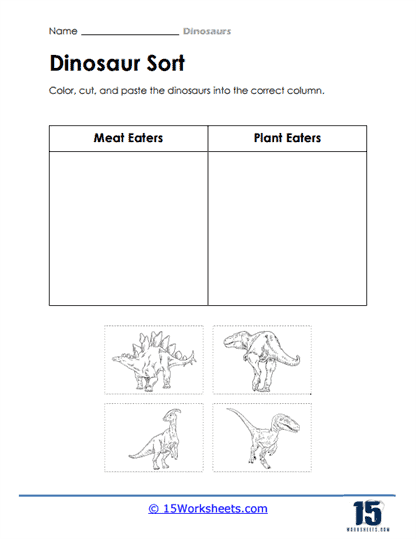
Dino Sort
This activity gets students moving as they color, cut, and sort dinosaurs by what they ate. Along the way, they’ll learn the difference between herbivores and carnivores in a hands-on way. It’s equal parts science lesson and craft project.
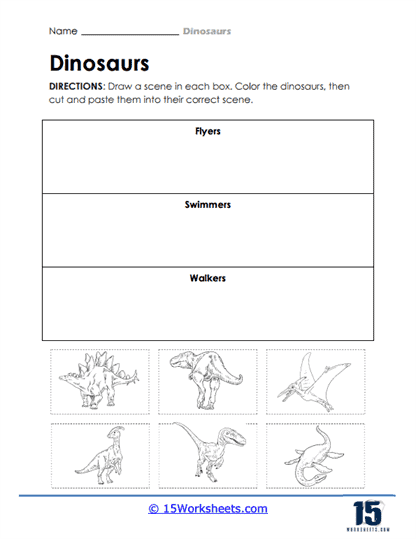
Locomotion
Not every dinosaur moved the same way, and this worksheet helps students discover those differences. They’ll create scenes and sort dinosaurs into groups based on whether they flew, swam, or walked. It’s a creative activity that mixes science, art, and critical thinking.
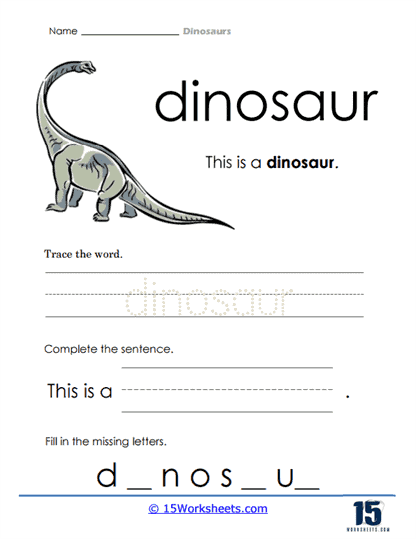
Writing and Spelling
This beginner-friendly worksheet focuses on one important word: dinosaur. Students trace it, write it, and complete simple spelling activities that reinforce letter recognition and handwriting skills. It’s a great confidence booster for early writers.
5 Things I Know
This worksheet gives children a chance to show what they already know about dinosaurs before starting a new unit. They can write facts, draw pictures, or do a little of both. Teachers and parents often learn just as much from the responses as the students do.
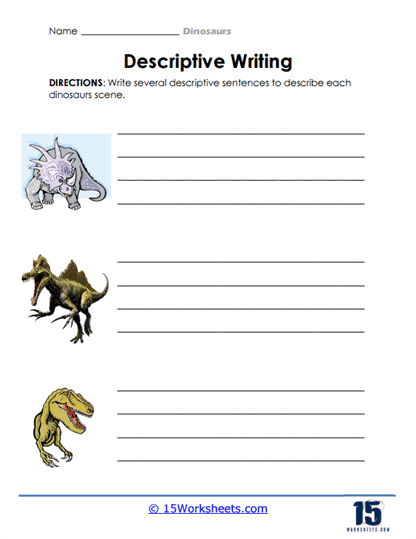
Dinosaur Descriptions
Students use their imaginations and observation skills to describe dinosaur pictures in their own words. The focus is on adding details and creating vivid sentences that help bring each dinosaur to life. It’s excellent practice for growing stronger writers.
Dino Research
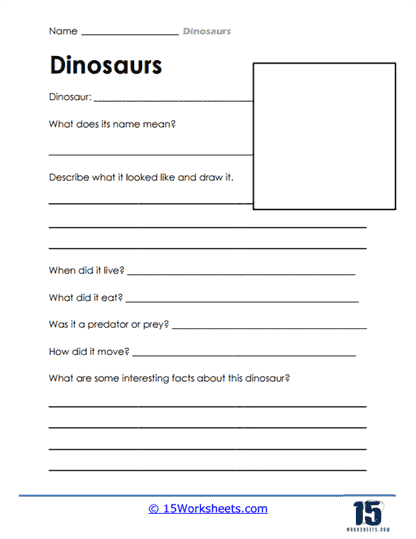
This worksheet turns students into young paleontologists. They choose a dinosaur, gather information, and organize their findings in one easy-to-follow place. The drawing section adds a creative touch that makes research feel more personal and fun.
Document It
Children take a deeper dive into a dinosaur of their choice by recording facts about its life, diet, movement, and more. The organized layout helps them practice collecting information and presenting it clearly. It’s perfect for independent research projects or science centers.
Dinosaur Facts
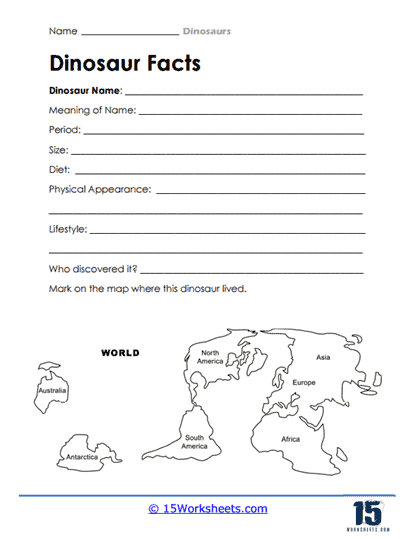
This worksheet encourages students to investigate a dinosaur from multiple angles, including where it lived and who discovered it. The map activity adds an extra layer of learning by connecting science with geography. It’s a great option for curious learners who enjoy digging into details.
What Were Dinosaurs?
Dinosaurs were a group of animals that lived on Earth millions of years ago, long before people were around. Some were as small as chickens, while others were larger than school buses. They came in all shapes and sizes, with some walking on two legs, some on four, and others even taking to the skies. Even though dinosaurs disappeared a very long time ago, they continue to capture the imagination of children and adults everywhere.
Scientists learn about dinosaurs by studying fossils, which are the preserved remains or traces of ancient living things. These fossils help researchers discover what dinosaurs looked like, what they ate, where they lived, and how they behaved. Every new fossil can provide another clue about life on Earth long ago. That sense of discovery is one reason dinosaurs remain one of the most popular science topics for young learners.
Learning about dinosaurs helps students practice much more than science. As children read dinosaur facts, write reports, solve dinosaur-themed math problems, and compare different species, they strengthen reading, writing, research, and critical-thinking skills. Dinosaurs encourage curiosity, and curiosity is one of the most powerful tools for learning. It’s hard not to get excited when a lesson includes giant prehistoric creatures.