
Battles of World War I Worksheets
All About These 15 Worksheets
World War I was one of the largest and most impactful conflicts in modern history. Fought between 1914 and 1918, the war involved countries from around the world and introduced new military technologies, strategies, and challenges that changed warfare forever. These worksheets help students explore some of the war’s most important battles and campaigns while learning about the people, decisions, and events that shaped the conflict. By studying these battles, students gain a better understanding of how individual military actions influenced the course of history.
This collection introduces students to major battles on land and sea, including Gallipoli, Verdun, the Somme, Tannenberg, Jutland, Amiens, and the Marne. Students will examine military strategies, compare opposing forces, analyze historical outcomes, and investigate the broader significance of each conflict. Through reading passages, research activities, writing assignments, graphic organizers, and critical-thinking exercises, learners strengthen both their historical knowledge and analytical skills. The variety of activities keeps students engaged while helping them understand the complexity of World War I.
One of the most important lessons students gain from these worksheets is that battles are about more than troop movements and military victories. Each conflict affected governments, soldiers, civilians, and entire nations in different ways. These activities encourage students to look beyond dates and statistics to understand the human experiences behind the war. By exploring these pivotal moments, students develop a deeper appreciation for the challenges and consequences of global conflict.
About Each Worksheet
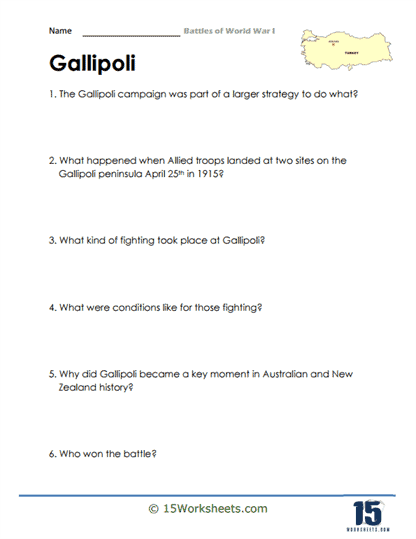
Gallipoli Campaign
Students investigate one of World War I’s most famous and challenging military campaigns. The worksheet explores the goals, hardships, and lasting significance of the Gallipoli landings, particularly for Australia and New Zealand. It encourages students to think about both military strategy and human sacrifice.
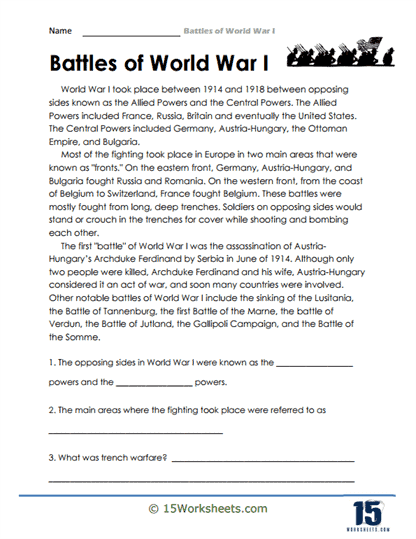
Major Battles
This reading provides a helpful overview of several major World War I battles and the nations involved in the conflict. Students learn about the Eastern and Western Fronts while reviewing important events and military developments. It’s a great starting point for understanding the broader war.
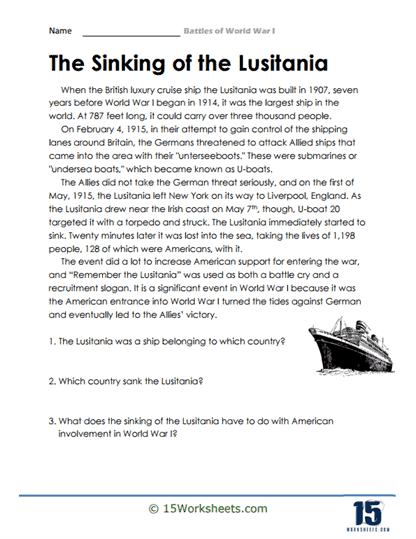
Sinking of the Lusitania
Students explore the tragic sinking of the Lusitania and its impact on public opinion around the world. The worksheet highlights how a single event at sea helped influence the United States’ eventual entry into the war. It shows how military actions can have powerful political consequences.
Pivotal Moment
This activity takes a closer look at the Lusitania disaster through a series of focused questions. Students examine the causes, participants, and consequences of the event while developing a stronger understanding of its historical significance. It encourages careful analysis of cause and effect.
Battle of Tannenberg
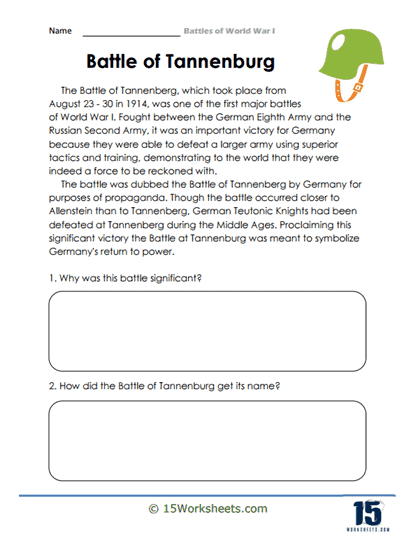
Students learn about one of Germany’s most important victories early in the war. The worksheet explores military tactics, leadership decisions, and the battle’s symbolic importance in German history. It demonstrates how strategy can sometimes overcome larger numbers.
Germany and Russia
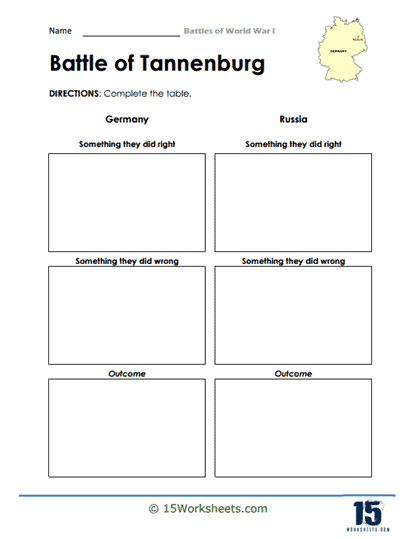
This comparison activity asks students to evaluate the actions of both Germany and Russia during the Battle of Tannenberg. Instead of simply memorizing facts, students consider what each side did well and where mistakes were made. It’s a great exercise in historical analysis.
First Battle of the Marne
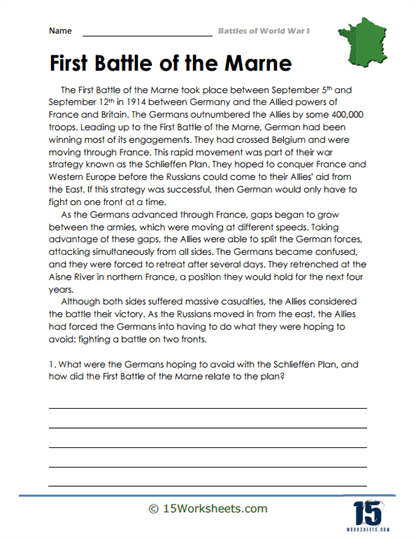
Students explore the battle that halted Germany’s early advance into France. The worksheet examines the famous Schlieffen Plan and how unexpected developments changed the course of the war. It highlights how even carefully designed strategies can face unforeseen challenges.
Battle of Jutland
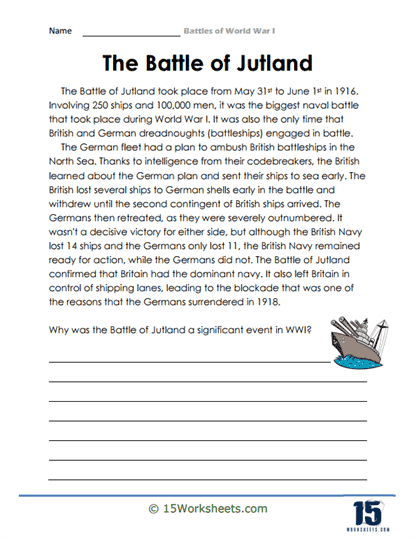
This worksheet focuses on the largest naval battle of World War I. Students learn about battleships, naval strategy, and the importance of sea power during the conflict. The lesson helps show that wars are fought on more than just land.
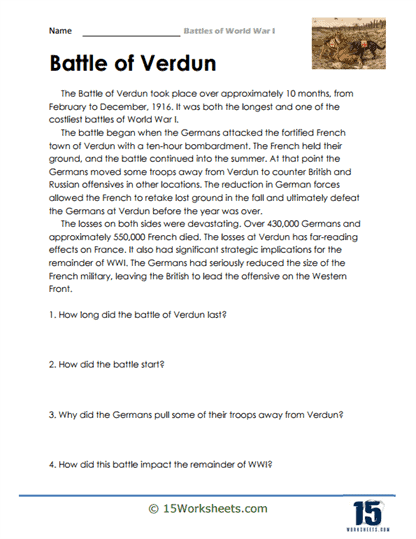
Battle of Verdun
Students examine one of the longest and deadliest battles of the entire war. The worksheet explores the intense fighting, enormous casualties, and determination shown by both sides. It offers a powerful example of the human cost of prolonged warfare.
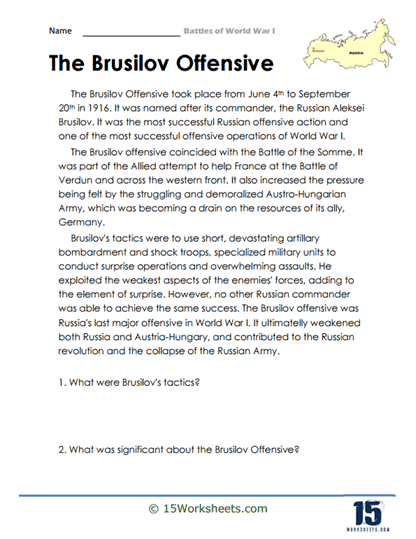
Brusilov Offensive
This activity introduces students to one of Russia’s most successful military campaigns. They learn how innovative tactics helped create major problems for the Austro-Hungarian Army. The worksheet highlights how strategic creativity can influence battlefield outcomes.
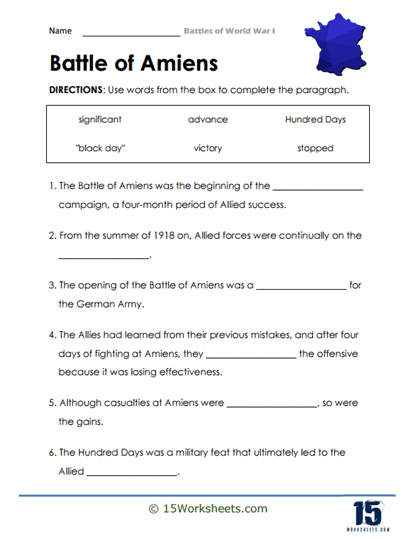
Battle of Amiens
Students complete a fill-in-the-blank activity while learning about a battle that helped shift momentum toward the Allies. The worksheet reinforces key vocabulary and important historical facts. It’s an engaging way to review a major turning point in the war.
Wartime Journalist
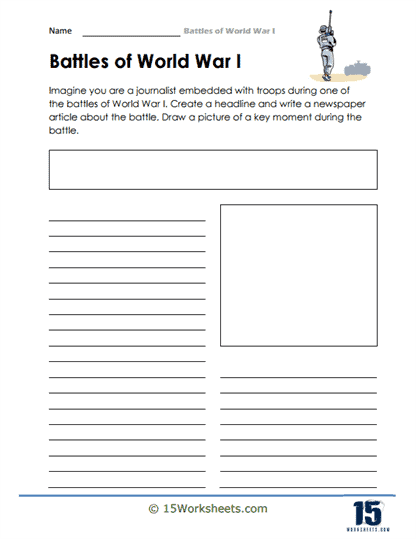
Students step into the role of a newspaper reporter covering World War I. They write articles, create headlines, and illustrate scenes from a battle of their choice. This creative activity helps history feel more immediate and personal.
WWI Battle Facts
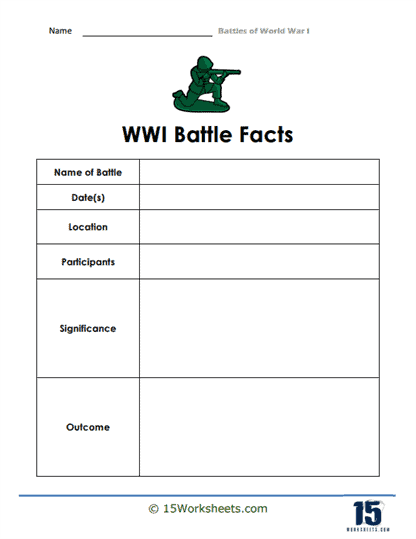
This research organizer helps students gather important information about a specific World War I battle. The structured format makes it easy to record dates, locations, participants, outcomes, and significance. It’s an excellent tool for independent research.
Battle of the Somme
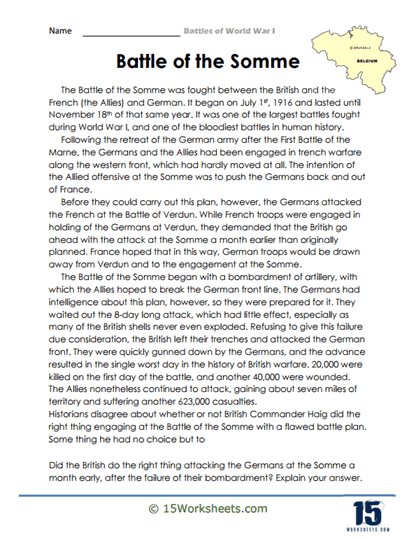
Students explore one of the bloodiest battles in military history. The worksheet examines the battle’s strategies, challenges, and devastating casualties while encouraging students to evaluate leadership decisions. It promotes both historical understanding and critical thinking.
What Were the Battles of World War I?
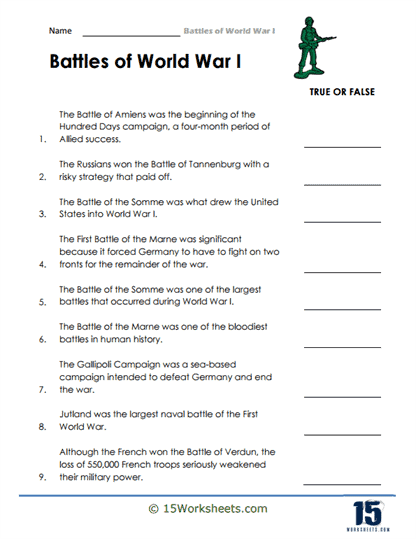
The battles of World War I were military conflicts fought between the Allied Powers and the Central Powers from 1914 to 1918. These battles took place across Europe, the Middle East, Africa, and the world’s oceans. Some involved massive armies fighting in trench systems, while others were naval battles fought with powerful warships and submarines. Together, these conflicts helped determine the outcome of the war and shaped the future of many nations.
Many World War I battles became famous because of their scale, intensity, and lasting impact. Battles such as Verdun, the Somme, Tannenberg, and Gallipoli resulted in enormous casualties and tested new military technologies, including machine guns, tanks, aircraft, and submarines. Military leaders often faced difficult decisions as they tried to break through heavily defended positions. These battles revealed both the strengths and limitations of modern warfare.
Studying the battles of World War I helps students understand how military strategy, technology, leadership, and geography can influence historical events. It also highlights the sacrifices made by soldiers and civilians during times of conflict. By examining these battles, students gain insight into one of the most important events of the twentieth century and the lessons it continues to teach about war, decision-making, and global cooperation.