
Skip Counting By 2s Worksheets
About These 15 Worksheets
Skip counting by 2s is one of the first exciting shortcuts students learn in math. Instead of counting every number one by one, children begin jumping ahead in pairs, helping them recognize patterns and count more quickly. This worksheet collection turns skip counting into a playful adventure filled with pumpkins, rockets, rabbits, frogs, fish, snakes, and even cherry baskets. The colorful themes and hands-on activities help students stay engaged while building confidence with numbers and numerical sequences.
These worksheets help students strengthen pattern recognition, number sequencing, mental math, multiplication readiness, and understanding of even numbers. Some activities involve filling in missing numbers, while others encourage tracing paths, solving mazes, coloring patterns, connecting animals, or completing number grids. The repeated practice with counting by 2s helps students naturally recognize how numbers grow in predictable intervals. Because each worksheet presents the skill in a different format, learners stay interested while reinforcing the same important concept over and over.
The collection also helps students connect skip counting to real-world math skills they will use later in multiplication, division, money counting, measurement, and problem-solving. Along the way, children improve focus, logical thinking, and confidence with larger numbers through interactive and visually engaging exercises. These worksheets create a supportive learning environment where early math skills can grow through creativity, repetition, and playful exploration.
About Each Worksheet
Pumpkin Patch
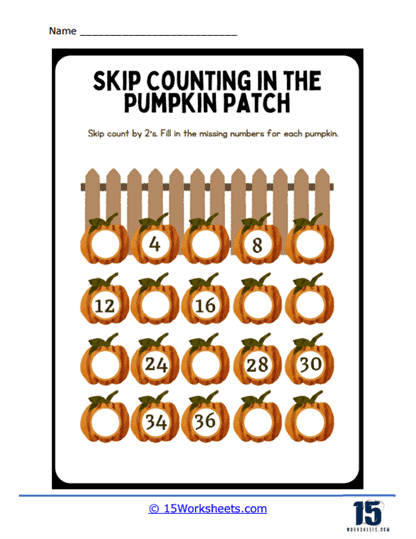
This worksheet turns skip counting into a trip through a cheerful pumpkin patch filled with missing-number puzzles. Students count by twos while filling in the blank pumpkins to complete the numerical sequence. The bright fall-themed visuals make the activity feel festive and fun instead of repetitive. Children strengthen number pattern recognition while practicing even-number sequencing in a simple and approachable format. Counting pumpkins somehow makes math feel extra cozy.
Carrot Field
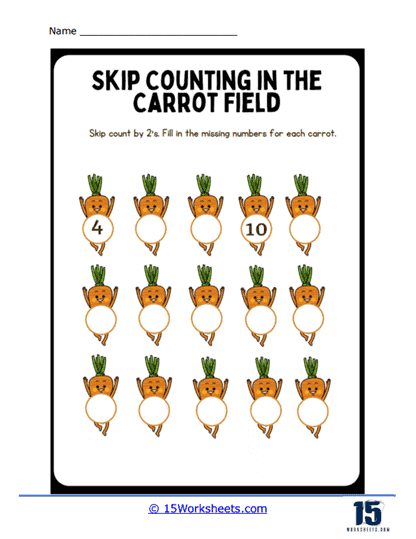
Students practice counting by twos while working through rows of numbered carrots in this playful worksheet. Some carrots already contain numbers while others are left blank for students to complete. The garden theme helps make the counting activity feel more interactive and visually engaging. Learners strengthen number sequencing skills while becoming more comfortable recognizing even-number patterns. It almost feels like harvesting math skills straight from the carrot patch.
Skipping Worm
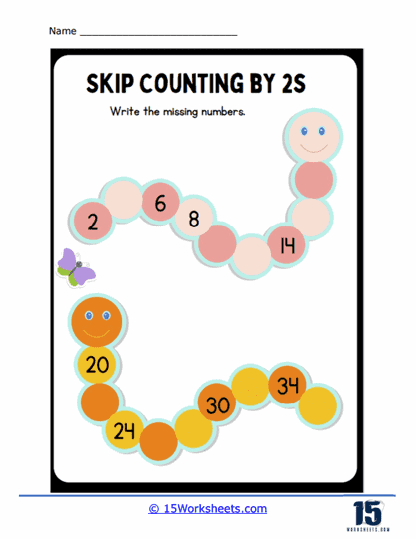
This worksheet features a colorful caterpillar-like worm whose body segments contain numbers in a counting-by-twos sequence. Students fill in the missing numbers to help complete the worm from beginning to end. The segmented design makes the numerical pattern easy to follow while also keeping the page visually exciting. Children strengthen mental addition and pattern recognition without feeling overwhelmed by long sequences. By the end, the worm practically wiggles with skip-counting energy.
Baby to Mama
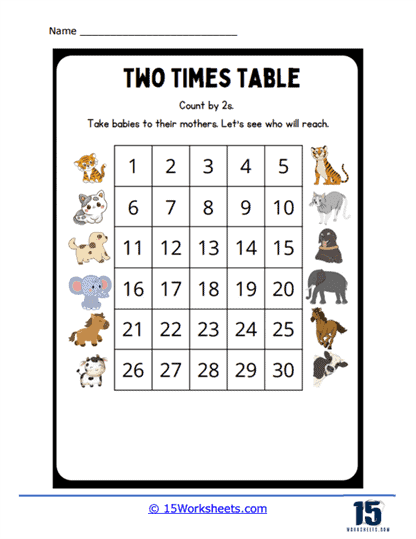
This worksheet combines skip counting with adorable baby animals trying to find their mothers. Students identify the multiples of two that create the correct path across a number grid. The playful animal theme helps transform multiplication readiness into a fun matching game. Learners practice recognizing even numbers while building confidence with the two times table. Reuniting baby animals with their moms definitely adds extra motivation to math practice.
Baby Frog Leap
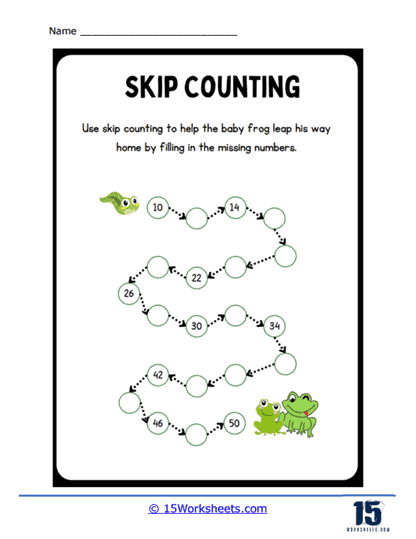
Students help a tiny frog leap across lily pads by filling in missing numbers in a skip-counting sequence. The playful pond setting keeps the activity visually lively while reinforcing numerical patterns. Learners strengthen their ability to recognize intervals and continue sequences correctly. The jumping motion of the frog also helps children visualize how skip counting moves forward in larger steps. It’s a lighthearted worksheet that makes counting feel more like an adventure than an assignment.
Find the Carrot
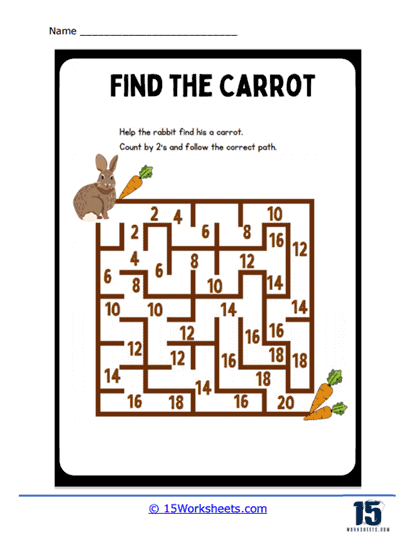
This worksheet turns skip counting into a maze challenge where students guide a rabbit toward a carrot by following the correct counting-by-twos path. Children must carefully choose the right numbers at each turn to stay on course. The maze format adds problem-solving and logical thinking to the math practice, making the activity feel interactive and exciting. It’s especially great for learners who enjoy puzzles and visual challenges. The carrot at the end feels like a tiny victory prize for all the careful counting.
Rocket Game
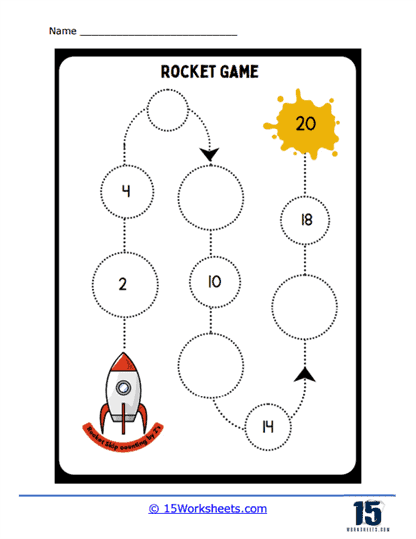
Students blast off into space-themed math practice with this skip-counting rocket adventure. A vertical sequence of numbered circles guides the rocket upward toward the sun, with missing numbers waiting to be filled in. The counting-by-twos pattern helps students practice sequencing while enjoying the imaginative space setting. The upward movement of the rocket makes the growing sequence feel dynamic and exciting. Suddenly, skip counting feels less like homework and more like a mission to outer space.
Character Patterns
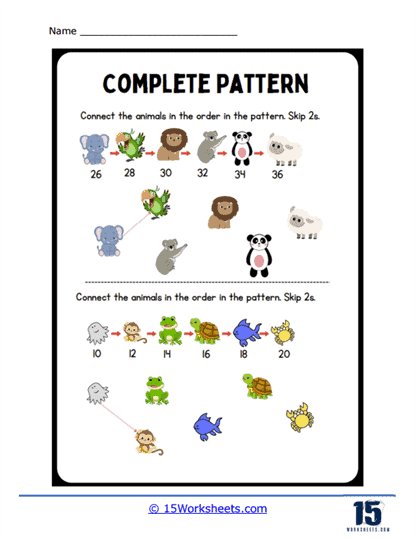
This worksheet combines skip counting with cute animal illustrations that students connect in numerical order. Learners follow counting-by-twos patterns while drawing lines between the animals to complete the sequence. The activity strengthens number recognition and sequencing while also giving children extra fine motor practice. The adorable characters make the worksheet feel more like a puzzle or game than traditional math work. Connecting the animals often becomes just as satisfying as solving the number pattern itself.
Skip 2s Grid
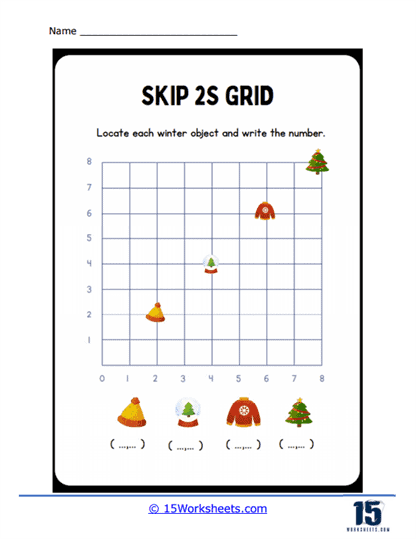
Students practice locating coordinates on a winter-themed grid while also using skip counting by twos to identify positions. The activity combines geometry and number sequencing into one engaging challenge. Learners strengthen spatial reasoning and coordinate recognition while reinforcing even-number patterns. The seasonal illustrations make the worksheet visually inviting and a little different from ordinary counting practice. It’s a clever mix of counting and map-style problem-solving all in one activity.
Snake Exercise
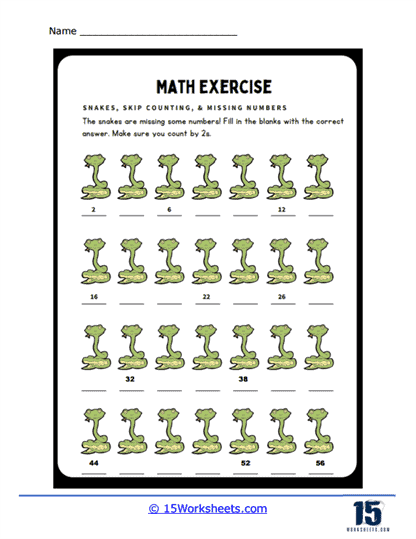
This worksheet uses rows of colorful snakes to guide students through counting-by-twos sequences. Some numbers are missing beneath the snakes, and students must fill in the blanks correctly to complete the pattern. The repeating sequences help learners build fluency and confidence with even numbers. The playful snake theme keeps the worksheet lighthearted and visually interesting from top to bottom. Somehow even snakes become less scary when they’re helping with math practice.
Fish Aquarium
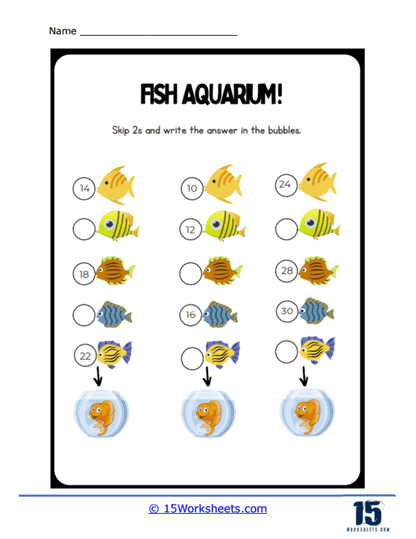
Students dive into skip counting with fish and numbered bubbles in this aquarium-themed worksheet. The bubbles display parts of a counting-by-twos sequence while leaving blanks for students to complete. The underwater visuals create a calm and playful atmosphere that makes learning feel more relaxed and engaging. Learners strengthen pattern recognition while practicing numerical fluency and sequencing skills. Counting fish bubbles almost feels like swimming through numbers.
Cherry For Sale
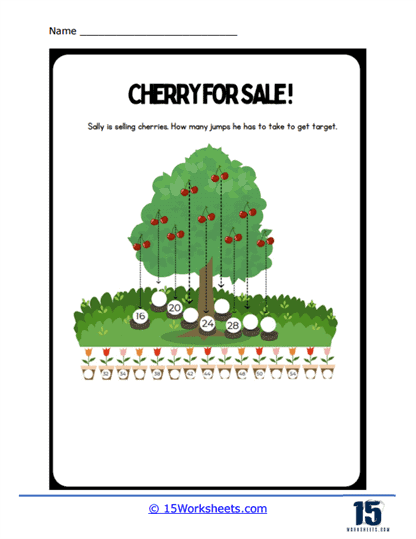
This worksheet introduces skip counting by fours through a cherry-selling theme filled with baskets and number sequences. Students examine the pattern of numbers on the baskets and continue the sequence correctly. The real-world market setting helps children see how counting patterns can connect to everyday situations. The activity strengthens pattern recognition and prepares learners for multiplication concepts. Plus, math involving cherries somehow feels surprisingly cheerful.
2s Patch
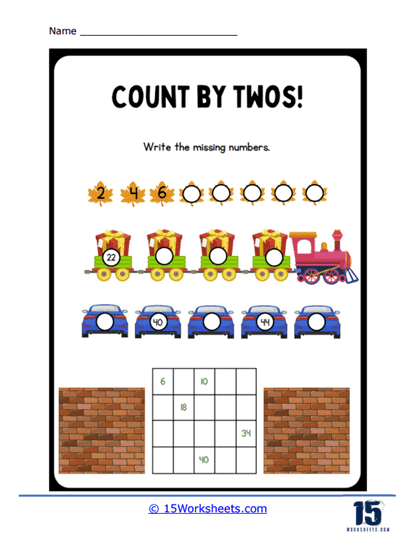
This worksheet combines suns, trains, police cars, and a numbered brick wall into one large counting-by-twos challenge. Students complete missing numbers in several different sequences while recognizing the growing pattern of even numbers. The changing visuals keep learners engaged and prevent the repetition from feeling dull. Each section gives students another opportunity to practice sequencing and number fluency. The mix of themes makes the worksheet feel like several mini adventures packed into one page.
Happy 2s
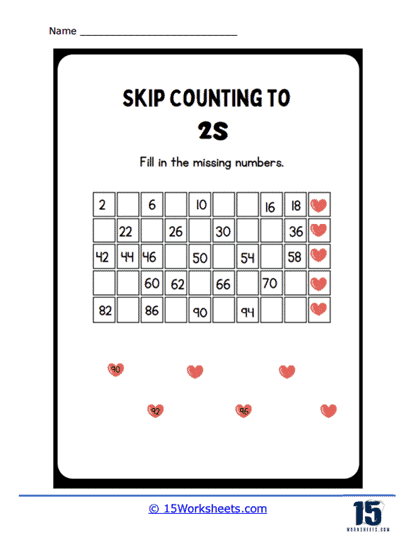
Students work through a large grid of numbers increasing by twos while filling in the missing spaces throughout the chart. The broad range of numbers gives learners lots of practice recognizing and predicting even-number patterns. The heart decorations at the bottom add a cheerful and encouraging touch to the worksheet design. This activity strengthens mental math and skip-counting fluency through repeated exposure to the sequence. By the end, students often notice the patterns almost automatically without needing to calculate carefully each time.
Raking It In
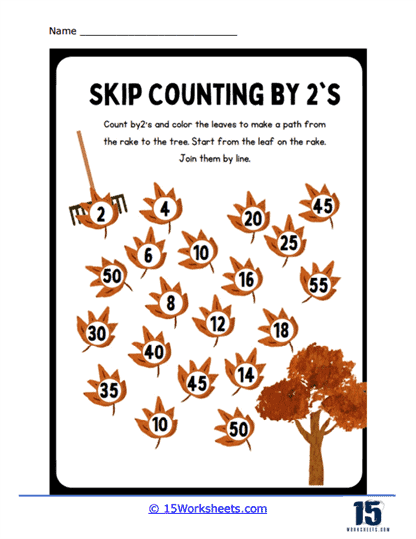
This autumn-themed worksheet asks students to color leaves in counting-by-twos order to create a path from a rake to a tree. The combination of coloring and sequencing helps reinforce numerical patterns in a creative and hands-on way. Learners strengthen counting fluency while also practicing attention to detail and fine motor control. The seasonal design gives the worksheet a warm and playful atmosphere that feels relaxing and enjoyable. It’s basically math practice wrapped up in a colorful fall art project.
Why Is This Skill Important?
Skip counting by 2s lays the foundation for understanding multiplication and division. By recognizing the pattern of counting by 2s, children begin to understand the concept of equal groups and build their understanding of the 2 times tables and related division facts. It also helps children develop numerical fluency and mental calculation skills. It allows them to quickly and accurately count and perform calculations involving numbers that are multiples of 2.
Tips for Teaching Skip Counting By 2s
Teaching students to skip count by 2s can be done using various methods. Here are some strategies you can use:
Counting Objects – Use objects such as blocks, beads, or buttons to help students visualize the concept of skip counting. Ask them to count the objects by 2s and group them in pairs.
Visual Aids – Use pictures or illustrations that show examples of skip counting by 2s, such as pictures of objects arranged in pairs or pictures of a number line counting up or down by 2s. This helps students learn to recognize skip counting patterns more easily.
Song or Chant – Teach students a skip counting song or chant to help them memorize the numbers counting up or down by 2s. Encourage them to sing or chant along as they count by 2s.
Worksheets – Use skip counting by 2s worksheets to give students more opportunities to practice and apply the concept of skip counting by 2s.
Interactive Games – Use interactive games, such as online or board games, that involve skip counting by 2s. This makes learning skip counting by 2s more fun and engaging for students.
It is important to provide students with multiple opportunities to practice skip counting by 2s until they gain mastery over the skill. With consistent practice and varied teaching strategies, students can understand and apply the concept of skip counting by 2s with ease.