
Counting to 100 By 1s Worksheets


All About These 15 Worksheets
These Counting to 100 By 1s Worksheets help young learners master one of the most essential early math milestones – counting all the way from 1 to 100 with confidence and accuracy! Each worksheet is designed to make repetition engaging, with fun themes like puppies, tractors, robots, and bees guiding students along the number path. Whether students are filling in missing numbers, tracing digits, or completing number grids, they’re building fluency, focus, and familiarity with number order in a playful, stress-free way.
The collection offers a perfect mix of visual, tactile, and written practice. Some activities invite tracing for handwriting support, while others include cut-and-paste sequencing or pattern spotting to strengthen fine motor and problem-solving skills. The variety keeps students interested and motivated while reinforcing the same foundational goal – understanding that numbers follow a consistent, predictable pattern. It’s great for centers, homework, or morning work that keeps counting skills sharp!
More than just memorizing numbers, these worksheets teach children how to see patterns, recognize number families, and understand place value beginnings. They prepare students for skip counting, addition, and subtraction later on. By the end of the collection, learners won’t just be able to count to 100 – they’ll truly understand the rhythm and flow of our number system, one step (and one number) at a time.
Have a Look Inside Each Worksheet
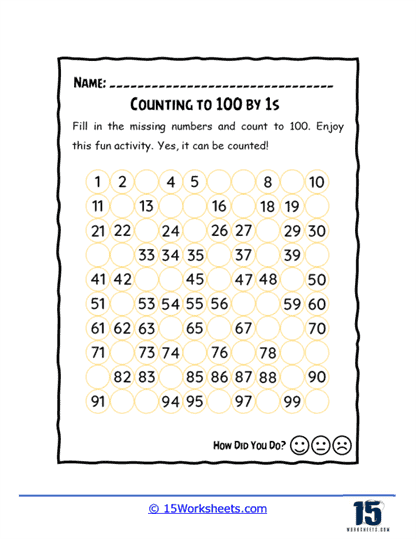
Getting to 100
Students will practice counting from 1 all the way to 100 in this classic number-sequencing worksheet. They’ll fill in missing numbers, recognize number patterns, and build fluency in counting by 1s. The activity strengthens number order awareness and foundational math confidence. It’s the perfect warm-up for mastering the big “100!”
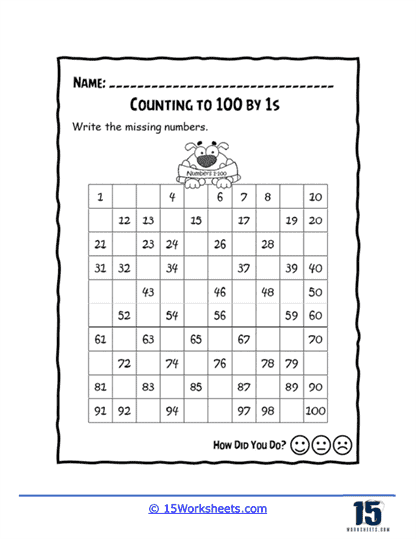
Empty Dog Bowl
In this playful worksheet, learners help a hungry puppy by filling in missing numbers to “feed” its empty bowl. They’ll count sequentially by 1s while reinforcing number recognition and fine motor skills. The engaging theme makes repetition fun and purposeful. A tail-wagging way to practice counting to 100!
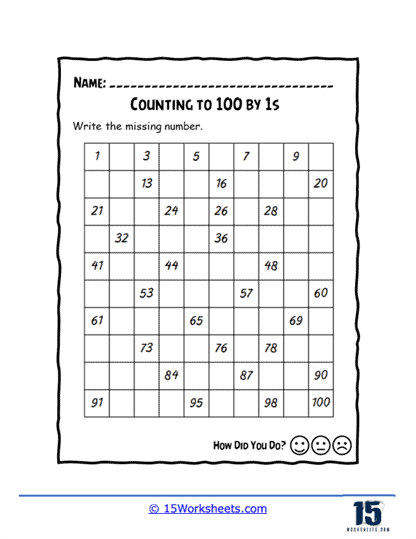
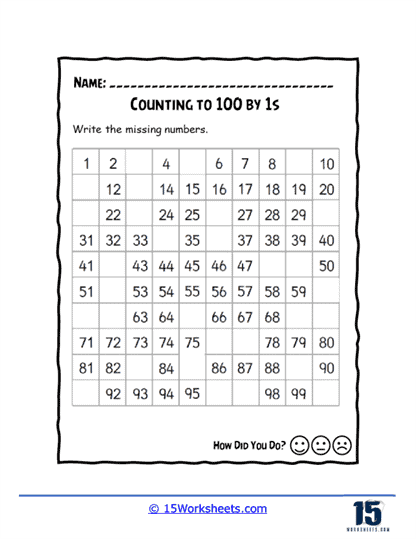
Missing in the Matrix
Students will complete a 1-100 number grid by finding and writing the missing numbers. This exercise builds pattern recognition, spatial awareness, and logical sequencing. It helps students visually understand number placement within a 10-by-10 chart. A great activity for visual learners and pattern spotters alike!
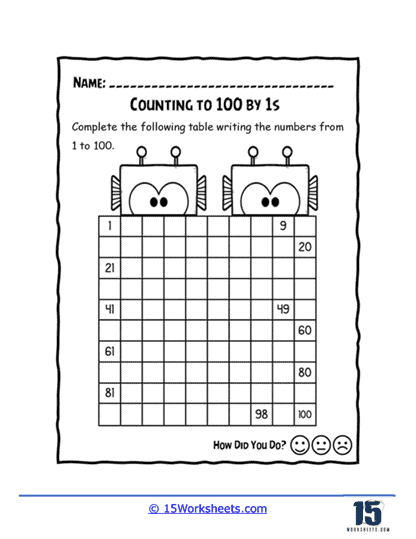
Robot Eyes
Learners will count and write numbers up to 100 to help a friendly robot “see” the full picture. Each section reveals more of the robot’s design as students fill in the blanks. The worksheet reinforces number sequencing and handwriting practice. Counting has never looked so futuristic and fun!
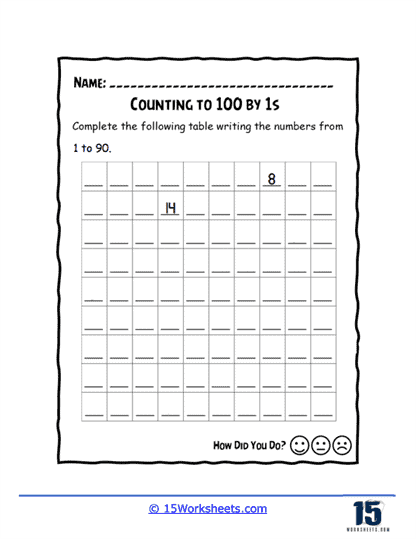
1 to 90
Students will count from 1 to 90 by 1s, filling in numbers that are missing along the way. This worksheet is a great stepping stone toward the full 100-count milestone. It sharpens focus and sequencing skills while keeping tasks short and manageable. Ideal for early learners building stamina in number writing.
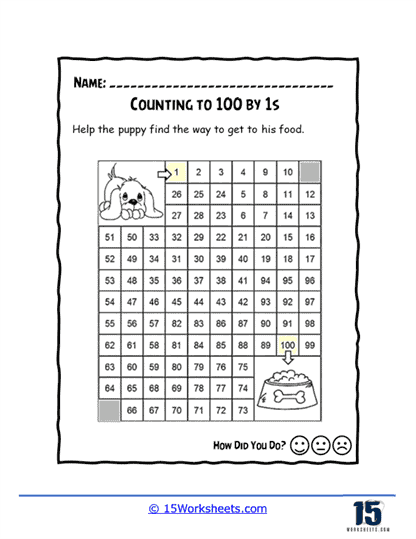
Puppy Path
Learners will follow a puppy-themed path by counting one number at a time to reach 100. They’ll trace or write numbers as they move through the sequence, promoting fine motor control and counting fluency. The playful journey format keeps motivation high. Counting becomes an adventure from start to finish!
The Path of 2s
Students will practice counting by 2s within the framework of a 1-to-100 chart. They’ll identify even numbers and strengthen skip-counting awareness, preparing for future multiplication lessons. The worksheet mixes pattern recognition with rhythmic number flow. It’s a smooth and steady stride through the world of twos!
Holes in the Path
Learners will discover “holes” or missing numbers in a 1-to-100 counting sequence and fill them in to complete the trail. The worksheet builds focus, accuracy, and sequencing mastery. It’s a simple yet effective way to reinforce attention to detail. Perfect for helping students spot what’s missing and make it right!
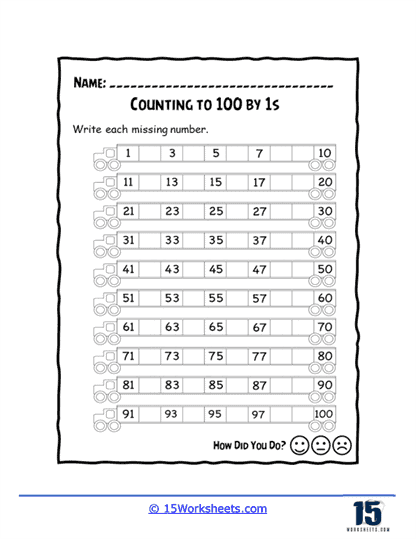
Tractor Trailer
Students will help a tractor drive through a farm field by counting from 1 to 100 in order. Each stop along the way includes a number space to fill in, promoting careful sequencing. The farm theme adds a sense of fun and purpose to counting practice. A field full of math growth opportunities!
Try 5s
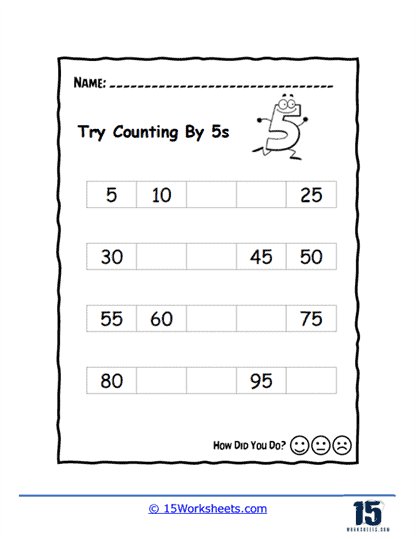
Learners will count by 5s up to 100, discovering the pattern of numbers ending in 0 or 5. This worksheet strengthens understanding of skip-counting and sets the foundation for multiplication by 5s. The engaging design keeps practice lively and rhythmic. Counting by 5s has never been this smooth!
5 Skips
Students will take another dive into skip-counting by 5s, completing sequences and recognizing the repeating pattern. They’ll practice writing and saying the numbers to build fluency. The activity develops confidence with regular intervals in number order. A perfect follow-up for learners mastering early multiplication patterns.
To the Hive
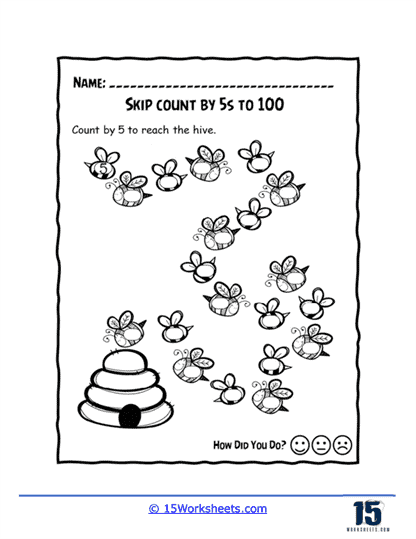
Learners will help busy bees find their way back to the hive by counting in order from 1 to 100. Each step along the honey trail requires the next correct number, reinforcing sequencing and focus. The sweet theme keeps students buzzing with excitement to finish. Counting practice has never been so honey-smooth!
Paste What’s Next
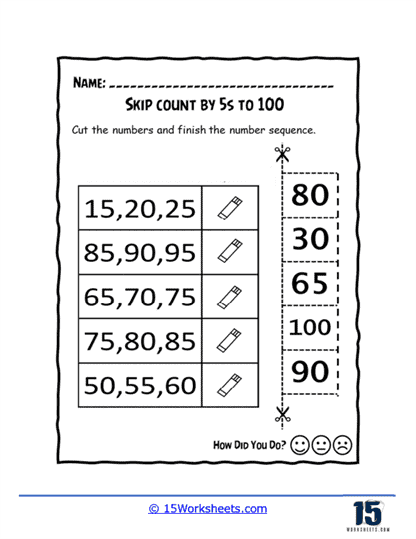
In this interactive worksheet, students will cut out number tiles and paste them into the correct spots to complete a 1-100 sequence. This tactile activity supports hands-on learners and fine motor development. It encourages problem-solving as kids determine what comes next. A crafty way to master counting!
Number Family
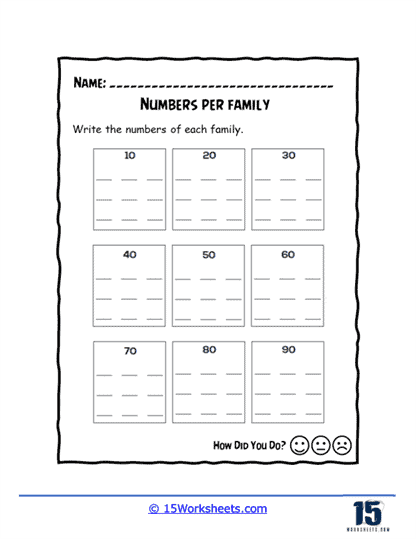
Students will explore number families within the 1-100 range by grouping related numbers and completing sequences. The worksheet deepens understanding of patterns, place value, and number relationships. It’s a gentle introduction to how numbers connect and repeat. A thoughtful blend of math reasoning and fun discovery.
Tracing to 100
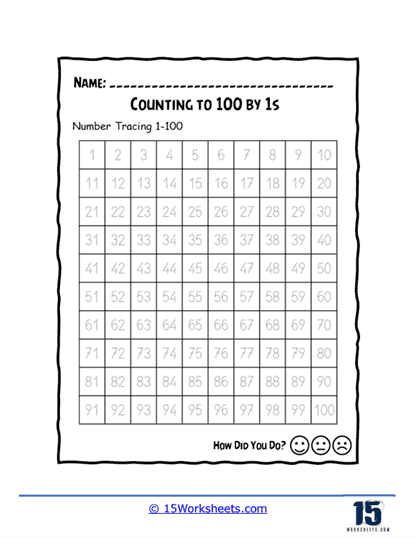
Learners will trace numbers from 1 to 100 to build number formation, sequencing, and handwriting skills. This worksheet supports both counting fluency and fine motor coordination. It’s ideal for beginners who need guided practice before writing independently. A smooth, confidence-building finish to the 1-100 journey!
How to Learn to Count to 100 by 1s
Learning to count to 100 by 1s is a fundamental skill that forms the basis for understanding more advanced math concepts. Here are some strategies to help you learn to count to 100 by 1s:
Understand Number Sequence – Familiarize yourself with the sequence of numbers from 1 to 100. Start by learning smaller ranges, such as 1 to 20, and gradually increase the range as you become more comfortable.
Practice Regularly – Make a habit of practicing counting to 100 daily. Repetition is key to mastering this skill. Count aloud or in your head to reinforce your understanding of the number sequence.
Use Visual Aids – Utilize number charts, number lines, or flashcards to help you visualize the sequence of numbers from 1 to 100. These aids can make it easier to understand and remember the sequence.
Break it Down into Smaller Groups – To make counting to 100 more manageable, break the numbers into smaller groups or sections, such as counting from 1 to 20, 21 to 40, 41 to 60, 61 to 80, and 81 to 100. Master each group before moving on to the next.
Use Songs, Rhymes, or Chants – Find songs, rhymes, or chants that involve counting to 100 by 1s. This can make learning more engaging and help you memorize the sequence more easily.
Incorporate Counting into Daily Activities – Practice counting by incorporating it into your daily routines, such as counting steps while walking, counting objects in your surroundings, or counting bites of food during a meal.
Use Manipulatives – Use physical objects like beads, counters, or blocks to represent numbers as you count. This tactile approach can help reinforce your understanding of the number sequence and make counting more concrete.
Play Games and Activities – Engage in games or activities that involve counting to 100, such as board games, puzzles, or online games. These can make learning more fun and enjoyable.
Set Goals and Track Progress – Set goals for yourself, such as being able to count to 100 within a certain time frame or without making any mistakes. Track your progress and celebrate your achievements.
Be Patient and Persistent – Learning to count to 100 may take time and effort, so be patient with yourself and remain persistent in your practice. Remember that consistent practice and repetition will lead to mastery of this essential skill.