
Ame Word Family Worksheets




About These 15 Worksheets
The -ame word family introduces learners to the powerful “magic e” pattern, where a silent e turns the short a into a long a sound. Words like name, same, game, flame, and frame give children a joyful entry point into long vowel recognition and spelling fluency. This set of worksheets makes phonics learning interactive, creative, and visually engaging – turning the concept of long vowel sounds into a series of fun, hands-on discoveries.
Each worksheet offers a fresh way to explore the -ame sound through tracing, writing, cutting, matching, and puzzles. The familiar, rhyming words encourage decoding, blending, and reading fluency. As learners connect images, letters, and sounds, they strengthen word recognition and build spelling confidence. Repetition of the pattern helps children see the logic behind English spelling – a key skill for lifelong literacy success.
Because -ame words appear in stories, songs, and everyday phrases, this collection connects phonics practice to real-world contexts. The creative mix of visuals, puzzles, and handwriting lines ensures engagement for all learning styles – visual, auditory, and kinesthetic. By the end, learners will understand the pattern, recognize it instantly, and feel proud to say, “I can play the name game!“
About Each Worksheet
Flame Frame
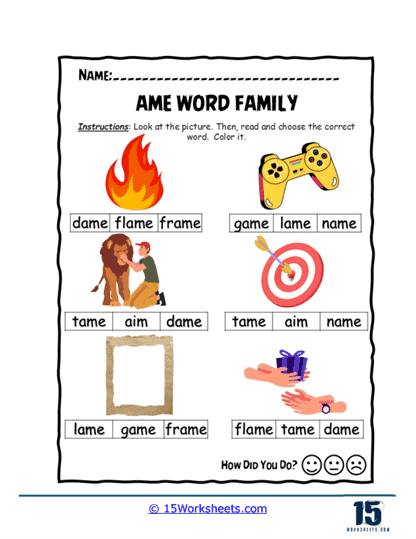
Students look at pictures and select the correct -ame word from three options, such as flame, game, and name. After reading, they color the matching choice. Bright images keep learners engaged and help build visual-word connections. The mix of reading and coloring creates a balanced, interactive task. Perfect for reinforcing word recognition and comprehension.
Picture Match-Up
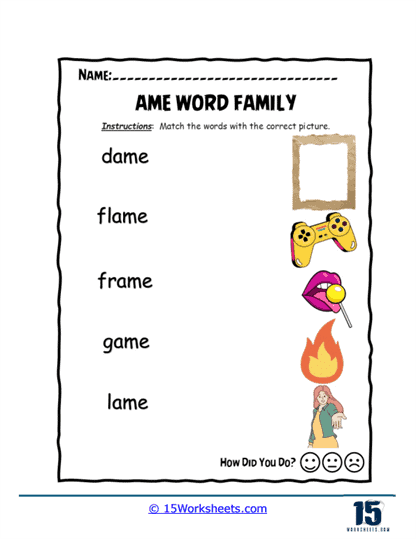
Learners draw lines between -ame words like dame, flame, and game and their corresponding pictures. The visual cues strengthen understanding of both sound and meaning. Matching helps students see how beginnings change while endings remain the same. It’s an accessible activity for building reading fluency and pattern recognition.
Trace and Match Game
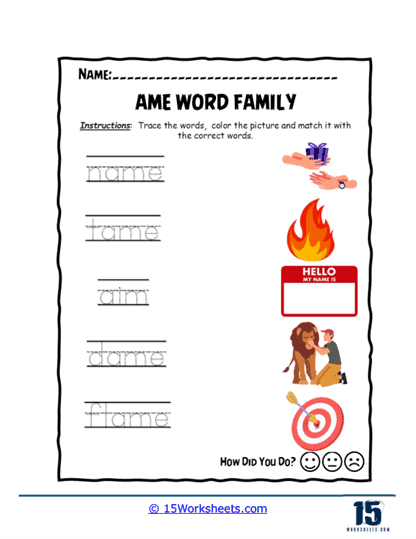
Students trace words such as name, tame, and flame, then match them to pictures. The blend of tracing, coloring, and matching makes learning tactile and creative. Repetition reinforces handwriting fluency and sound-symbol connection. Learners gain confidence in both writing and phonics decoding.
Word Write Fun
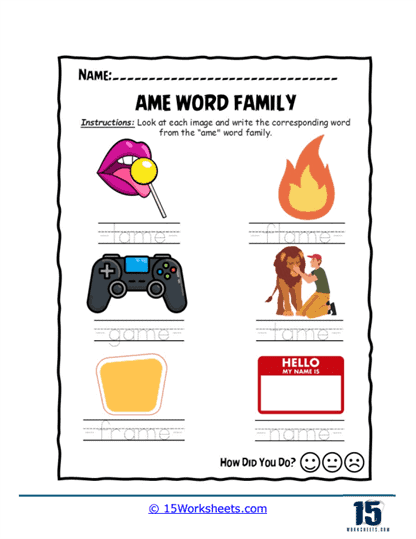
Students view images and write the correct -ame word, including frame, game, and flame. Writing from memory reinforces spelling accuracy and visual recall. The clean design encourages focus and handwriting practice. This exercise combines reading comprehension, spelling, and fine motor skills in one engaging activity.
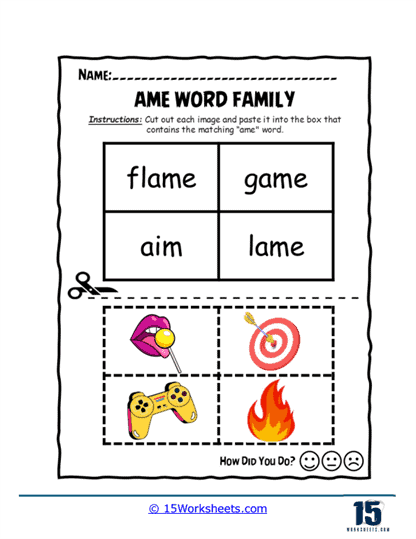
Cut-and-Paste Fun
Learners cut out pictures and paste them into boxes labeled with words like flame, game, aim, and lame. The hands-on process deepens engagement and strengthens retention. It’s an interactive, craft-style literacy activity that promotes multisensory learning. Great for kinesthetic learners or classroom literacy centers.
Game Flame Practice
Students trace and copy -ame words like game, flame, and tame on guided handwriting lines. Repetition and visual prompts reinforce correct letter spacing and size. Each line encourages rhythm and fluency in writing. This consistent practice improves spelling, penmanship, and confidence.
Aim Frame Lines
Learners trace and write words such as aim, lame, and frame, each paired with an image for meaning. Writing lines encourage neat, focused work. The repetition solidifies long vowel sound recognition. This sheet supports fine motor development and phonics accuracy together.
Flame Write & Draw
Students color, draw, and write the word flame several times, linking creativity with literacy. Drawing reinforces meaning through visual memory. The process of coloring and writing makes practice personal and fun. It’s a calm, artistic way to strengthen spelling and phonetic understanding.
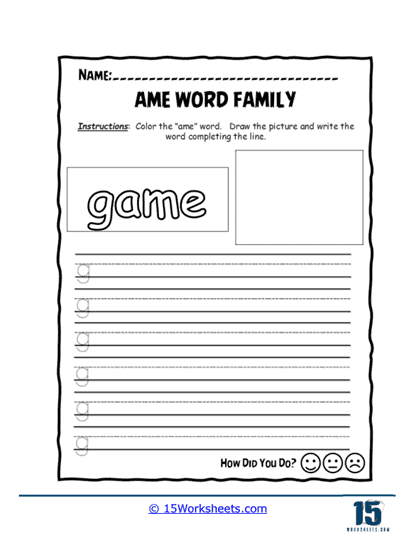
Game Write & Draw
This worksheet spotlights the word game, asking learners to color, illustrate, and write it repeatedly. The drawing box lets them connect imagination to vocabulary. Repetition ensures automatic spelling recognition. The mix of art and writing boosts both phonics fluency and expressive confidence.
Tame Write & Draw
Learners focus on the word tame, coloring and illustrating it while practicing neat handwriting. The creative design makes repetition enjoyable. Visualizing the meaning deepens comprehension. It’s a hands-on activity that blends language learning with self-expression.
Word Aim Game
Students look at images and write the correct -ame words such as flame, game, tame, lame, and aim. Visual clues reinforce reading comprehension. Writing supports word recall and sound awareness. The structured design keeps learners engaged and confident.
Trace the Name
Learners trace -ame words like name, tame, flame, and same to reinforce letter formation and spelling. The repeated pattern makes long vowels feel natural and predictable. Tracing builds rhythm, accuracy, and confidence. A gentle, foundational step in mastering the “magic e” pattern.
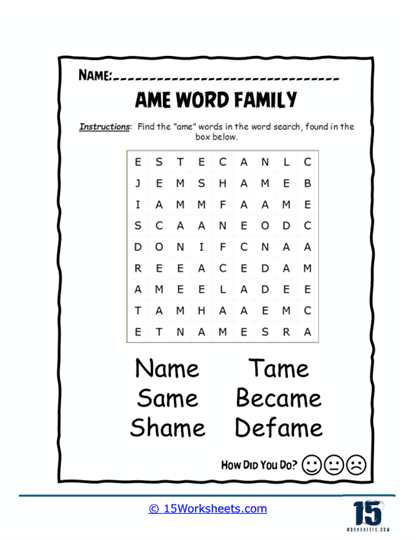
Frame Game Hunt
Students search for -ame words like came, flame, game, and frame in a word search grid. The puzzle format keeps learners focused while promoting visual scanning. Each find reinforces spelling and recognition. It’s a playful, independent review of -ame vocabulary.
Name Game Search
This second word search introduces longer and varied -ame words such as name, same, tame, became, and shame. Learners find and circle them for practice with rhyming and meaning. The challenge develops persistence and word-pattern fluency. Great for older or more advanced learners.
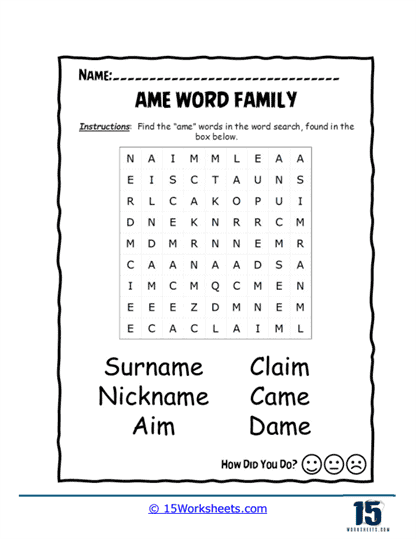
Aim and Claim Search
Students search for more advanced -ame words, including surname, nickname, and claim. The puzzle builds curiosity and extends the concept of word families into complex vocabulary. Learners recognize how familiar roots form new words. It’s a fun, discovery-based expansion of phonics knowledge.
What is the -ame Word Family?
The -ame word family features words that share the long “a” sound, created by the vowel-consonant-e pattern. Common examples include name, same, game, flame, and frame. The silent e at the end makes the a say its name – a key phonics rule that helps children read more complex words fluently. Mastering this family helps learners spot similar long vowel patterns in other word families like -ake, -ate, and -ade.
The -ame family includes nouns (name, flame, frame), verbs (came, became, blame), and adjectives (same, tame, lame). Understanding this flexibility helps children recognize how word endings can appear in different parts of speech while maintaining the same core sound. These words are common in reading materials, rhymes, and stories, giving learners natural opportunities for reinforcement.
Learning the -ame family boosts both decoding and spelling fluency. Once children understand that a + consonant + e creates the long a sound, they can confidently apply the rule across other word sets. Sentences like, “I came to play the game with my name on the frame” help solidify recognition through rhyme, rhythm, and repetition – the building blocks of reading success.
Word List for the -ame Word Family
aim
became
blame
came
dame
fame
flame
frame
game
lame
name
same
shame
tame
Example Sentences
1. I came to play the game with my name on the frame.
2. The bright flame made the room feel the same as day.
3. Don’t blame me if the tame cat loses its fame!