
Short Stories with Questions Worksheets
All About These 15 Worksheets
Short stories are like snack-sized adventures-quick to read but packed with meaning. For students, they’re the perfect length to hold attention while still leaving room for reflection and discussion. Each worksheet in this collection takes a short tale and pairs it with carefully crafted comprehension questions, helping learners practice everything from identifying details to exploring big themes. It’s reading practice without the “Are we done yet?” complaints.
These worksheets are built to help students strengthen their reading comprehension in a structured yet enjoyable way. Every story is designed with relatable characters, realistic situations, or fun twists that keep kids curious. The follow-up questions encourage critical thinking, sequencing, inference, and even a bit of moral reasoning. In short, students don’t just read-they engage.
Beyond skill-building, these worksheets connect reading to the real world. Kids learn not only how to understand a story but also how to relate it to their own lives-whether it’s about making friends, solving a problem, or bouncing back from a setback. That mix of literacy and life lessons makes the collection doubly powerful: improving reading while shaping thoughtful, empathetic readers.
Have a Look Inside Each Worksheet
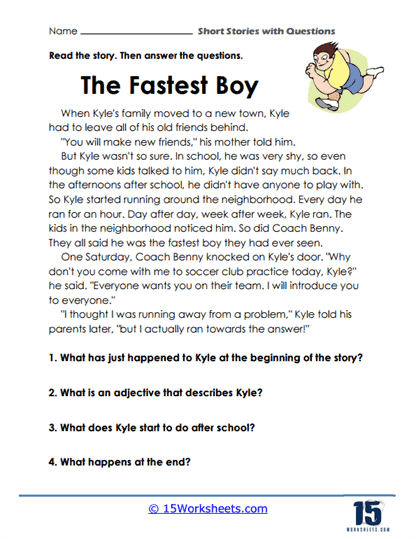
Kyle’s New Beginning
This story lets students step into Kyle’s world as he adjusts to a big life change. Readers practice identifying main ideas, drawing inferences, and following character development. The comprehension questions encourage reflection on themes like resilience and fresh starts. It’s a great way to build confidence in reading while exploring emotions that many kids can relate to.
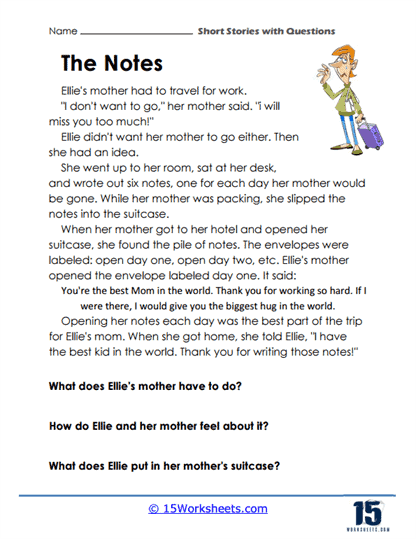
Ellie’s Thoughtful Gesture
Students will read about Ellie and the kind choices she makes for others. The worksheet strengthens comprehension skills such as recognizing details, cause and effect, and moral lessons. Questions push learners to think about kindness and empathy in real life. It’s both a reading exercise and a gentle lesson in social awareness.
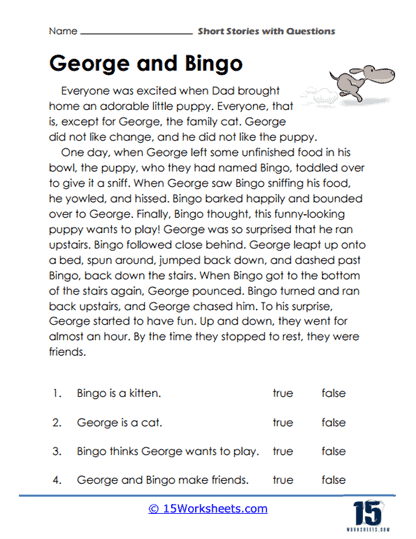
George And Bingo
This short story highlights the friendship between a boy and his dog. The comprehension work asks students to retell events, predict outcomes, and connect emotions with actions. It’s a fun, heartwarming way to build fluency and critical thinking. Kids will especially enjoy answering questions about loyalty and responsibility through George’s adventures.
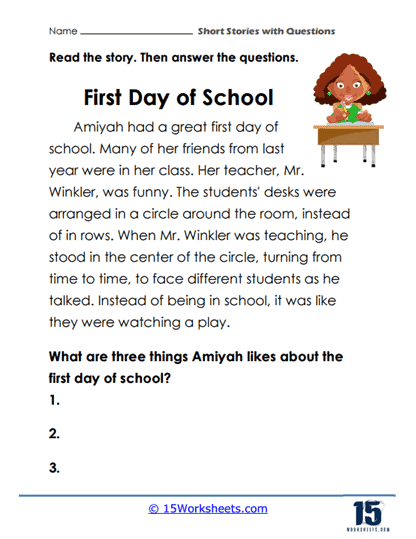
First Day Of School
Students dive into a relatable story about facing nerves and excitement on the first day. The reading questions build skills like sequencing, identifying setting, and understanding character motivations. It turns an everyday event into a chance for deeper comprehension practice. Learners will see how reading connects to their own school experiences.
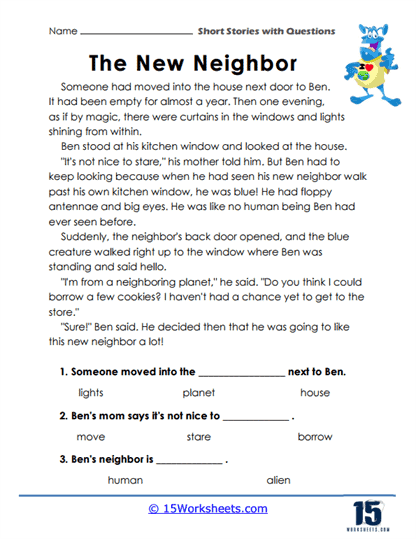
The New Neighbor
This story explores making friends and adjusting to change when someone new arrives. The worksheet develops skills in analyzing dialogue, drawing conclusions, and recognizing themes of acceptance. Students are asked to reflect on how they’d welcome someone themselves. It’s a perfect mix of reading practice and social learning.
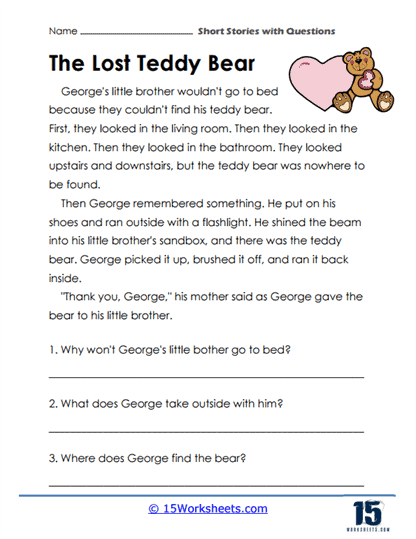
The Lost Teddy Bear
Readers follow the adventure of finding something special that’s gone missing. The comprehension questions target detail recall, sequencing, and making predictions. The lighthearted mystery keeps kids engaged while sharpening critical thinking. It’s both fun and skill-building, just like solving a little puzzle.
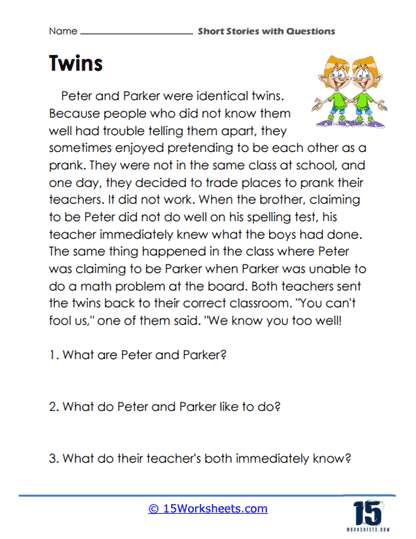
The Twin Swap
This playful tale of two twins switching places gives students a chance to notice plot twists. The worksheet challenges them to track events, compare characters, and understand consequences. It makes for a lively comprehension practice that sparks imagination. Students will love thinking about what it would be like to switch lives for a day.
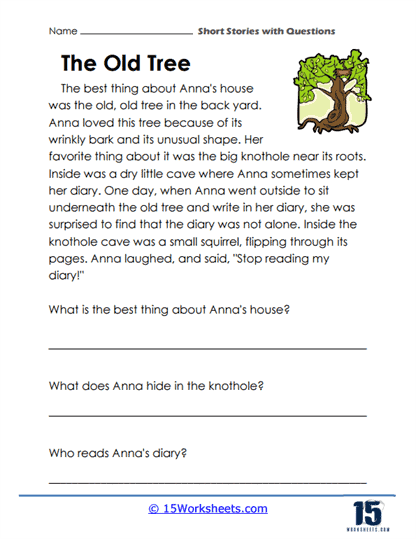
Under The Old Tree
Students will read a thoughtful story that highlights memories and personal growth under a favorite tree. Questions encourage them to practice inference, theme recognition, and connecting text to self. It’s a slower-paced, reflective story that strengthens deeper comprehension. Perfect for showing how stories can carry meaning beyond the surface.
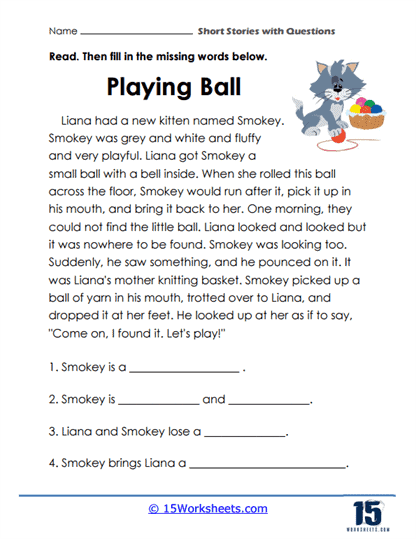
Playing Ball With Smokey
This worksheet lets students join in on a game with Smokey the dog. It emphasizes sequencing events, summarizing, and identifying the problem and solution. The lighthearted story makes comprehension questions feel playful instead of formal. Kids will love the sporty, pet-centered theme.
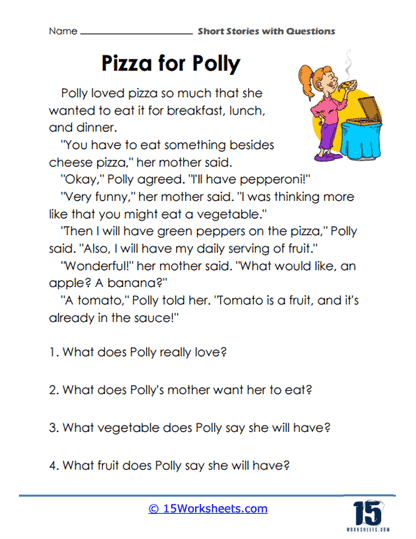
Pizza For Polly
A story centered around food and friendship, this worksheet gets students hungry to read more. Comprehension questions focus on main idea, details, and cause-and-effect relationships. It’s a fun, everyday situation that feels relatable for kids. Great for strengthening skills while enjoying a cheerful story.
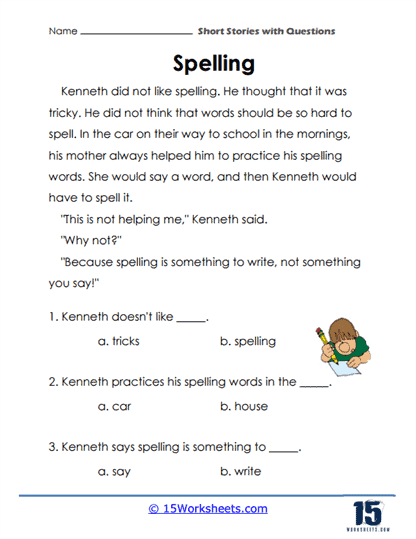
Spelling Woes
Readers will follow a character struggling with tricky words. The questions prompt students to reflect on challenges, problem-solving, and perseverance. It’s a realistic story that blends humor with a relatable academic struggle. Kids will see that practice and effort pay off in both reading and real life.
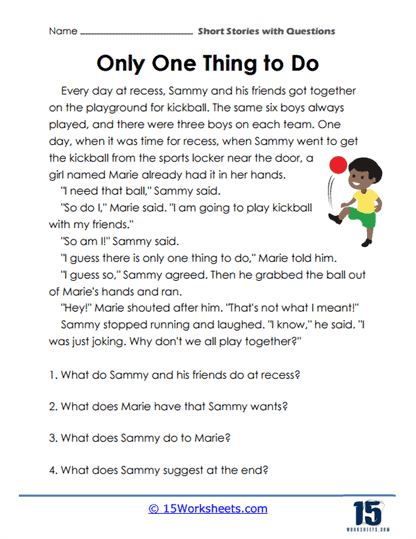
The Playtime Solution
This story shows how kids solve a problem during play. Students practice comprehension by looking at problem-solution structure, teamwork, and dialogue. The questions encourage them to think creatively about cooperation. It’s a light and engaging way to strengthen reading and social problem-solving.
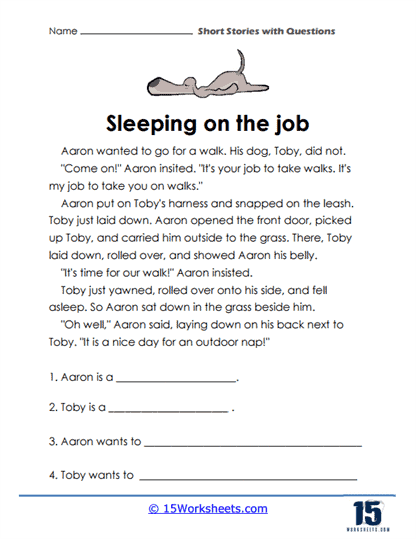
Sleeping On The Job
Students read about a character whose nap causes unexpected results. The worksheet questions highlight sequencing, humor, and cause-and-effect. It teaches that small actions can lead to big consequences. Kids will enjoy the funny twist while practicing reading comprehension.
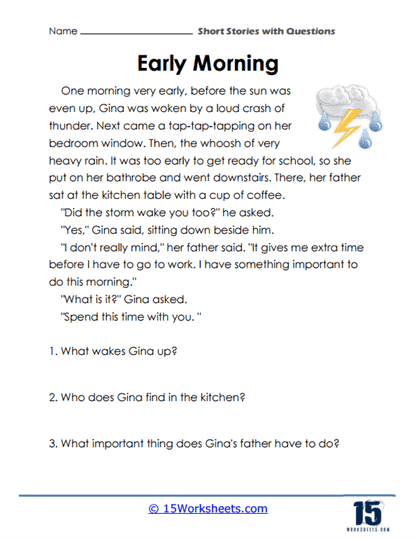
Morning Quality Time
This story highlights the importance of starting the day with family. Students will answer questions about details, character relationships, and underlying themes. It supports comprehension by tying everyday routines to deeper meaning. Kids will connect with the cozy, real-life setting.
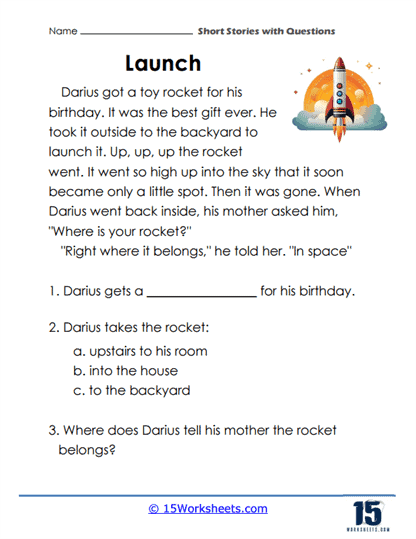
Rocket Launch Adventure
This adventurous story excites students with the idea of space and rockets. The questions strengthen comprehension by targeting prediction, sequencing, and thematic understanding. It keeps students engaged with the thrill of science and exploration. A great way to combine reading practice with imagination.
How To Be Successful With Short Stories
Improving reading comprehension in short stories is a crucial skill that enhances a student’s overall literacy and understanding of various texts. Here are some effective strategies that students can use to enhance their ability to comprehend what they read in short stories:
Active Reading – Encourage students to actively engage with the text while reading. This includes underlining or highlighting key points, jotting down notes in the margins, or using sticky notes to mark important sections. These practices help students stay focused, identify significant details, and retain information.
Pre-Reading Strategies – Before diving into the story, students should preview the text by skimming the title, headings, and subheadings. This provides a sense of what to expect in the story and helps activate prior knowledge related to the subject matter.
Set a Purpose for Reading – Students should establish a clear purpose for reading the short story. Whether it’s to understand the main idea, identify the central theme, or analyze the characters, having a specific goal in mind helps maintain focus and comprehension.
Break the Story into Sections – Encourage students to break the short story into manageable sections or chunks. After reading each section, they can pause to summarize what they have learned and make connections to the overall narrative.
Identify Story Elements – Help students recognize the essential elements of a short story, such as characters, setting, plot, and theme. Understanding these components enhances comprehension and enables students to grasp the story’s overall structure.
Ask Questions – Encourage students to ask questions as they read. Questions can range from basic ones, such as “What happened next?” to more analytical ones, like “Why did the character make that decision?” Questioning helps students actively engage with the content and deepen their understanding. Encourage students to make predictions about the story’s outcome based on the information they have gathered. This strategy fosters active thinking and encourages students to look for evidence to support their predictions as they read.
Summarize – After reading the short story, have students write a concise summary of the plot or the main points of the narrative. Summarizing helps reinforce understanding and aids in memory retention.
Visualize – Encourage students to create mental images or visualizations of the events and characters in the story. Visualization enhances comprehension by making the content more vivid and relatable.