
Same vs. Different Worksheets
About These 15 worksheets
Young kids are natural noticers-they’ll spot that one sock is missing stripes or that their sandwich is cut differently before you even say a word. These worksheets tap into that instinct and turn it into a playful learning experience. By looking closely at pictures, circling, coloring, or matching, students learn how to compare, categorize, and explain what makes things alike or not.
What makes this set special is the variety of activities. Some are quick and snappy, like finding the odd one in a row, while others invite a little more patience, like coloring all the items that match. This mix keeps kids engaged while also strengthening early math and reading readiness skills-because “same” and “different” thinking is a building block for patterns, sorting, and even problem-solving later on.
And beyond academics, these worksheets help kids pay attention to details in their everyday world. Spotting similarities and differences is what lets them tell letters apart, recognize faces, or sort their toys. Practicing it here is like giving their observation muscles a daily workout-but with plenty of fun.
Have a Look Inside Each Worksheet
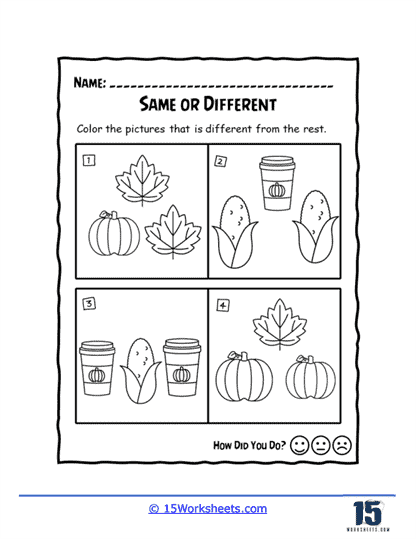
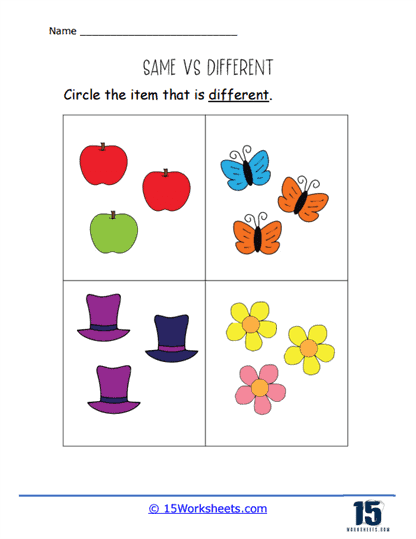
Different From the Rest
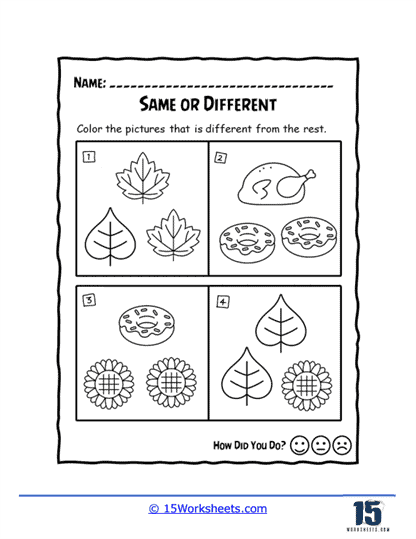
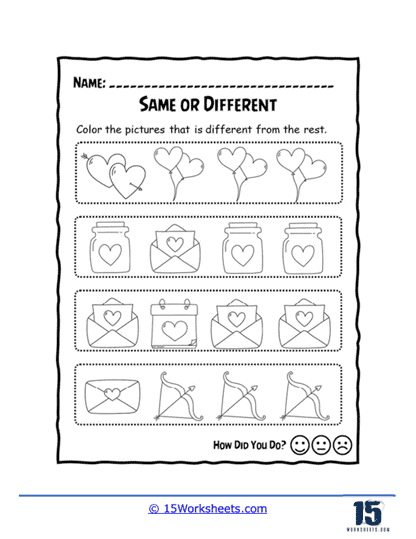
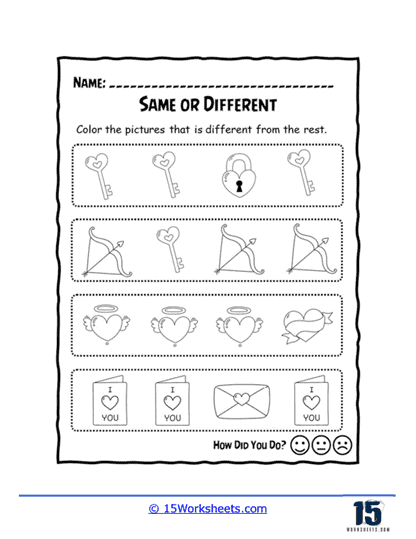
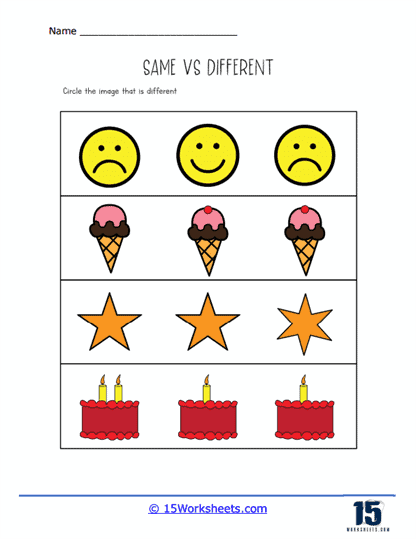
Kids spot the odd one out among a row of images-like the fruit that doesn’t belong. This sharpens attention to detail and encourages quick visual thinking. It’s a little detective game on paper. And it teaches that noticing differences can help us understand categories better.
What Is Different?
Here, students compare two similar pictures and point out what’s changed-like a missing hat or a shifted color. It builds observation skills in a gentle challenge. Kids practice finding clues with curiosity. And they learn that small changes can tell big stories.
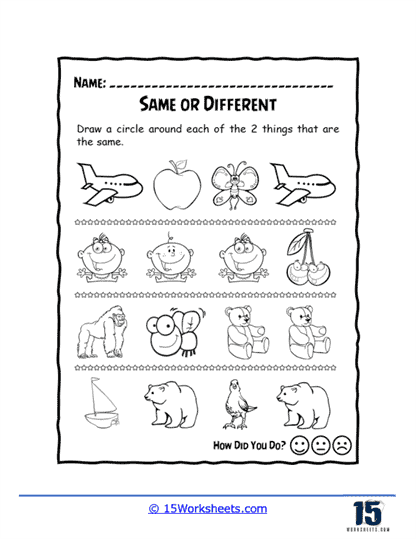
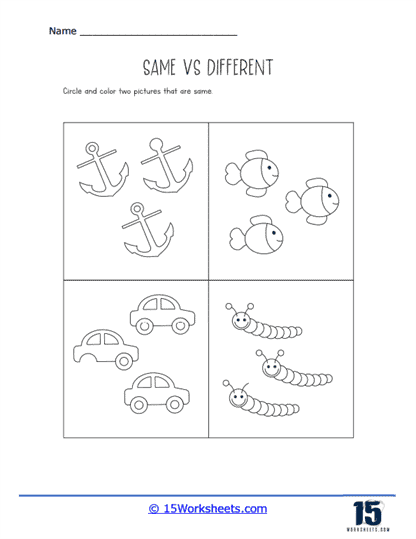
Circle of 2
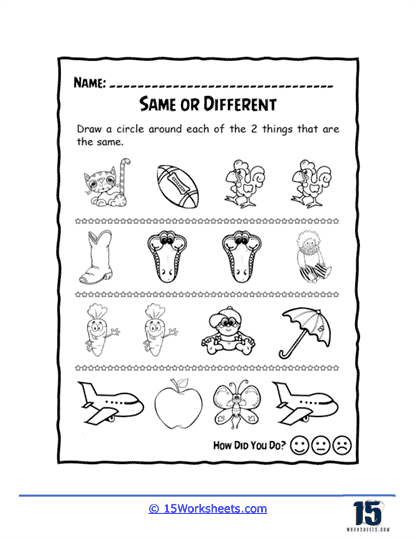
Two matching items are surrounded by others-students circle the pair. It’s like a find-the-treasure hunt, but with pens. Great for quick pattern recognition. And boosts confidence with that satisfying “got it!” moment.
Find the Same
Match identical images from a group-simple and repetitive in the best way. This strengthens memory and visual discrimination. It’s straightforward and soothingly predictable. Great for building early confidence.
Color Difference
Students compare colorful pictures and note small differences-like shade changes or missing parts. It encourages finer visual awareness. It’s playful and demands focus. Meanwhile, it teaches that details matter.
2 of the Same
Look at a set and pick the two that match exactly. A mini matching game that blends logic and focus. Promotes precise visual thinking. And it reminds kids that some things pair up perfectly-and noticing helps.
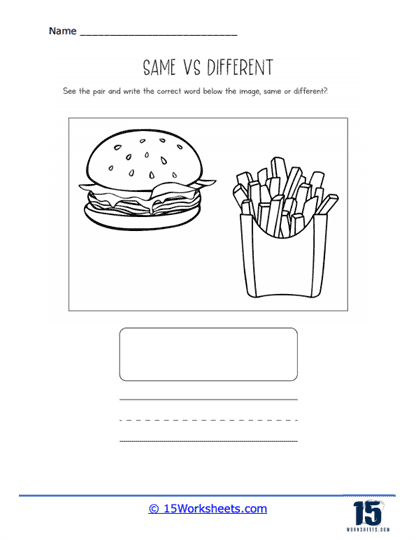
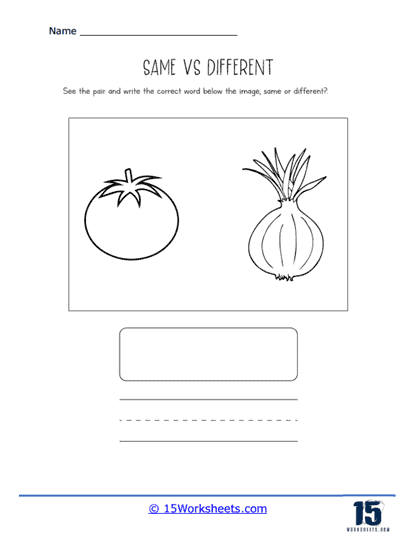
Same or Different
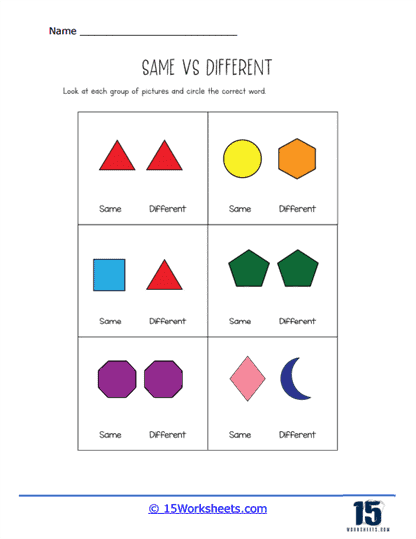
A classic: decide if two items are the same or not. Quick, binary, and brain-stimulating. Great for building vocabulary and judgement skills. And ideal for quick warm-ups or morning routines.
What’s Different
Similar to “What Is Different?”, this worksheet asks kids to identify differences-but maybe with multiple items or more nuance. It adds a sprinkle of challenge to observation. Makes puzzle-solving feel like a discovery. And keeps kids mentally humming.
Color the Rest
If several images are one color, and one isn’t, kids color the ones that match. It blends visual sorting with coloring. Teaches them to spot patterns and apply color choices. It’s satisfying and reinforces sameness visually.
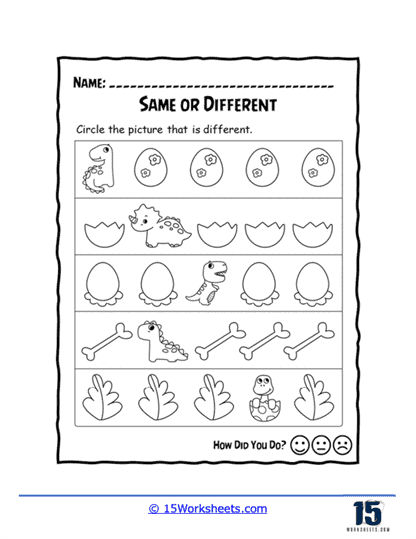
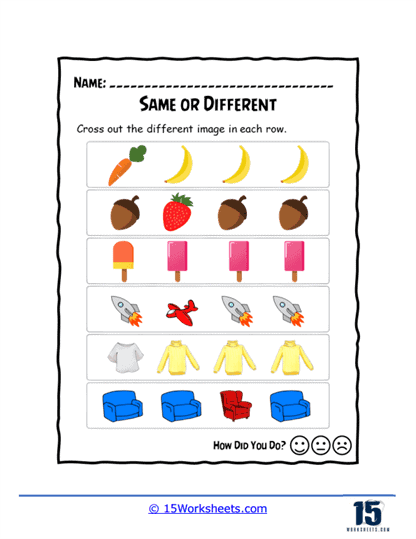
Different in the Row
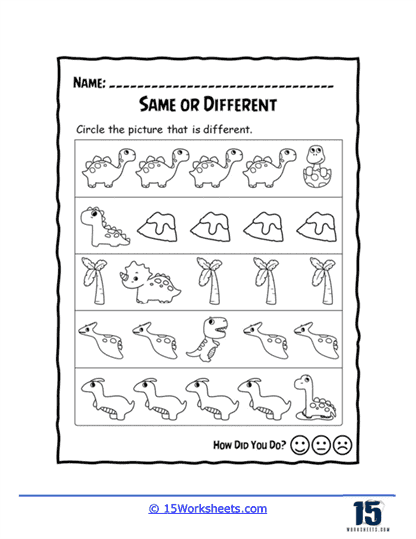
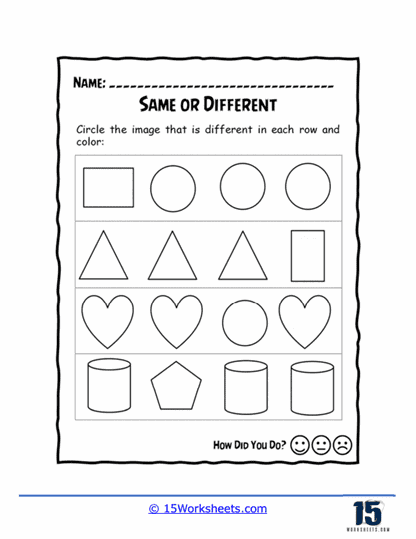
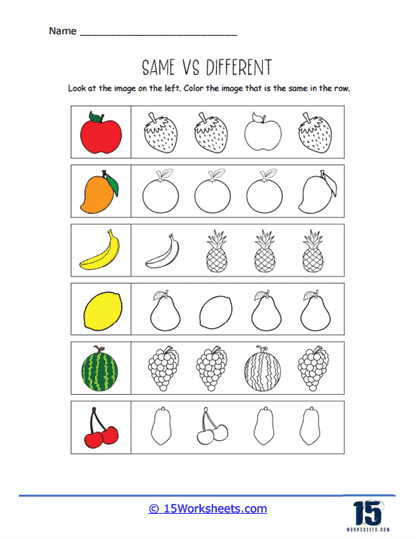
Spot the odd one in each row of items. A rhythm of new puzzles-row after row. Builds concentration along with comparison skills. And keeps the pace fun and engaging.
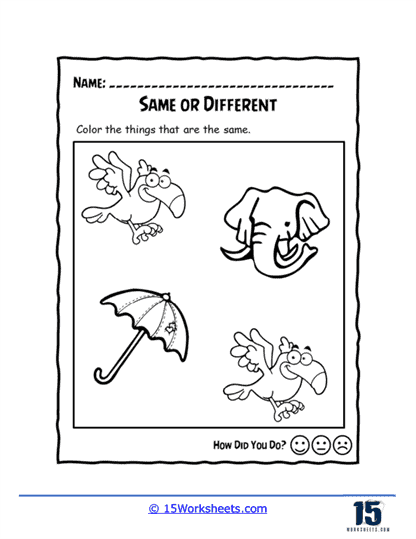
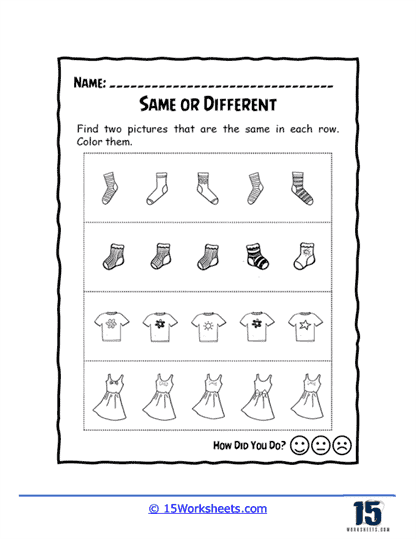
Color the Same
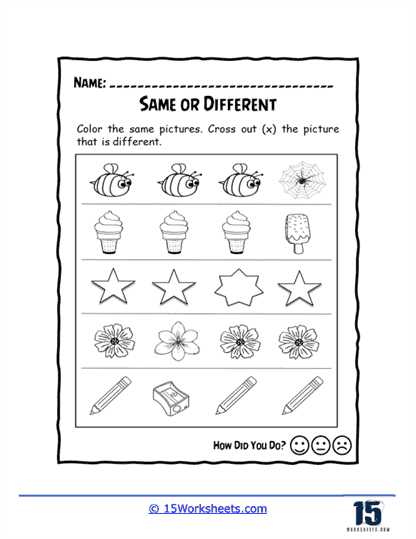
Given a variety of small images, children color those that match a target image. It’s part art activity, part matching game. Great for reinforcing color recognition. And perfect for calm, focused practice.
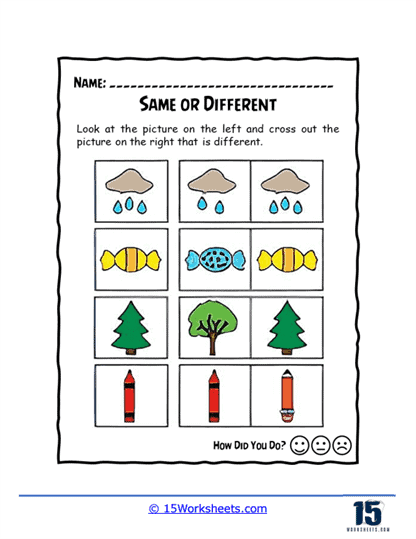
Cross Out Right
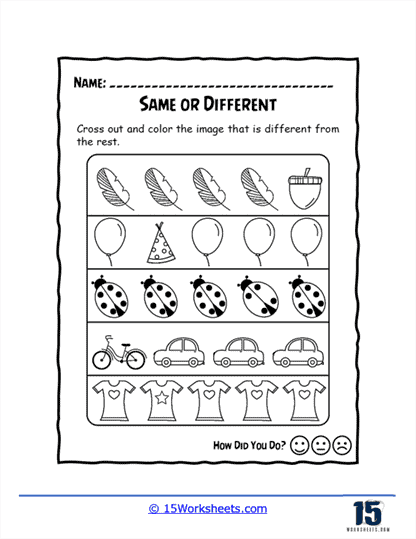
Here, kids cross out the image that doesn’t belong in a set. It’s a cut-to-the-chase version of odd-one-out. Sharing that satisfyingly concrete movement of pen on paper. Reinforces quick critical thinking.
Two in the Row
Within several rows, students identify and perhaps circle or mark rows with two identical items. It’s a visual puzzle that’s both fun and precise. Builds pattern recognition and detail orientation. And feels like a hidden hunt.
Same in the Row
Similar to the above but focused on rows with identical pairs-maybe two items in a row are the same among others. It’s about attention to structure. Helps with detecting order and patterns. And trains both eyes and brain to team up.
Same in Row
Another version-same idea with slight variation or layout change. A fresh take on spotting aligned pairs. Keeps kids adaptable to small design tweaks. Builds flexibility in thinking.
1 to 1 Match
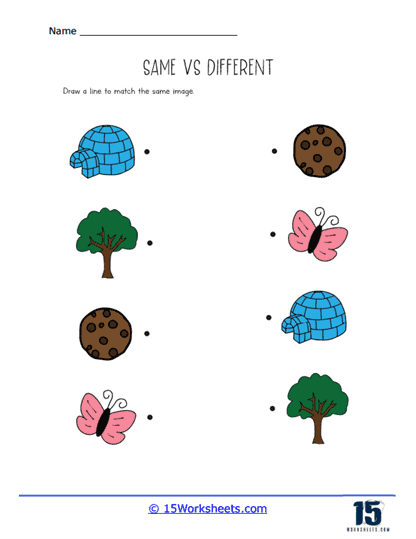
Students draw lines connecting each item to its matching pair. Great for fine motor skills and one-to-one correspondence awareness. It’s orderly, reassuring, and deliberate. Reinforces matching logic plus pen control.
Happy Differences
Spot cheerful, perhaps whimsical differences in fun images. Adds laughter to the learning. Feels lighthearted, playful, and visually delightful. And makes comparison joyfully memorable.
The Odd Ball
Find the one that doesn’t fit-quirky, oddball items stand out. A delightful way to build visual discrimination. Feels like spotting a disguised joke. And offers a little giggle with learning.
Falling Drops
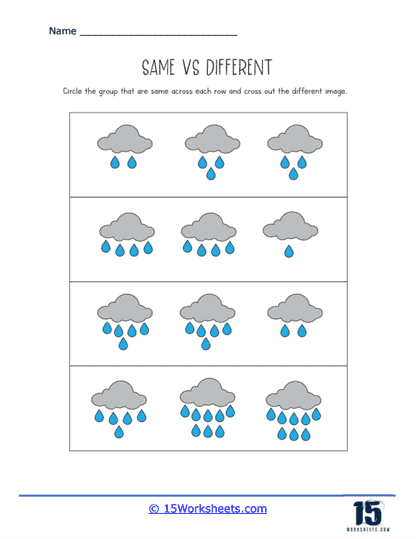
Maybe a pattern of raindrops or shapes-kids figure out which doesn’t flow. It’s pattern-oriented and rhythm-based. Great for visual sequencing practice. And adds a bit of motion to static pages.
Color Match
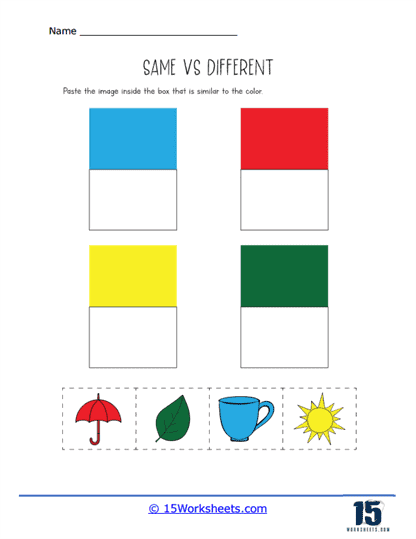
Pick or link items based on color similarities. Reinforces color recognition and grouping. It’s simple but effective visual sorting. And builds solid foundation for visual literacy.
Different Groups
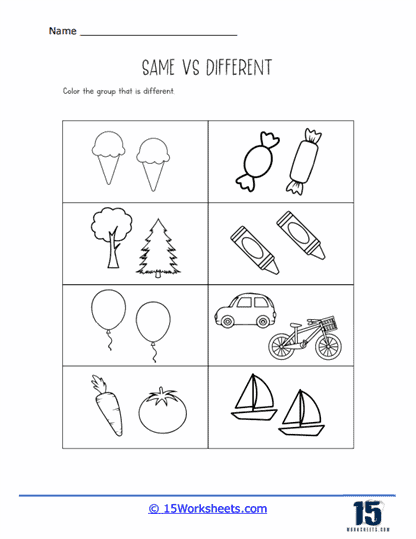
Look at groups of objects and decide how they differ-by color, shape, or size. Builds classification and comparative thinking. Encourages broader thinking, not just pair comparison. And strengthens logical grouping skills.
Where is the Same
Identify matching items among others scattered around. A seek-and-find format. Great for building scanning skills and attention span. And adds a playful treasure hunt energy.
Understanding Pairs
Think through pair logic-are these a pair or not? Kicks in early math and relational thinking. It encourages thinking about partnerships and equivalence. And feels surprisingly grown-up for little learners.
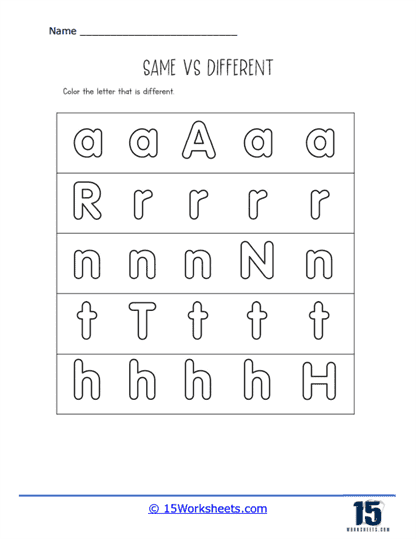
Different Letters
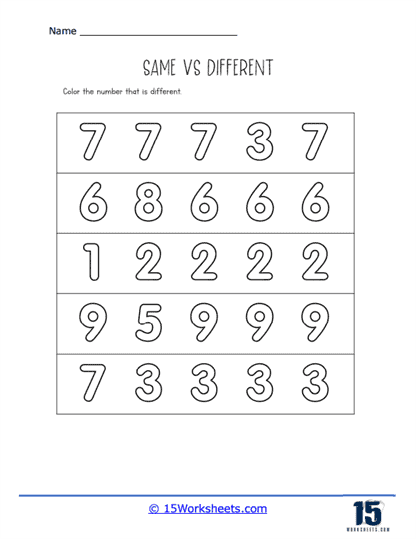
Spot the letter that’s different among similar ones. Perfect for pre-readers and early readers. Builds visual letter awareness. And silently preps reading readiness.
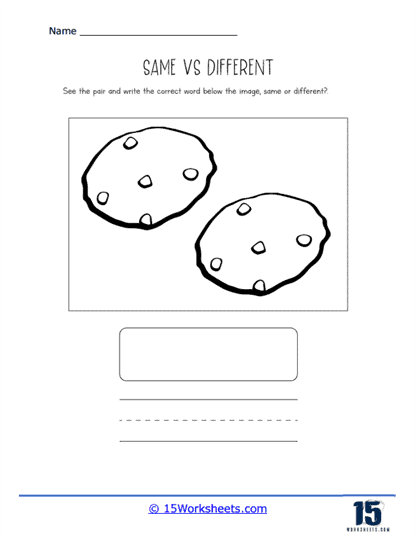
Cookie Craze
Maybe cookies with small differences-spot the odd icing or shape. Yummy-themed fun meets visual puzzles. Ticks the boxes for engagement and fine detail. And sweetens focus with thematic appeal.
Veggies On Top
Veggie-themed comparison-spot differences among carrots, peas, or broccoli. A healthy twist to matching. Feels fresh, colorful, and organic. And turns visual sorting into garden fun.
My Thoughts
Likely a reflective activity-kids draw or describe what makes items same or different. Encourages metacognition and language articulation. It blends analysis with creative expression. And invites thoughtful learning.
Practical Uses in Everyday Life
Same vs. different worksheets aren’t just for classrooms; they have practical applications that extend far beyond early education. For parents, these worksheets offer a fun and engaging way to help children develop key skills at home. Here are a few ways in which these worksheets can benefit different aspects of a child’s development:
Building Cognitive Skills – When children are asked to identify what makes two items alike or different, they are engaging their brains in problem-solving. They must focus on details and think critically about how objects relate to one another. This cognitive exercise strengthens their ability to observe and analyze-skills that will help in more complex subjects like science and math.
Enhancing Visual Discrimination – Visual discrimination refers to the ability to recognize details in objects and images. By using same vs. different worksheets, children practice honing their ability to spot small differences, whether it’s in color, shape, or texture. This is crucial for learning to read, as recognizing differences between letters and words is an essential reading skill.
Fostering Language Development – As children learn to describe what makes two things alike or different, they also improve their vocabulary. They begin to use more specific language-terms like “larger,” “smaller,” “brighter,” “darker,” or “rounder”-which enhances their ability to communicate clearly and effectively. This expansion in descriptive language will aid them in writing, reading comprehension, and verbal communication.
Developing Organizational Skills – Sorting and categorizing items is an essential organizational skill that translates to everyday tasks. Same vs. different worksheets teach children how to group items, a skill that is useful in many real-life contexts, such as organizing toys, arranging books on a shelf, or even setting the table.
Improving Memory and Attention – Memory games that ask children to recall objects that are the same or different help develop concentration and memory skills. When children play these games, they need to remember what they’ve seen and hold that information long enough to make a correct comparison, thereby strengthening both short-term and long-term memory.
Effective Strategies for Teaching the Concept
Teaching the concept of “same vs. different” is a foundational skill in early childhood education, and there are numerous strategies that educators and parents can use to make this learning process both engaging and effective. These strategies not only help children grasp the basic concept of comparison but also foster their cognitive development in areas like classification, memory, and critical thinking. Below are some of the most effective approaches to teaching this concept, each of which can be adapted to suit different learning environments and needs.
Using Real Objects
One of the most impactful ways to teach children about similarities and differences is through the use of real, tangible objects. Physical interaction with items such as fruits, toys, or articles of clothing provides children with an opportunity to engage in hands-on learning. This kinesthetic approach allows them to physically manipulate objects, which makes abstract concepts like comparison more concrete and understandable.
For example, a parent or teacher might present a collection of toy cars and ask the child to group them by color, size, or type. In doing so, the child not only practices categorization but also strengthens their observation skills. Another example could be using household items, such as asking a child to separate socks by color or match shoes by size. The use of real objects taps into a child’s natural curiosity and sense of exploration, making learning feel like play rather than a structured task. This method is especially helpful for children who may struggle with more abstract representations of concepts or those who learn best through physical interaction with their environment.
Visual Aids
For children who are visual learners, the use of pictures, charts, and illustrations can be incredibly beneficial. Visual aids offer a simple, yet powerful way to demonstrate the concept of “same vs. different,” especially when they depict clear and distinct features in objects. For instance, a chart showing different shapes or animals allows children to quickly see patterns, similarities, and differences without needing to handle physical objects.
Educators can use visual aids in various ways, such as flashcards or picture books, where children are asked to identify which items in a series are alike or different. This not only helps children develop their ability to recognize visual patterns but also reinforces their ability to focus on details, such as shape, size, and color. A teacher might show images of animals, for example, and ask the child to identify which two are the same or what makes each animal unique. Visual aids also offer a great opportunity to incorporate real-world examples, such as photos of familiar objects like cars, trees, or everyday household items. The combination of recognizable images and the challenge of comparison helps to solidify understanding in a visually engaging way.
Sorting Activities
Sorting activities are another highly effective method for teaching the concept of same vs. different, as they require children to actively engage in classification and grouping. Children are naturally inclined to sort and organize objects, and these activities allow them to hone their analytical skills by asking them to group items based on specific criteria-such as color, shape, or size.
For example, a teacher might provide a child with a collection of buttons that vary in size, shape, and color. The child is then asked to sort the buttons into groups-perhaps by color first, and then by size within each color group. This activity encourages the child to think critically about what makes items the same and how those similarities or differences can be used to classify them. Sorting activities help children develop organizational skills that extend beyond the classroom and into real-life situations, such as organizing their toys at home or grouping objects in everyday settings.
Memory and Matching Games
Memory and matching games are another excellent way to reinforce the concept of “same vs. different” while also strengthening a child’s memory and attention to detail. These games require children to focus on pairs of objects or images and recall what makes them similar or different. This process not only sharpens their observation skills but also helps to develop their ability to retain and retrieve information-two key components of learning and problem-solving.
In a typical memory game, a set of cards with pairs of images (such as two apples or two different animals) is placed face down. The child then turns over two cards at a time, trying to find matching pairs. If the cards match, they are removed from the game; if they don’t, the child must remember their locations and continue searching for matches. This activity enhances a child’s ability to focus on details, as they need to remember the location of each card and whether it matches the one they are currently turning over.
Matching games can also be tailored to teach more nuanced differences, such as matching cards that are the same but differ in one small detail. For example, a memory game might involve images of different fruits, where some pairs are identical and others are slightly different in color or size. The child must pay close attention to these details to succeed, which helps improve both their focus and their ability to notice subtle differences.