
Rectangles Worksheets




About These 15 Worksheets
Rectangles are one of the most common shapes kids encounter every day, and this worksheet collection makes learning about them hands-on and fun. From coloring and tracing to seek-and-find puzzles, each page gives children multiple ways to recognize and practice with rectangles. The variety ensures that learners don’t just memorize the shape but truly understand how to spot and create it. With playful themes like windows, houses, and presents, these worksheets show that rectangles aren’t just math concepts-they’re part of the real world.
The collection also balances early learning with skill-building. Beginners can practice tracing and writing the word “rectangle,” while more advanced learners count, sort, and even draw their own rectangles. Activities like “How Many I See” tie geometry into counting practice, helping kids develop multiple skills at once. The themes keep learners engaged while the repetition builds confidence.
Best of all, these worksheets highlight how rectangles are everywhere around us. From doors and books to computer screens and gift boxes, rectangles make up much of the world we see. By connecting shapes to real-life objects, these pages help students see math as meaningful and useful. It’s a fun and effective way to make geometry stick.
Have a Look Inside Each Worksheet
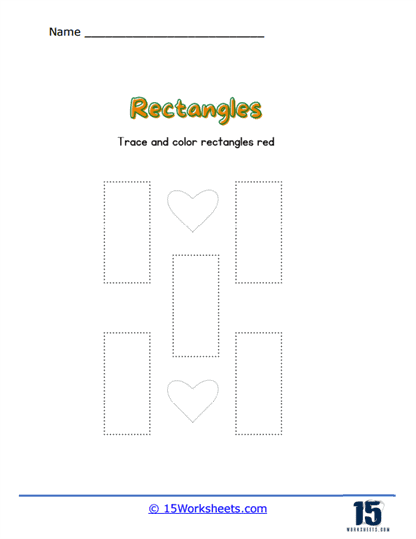
Rectangle and Hearts
Students identify and color rectangles hidden among heart shapes. This activity sharpens visual discrimination while keeping things playful. Kids learn to spot rectangles even when surrounded by different designs. It’s a cheerful way to reinforce shape recognition.
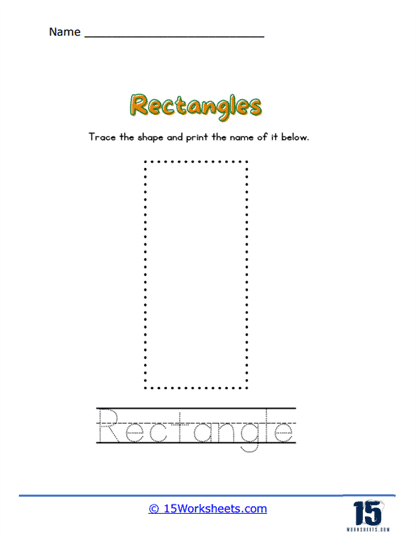
Trace and Write
Learners trace rectangles and practice writing the word “rectangle.” The worksheet supports both fine motor development and literacy skills. Kids get familiar with both the shape and its name. It’s a solid beginner activity for shape learning.
Window Shapes
Children match and count rectangles that look like windows. The familiar theme makes rectangles easy to recognize. It connects geometry with everyday life. Kids quickly see how rectangles appear all around them.
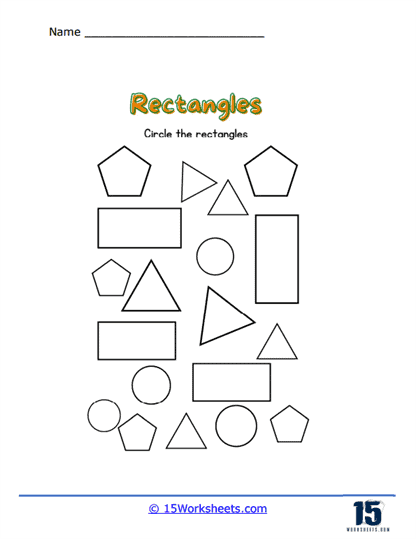
Standouts
Students find rectangles among a mix of different shapes. The challenge is spotting which ones fit the rectangle rule. It trains attention to detail and sorting skills. The activity is like a mini geometry puzzle.
Bowtie on Top
This worksheet adds a fun twist by combining bowties with rectangles. Kids color or sort the rectangular bowties from other shapes. It blends creativity with geometry practice. The playful design keeps learners engaged.
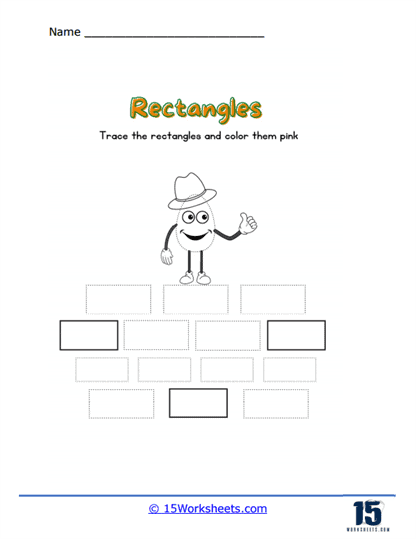
Pink Rectangles
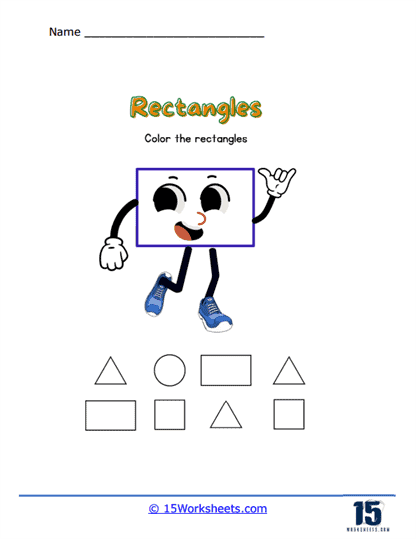
Learners color all the rectangles pink to set them apart. It’s a straightforward coloring task that reinforces identification. The focus is on distinguishing rectangles from other shapes. It’s a great starter page for young students.
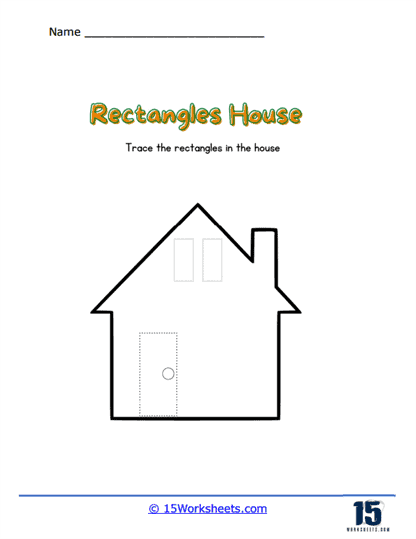
House Shapes
Kids identify rectangles used in house drawings, like doors and windows. The theme connects geometry to everyday structures. It helps students see rectangles as part of real designs. It’s a practical and relatable activity.
Where is the Shape?
Students search for rectangles hidden in a busy design. It strengthens visual scanning and attention to detail. The worksheet feels like a seek-and-find game. It makes practicing rectangles fun and interactive.
Presents
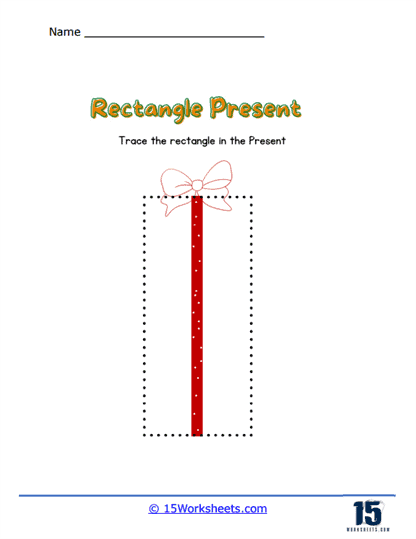
Learners spot and color rectangular presents in a festive scene. The theme adds a holiday vibe to shape practice. Kids enjoy the cheerful context while reinforcing rectangle recognition. It mixes math with celebration.
Shape Differentiation
This worksheet asks kids to separate rectangles from a group of different shapes. It builds classification skills. The task helps learners compare similarities and differences. It strengthens both geometry and logical thinking.
Connect and Draw
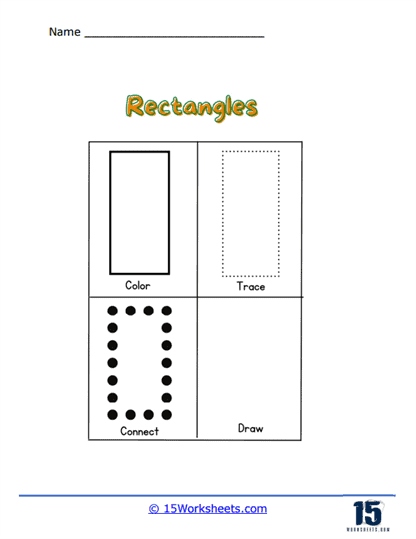
Children connect dots to form rectangles. They practice both fine motor control and shape construction. The activity shows how rectangles are made from straight lines. It’s hands-on and fun.
How Many I See
Students count the number of rectangles in a picture. This boosts observation and number sense. The activity ties geometry with counting practice. It’s a double-skill worksheet.
Everyday Rectangles
Learners identify rectangles in common objects like books, doors, or screens. The real-life theme makes learning meaningful. Kids realize rectangles are everywhere. It’s a confidence-building activity.
Pencil Crazy
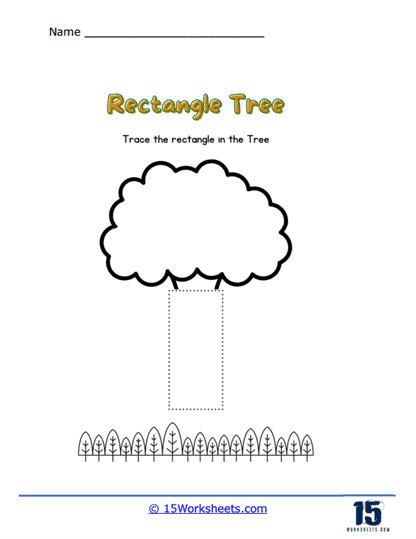
This page uses pencils arranged in rectangular shapes. Kids spot and trace the rectangles within the design. The playful theme keeps learning lively. It blends creativity with recognition.
Sort By Coloring
Students color-code rectangles and non-rectangles in different shades. It reinforces classification through a fun art activity. The visual approach helps cement rectangle recognition. Kids enjoy the colorful sorting process.
What Are Rectangles?
Rectangles are four-sided shapes (quadrilaterals) with opposite sides that are equal in length and all angles at 90 degrees. They’re a special kind of parallelogram, which makes them part of the bigger family of polygons. Kids often first recognize rectangles in familiar items like doors, tables, or pieces of paper. They’re everywhere, which makes learning them especially important.
We use rectangles constantly in everyday life. Architects design buildings with rectangular windows and doors, teachers use rectangular chalkboards, and almost every screen we look at-from phones to TVs-is a rectangle. Even when wrapping presents, you’re often dealing with rectangular boxes. Recognizing rectangles helps kids connect geometry to their daily experiences.
These worksheets make rectangles fun to learn by mixing tracing, coloring, matching, and real-world connections. Students not only get to practice identifying the shape but also learn how rectangles are constructed from straight lines and right angles. With enough practice, recognizing and working with rectangles becomes second nature, giving kids a solid foundation in geometry.