
Primary Colors Worksheets
All About These 15 Worksheets
These worksheets are designed to introduce young learners to the fundamental colors: red, blue, and yellow. They combine coloring, matching, writing, and color sorting activities to ensure children see, name, and use these primary colors in different ways. The variety helps keep things fresh: some sheets focus on recognizing a single color, while others help kids compare or tell the difference between multiple primary colors.
By engaging with these activities, kids develop visual discrimination (telling colors apart), color vocabulary (knowing and using color names), and fine motor coordination (coloring, tracing, writing). They also gain confidence: each successful color match or correctly colored shape reinforces understanding. The hands-on and visual components make learning color feel interactive and fun.
These worksheets also lay the groundwork for later color theory, art, design, and even science. Understanding primary colors is a building block-once kids grasp them, they can mix, explore shades, work with more colors, and appreciate how color is used in the world around them. It’s more than play-it’s foundational learning.
Have a Look Inside Each Worksheet
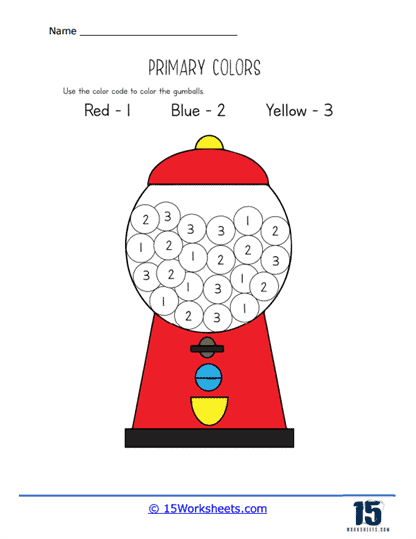
Gumball Machine
Kids color or name the main primary colors (red, blue, yellow) on a picture of a gumball machine. This makes identifying colors playful and visual. It helps young learners link a color name with what they see. Supports recognition of primary colors through fun art.
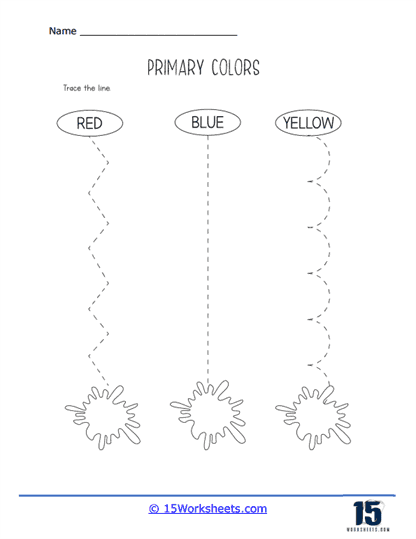
Line Traces
Students trace lines or shapes that are colored in primary colors. This builds fine motor control as well as reinforcing color awareness. It also helps kids see how colors are used in outline or detail work. Combines coordination and color recognition.
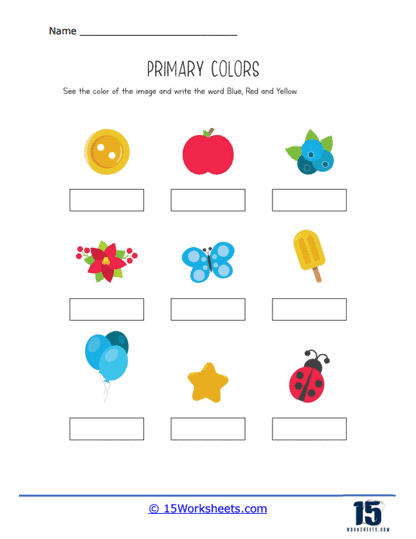
Name The Main Color
Given objects or pictures, children identify and write the primary color that matches the main part of the image. This deepens color vocabulary and observation skills. Encourages careful looking rather than guessing. Helps with confidence in naming colors correctly.
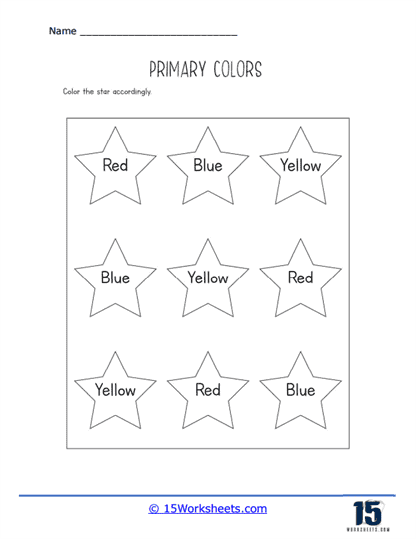
Coloring Stars
Learners color stars using primary colors, possibly following a pattern or instruction. Makes practicing colors repetitive in a controlled way. Helps students hear and see the names and shades of the primary colors. Also gives opportunity for creativity.
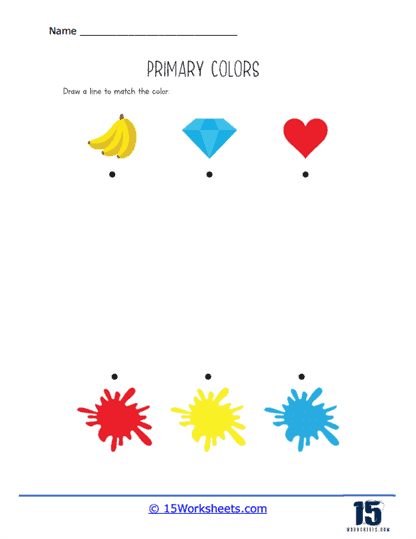
Color Matches
Kids match items or shapes that are the same primary color. It reinforces discrimination between red, blue, and yellow. Supports visual sorting skills. Helps strengthen category building: “these belong here because they’re red,” etc.
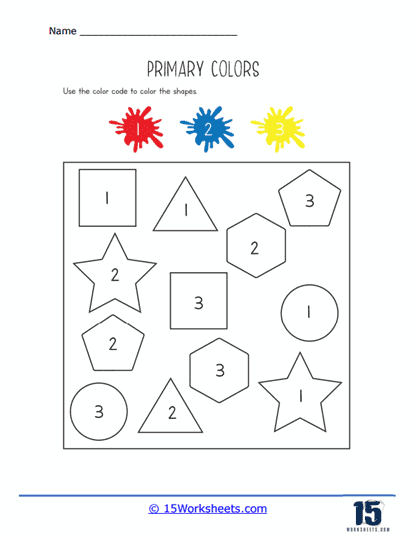
Color Code Shapes
Shapes are coded by color (e.g. color by number or by instruction). Children fill in primary colors as indicated. Helps with following directions and recognizing shape + color combinations. Builds both visual discrimination and comprehension.
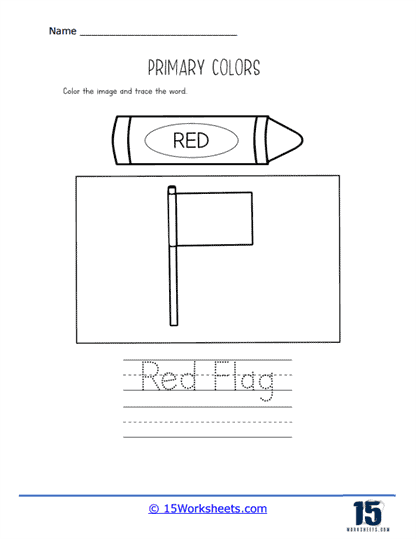
Red Flag
A worksheet focused on the color red-identifying red items or coloring red parts. This gives emphasis to one primary color at a time, helpful for incremental learning. Helps children focus before introducing more colors. Builds understanding of what ‘red’ looks like in different contexts.
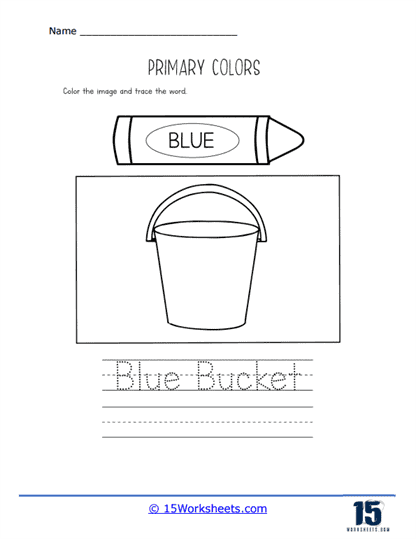
Blue Bucket
Similar to the red focus but with blue-identify or color blue items or bucket. Reinforces blue in context. Gives practice distinguishing blue from the other primary colors. Helps solidify color-word recognition.
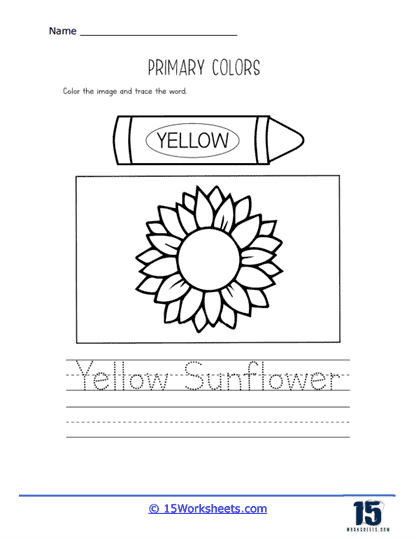
Yellow Sunflower
Worksheet centered on yellow: perhaps sunflower image, coloring or matching yellow. Helps kids see yellow in nature and practice naming yellow. Provides contrast with red/blue in students’ mind. Supports understanding of color usage in natural settings.
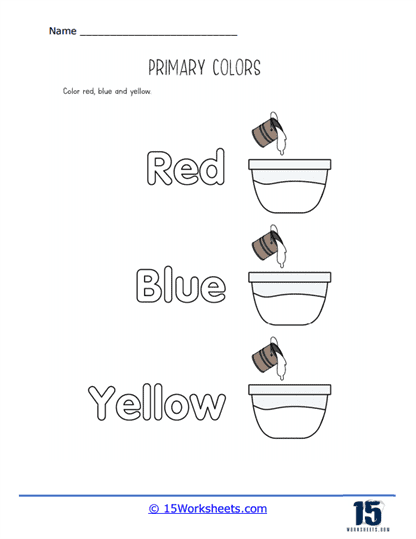
Pails of Primary Colors
Multiple pails (buckets) each representing one primary color; children sort objects into the correct pails. Helps with sorting skills and categorical thinking. Reinforces that red, blue, and yellow are separate groups. A hands-on and visual way to reinforce color categories.
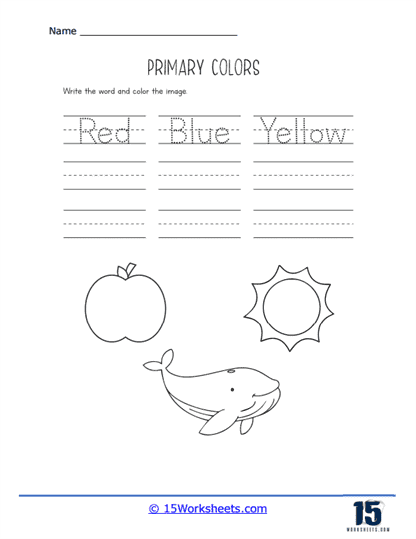
Write and Shade
Students write the color words (red, blue, yellow) and shade things with those colors. Combines writing, reading, and coloring. Helps link the color name to both visual and textual form. Builds fine motor skills too.
Primary Color Words
Focus on the words “red,” “blue,” and “yellow”: maybe tracing, reading, or matching words to colors. Helps with literacy as well as color recognition. Bridges visual learning and language. Encourages reading color words.
Primary Columns
Columns of shapes or objects sorted by primary colors in vertical strips. Children sort or color each column consistently. Reinforces grouping by color visually and spatially. Helps with pattern and order.
Crayons Need Color
Crayons are displayed blank or faint; students fill in or color them using primary colors. Supports both color usage and decision making (which crayon gets which color). Fun and visually satisfying. Encourages color-application skill.
Splat of Shades
Likely splats or blobs of color; students match or identify the primary color among mixed shapes. Helps in visual discrimination when color shapes are less defined. Strengthens ability to recognize pure primary colors even when edges or forms are messy. Adds variety to the kinds of visuals kids see.
What Are Primary Colors?
Primary colors are the basic colors-red, blue, and yellow (had trouble making this color visible) -that you cannot create by mixing other colors together. They are the starting point of all color mixing and color theory. Because they are “pure,” they serve as building blocks for artists, designers, and anyone working with color to make new hues.
Knowing these allows children to understand how new colors are made (like mixing red and blue to make purple, or yellow and blue to make green). It helps in art (painting, drawing), in everyday life (recognizing colors in signs, nature), and in science (light, pigments, etc.). It also helps with vocabulary and matching skills.
When children use worksheets like these, they get repeated, varied exposure to primary colors. They see them by themselves, compare them with each other, match them, name them, and apply them. Over time, the recognition becomes automatic, which frees up attention to explore more advanced color work-secondary colors, shades, tints, and creative expression.