
Black Worksheets

All About These 15 Worksheets
Learning colors is one of the first big steps young children take when exploring the world around them, and black is a surprisingly exciting color to study. From bats and hats to shoes and crayons, the color black appears in many familiar objects children already know and enjoy. This worksheet collection introduces young learners to the color black through tracing, coloring, sorting, drawing, writing, and hands-on activities. The variety keeps things playful and fresh, so kids stay curious while building important early learning skills.
These worksheets help students become more comfortable recognizing the color black in different settings and formats. Some activities focus on identifying black objects, while others strengthen handwriting, spelling, fine motor control, and visual discrimination skills. Children get to practice tracing the word “black,” solving simple puzzles, cutting and pasting, and even creating their own drawings. Because the activities use repetition in fun ways, learners naturally build confidence while improving memory and recognition.
The collection also helps students connect colors to the real world around them. Kids begin noticing how colors help describe objects, organize information, and communicate ideas in everyday life. They learn that black can appear in clothing, animals, tools, and symbols they see all the time. Along the way, these worksheets support broader language development, observation skills, and creative thinking in a way that feels more like playtime than schoolwork.
About Each Worksheet
Crossing Out
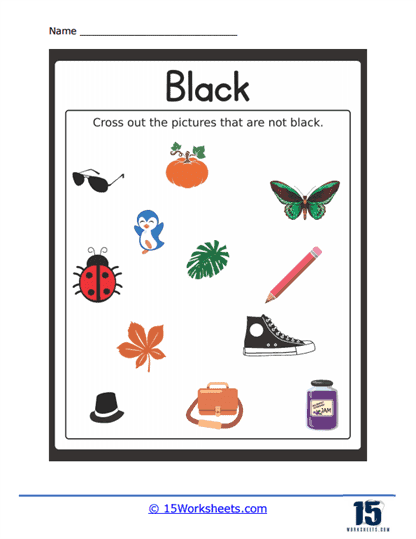
Kids become color detectives in this fun activity where they cross out everything that is not black. The worksheet encourages careful observation as students compare familiar objects and decide which ones match the target color. It’s a simple but effective way to build visual discrimination and sorting skills without feeling overwhelming. Teachers and parents can easily use it as a quick warm-up activity or independent practice station. By the end, students may start spotting black objects everywhere they look like tiny color experts.
Trace, Write, Color, Solve
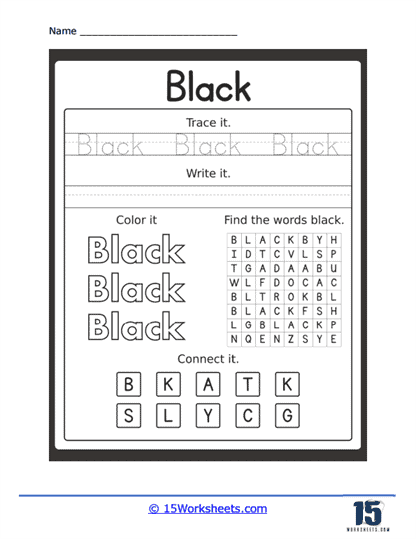
This worksheet packs several activities into one exciting learning adventure focused on the word “Black.” Students trace and write the word, color large bubble letters, complete a word search, and solve a letter jumble for extra practice. The mix of tasks keeps learners engaged while strengthening handwriting, spelling, and letter recognition skills. It works wonderfully at school centers or during quiet practice time at home because there’s always another little challenge waiting. Kids often feel proud after finishing all the mini activities like they just completed a color-themed mission.
Complete It
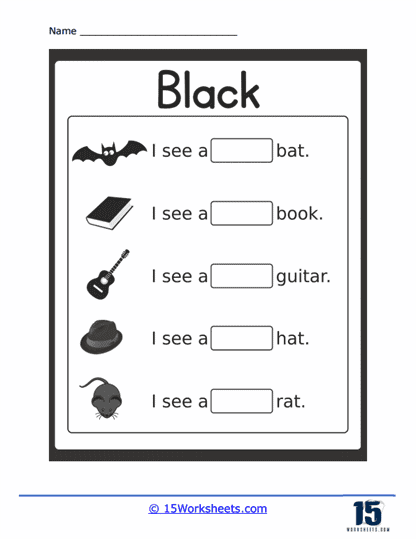
Students complete simple sentences by identifying black-colored objects shown in pictures and writing their names in the blanks. This activity combines vocabulary building with reading practice in a way that feels approachable for early learners. The familiar objects make it easier for children to connect words with pictures and improve confidence in sentence reading. Parents and teachers can use it to encourage discussion about colors and everyday objects around the room. It’s a cheerful little worksheet that quietly sneaks in both literacy and color practice at the same time.
Mostly Black
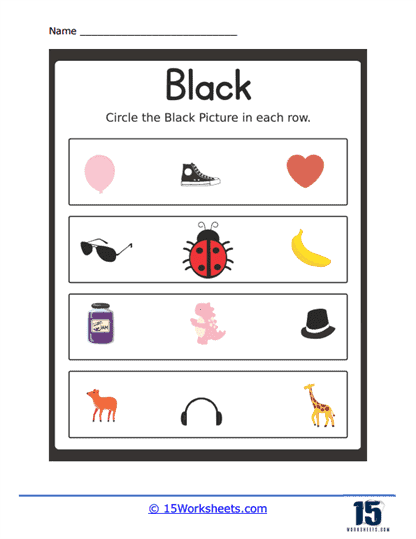
This activity challenges students to look carefully at groups of pictures and circle the object that is black in each row. The colorful comparisons make the worksheet feel almost like a mini game show for young learners. Students sharpen their observation skills while practicing color recognition and following directions. It’s especially useful for helping children slow down and pay attention to small details in pictures. The silly mix of objects often sparks fun conversations and lots of pointing and giggling along the way.
6 of 8 Items
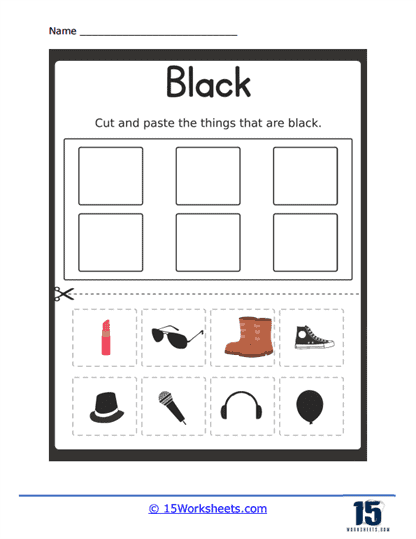
Young learners get hands-on with this cut-and-paste worksheet that asks them to find and sort black objects. Students cut out pictures from the bottom section and glue the correct ones into the empty boxes above. The activity builds fine motor skills while also strengthening decision-making and color identification abilities. Teachers love using worksheets like this because they combine movement, creativity, and learning all at once. By the end, kids feel like they created their own little black-colored collage masterpiece.
Trace and Circle
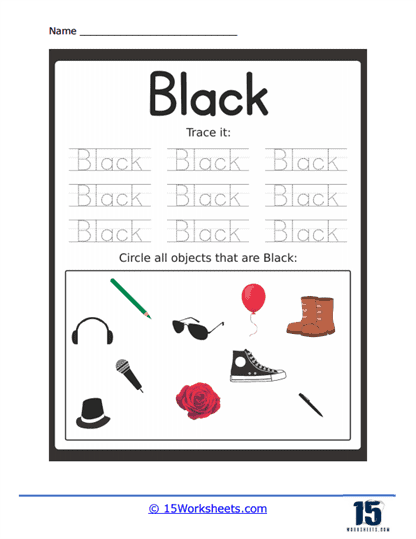
This worksheet combines handwriting practice with an exciting scavenger hunt for black objects. Students first trace the word “Black” several times before searching through a group of pictures to circle everything that matches the color. The tracing section strengthens letter formation while the picture search encourages visual focus and color recognition. It’s a great independent activity because students can move at their own pace without getting stuck. Many children enjoy the “hunt” portion so much they forget they’re practicing important school skills.
4 In 1
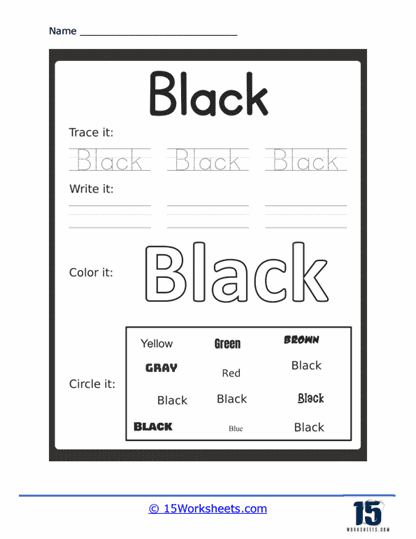
This worksheet gives students four different ways to practice the word “Black,” making learning feel varied and engaging. Children trace the word, write it independently, color large letters, and circle the correct word hidden among other color names. The different activities help reinforce spelling and recognition through repetition without becoming boring. It works especially well for students who enjoy switching tasks frequently to stay focused. By the end, learners usually recognize the word “Black” almost instantly like reading pros.
Writing the Word Black
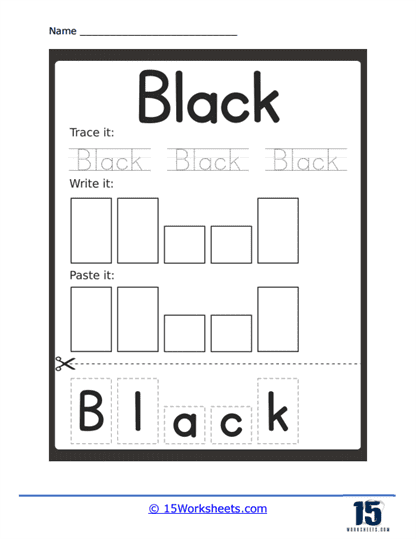
Students get to trace, write, cut, and paste their way through this literacy-focused worksheet. The activity starts with tracing practice before moving into independent writing and finally a cut-and-paste spelling challenge. This variety helps reinforce the spelling of “Black” while also developing coordination and sequencing skills. It’s perfect for small group instruction or quiet home practice because the tasks are easy to follow and highly interactive. Kids often feel extra accomplished when the mixed-up letters finally come together to spell the word correctly.
A Recap
This worksheet acts like a friendly review session for everything students have learned about the word “Black.” Children trace uppercase and lowercase versions of the word, practice writing it independently, and color a large outlined version at the bottom. The repetition helps build memory while keeping the activity relaxing and approachable for younger learners. Teachers can use it as reinforcement after introducing the color or as an easy assessment activity. The giant coloring word at the end feels like a little reward after all the writing practice.
Color Shapes Black
Shapes get a colorful makeover in this worksheet where students color every geometric figure black. The smiling faces on the shapes make the activity feel playful and inviting rather than purely academic. While coloring, students also become more familiar with basic geometry concepts like circles, polygons, and ovals. The activity strengthens fine motor control as children carefully color within the lines. It’s a calm and creative worksheet that mixes art time with early math and color learning.
Yes, Color It Black
This worksheet combines tracing, writing, and coloring into one smooth learning activity centered around the color black. Students practice writing the word before coloring pictures like a bat, microphone, and playing card symbol that are commonly associated with black. The connection between the objects and the target color helps strengthen memory and understanding. It works nicely as a classroom center activity or a fun homework page that doesn’t feel too difficult. Kids especially enjoy bringing the pictures to life with their black crayons or markers.
Really Batty
Bats take center stage in this creative worksheet all about the color black. Students first color a bat and then get the chance to draw even more bats of their own to decorate the page. The open-ended drawing section encourages imagination while still reinforcing the color concept. Teachers and parents can use it to spark conversations about nocturnal animals and Halloween-themed fun. The extra drawing freedom makes children feel like little artists while they practice staying focused on the target color.
Draw Something
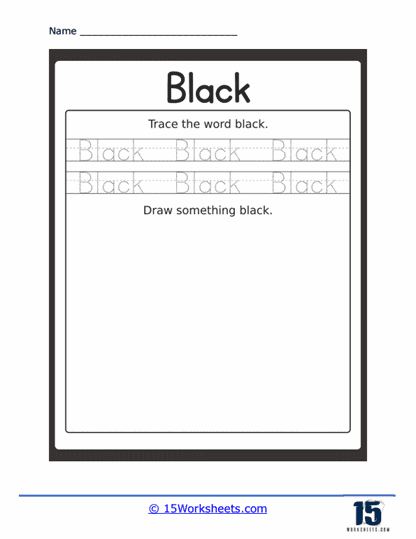
This worksheet invites students to practice tracing the word “Black” before using their imagination to draw something that matches the color. The combination of handwriting and creative art keeps learners engaged through two very different types of activities. Drawing their own black object encourages children to connect classroom learning with real-world experiences and memories. It’s a wonderful activity for home or school because every student’s final drawing turns out unique and personal. Some kids draw bats while others sketch cars, cats, or even giant black cookies with sprinkles.
Tracing the Word
Students strengthen their penmanship by tracing the word “Black” over and over in dotted letters. The repeated practice helps build muscle memory and confidence with letter formation in a calm, structured way. Pictures of black-colored objects at the bottom help connect the written word to familiar real-life items. This worksheet works well as daily handwriting practice or a quick literacy station activity. By the end, learners often start writing the word more neatly and automatically without needing the dotted guides.
Crayon Work
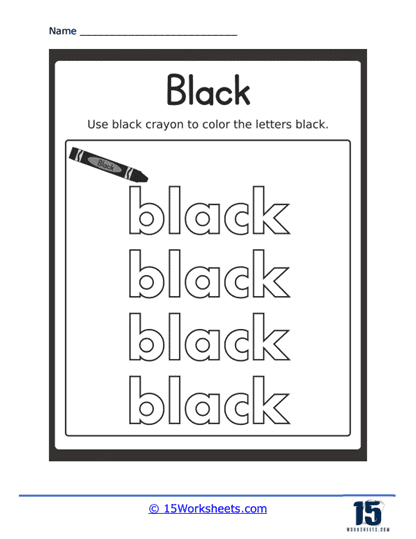
This worksheet keeps things simple and satisfying by asking students to color the outlined word “black” using a black crayon. The repetition reinforces both color recognition and word recognition while also improving fine motor control. The giant outlined letters are perfect for younger learners who are still building coloring precision and pencil grip strength. Parents and teachers can use it as an easy confidence-building activity for beginning learners. There’s something oddly exciting for kids about using a black crayon to color the word “black” again and again.
What is Unique About The Color Black?
Black is a fascinating color with a rich history and various symbolic meanings. Here is an overview of the color black, including its properties, cultural significance, and uses:
Properties
Black is the darkest color, resulting from the absence or complete absorption of visible light. In the color spectrum, black is not considered a color but rather the absence of color. In the context of pigments and color mixing, black is often considered a color, as it can be created by mixing all primary colors together.
Throughout history and across cultures, black has been associated with different symbolic meanings:
- Power and elegance – Black is often seen as a sophisticated and formal color. It is commonly used in high-end products and formal attire, like tuxedos and evening gowns, to convey a sense of luxury and prestige.
- Mystery and secrecy – Black can represent the unknown or hidden, which is why it’s often associated with mystery, intrigue, and secrecy.
- Grief and mourning – In many cultures, black is the traditional color of mourning and is worn at funerals to signify sadness and loss.
- Rebellion and counterculture – Black has been linked to rebellion and countercultural movements, such as punk and goth subcultures.
The Significance of the Color Black
Cultural significance: Black has played an important role in various cultures and religions. For example, in ancient Egypt, black represented fertility and resurrection, while in Christianity, it is often associated with sin and death. In some Eastern cultures, black can symbolize wealth, health, and prosperity.
Art and design: Black has been widely used in art and design throughout history. It has been used as a powerful contrast to other colors, to create dramatic effects, or to convey a sense of depth and dimension. Black is also an essential component of various printing techniques, such as the CMYK color model, where it is represented as the “K” (key) color.
Fashion: Black is a versatile and timeless color in fashion. It is often considered slimming and can be easily combined with other colors. The “little black dress,” designed by Coco Chanel, is a classic example of the enduring appeal of black in fashion.
Idioms and expressions: Various idioms and expressions in the English language involve the color black, such as “black sheep” (an outsider or odd one in a group), “black market” (illegal trade), and “black tie” (a formal dress code).