
Learning Colors Worksheets
All About These 15 Worksheets
Colors are often one of the very first things children notice, point out, and get excited about. This collection of worksheets takes that natural enthusiasm and builds it into early learning fun. From coloring stars and gumballs to tracing the word “yellow” or stacking ice cream scoops, each page mixes art, language, and problem-solving. The variety keeps kids engaged while steadily reinforcing both color recognition and vocabulary.
Instead of just memorizing names, students get to interact with colors in hands-on ways-cutting, pasting, matching, and writing. Some sheets focus on a single color (like red firetrucks or blue objects), while others invite comparison between shades or include sorting and matching colors activities that help kids connect what they see with what they learn. The constant switching of formats makes the learning feel like play. By the time they’ve completed the set, children have practiced both recognizing colors and expressing them in writing.
And these worksheets do more than teach colors-they also strengthen other skills like fine motor control, early spelling, and even simple math. Counting colored stars, building patterns, or finishing color-by-code activities all sneak in bonus practice. At the same time, kids see how color names connect to the world around them-from clothing to birds to tasty ice cream cones. It’s a rainbow of learning that brightens up any classroom or home activity time.
Have a Look Inside Each Worksheet
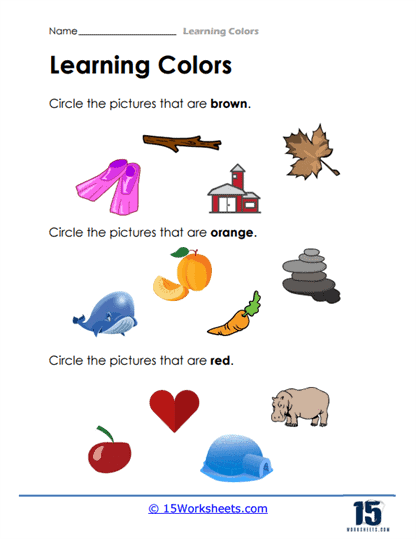
Brown, Orange, and Red
Students sort and color objects that belong to the warm hues of brown, orange, and red. They practice identifying color families and making quick visual comparisons. The activity feels like a cozy fall scavenger hunt on paper. It strengthens color recognition by focusing on three closely related shades.
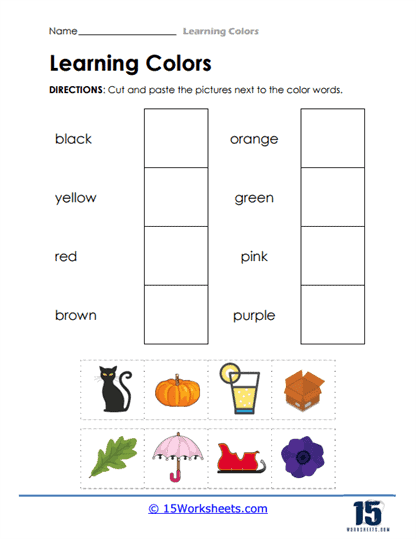
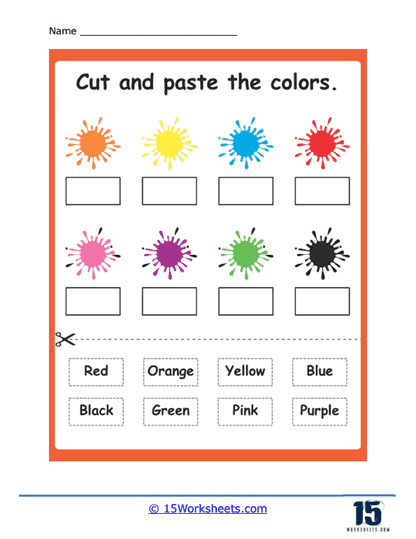
Cut and Match
Kids cut out colored pieces and match them to the correct pictures or color words. Scissor work builds fine‑motor control while matching boosts visual discrimination. It’s hands‑on, messy, and very satisfying. Matching colors to labels anchors early color vocabulary.
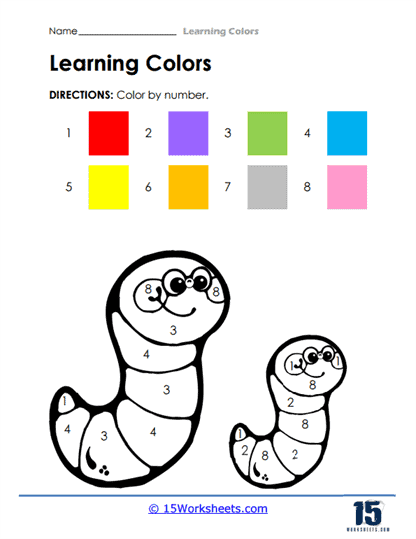
Wiggle Worms Design
Learners color fun wiggle‑worm patterns by following simple color cues. They practice staying inside lines and recognizing repeating color sequences. The wiggly shapes make it playful and low‑stress. Patterned coloring deepens attention to hue and order.
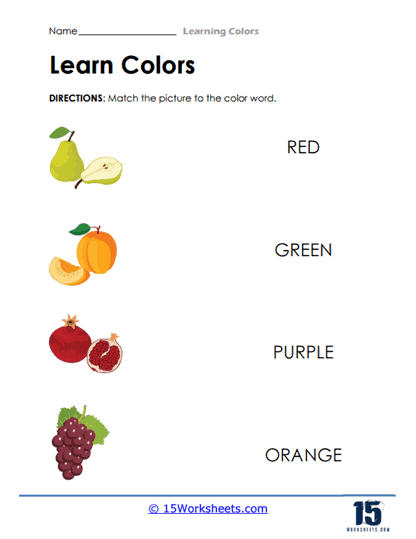
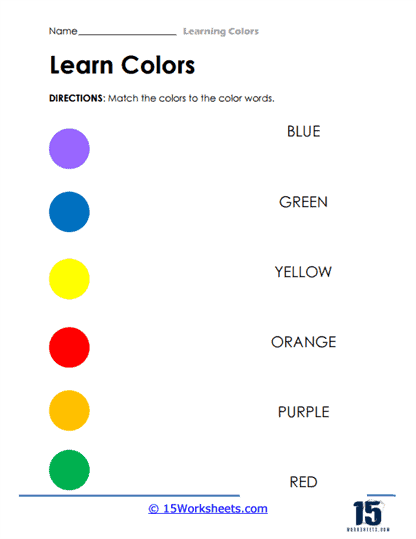
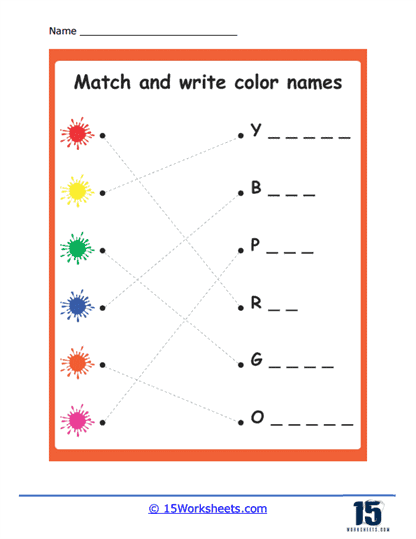
Match Them
Children connect objects to their matching colors or color words. This quick‑hit workout improves speed and accuracy in recognition. The simple format keeps focus on the target skill. It cements one‑to‑one matching between items and color names.
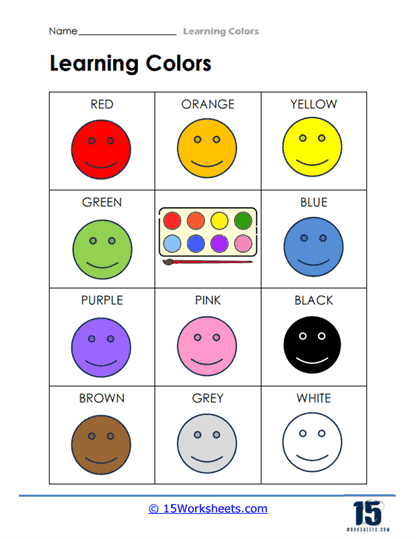
Paint Palette
Students color a painter’s palette to show primary and secondary hues. They learn that palettes organize colors in meaningful ways. The sheet invites a little “mini‑artist” role‑play. Visual mapping of colors supports memory and vocabulary.
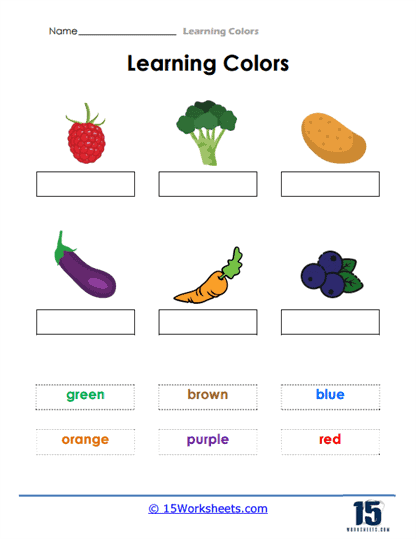
Cut and Paste Veggies
Learners cut vegetable pieces and paste them into color‑coded spots. It blends food themes with color recognition for easy engagement. The puzzle‑style build keeps hands and eyes busy. Sorting by color helps students categorize quickly and confidently.
Write and Shade
Kids trace or write color words, then shade a shape with the matching color. Writing cements spelling while shading locks in meaning. It’s half handwriting, half art class. Coordinating text with hue deepens word‑to‑color connections.
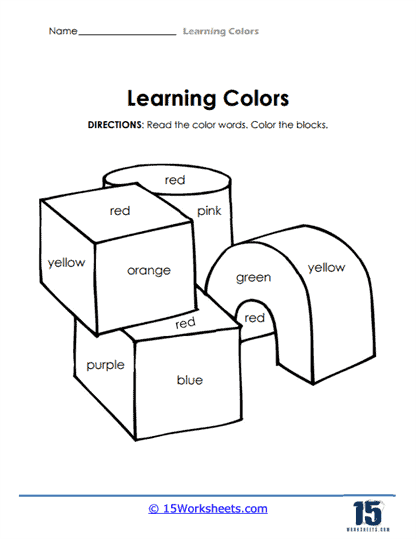
Color the Words on Shapes
Students read color words printed on shapes and color each shape correctly. It’s an instant check of decoding and application. The shape variety keeps it lively. Building word recognition around colors grows early reading fluency.
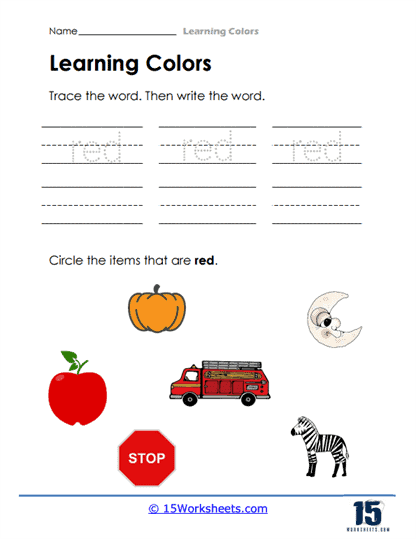
Firetruck Red
Everything here celebrates the boldness of red-especially a classic firetruck. Learners hunt for red items and color them accurately. It’s high‑interest and easy to spot. Focusing on one hue sharpens attention and recall.
Matching Shades to Words
Children match lighter and darker versions of colors to the right shade names. They learn that colors come in tints and shades, not just one look. It’s a gentle step toward nuance. Shade matching develops visual discrimination beyond “basic” colors.
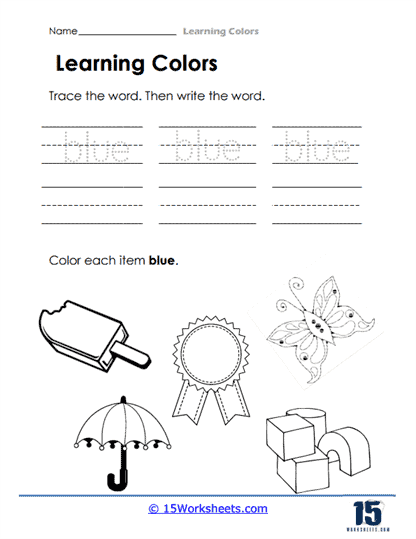
All About Blue
This page spotlights blue objects and vocabulary. Students color, label, and maybe circle all things blue. It’s calm, clear, and confidence‑building. A single‑color deep dive strengthens recognition and language.
All About Yellow
Learners explore yellow through pictures, labels, and quick tasks. Sunshine items make this cheerful and memorable. Tasks are short and friendly for early learners. Zeroing in on one color turns recognition into mastery.
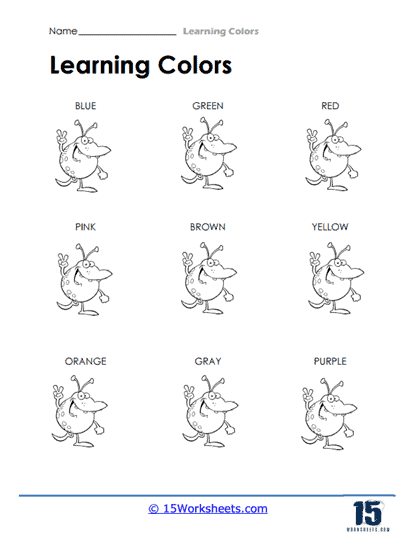
Identify the Alien
Students choose the right colors to complete a silly alien scene. They follow color prompts, then check details carefully. The humor keeps motivation high. Using directions to color accurately practices listening and recognition.
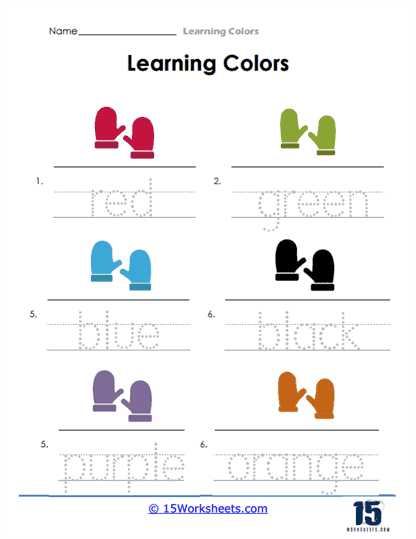
Writing Color Names
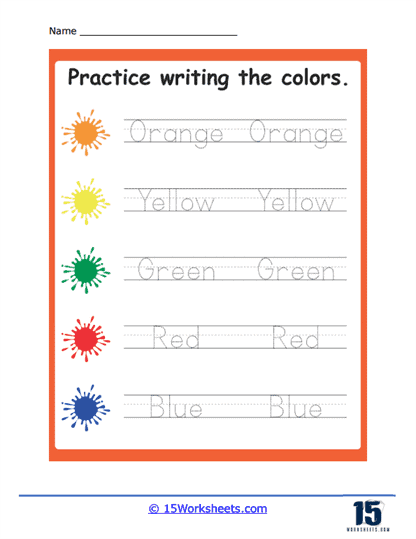
Kids practice writing color words on formatted lines. Repetition supports spelling and letter formation. Then they link each word to a colored object. Handwriting plus meaning = stronger color vocabulary.
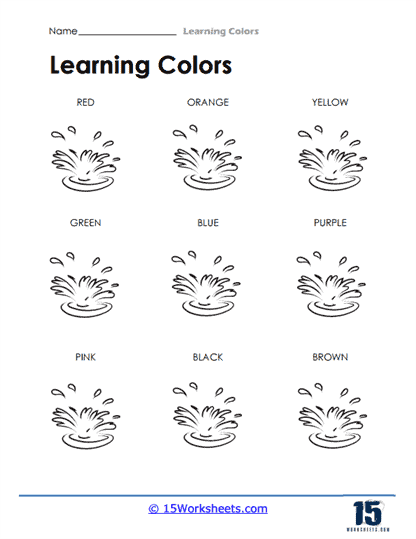
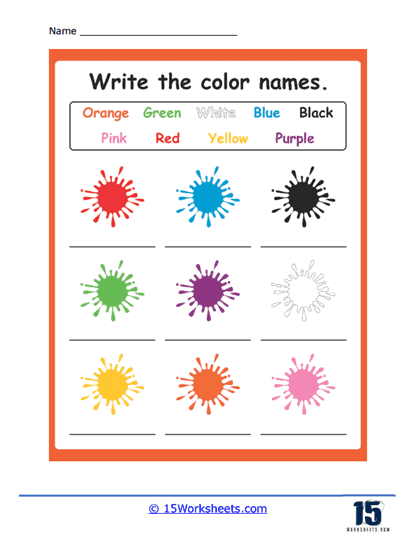
Puddle Splashes
Learners color splash shapes according to prompts or patterns. The blobby shapes feel low‑pressure and fun. They may compare similar hues to pick the right one. Playful splashes make fast practice feel like art time.
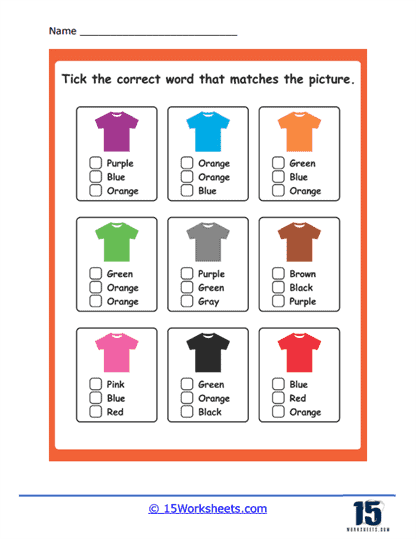
Shirt Color
Children color shirts to match labels or simple outfit directions. They connect real‑life items to color words. It’s quick, visual, and relatable. Everyday objects anchor the learning.
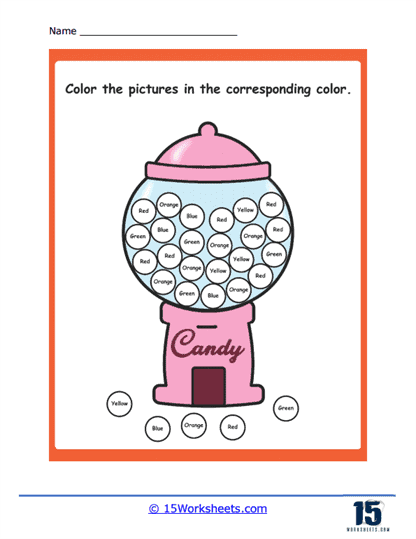
Colored Gumballs
Students color gumballs to match a key or count sets by color. It turns sorting and counting into a sweet little challenge. The themed picture keeps attention. Counting by color builds both math and recognition.
Splat
Kids color paint splats using a legend or teacher‑called cues. The big shapes invite bold coloring. It’s simple, energetic practice with instant feedback. Clear legends reinforce color‑key following.
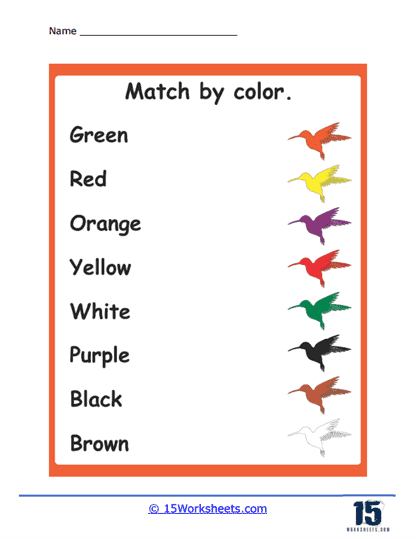
Bird Matching
Learners match birds to color prompts or colored backgrounds. They look closely at details like beaks, wings, and bodies. Nature themes spark curiosity. Careful noticing strengthens color identification.
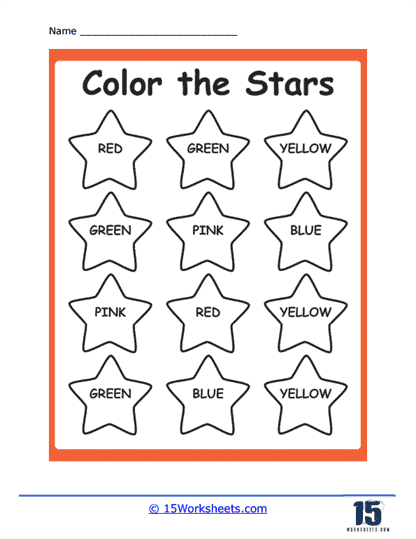
Color the Stars
Students color stars by code, sometimes counting or comparing sets. The repeating shapes support focus on hue, not drawing. It feels a bit like a celebratory craft. Coding stars by color builds accuracy and stamina.
Paste and Patch
Kids paste colored patches into the correct spots to complete a picture. It’s tactile and puzzle‑like. The final reveal rewards careful matching. Patchwork assembly reinforces color‑to‑space alignment.
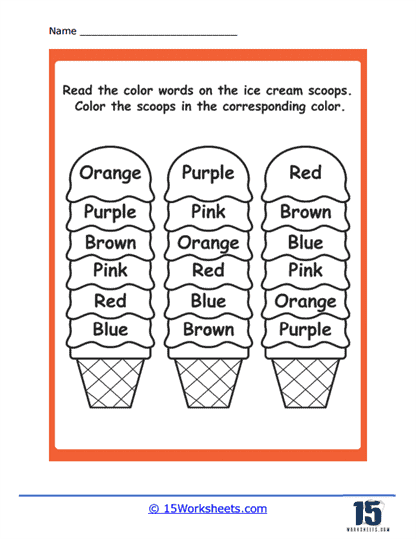
Ice Cream Scoops
Learners stack scoops by color or follow a “sundae” recipe card. The treat theme is irresistible and memorable. They practice order, matching, and sometimes counting. Sequencing scoops by color boosts recall and attention.
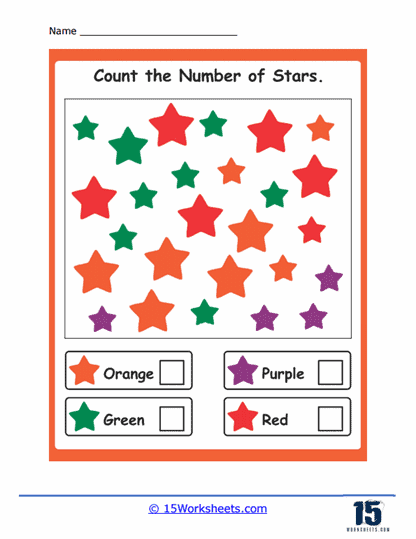
Number of Stars
Students count stars of each color and record totals. It blends early math with color analysis. The data feel concrete and visual. Counting by color strengthens classification and numeracy.
Row of Colors
Children complete or extend rows using repeating color patterns. It’s a gentle entry into pattern recognition. Short rows keep the task approachable. Seeing sequences in color prepares them for bigger math ideas.
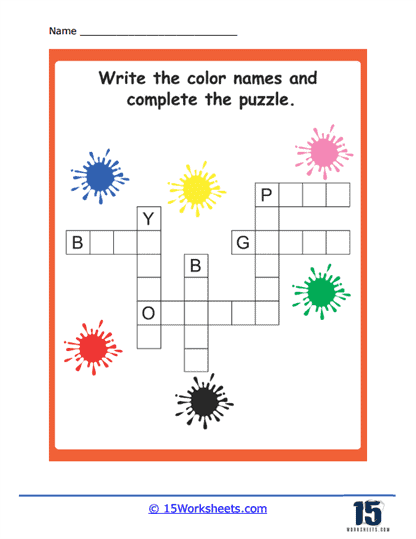
Crossword Colors
Learners solve a tiny crossword using color words. Spelling meets puzzle‑solving for extra engagement. Each filled square reinforces a letter pattern. Word play cements color vocabulary.
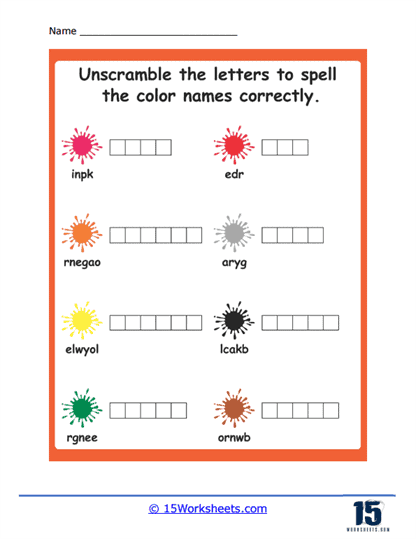
Unscramble the Colors
Students rearrange mixed‑up letters to form color words. It’s a bite‑sized phonics and spelling challenge. The “aha!” moment comes with each solved word. Decoding builds flexible recognition of color terms.
Finish It Up
Kids complete partially colored scenes by following color cues. They check for missing hues and details. The task rewards careful observation. Completing patterns and pictures builds thoroughness with color use.
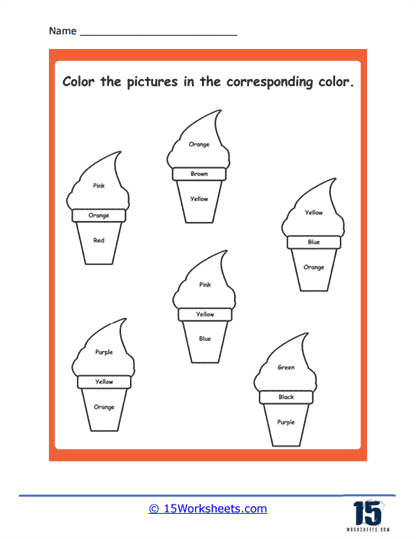
Soft Ice Cream
Learners color soft‑serve swirls to match a key or preference list. It’s cheerful and very on‑brand for early grades. They might compare “vanilla,” “strawberry,” or “mint” tones. Tasty themes make color choices stick.
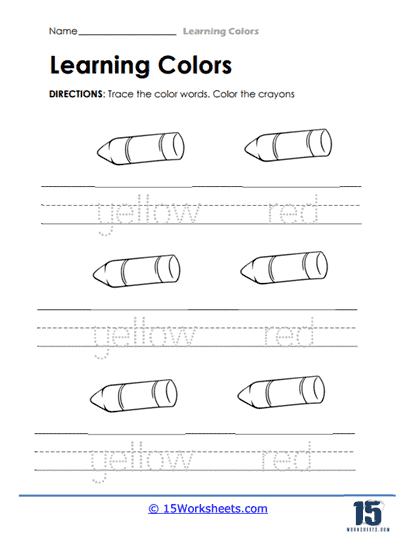
Crayons of Color
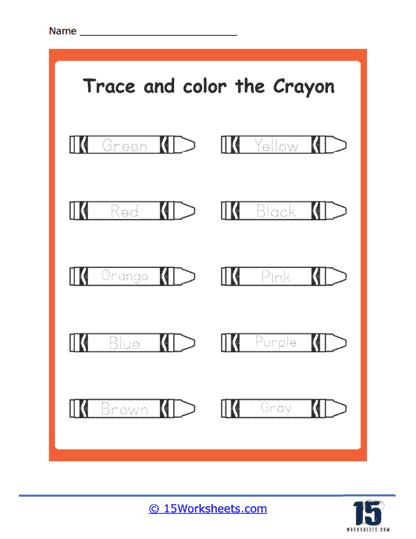
Students label and color big crayon icons with the correct words. The familiar object makes vocabulary feel natural. Repetition builds speed and accuracy. Crayon‑to‑word matching reinforces everyday color language.
Color Words Penmanship
Kids trace and write a set of color words neatly. They then color matching objects or boxes. The routine links handwriting with meaning. Clean penmanship supports quick, confident color reading.
How to Learn and Name Colors
Preschool kids enjoy learning colors and everything related to them because bright colors attract and captivate them. Teachers or parents can take advantage of this while teaching kids about colors. It is best to begin with basic and bright colors when introducing colors and their names.
Here are a few tips and activities you can use to help students in learning colors.
Teach the Child’s Favorite Color First
Most children are exposed to colors at a very young age. However, they don’t know what the colors are called. Many children are attracted to one specific color, which you can use to your advantage. If you are a parent trying to teach your child colors and their names, start with the color they are most diverted towards.
You can do so by putting a bunch of colored pencils in front of the child and seeing which one the child gravitates towards first. For example, your child picks up a yellow colored pencil. You can start by asking them what it is. After they attempt to answer, you can say this is a yellow colored pencil.
Keep Practicing
After introducing children to one specific color, the best way to help them learn colors is to keep repeating the color’s names.
Teachers can do so by presenting students with different objects of the same color. Moreover, parents can do so by pointing at anything yellow. For example, if you take your child out on a stroll, point toward everything yellow and ask your child to tell you what color it is.
Go One Color at a Time
The best way to ensure children learn colors and their names effectively without confusion is to go one color at a time. If you bombard children with various colors in the same lesson, they likely won’t remember any name at the end. Therefore, taking it slow is the best way to ensure no confusion between colors.
Once you ensure that a child remembers what yellow color looks like and how it’s spelled, you can then move on to teaching the next color.
Activities to Learn and Name Colors
Another great way to help children in learning colors and their names is to make them practice with different fun activities. Here are a few activities you can use:
Grab a few colored yarns. For example, you are focusing on the color yellow. You can put the colored yarns in a basket and place them in front of the child. Next, pick up the yellow-colored yarn and say, this yarn is yellow. Next, you can give the child the basket and ask them to pick out yellow. Try out this activity with different objects such as balls, play dough, or stuffed toys
Use color puzzles to practice colors. You will find various types of color puzzles in the market. Color puzzles are fun, and they will help your child quickly grasp colors and their names
Come up with a sorting colors activity. Get a bunch of colored crayons and put them in front of the child. Next, you can tell them to sort colors out. While the child sorts the colors out, focus on your target color and ask them questions like show me yellow
Coloring books are a must when teaching color. Coloring books will also help students practice coloring. You can place a coloring book and colored pencils in front of the child and tell them to color the diagram yellow or any other color you are focusing on