
Secondary Colors Worksheets
All About These 15 Worksheets
Secondary colors-orange, green, and purple-are where the magic of mixing begins, and these worksheets help kids discover them in the most colorful ways. From coloring gumballs and shoes to decorating hot air balloons, the activities combine art with hands-on practice. Kids aren’t just memorizing colors; they’re seeing how those shades show up in the real world, like avocados, tulips, and tasty beets. The variety of worksheets makes learning about colors feel fresh, exciting, and interactive.
This collection also mixes creativity with literacy and critical thinking. Worksheets like Label the Secondary Colors and Word Color Writing sneak in spelling and handwriting practice while reinforcing color knowledge. Activities that include color sorting practice and picture-matching tasks help children understand not only what secondary colors are but also how to recognize them in everyday life. It’s a clever way to keep both right- and left-brain skills growing at the same time.
Beyond just identifying colors, these worksheets invite kids to notice how colors connect to feelings, objects, and even cultural symbols. When students color a purple tulip or green avocado, they’re building associations that make the concept stick. These pages help them see that colors aren’t just for art-they’re part of how we experience the world.
Have a Look Inside Each Worksheet
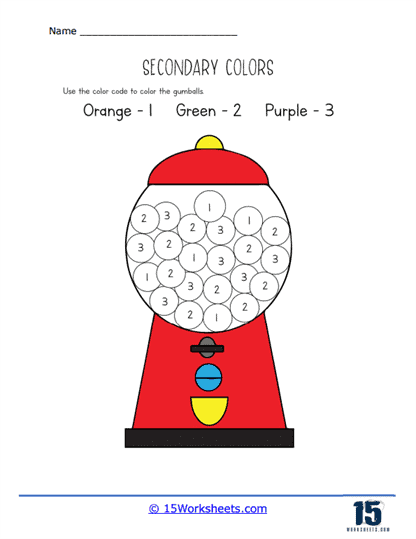
Secondary Gumball Colors
Students color in gumballs using secondary colors, making learning feel like a sweet treat. It helps them recognize and apply orange, green, and purple in a fun, playful way. Kids also practice fine motor skills as they carefully color the shapes. A cheerful introduction to secondary colors.
Balloon of Thoughts
This worksheet has balloons filled with color activities for kids to complete. Students identify and use secondary colors while connecting them to real objects. It builds creativity and color vocabulary at the same time. A lighthearted and engaging way to reinforce learning.
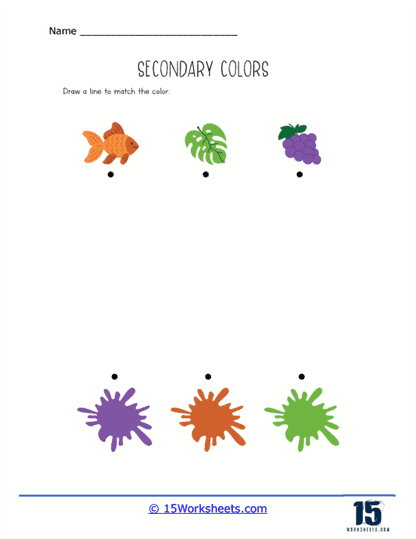
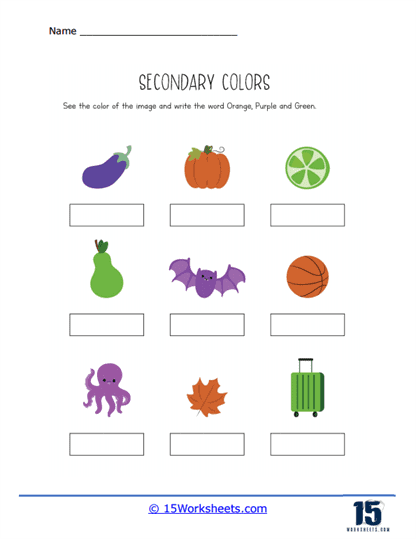
Unique Color of Things
Children match everyday objects with their correct secondary colors. The activity makes color learning feel personal and relatable. It strengthens observation skills while reinforcing color recognition. A fun mix of art and real-world connections.
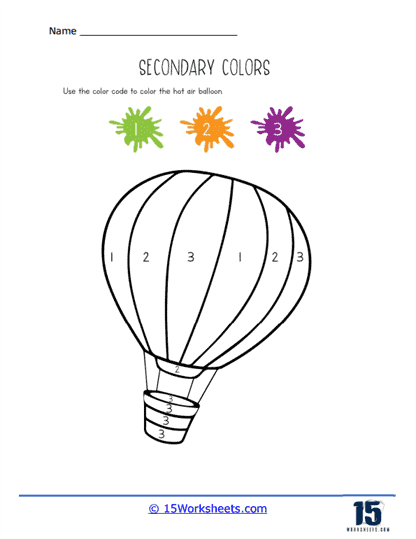
Hot Air Balloon
Kids decorate a hot air balloon using secondary colors. The large, playful design encourages creativity and careful coloring. It provides a chance to review which primary colors mix to make secondary shades. A visually exciting way to practice color theory.
Label the Secondary Colors
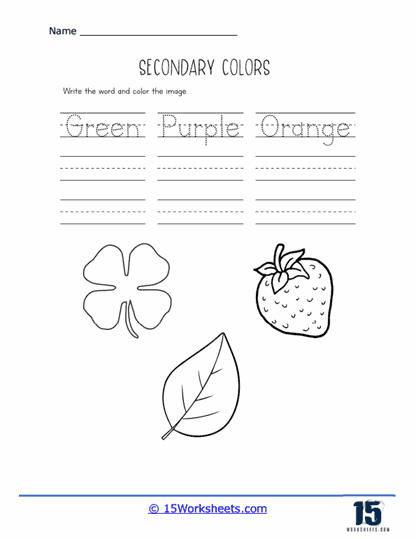
In this worksheet, students practice writing and labeling secondary colors. It combines handwriting practice with color learning. Kids reinforce spelling while strengthening their understanding of color words. Perfect for mixing literacy with art.
Use the Right Color
Students must choose the correct secondary color to finish pictures. This encourages both critical thinking and artistic expression. It helps reinforce the rules of color mixing in a practical way. A creative drill for color mastery.
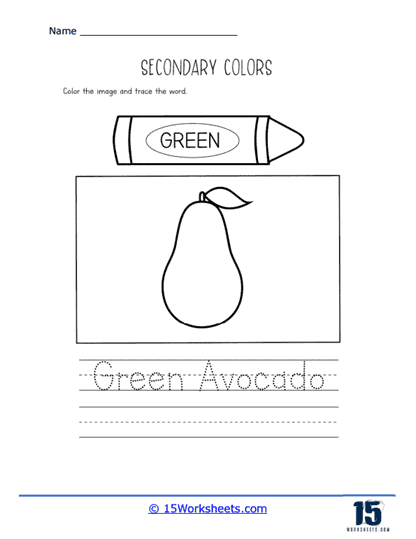
Green Avocado
Learners color an avocado with the secondary color green. This worksheet ties color recognition to a familiar food. It blends art, observation, and real-world connections. A simple but effective way to reinforce the color green.
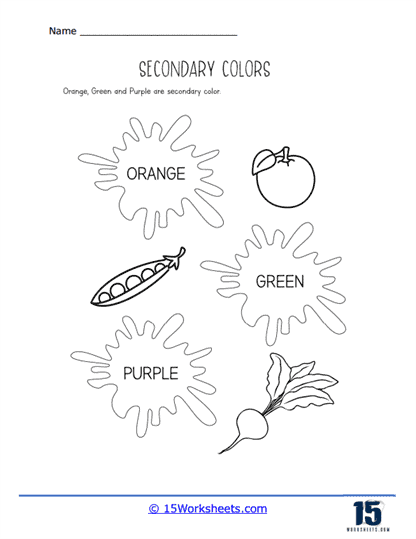
Orange, Pea, Beets
Kids identify and color foods using secondary colors. This activity makes the lesson fun and deliciously themed. It reinforces orange, green, and purple through real-life examples. A tasty twist on color recognition practice.
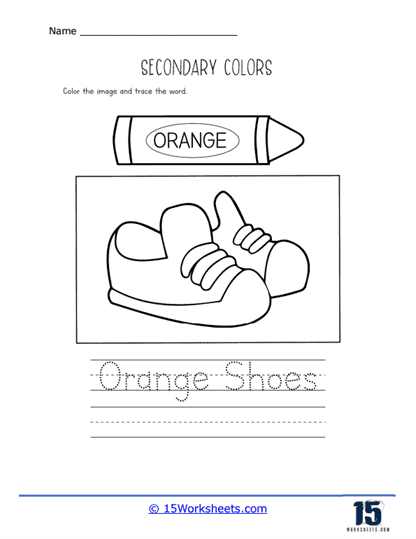
Orange Shoes
Students color shoes in bright orange, one of the key secondary colors. It brings fashion into the mix and sparks creativity. The worksheet strengthens attention to detail while reinforcing color learning. A lively way to practice orange recognition.
What a Splash
Children color a splashing design with secondary colors. The worksheet highlights how colors add energy and excitement to art. It boosts creativity while reinforcing color vocabulary. A dynamic activity that kids will enjoy filling in.
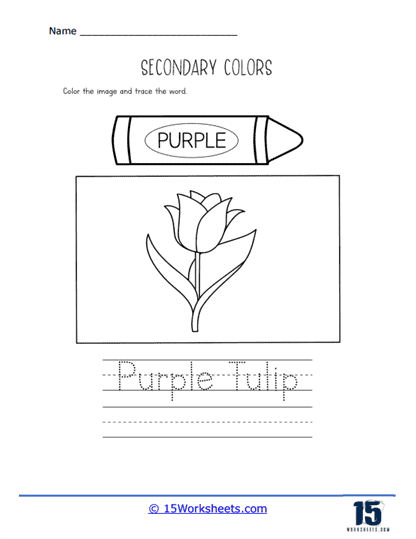
Purple Tulip
Learners color a tulip using the secondary color purple. This worksheet ties color learning to nature. It helps students connect abstract color concepts with real-world objects. A simple, beautiful way to highlight purple.
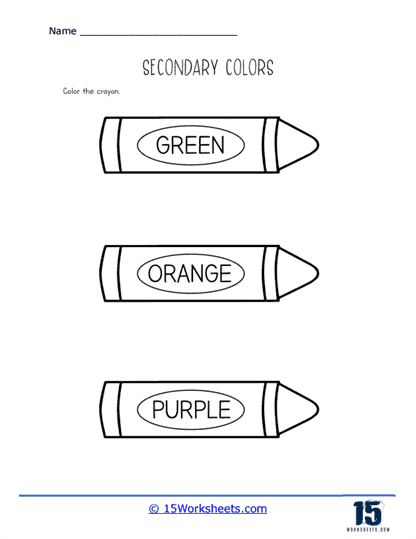
Secondary Crayons
Kids match crayons to their correct secondary colors. This reinforces recognition while tying the lesson to familiar classroom tools. It strengthens both visual memory and vocabulary. A fun activity for everyday practice.
Secondary Color Words
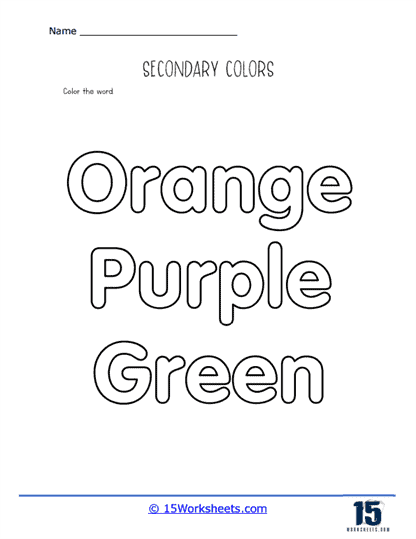
Students read and identify words for secondary colors. This worksheet reinforces both reading and color recognition. It strengthens literacy alongside color learning. Perfect for learners who enjoy word-based activities.
Word Color Writing
Children practice tracing and writing secondary color words. The worksheet develops handwriting while reinforcing spelling. It supports early literacy and fine motor control. A great blend of language arts and art concepts.
Secondary Color Columns
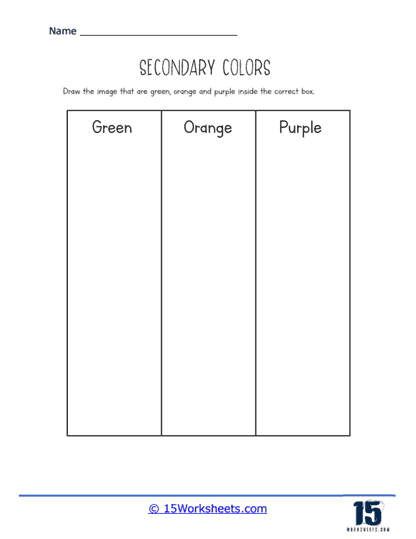
Students sort and organize colors into proper categories. This structured activity reinforces which shades belong to the secondary group. It encourages careful thinking and neat organization. A clear, logical way to wrap up secondary color learning.
What Are Secondary Colors?
After learning all about primary colors, which are red, blue, and yellow, you may know how special they are because they cannot be made by mixing other colors together. But do you know what happens when we mix primary colors? We get something called secondary colors!
Secondary colors are colors that are created by mixing two primary colors together. When we mix primary colors, something magical happens, and new colors are born.
If we mix red and blue together, what do you think we get? That’s right! We get the color purple! Purple is a beautiful secondary color. It can remind us of things like grapes or lavender flowers.
Now, what about mixing blue and yellow? Can you guess what color we will get? Yes, it’s green! Green is another secondary color. It can remind us of things like grass or leaves on a tree.
And finally, if we mix red and yellow, what color do you think we will get? You got it! We get orange! Orange is a warm and vibrant secondary color. It can remind us of things like a juicy orange or a bright sunset.
Isn’t it exciting to see how new colors can be created by mixing primary colors? Secondary colors are like friends that are made when primary colors come together. They are special because they have their own unique look and personality. We can use secondary colors in our artwork, coloring, and painting to make things even more colorful and fun!
Remember, secondary colors are created by mixing primary colors. Red and blue make purple, blue and yellow make green, and red and yellow make orange. So, the next time you’re painting or coloring, try mixing different primary colors together and see what wonderful secondary colors you can create! Have fun exploring the colorful world of secondary colors!