
Number Line Subtraction Worksheets
About These 15 Worksheets
Number line subtraction transforms math from symbols on a page into mapped journeys, and this collection does a stellar job merging movement, number sense, and fun. Through bouncy frogs, secret messages, and sliding back visuals, students get to “see” subtraction-hopping from 10, sliding across grids, or counting backward in dramatic fashion. It’s subtraction as an action, reinforcing that taking away isn’t just an operation-it’s spatial and intuitive. With visuals for one-digit, two-digit, and everything in between, learners build a conceptual bridge that supports both arithmetic fluency and deeper understanding.
Teachers love this collection because it blends structure with creativity. Some worksheets focus on straightforward backward counting or difference modeling, while others introduce themes like decoding hidden messages or guiding cartoon frogs. The repetition of moving left-with themed variation-keeps subtraction fresh and manageable. Whether learners need lots of visual control or themed motivation, this mix hits every note.
Understanding subtraction on a number line doesn’t just help with schoolwork-it supports lifelong number sense. Learners internalize subtraction as movement, meaning they can mentally jump backward when solving problems later. It lays groundwork for adding, comparing, and working with negative numbers in a visual way. Number line subtraction grounds math in spatial reasoning, building a foundation that boosts confidence and independence in all areas of math.
Have a Look Inside Each Worksheet
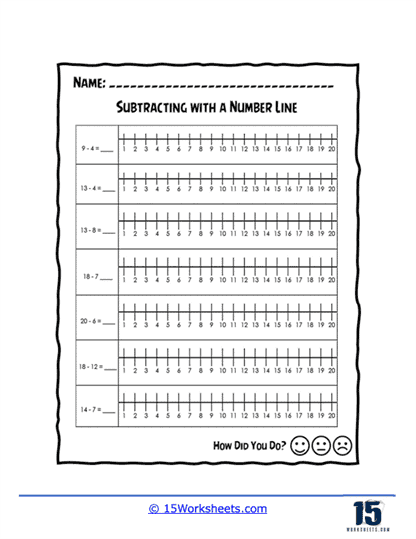
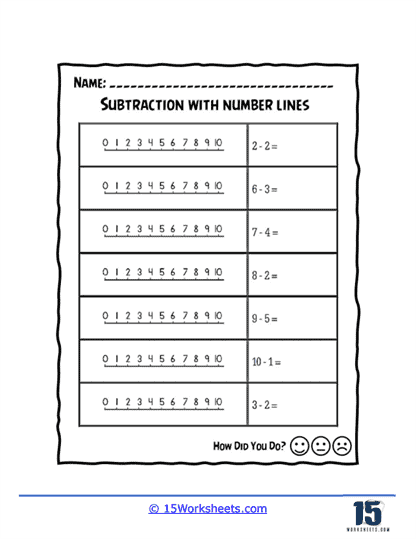
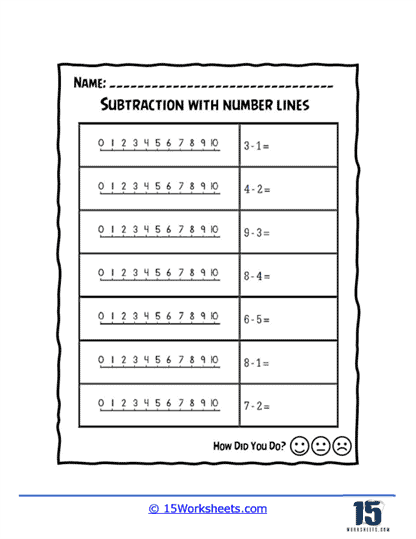
Subtract 1-Digit Number Line
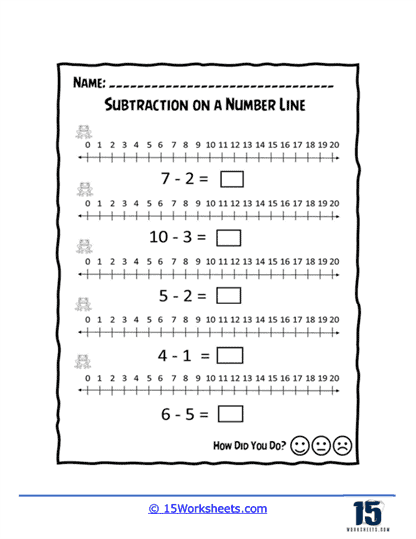
Learners subtract one-digit numbers using a number line-perfect for visualizing what “minus” really means. By hopping backward on the line, students gain a concrete sense of taking away. The format builds subtraction fluency while strengthening number sense. A simple, foundational tool for mastering subtraction in motion.
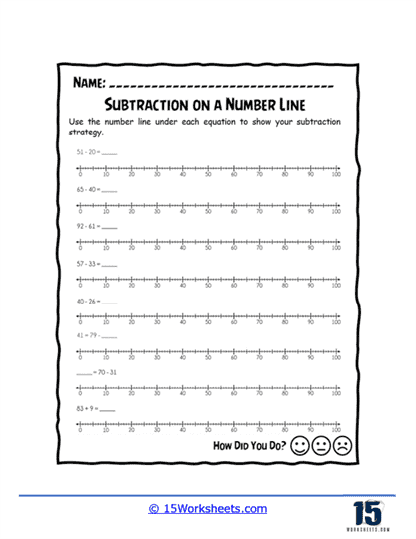
Subtract 2-Digits Number Line
This worksheet levels up subtraction by having kids subtract two-digit numbers on a number line. It supports understanding of value and place as they move backward in larger steps. Visual tracking helps prevent confusion, especially when regrouping isn’t involved. A strategic bridge between basic subtraction and multi-digit number sense.
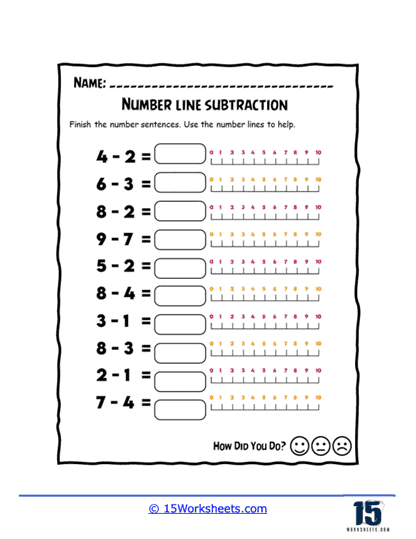
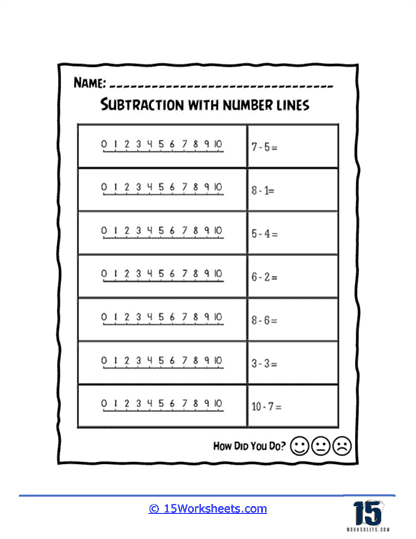
Using Number Lines
Here, students practice various subtraction problems using provided number lines-perhaps both one- and two-digit. This helps them become comfortable selecting starting points and counting back effectively. It reinforces subtraction as a movement, not just a symbol. A versatile entry into visual subtraction strategies.
Model the Difference
Learners model subtraction problems by showing the difference on a number line-highlighting the gap between the numbers. This emphasizes understanding the “how far apart” aspect of subtraction. Connecting written problems to visual jumps strengthens conceptual clarity. A brilliant way to build subtraction insight step by step.
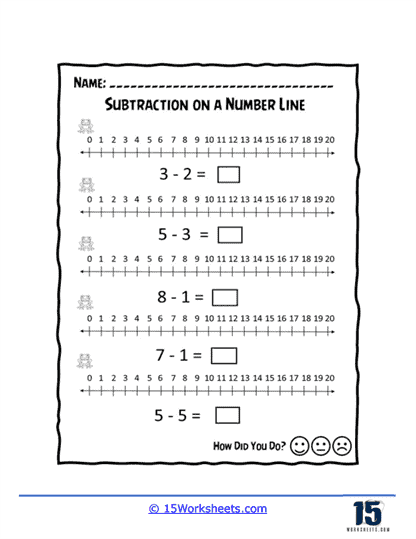
Bounces on the Number Line
This worksheet makes subtraction playful by having students “bounce” backward on a line-each bounce represents a subtraction step. It adds rhythm and pacing to number jumps, reinforcing counting back multiple steps. The bouncing imagery turns math into a game-like motion. A kinetic kick to keep number line subtraction lively and engaging.
Secret Message Math
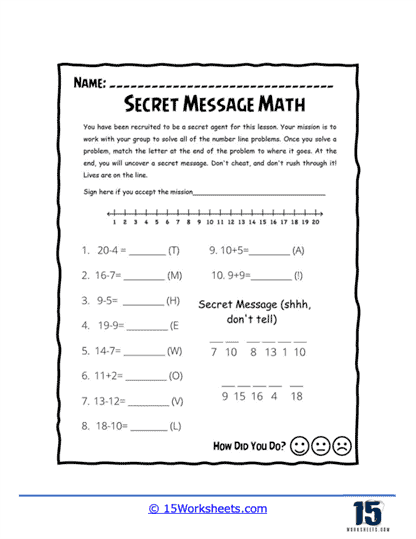
Kids solve subtraction problems on a number line, then use the answers to decode a secret message-perhaps revealing a fun phrase or joke. This combines number sense with puzzle solving and reading. It motivates students to pay attention to their math work. A sneaky, skill-rewarding way to practice subtraction.
Frog Hops From 10
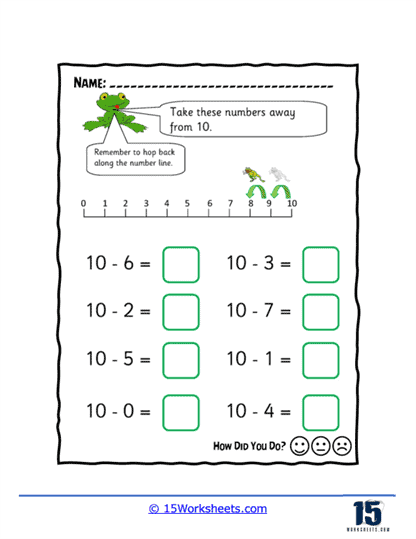
Here, a frog starts at 10 and hops backward along a number line to subtract, making subtraction into a visual journey. The frog motif adds whimsy and imagination to otherwise abstract jumps. By tracking the frog’s hops, students learn to count back with confidence. A charming, themed way to engage young mathematicians.
Counting Back
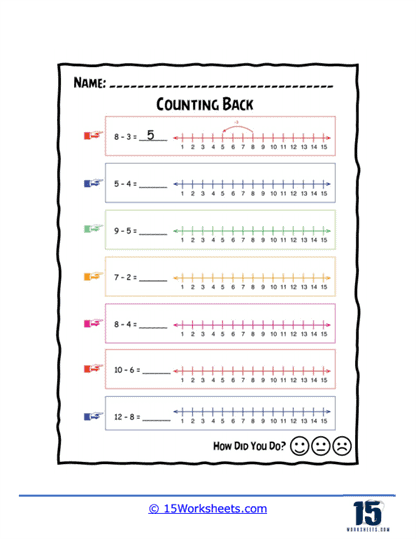
Students practice counting backward from various starting numbers using a number line, gradually building subtraction intuition. It reinforces the core idea that subtraction is stepping back in sequence. Regular backward movement builds mental subtraction fluency. A foundational exercise in backward-forward thinking.
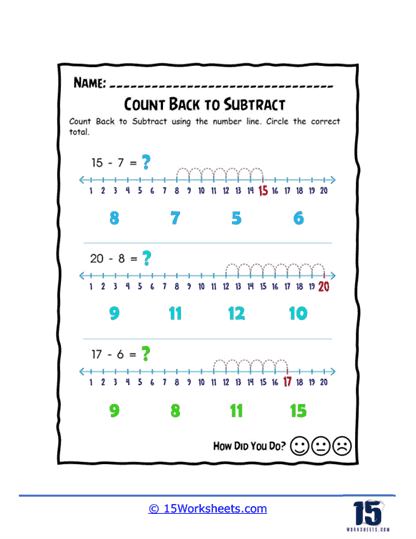
Count Back to Subtract
This activity combines counting-back strategies with subtraction problems, helping students internalize what it means to subtract. They physically trace or count back on the line, linking the number operation to action. Repurposing counting skills in this way deepens understanding. A smart stride toward independent subtraction.
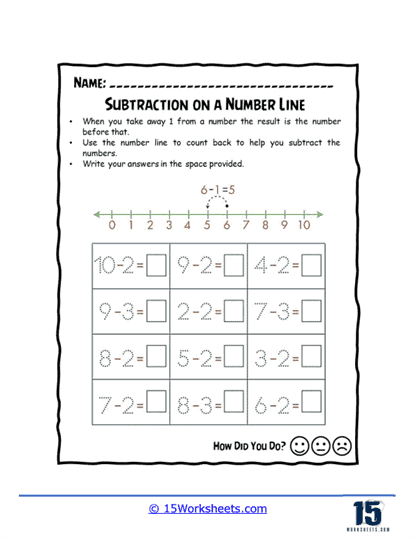
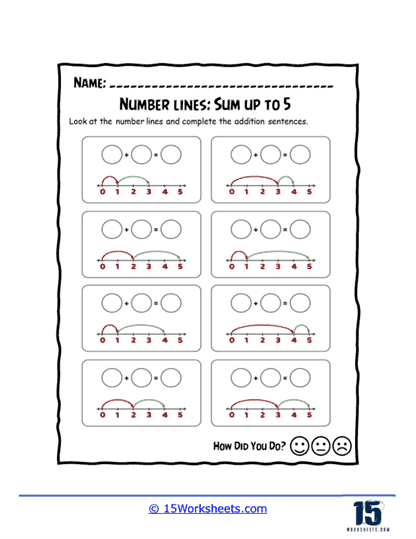
Sum to 5
On a shorter span, students subtract to reach the target number 5-perhaps counting back from numbers 6-10. This narrow focus builds familiarity with subtracting to a specific base. Practicing around five helps with benchmarks and mental subtraction speed. A targeted, compact way to build fluency with early subtraction facts.
Moving Backwards
This worksheet emphasizes backward movement on a number line-visualizing subtraction steps in motion. Students’ll practice starting at a number and sliding backward in intervals. It reinforces the notion of subtraction as a journey rather than just a math sentence. A dynamic primer on subtraction directionality.
Start to Finish
Learners practice subtraction by moving from a start number back to a finish number on the number line-bridging two numeric points. This promotes flexibility in choosing number paths and understanding subtractive steps. It helps students link end points to subtraction fact fluency. A practical mapping of how subtraction leads from start to result.
Way Back Subtraction
This worksheet asks students to travel “way back” on the number line-maybe making larger backward jumps to reach the correct difference. It supports tiered understanding, from small steps to more challenging leaps. The adventurous name adds curiosity and grit to the task. A bold prompt to practice subtraction with flair.
Sliding Back
Here, students slide backward along the number line, perhaps with directional arrows or shaded paths highlighting subtraction. It emphasizes smooth movement and step recognition. Sliding brings a controlled, visual sense of subtraction rhythm. A fluid, motion-inspired approach to reinforcing subtraction.
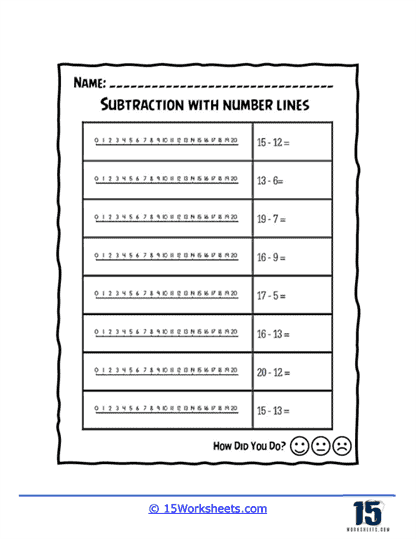
Double Digit Number Line
This worksheet invites students to subtract double-digit numbers using a number line-great for extending number sense to higher values. It underscores how subtraction can scale up while staying visual and hands-on. Handling double digits visually supports deeper understanding of place value. A confident step into two-digit subtraction territory.
How Does A Number Line Help You Subtract?
A number line is a useful tool for visualizing and solving subtraction problems. It allows you to see the process of subtraction in a tangible way, which can make it easier to understand and remember. Here’s how a number line helps with subtraction:
Visualizing the Operation – A number line helps you to visualize the operation of subtraction as a movement along a line. This can make the process more concrete, particularly for those who learn better with visual aids.
Understanding Direction – When you’re using a number line, subtraction involves moving to the left on the line, because the numbers get smaller as you move in that direction. This can help you to understand the concept of subtraction as “taking away.”
Counting Intervals – With a number line, you can count the exact number of steps or intervals from one number to another, which can help you to accurately solve subtraction problems. For example, to subtract 3 from 5, you would start at 5 on the number line and then move three steps to the left, which would take you to 2.
Checking Answers – Finally, a number line can be used to check your answers. If you’ve done a subtraction problem in your head or on paper, you can use a number line to verify that your answer is correct.