
Subtraction Worksheets
About Our Subtraction Worksheets
Subtraction is one of those math skills kids use constantly, even when they don’t realize it. Whether they’re figuring out how many cookies are left, counting down days until the weekend, or sharing toys with friends, subtraction pops up everywhere. These worksheets help students practice subtraction in lots of different ways so the skill starts feeling natural instead of stressful. From simple single-digit problems to regrouping with large numbers, this collection gives learners the chance to build confidence step by step. The activities are designed to keep math approachable, encouraging kids to see subtraction as something they can do successfully.
This collection mixes visual learning, hands-on activities, and traditional practice pages to keep students interested while they learn. Some worksheets use number lines, pictures, dominoes, wheels, and coloring pages to help math feel less intimidating for younger learners. Other pages challenge students to think more deeply with missing numbers, regrouping, and subtraction word problems. The variety helps students strengthen accuracy, problem-solving, and number sense without feeling stuck doing the same type of exercise over and over. It’s the kind of practice that quietly builds stronger math habits while keeping frustration levels low.
Subtraction also teaches kids important life skills beyond simply finding answers. Students learn how to think carefully, check their work, and solve problems one step at a time. These worksheets help children understand that math is not just about memorizing facts – it’s about making sense of numbers and using them in everyday situations. As students grow more comfortable with subtraction, they also build confidence that carries over into addition, multiplication, division, and future math concepts. Plus, there’s something pretty satisfying about making numbers disappear correctly.
About Each Worksheet
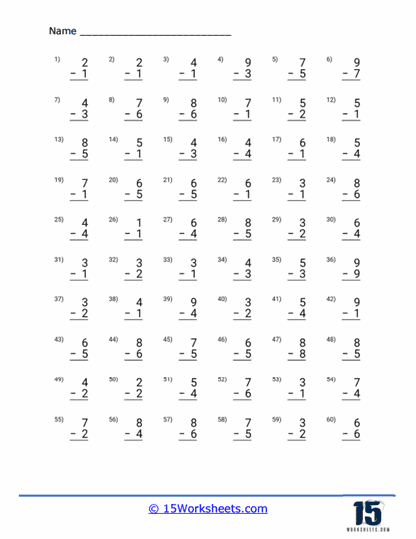
Let’s start nice and easy with simple subtraction facts that help young learners feel successful right away. Kids practice taking away small numbers while building speed, confidence, and stronger number recognition skills. The problems are simple enough to avoid frustration but still give plenty of repetition for fluency practice. These pages work great for math warm-ups, homework, or quick practice at the kitchen table. Before long, students will be solving subtraction facts almost automatically.
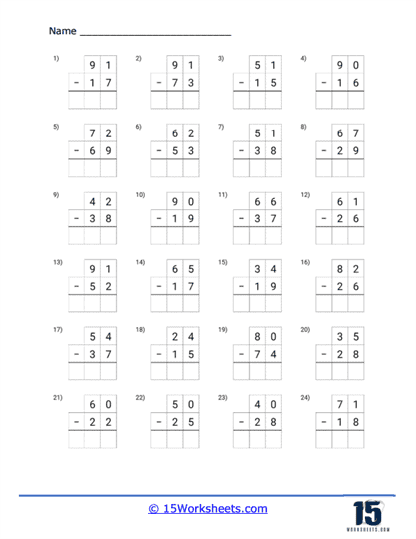
Now the numbers are getting a little bigger, but don’t worry – students are ready for it. These worksheets help kids practice subtracting two-digit numbers while paying close attention to place value and organization. The exercises encourage learners to slow down, line up numbers carefully, and check their work as they go. It’s a great way to build independence and confidence with larger problems. Soon enough, two-digit subtraction starts feeling way less intimidating.
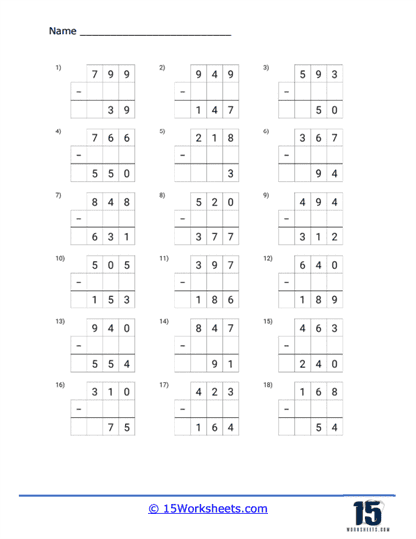
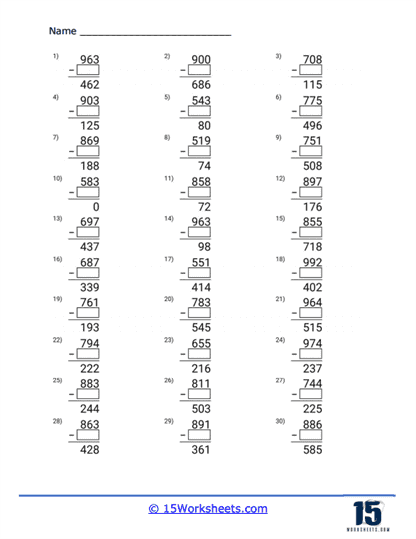
Three-digit subtraction can look serious at first glance, but these worksheets help break everything into manageable steps. Students practice organizing their work carefully while strengthening accuracy and multi-step thinking skills. The repeated practice helps kids stay calm and focused even when the numbers get larger. Teachers and parents love how these pages encourage good math habits without overwhelming learners. It’s basically subtraction training wheels for bigger-number confidence.
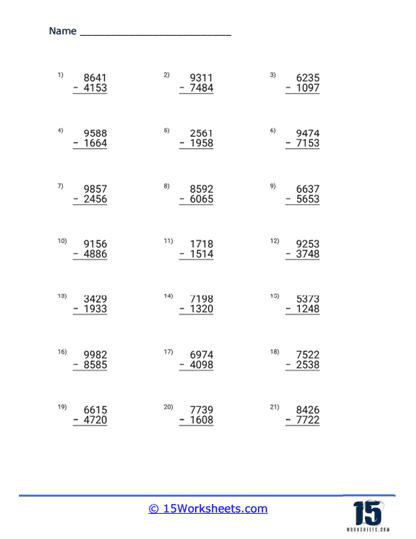
Big numbers? No problem. These worksheets give students practice subtracting four-digit numbers while sharpening attention to detail and problem-solving skills. Kids learn how important careful organization becomes when working with larger place values. The activities encourage patience, accuracy, and confidence all at the same time. By the end, students usually realize giant subtraction problems aren’t nearly as scary as they first looked.
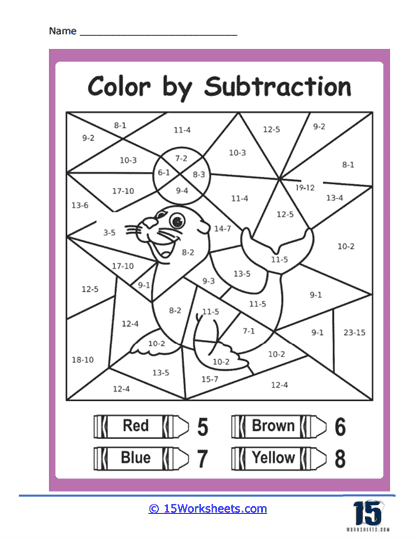
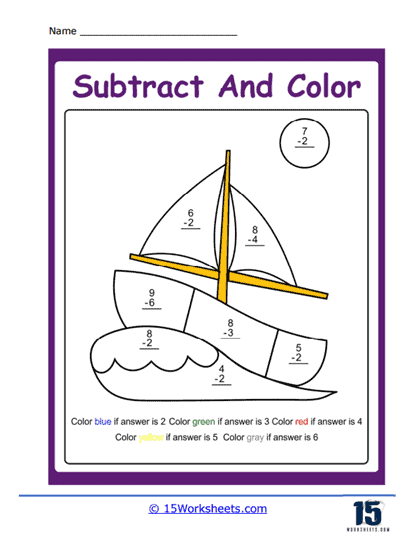
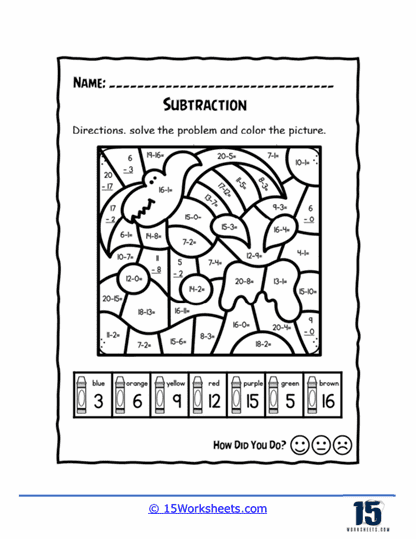
This set sneaks math practice into coloring fun, which instantly makes subtraction feel more exciting. Students solve subtraction problems to reveal colorful pictures hidden inside the worksheet. The combination of math and creativity keeps kids engaged longer without feeling like they’re stuck doing drills. It’s especially helpful for students who need extra motivation during independent work time. Honestly, some kids get so focused on finishing the picture they forget they’re practicing math.
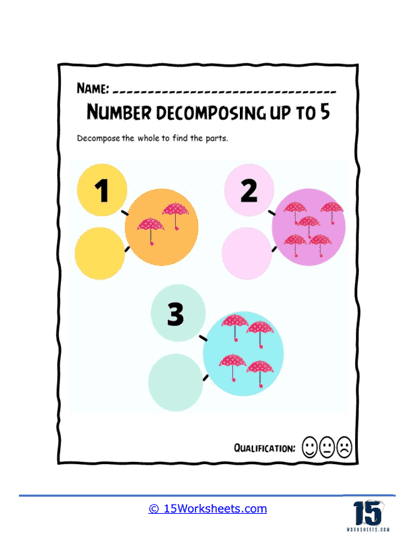
These worksheets teach students how to break numbers apart to make subtraction easier to understand. Kids practice flexible thinking strategies that help math feel less rigid and more manageable. The activities encourage learners to look at numbers in different ways instead of relying on memorization alone. This kind of number sense becomes incredibly useful as math gets more advanced later on. Think of it like teaching numbers how to rearrange themselves helpfully.
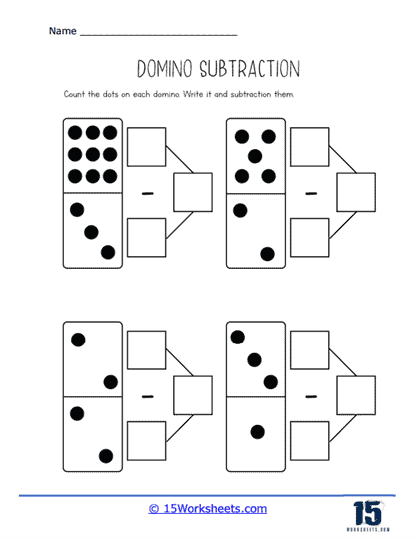
Dominoes make subtraction practice feel much more hands-on and interactive for younger learners. Students use familiar dot patterns to visualize subtraction facts and connect numbers to real objects. The visual support helps many children understand subtraction more naturally without getting overwhelmed by abstract equations. These worksheets are especially great for small groups, centers, or early math learners. Plus, anything involving dominoes automatically feels a little more fun.
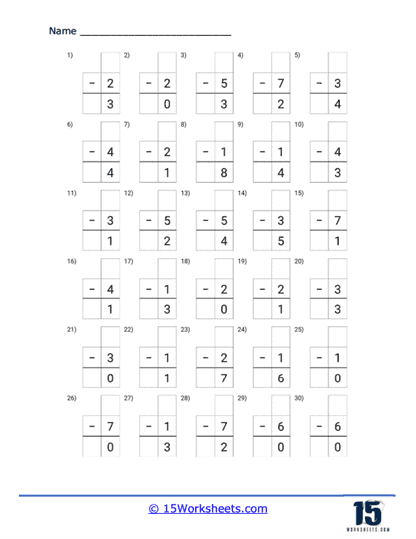
Something’s missing here, and students get to play detective to figure it out. Instead of solving regular subtraction equations, kids must determine the missing starting number in each problem. This type of thinking strengthens number relationships and encourages deeper problem-solving skills. The exercises help students realize subtraction isn’t just about taking away – it’s also about understanding how numbers connect together. It’s like turning math class into a little mystery-solving adventure.
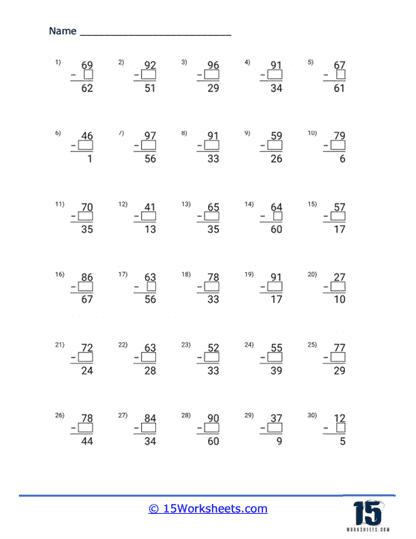
In this collection, students work backward to figure out which number was taken away in each subtraction problem. The activities challenge learners to think more carefully about how subtraction equations are built. Kids strengthen logical reasoning skills while becoming more flexible with number relationships. These worksheets work especially well for encouraging mathematical thinking instead of simple memorization. Some students even start feeling like subtraction puzzle experts.
These worksheets keep subtraction simple by removing the challenge of regrouping so students can focus on the basics first. Kids practice accuracy, organization, and number fluency without feeling overloaded by extra steps. The straightforward format helps build confidence before moving into more advanced subtraction methods later on. Teachers often use these pages as a bridge between beginner and more difficult subtraction work. It’s calm, steady subtraction practice without the borrowing drama.
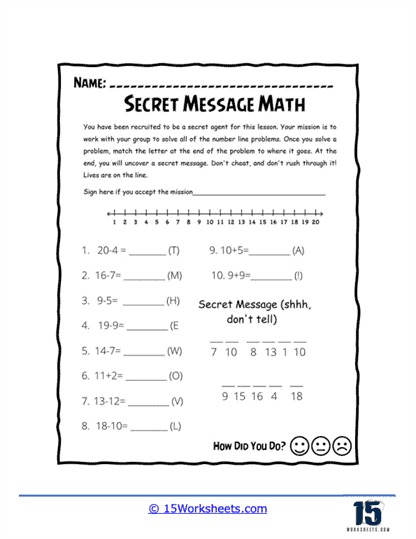
Number lines help students actually see subtraction happening instead of just memorizing steps. Kids count backward visually while strengthening understanding of distance between numbers and subtraction movement. The step-by-step layout works especially well for learners who need concrete visual support. These worksheets make subtraction feel more interactive and easier to follow for struggling students. Before long, number lines start feeling like trusty little math roadmaps.
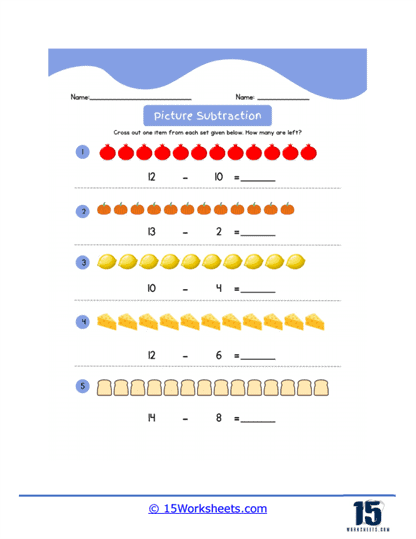
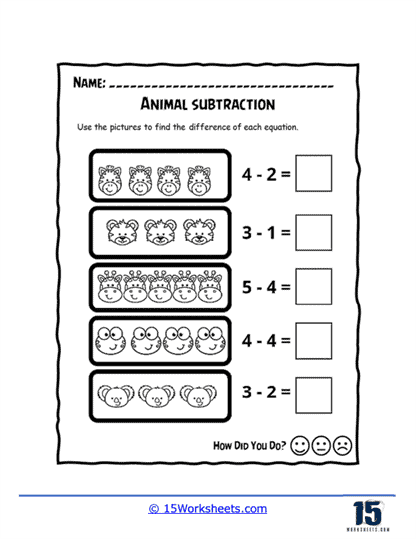
Pictures make subtraction much less intimidating for early learners just getting started with math. Students look at groups of objects, take some away, and visually connect the action to subtraction equations. This hands-on style helps children understand what subtraction actually means in real life. The colorful illustrations keep practice feeling approachable and engaging for young students. It’s basically math with training wheels and cartoons combined.
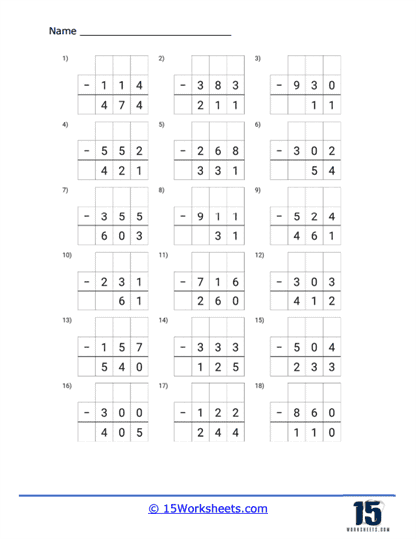
Ah yes, the famous borrowing strategy arrives. These worksheets guide students step by step through regrouping so the process feels organized instead of confusing. Kids practice borrowing carefully while learning how place value helps subtraction work correctly. The repeated structure builds persistence, patience, and confidence with more advanced subtraction problems. Eventually, regrouping stops feeling scary and starts feeling oddly satisfying.
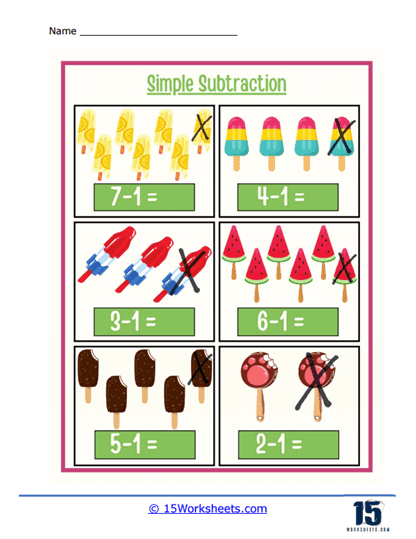
Sometimes the simplest practice is exactly what young learners need most. These worksheets focus only on subtracting one, helping students strengthen counting skills and number recognition. The repetition builds speed and confidence while making subtraction feel very approachable for beginners. They’re perfect for early learners who are just starting to understand what subtraction means. Plus, kids usually love how quickly they can solve the problems.
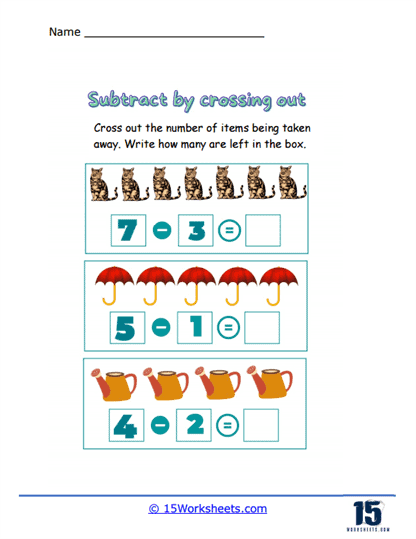
These worksheets let students physically see subtraction happening by crossing out objects one at a time. The visual approach helps children connect subtraction equations to real actions and experiences. Kids can easily track what’s being taken away, which makes the math feel more concrete and understandable. This strategy works especially well for hands-on learners who need visual reinforcement. Crossing things out somehow makes math feel very official.
These pages focus on subtraction facts within 10 so students can build a rock-solid foundation in basic math fluency. The smaller numbers help learners focus on speed, confidence, and accuracy without feeling overwhelmed. Repeated practice encourages kids to recognize subtraction facts more automatically over time. Teachers often use these worksheets for daily review or quick fluency checks. Once students master these facts, bigger subtraction problems become much easier later on.
Ready for a little more challenge? These worksheets help students strengthen subtraction skills within 20 while developing stronger mental math strategies. The variety of exercises keeps kids thinking flexibly instead of relying on only one solving method. Students practice solving problems more efficiently while building confidence with larger basic facts. It’s excellent preparation for future regrouping and multi-digit subtraction work. The numbers are bigger, but the confidence grows too.
This set is perfect for little learners just beginning their subtraction journey. The tiny numbers keep practice manageable while helping students understand the basic idea of “taking away.” Kids build early number confidence without feeling pressured by complicated problems. The simple format works wonderfully for preschoolers, kindergarteners, and first graders learning foundational math skills. Everyone starts somewhere, and this is a pretty friendly place to begin.
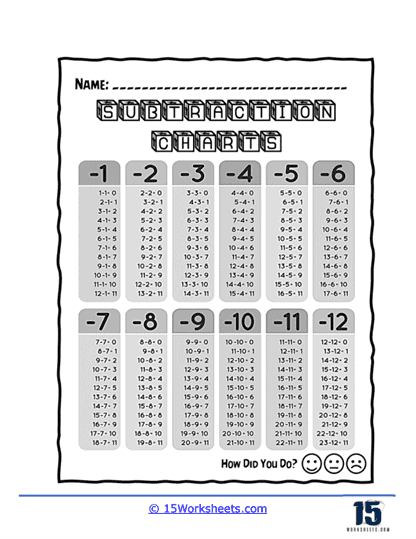
These subtraction charts and tables act like little math helpers students can rely on while practicing facts. Kids use patterns and visual references to strengthen recall and spot relationships between numbers. The organized format encourages independent learning and helps students feel more confident checking their own work. Teachers love using these as classroom references or quick review tools. Some students even start noticing cool number patterns they never spotted before.
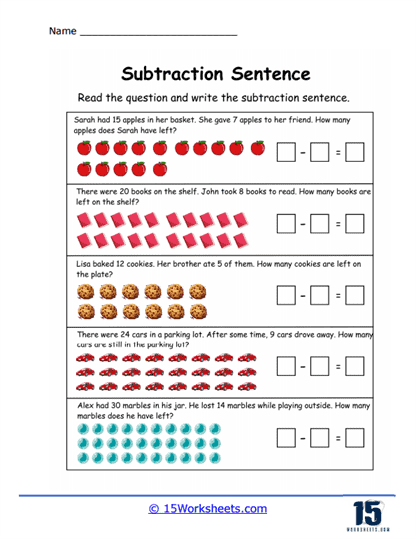
These worksheets help students connect subtraction problems to full math equations and number relationships. Kids practice turning subtraction situations into complete number sentences while strengthening understanding of mathematical symbols. The exercises encourage learners to think carefully about how equations are structured and why they work. This kind of practice builds stronger math communication skills alongside subtraction fluency. It’s basically teaching numbers how to form proper sentences.
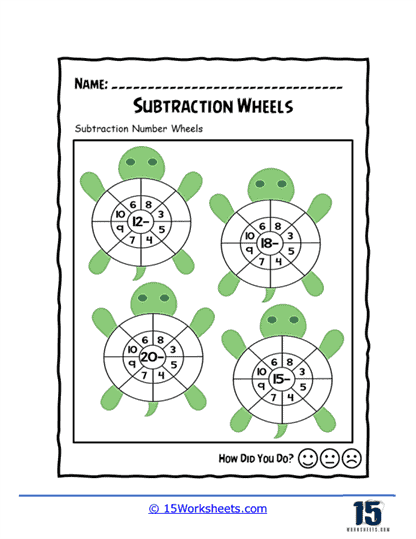
Spinning subtraction wheels make math practice feel more like a game than a worksheet. Students solve subtraction facts using the circular wheel format, which keeps repetition from feeling boring. The interactive design encourages extra practice while helping kids stay engaged longer. These worksheets are especially fun for centers, partner work, or fast finishers needing extra review. There’s just something entertaining about math happening in wheel form.
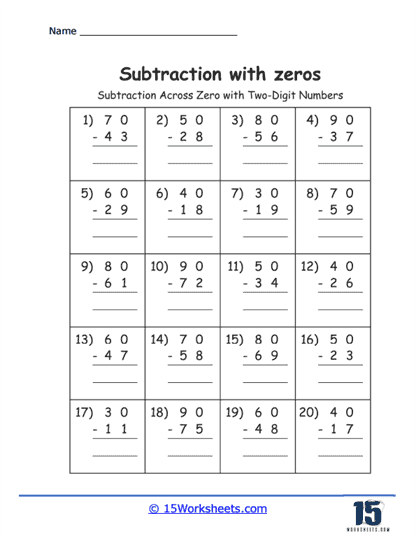
Zero can be surprisingly confusing sometimes, but these worksheets help students understand exactly how it behaves in subtraction problems. Kids practice solving equations involving zero while strengthening overall number rule understanding. The activities help clear up common misconceptions and build confidence with special subtraction cases. The simple examples make tricky concepts feel much easier to follow. Turns out zero likes making math weird sometimes.
Now subtraction heads into the real world where students actually use it to solve everyday problems. Kids work through story problems involving money, distances, missing objects, and real-life situations that require subtraction thinking. The reading component also strengthens comprehension skills while students practice solving equations. These worksheets help children move beyond memorization and start understanding when subtraction is actually useful. Suddenly math starts feeling a lot more connected to real life.