
Name Tracing Worksheets


About These 15 Worksheets
These worksheets make early handwriting practice personal, meaningful, and fun! Each sheet gives students a chance to trace real names in neat, easy-to-follow formats that strengthen pencil control and fine motor coordination. By seeing and writing familiar names, learners begin to understand how letters connect and form words. It’s the perfect way to turn handwriting from a chore into an engaging, confidence-building activity.
The collection is carefully arranged by alphabet ranges – from Aiden through Bryce, all the way to Yasmine and Zeke – ensuring every student gets a variety of names to practice. Tracing dotted letters helps young writers learn spacing, direction, and consistent letter sizing, while repetition reinforces memory and rhythm. Whether used in class, at home, or during centers, these worksheets offer the right blend of structure and creativity for early learners.
Beyond handwriting, these worksheets help children develop visual recognition, alphabetical awareness, and name familiarity – all essential skills for reading readiness. Students love tracing names that look like their own or those of friends and classmates. With each completed sheet, they’re not only improving their writing – they’re building confidence in one of their first literacy milestones: writing a name with pride and precision!
Have a Look Inside Each Worksheet
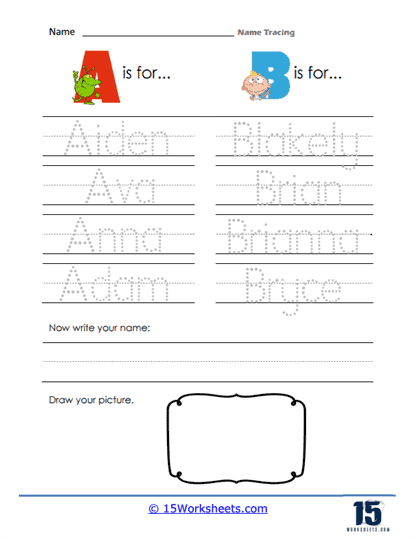
Aiden Through Bryce
Students will practice tracing and writing names from Aiden through Bryce, focusing on correct letter formation and spacing. The worksheet helps build fine motor skills, name recognition, and early handwriting confidence. Each name offers repetitive practice to strengthen muscle memory and pencil control. It’s a smooth start for learners mastering neat, readable writing!
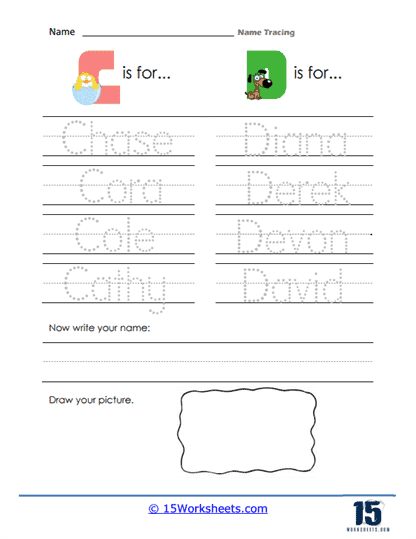
Chase – David
This worksheet gives learners a chance to trace and write names from Chase through David. Students will follow dotted lines to form each letter correctly while learning to recognize the look and flow of common names. It builds consistency, attention to detail, and steady handwriting rhythm. A perfect warm-up for young writers learning to shape their letters with care!
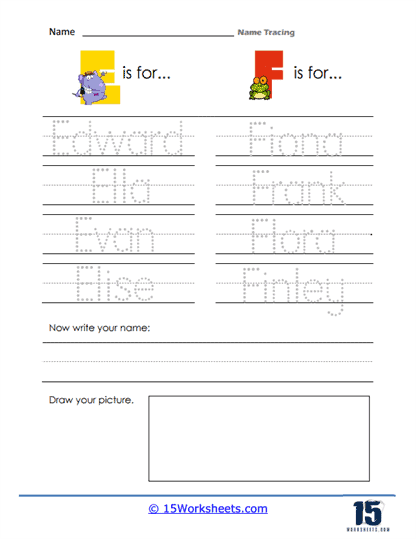
Edward – Finley
Students trace names from Edward through Finley, carefully forming uppercase and lowercase letters. The worksheet reinforces spacing, alignment, and handwriting precision. It also helps learners recognize letter patterns in familiar names. It’s a calm and focused way to turn tracing practice into confident penmanship.
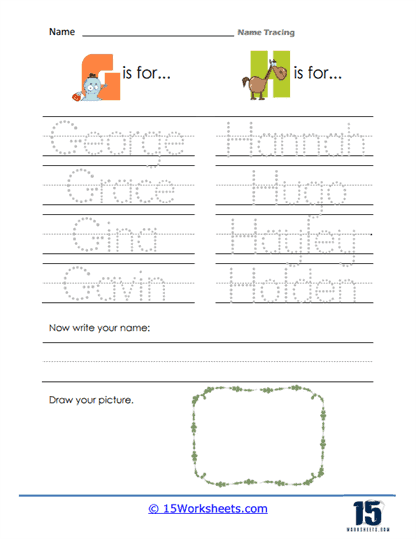
George – Holden
Learners will trace names from George through Holden, focusing on smooth strokes and balanced letters. Each name provides multiple chances to refine writing motion and accuracy. The worksheet supports letter recognition, pattern memory, and name spelling awareness. A wonderful handwriting boost for early learners!
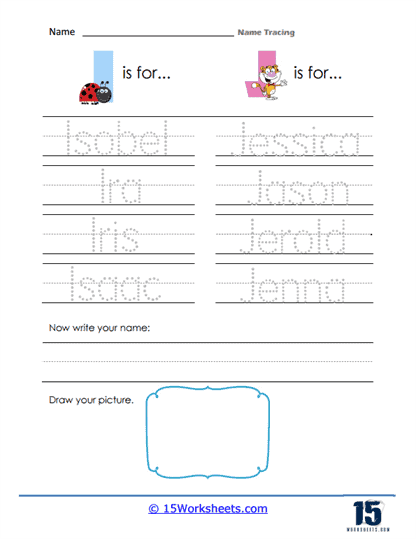
Isabel – Jenna
This worksheet features names from Isabel through Jenna, giving students structured tracing practice in both capital and lowercase letters. It supports early literacy development by combining name recognition with fine motor skill-building. Each name gives a new challenge in letter transitions and spacing. A neat way to combine reading readiness with writing skill!
Kevin – Landon
Students will trace and write names from Kevin through Landon, practicing consistency in slanted and rounded letter shapes. The worksheet helps refine grip, control, and formation accuracy. Learners strengthen their understanding of letter sequence and sound awareness too. It’s a confident step toward fluent, independent handwriting.
Mark – Naika
This worksheet provides tracing practice for names from Mark through Naika, reinforcing spacing, shape, and steady pencil movement. Students will trace each name multiple times to improve coordination and letter recognition. It’s a great activity for daily handwriting warm-ups or individual practice. Each name offers a small step toward mastery!
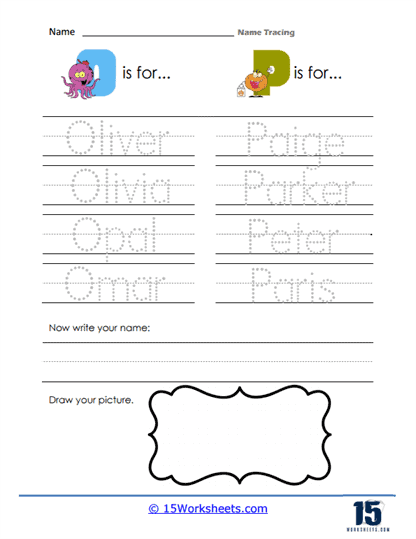
Oliver – Paris
Students will trace and write names from Oliver through Paris, following dotted lines to perfect each curve and corner. The worksheet promotes focus, rhythm, and familiarity with letter patterns. It also supports visual recognition and helps students connect sounds to printed words. A fun way to combine literacy and handwriting!
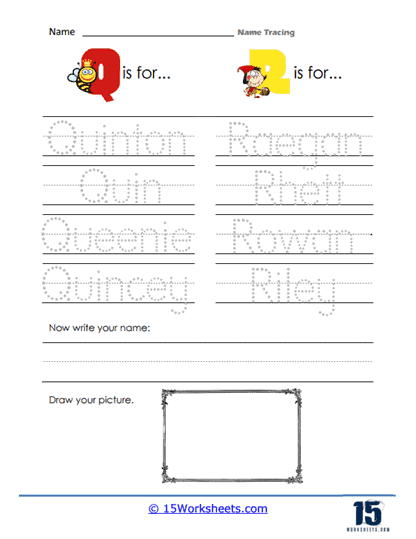
Quinton – Riley
Learners will trace names from Quinton through Riley, focusing on letter spacing, connection, and line placement. Each name gives practice in both tall and short letters, building handwriting balance and consistency. The worksheet strengthens early writing confidence and name awareness. It’s a simple, steady path to handwriting success!
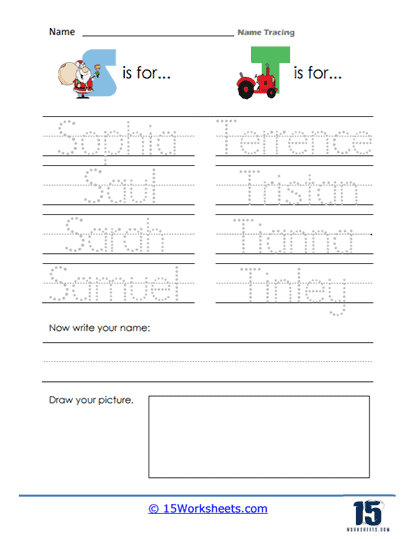
Sophia – Tinley
Students trace names from Sophia through Tinley, working on smooth writing motion and even letter sizing. This worksheet builds muscle memory for clear, legible handwriting and reinforces name spelling patterns. It’s great for repeated tracing and steady skill improvement. A graceful step forward in learning to write with confidence!
U and V Names
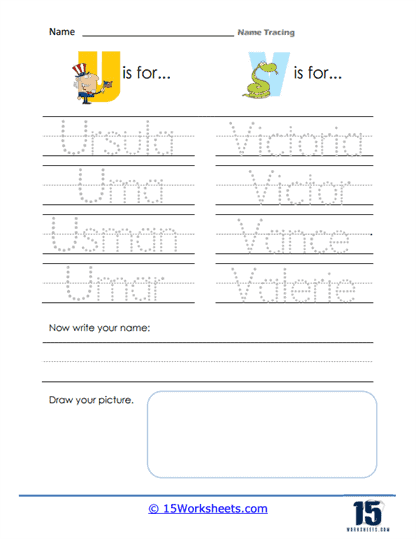
This worksheet focuses on names beginning with U and V, giving students targeted practice on two less common starting letters. Learners trace and write each name to improve coordination and recognition. It strengthens both alphabet knowledge and handwriting fluency. A fun way to explore unique names while mastering proper strokes!
William – Xyla
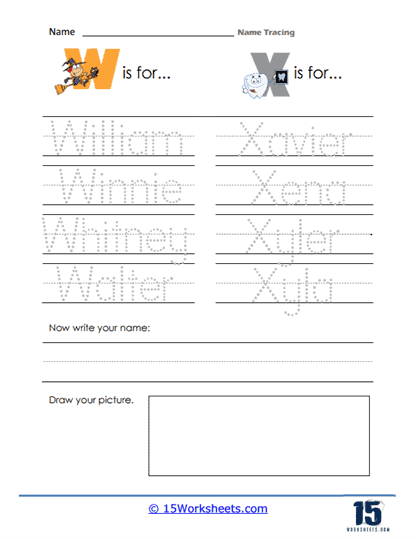
Students will trace names from William through Xyla, paying attention to neatness and letter proportion. The worksheet encourages careful hand-eye coordination and builds writing endurance. Each name provides a chance to refine form and rhythm. It’s structured, satisfying practice for developing writers.
Yasmine – Zeke
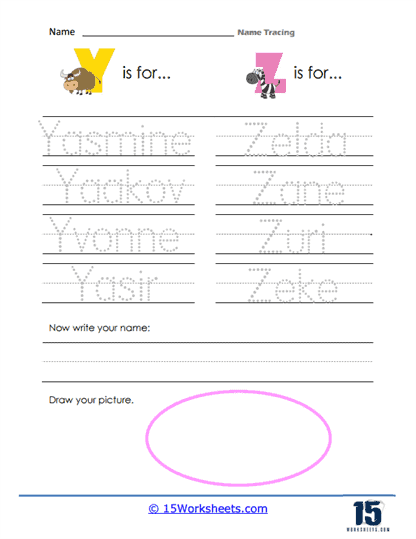
Learners trace names from Yasmine through Zeke, focusing on completing the alphabet and maintaining letter consistency. This worksheet reinforces correct letter direction, spacing, and fine motor control. It’s perfect for final handwriting review or end-of-unit practice. Students finish strong with smooth, confident writing strokes!
A to M Names
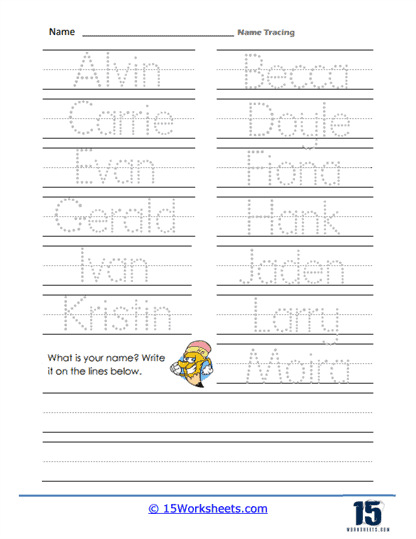
Students will trace and write a collection of names starting with A through M, building alphabet familiarity and tracing rhythm. The worksheet helps them form both uppercase and lowercase letters cleanly. It’s ideal for beginners building name recognition and smooth writing flow. A great all-in-one handwriting refresher!
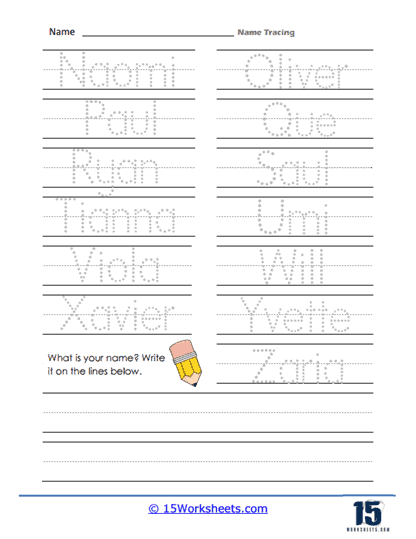
N to Z Names
Learners will trace names beginning with N through Z, practicing consistent strokes and correct line alignment. This worksheet completes the alphabet practice while reinforcing clear letter formation. It helps young writers develop precision and confidence. The perfect follow-up to the A-M set for full alphabet handwriting mastery!
Why Do We Have Students Trace Their Name?
One of the primary reading skills preschoolers acquire is how to recognize their names. Name recognition also helps children better understand sounds, letters, and how they combine to create a word. Name tracing activities are great for helping preschoolers learn to recognize and write their names.
Here are a few reasons why it is important to have preschoolers trace their names.
Develop Prewriting Skills
By starting preschoolers off on name tracing activities, you can help develop their prewriting skills and train them to write and draw independently without the help of traceability. Even though it takes a child to be around 4 years old to develop a dominant hand, tracing their names will help children develop a dominant hand more quickly.
Tracing names will also help students learn how to grip writing tools such as pencils or markers effectively.
Teach New Spelling Patterns
By teaching students how to trace their names, teachers can teach them new spelling patterns with more complex words. Moreover, teachers can get creative and make students practice new words rhyming with their names.
For example, if a student’s name is Jack, and he has mastered tracing his name, you can teach him how to trace words that rhyme with his name, e.g. attack, snack, quack, unpack, black, etc.
Build a Healthy Classroom Environment
When students learn how to write and say their names in a classroom setting, it helps build a positive and healthy classroom environment. When students know each other names, they are more likely to interact with each other, which helps form a bond between them. This gives children a sense of belonging, and as a result, they do much better in the classroom.
A healthy classroom community makes learning new things and group activities even more enjoyable. You can also get creative and print out each student’s pictures and names for a fun name recognition activity.
Boost Focus and Concentration
Good focus and concentration skills are essential for students to do well in school and other aspects of life. When students know that they are tracing out their own name, they are more likely to be interested in that activity rather than tracing a random word. Therefore, students develop better focus and concentration skills by learning to trace their names.
How to Teach Students to Trace Their Name?
Now that you recognize the importance of teaching students to trace their names, let’s look at a few simple techniques you may use to teach preschoolers to trace their names.
1. The first step is to work on the child’s prewriting skills and introduce them to lines and shapes, give them a pencil and let them draw whatever they want to.
2. Once the child is used to holding a pencil and drawing lines and shapes, you can move on to tracing.
3. To begin, print out a few name tracing worksheets with the child’s name; you can tell the child today we will learn how to write your name.
4. Next, make the child hold a pencil and guide them on how to trace each letter by holding their hand.
5. Tracing is all about connecting the dots, so tell them to focus on connecting the dots.
6. Try to repeat each letter while tracing it to help the child learn the sounds they make and eventually learn how to speak their name.