
Integers Worksheets


About Our Integer Worksheets
Integers are often one of the first places where students realize that math extends far beyond simple counting numbers. Once negative values, opposites, absolute value, and irrational numbers enter the picture, learners begin building the deeper number sense they will rely on throughout algebra and higher-level mathematics. This collection was designed to help students move beyond memorization by giving them meaningful practice with the many ways integers and real numbers appear, behave, and connect to one another. From comparing values on a number line to understanding patterns, properties, and relationships between numbers, these worksheets encourage students to think mathematically instead of just following steps.
What makes this topic especially important is how often students use these skills in future math courses and in everyday life. Whether they are working with temperatures below zero, understanding distances, organizing data with Venn diagrams, or recognizing Roman numerals in the real world, students begin to see that numbers are part of the world around them. The activities throughout this collection are meant to build confidence gradually while giving teachers and parents approachable tools to reinforce classroom learning. With a balance of visual models, problem-solving practice, and foundational number work, students gain the kind of comfort with integers that makes later math concepts far less intimidating.
A Look At The Collection
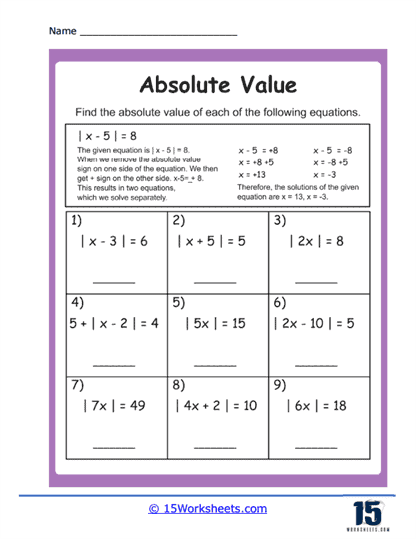
The absolute value of a number represents its distance from zero on the number line, regardless of its sign. It is denoted by two vertical bars, as in |x|, and always results in a non-negative value. These worksheets help students learn how to make use of this measure in real world applications.
One thing students really need is repeated exposure to seeing how integers relate to one another, and this collection gives them exactly that. The practice helps kids become more comfortable spotting greater than, less than, and equal values without second-guessing themselves every step of the way.
Patterns start to click for students once they spend time working with numbers that naturally follow each other. I like this set because it quietly builds algebra readiness while students focus on sequencing, relationships, and logical thinking.
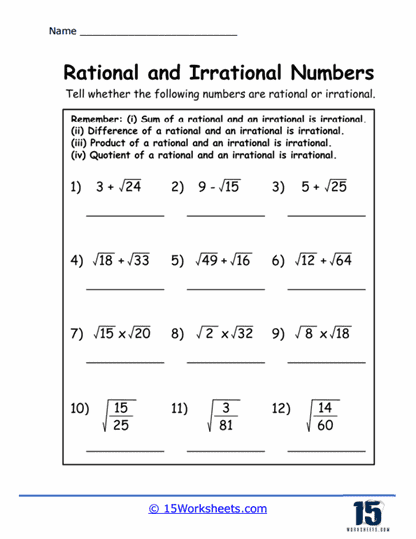
At first, irrational numbers can seem strange to students because they don’t behave as neatly as whole numbers or fractions. These activities break the concept down into approachable pieces so learners can better understand numbers like π and square roots without getting frustrated.
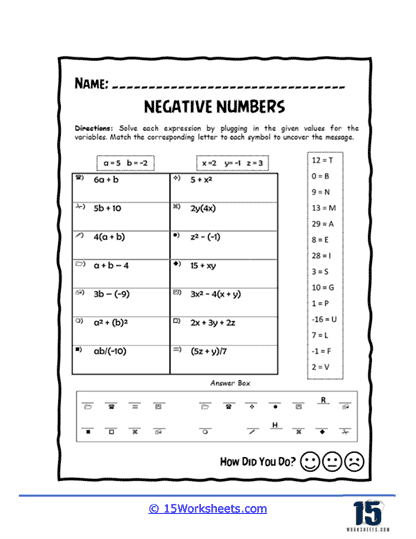
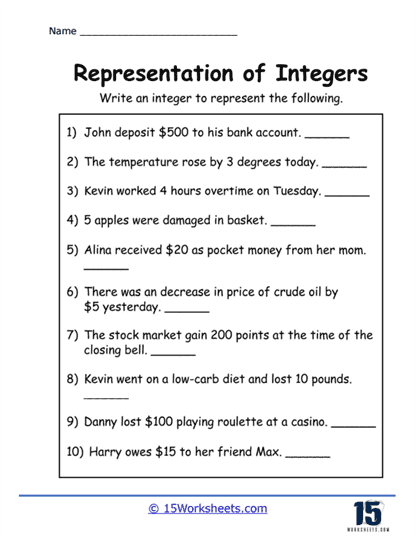
Negative numbers are values less than zero and are represented with a minus sign (-) in front of them. They lie to the left of zero on the number line. Over the course of these worksheets students will learn how to use these values in various math operations.
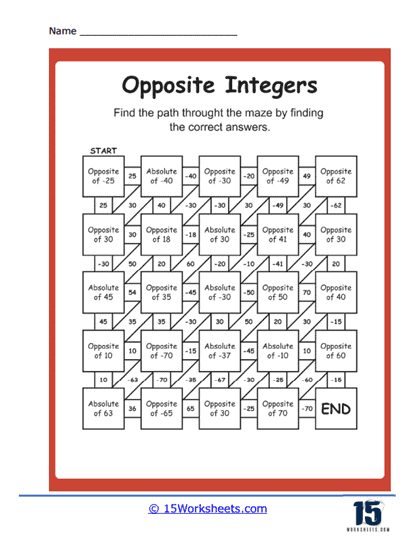
The opposite value of an integer is the value that is the same distance from zero on the number line but in the opposite direction. This becomes a very useful skill as students approach learning algebra.
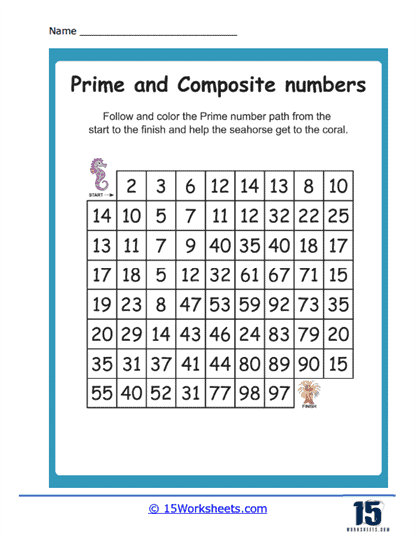
Prime numbers are numbers greater than 1 that have no positive divisors other than 1 and themselves. Composite numbers are numbers greater than 1 that are not prime, meaning they can be divided exactly by at least one other number besides 1 and themselves. Students learn how to classify numbers when presented with them. It helps them better understand factors and factoring.
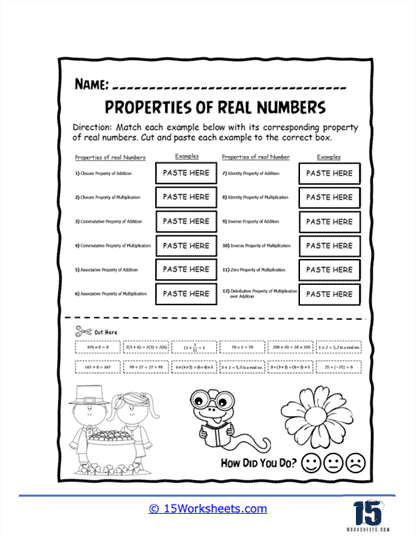
Real numbers are all numbers that can be found on the number line, including both rational and irrational numbers. They possess properties like the commutative, associative, and distributive properties for addition and multiplication. Students learn how to classify these different properties over the course of these worksheets.
A lot of students struggle with integers until they can actually picture what the numbers mean. This collection uses visual models, number lines, and practical examples to help students connect abstract ideas to something they can truly understand.
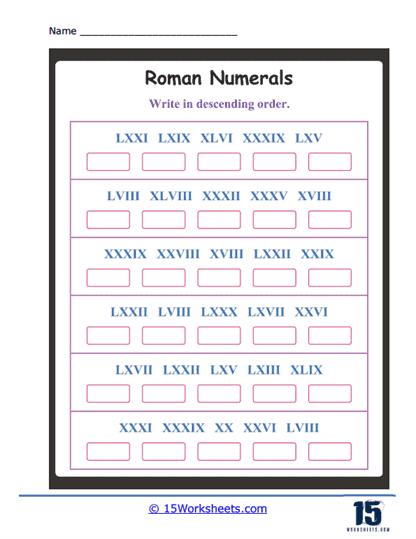
Roman numerals are a numeral naming system originating from ancient Rome that use combinations of letters from the Latin alphabet to represent numbers. Today, they are also commonly used on clock faces, chapter headings in books, and for marking the special occasions of annual events like the Super Bowl. Over the course of these worksheets students will learn how convert values between numeral naming systems.
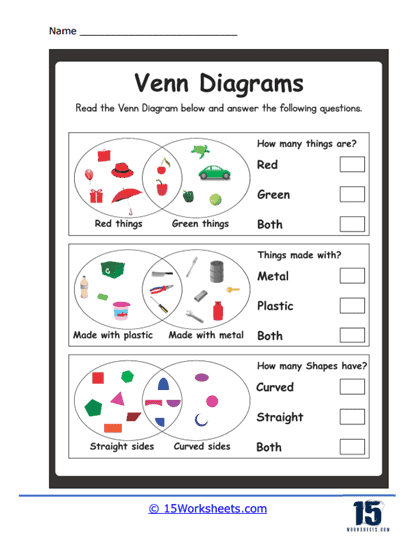
Venn diagrams are visual representations used to display the relationships between different sets. In mathematics, they are often used to show the intersections, unions, and differences between sets. These worksheets help students learn how to classify, sort, and detail various types of relationships that exist in groups of objects and numbers.
What Are Integers?
Integers are one of the fundamental building blocks of mathematics, representing both the positive and negative whole numbers, including zero. Integers are a set of numbers that include all whole numbers, both positive and negative, as well as zero. This means integers encompass numbers like …, -3, -2, -1, 0, 1, 2, 3, … and so on, without any fractional or decimal parts.