
Ow Word Family Worksheets
About Our Ow Word Family Worksheets
The ow word family is an exciting one for early readers because it appears in many familiar, high-interest words like cow, now, how, and owl. Learning to recognize the -ow spelling pattern helps students read these words more quickly and confidently. Because these words show up often in stories and everyday speech, mastering them gives students an immediate boost in reading success.
This worksheet collection gives learners many chances to explore ow words through hands-on, visual, and writing-based activities. Students sort, match, complete, trace, search, and write words while repeatedly seeing the same spelling pattern. Each worksheet reinforces phonics skills in a slightly different way, helping students stay engaged while building strong recognition.
These worksheets are flexible and easy to use in classrooms, literacy centers, small groups, or at home. Teachers and parents can use them for introducing the word family, reinforcing lessons, or reviewing skills. With consistent practice, students strengthen decoding, spelling, and confidence as developing readers.
About Each Worksheet
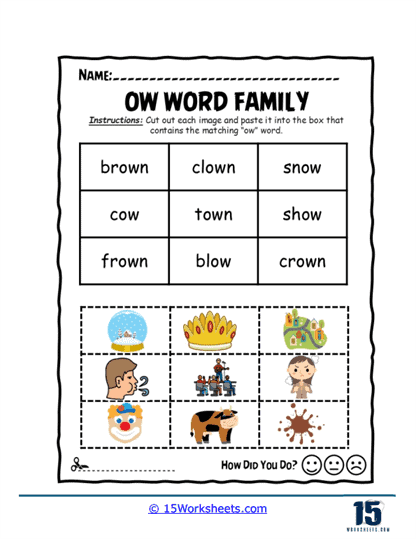
Cut Paste
This worksheet invites students to cut out pictures and paste them next to the correct ow word. Learners study each image carefully before making a decision. The hands-on format keeps students engaged and active. Matching images to words reinforces phonics patterns. It’s an excellent choice for centers or interactive practice.
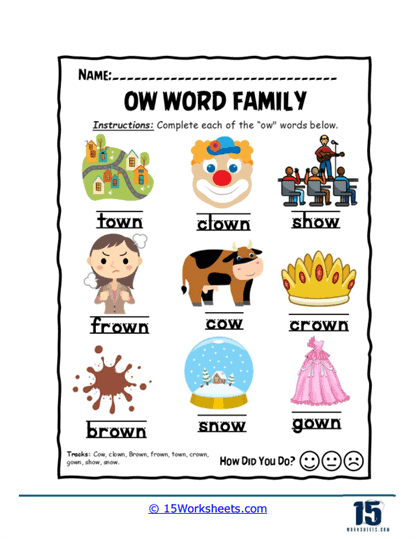
Word Completion
Students complete missing letters to form ow words that match each picture. Visual clues guide learners toward the correct spelling. The activity focuses on recognizing word endings rather than guessing. Learners practice building complete words independently. This worksheet supports early spelling confidence.
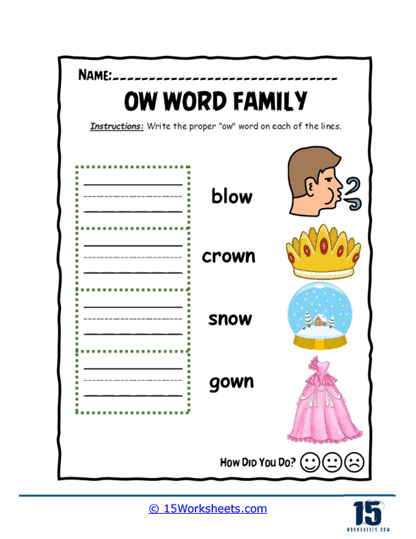
Word Writing
Students write the correct ow word on the lines next to each picture. Visual prompts help ensure accurate spelling. The worksheet emphasizes neat handwriting and careful letter formation. Learners apply phonics knowledge through writing. It works well for independent or at-home practice.
Word Practice
This worksheet asks students to repeatedly write ow words that match the images shown. Repetition helps strengthen recognition and spelling. Learners focus on accuracy and clarity. The structured format supports independent work. It’s ideal for daily phonics review.
Word Sort
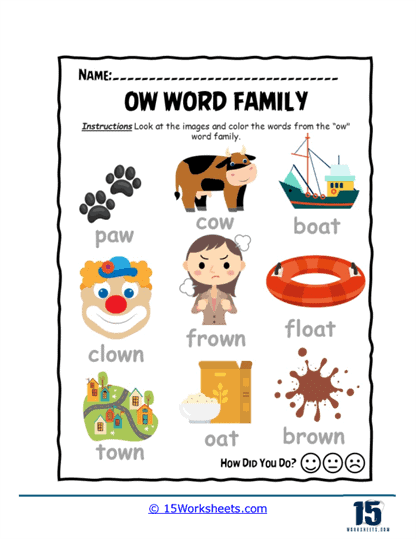
Students color only the words that belong to the ow word family. Distractor words encourage careful comparison and thinking. Learners focus on spelling patterns before making choices. Coloring keeps the activity engaging. This worksheet supports phonemic awareness and decoding.
Word Sort Plus
This worksheet expands sorting practice with additional ow words and similar-looking alternatives. Students must analyze each word carefully. The activity reinforces consistency in spelling patterns. Learners deepen understanding of word families. It’s great for more advanced practice.
Word Search
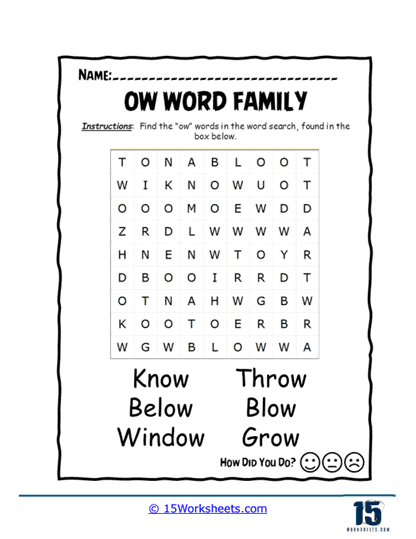
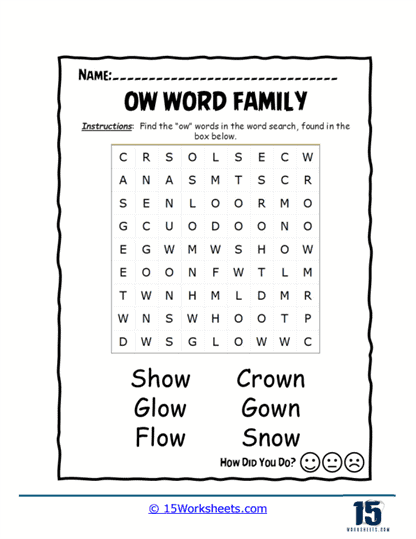
Students search for ow words hidden in a letter grid. Each word is listed for reference below the puzzle. Learners scan rows and columns to find matches. The activity feels like a game while reinforcing spelling. It’s a fun way to review phonics skills.
Vocabulary Search
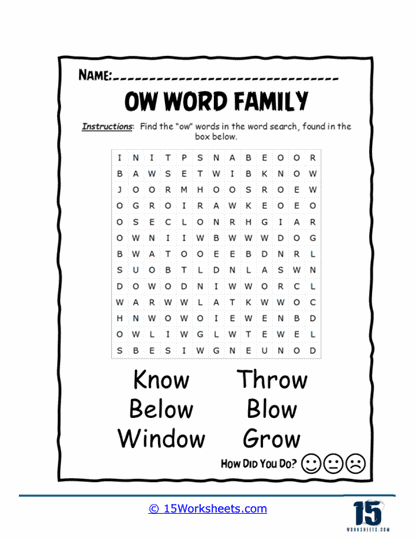
This worksheet includes a word search with both common and extended ow words. Students carefully track letters through a dense grid. The added challenge encourages focus and persistence. Learners reinforce spelling through repetition. This worksheet supports decoding and vocabulary growth.
Picture Match
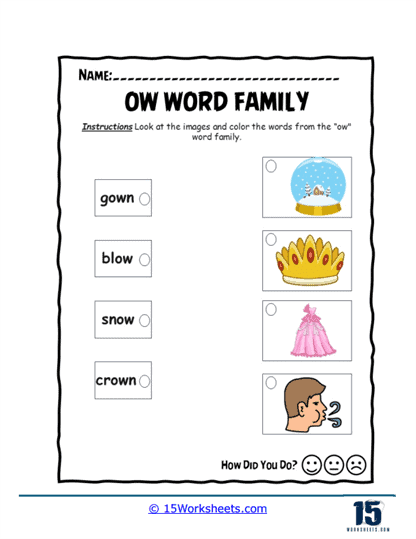
Students match ow words to the pictures that best represent them. Learners consider meaning as well as spelling. The activity strengthens word-to-image connections. Accurate matching shows true understanding. It works well for guided practice or review.
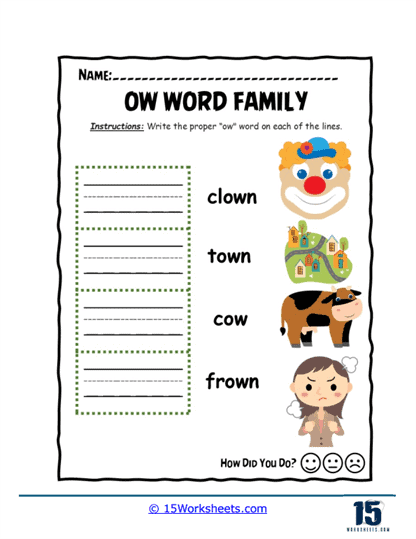
Picture Writing
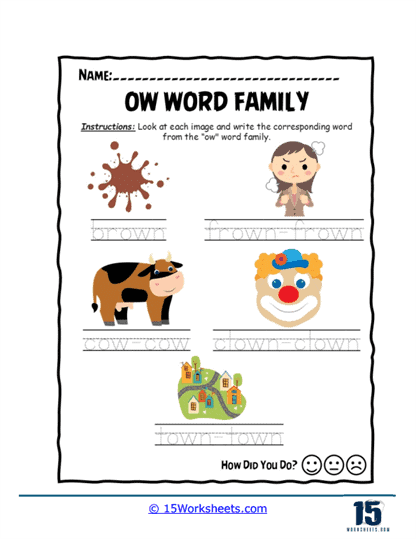
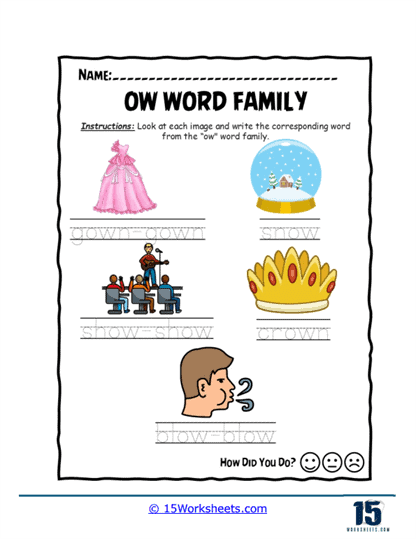
Students look at each image and write the correct ow word on the lines provided. Visual prompts guide spelling choices. The worksheet emphasizes neat handwriting. Learners demonstrate understanding through writing. It supports confidence in independent work.
Picture Writing
This version of picture writing includes light tracing support for spelling and letter formation. Students identify each image and write the matching ow word. Guided text helps emerging writers succeed. The activity reinforces recognition through repetition. It’s ideal for early learners.
Word Search
Students locate ow words hidden horizontally and vertically in a grid. Each target word is listed below for support. Learners practice visual scanning and focus. Repeated exposure reinforces the spelling pattern. This worksheet builds stamina and attention.
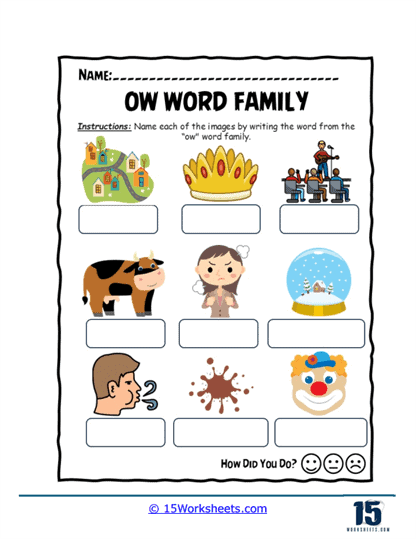
Picture Label
Students label each image by writing the correct ow word in the blank boxes. The pictures include common objects and actions. Learners recall vocabulary and apply spelling knowledge. The activity blends visual recognition with writing. It’s useful for assessment or review.
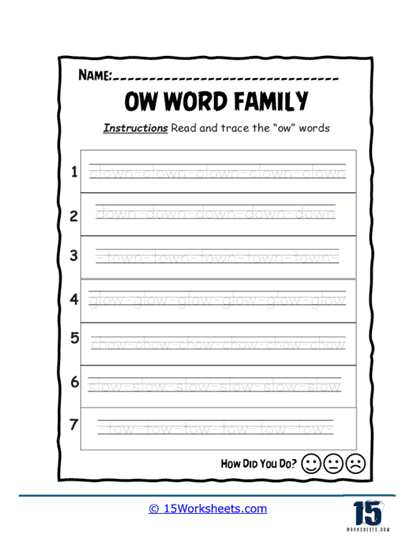
Tracing Practice
Students read and trace ow words across numbered handwriting lines. Repetition supports proper letter formation and spacing. Learners build muscle memory through guided practice. The worksheet reinforces spelling patterns. It’s perfect for early writing development.
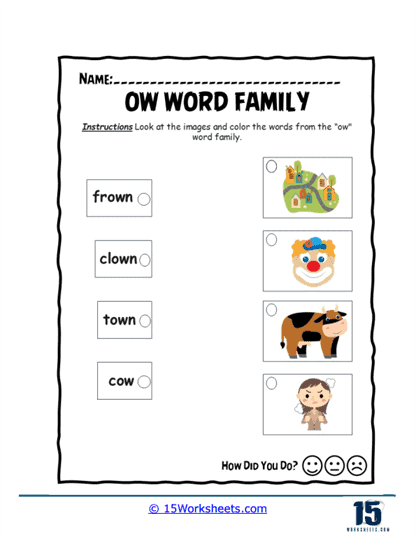
Word Sort
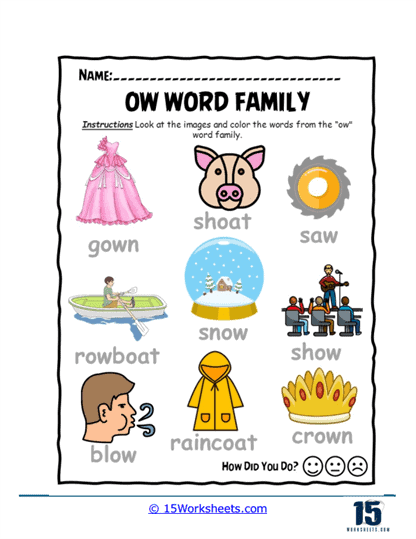
This worksheet asks students to color only the ow words that match the images shown. Similar-looking distractors require careful comparison. Learners focus closely on spelling patterns. Coloring adds engagement and motivation. This activity strengthens phonics foundations.
What is the Ow Word Family?
The ow word family includes words that share the -ow spelling pattern. This ending often appears in short, familiar words like cow, how, now, and owl. When students recognize the pattern, they can read these words more smoothly and confidently. Grouping them together helps learners see how spelling stays consistent even as meanings change.
Some ow words name objects, like cow or owl, while others describe actions or ideas, such as how or now. This variety helps students build vocabulary alongside phonics skills. Even though meanings differ, the shared ending makes the words easier to decode. Students begin to rely on patterns instead of sounding out every letter.
The -ow spelling pattern is common in early reading materials and everyday language. Its pronunciation is usually predictable, which supports developing readers. Mastering this word family helps students approach new words with confidence. It’s an important step toward fluent and independent reading.
Word List for the Ow Word Family
bow, cow, how, now, owl, row, vow, wow, brow, down, fowl, gown, howl, power, tower, town, allow, brown, browse, clown, crowd, drown, flower, frown, growl, powder, scowl, towel.
Example Sentences
1. The cow is eating grass right now.
2. I asked how the owl flies so quietly.
3. The cow looked up now as the owl flew by.