
Missing Number Single Digit Addition Worksheets


All About These 15 Worksheets
When kids first learn addition, they usually start with both numbers right there in front of them. But real math brains grow when one of those numbers goes missing-and the child has to figure it out! This collection of worksheets is all about that puzzle-like twist. With friendly themes like butterflies, hats, and even ice pops, the missing number becomes less of a problem and more of a game. Kids will love the hunt for the “lost addend,” and teachers will love how much sharper their students get with basic facts.
Each worksheet sneaks in practice with building numbers, especially those all-important bonds to 10. Students aren’t just solving sums-they’re learning to see the relationships between numbers. Sometimes they’ll guess and check, sometimes they’ll match, and sometimes they’ll estimate how many more are needed. The variety keeps them curious, while the repetition cements the skills.
And here’s the bonus: these worksheets don’t just prepare kids for addition tests-they set the stage for algebra thinking later on. The missing box or blank is like a baby version of “x,” helping students get comfy with the idea that math often involves solving for something unknown. So yes, these are worksheets for single-digit addition-but secretly, they’re also training little problem-solvers for the math adventures ahead.
All The Worksheet Descriptions
How Many More Make 10
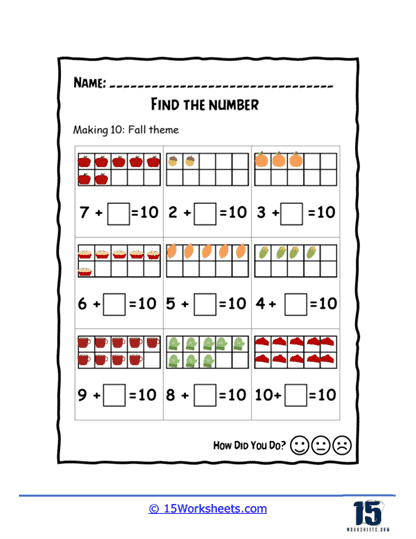
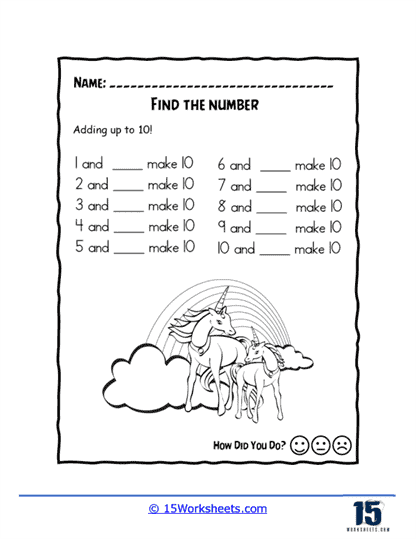
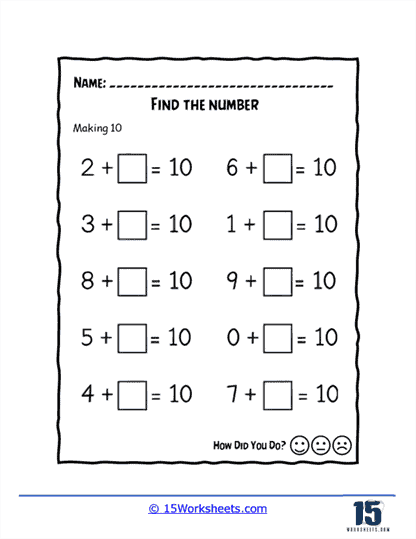
Kids work on “fill-in-the-blank” addition where they figure out how many more are needed to reach 10. It’s a playful way to build number sense and addition fluency. The problems feel like fun puzzles-just the right amount of brain-teasing. By focusing on sums of 10, it develops early number relationships and confidence.
Lost Addends
Students identify the missing addend in simple addition problems. This sharpens their understanding of equations and counting strategies. It’s like detective work for math! Solving these helps kids internalize how numbers combine.
Find the Bottom Number
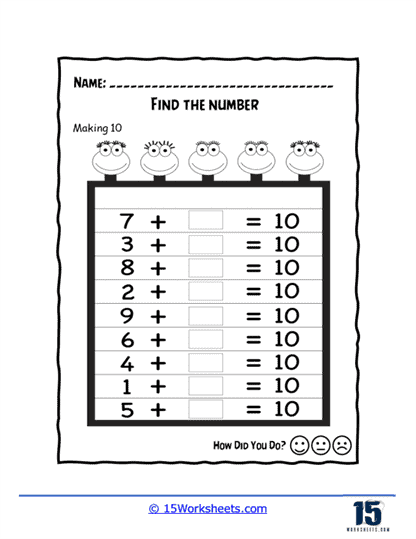
Here, children fill in the bottom addend-one number in the addition sentence is missing and must be found. It reinforces structure and familiarity with addition formats. The repetition builds fluency and clarity. And it’s great practice for reading math problems correctly.
Addition Sentence Match
Kids match addition expressions with their correct answers-or pair puzzles and sums together. This matching game makes math feel like memory and exploration at once. It supports recognition of equivalent expressions. Plus, it’s satisfying to draw the line between matches correctly!
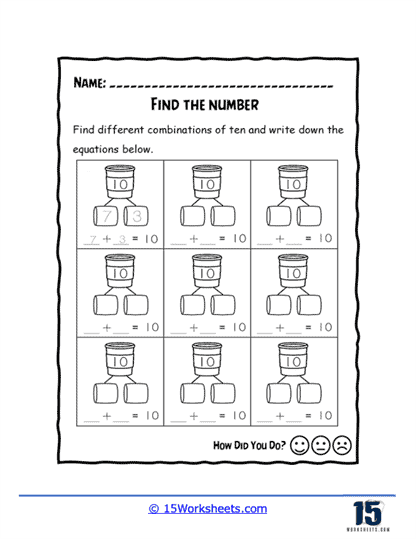
Combos of 10
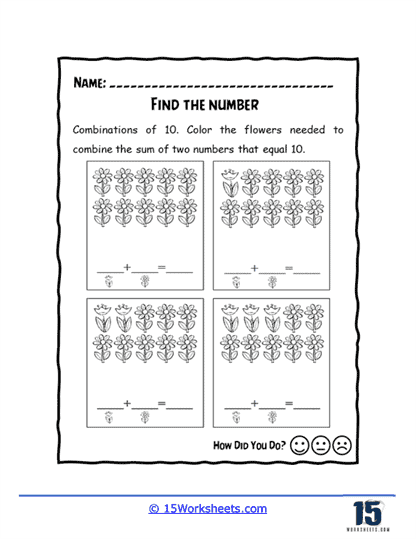
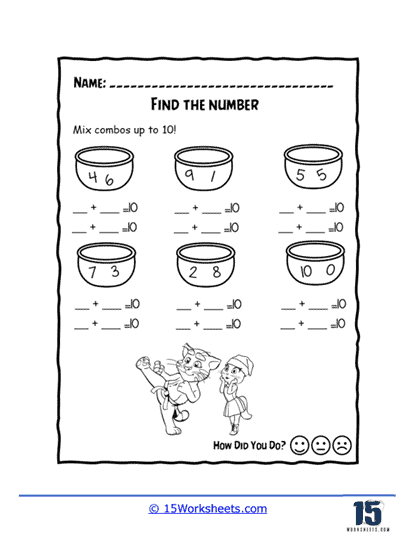
Players identify different pairs of single-digit numbers that sum to 10. It’s a cozy mix of variety and challenge, helping kids grasp all the ways 10 can be composed. This strengthens mental addition and flexibility with numbers. A fun way to explore math combos.
Adding to 10
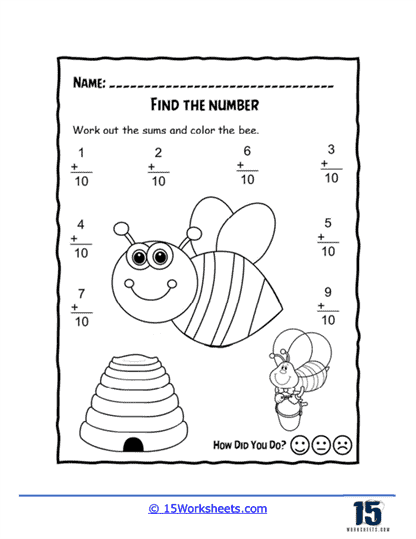
This worksheet has straight-up addition problems where sums equal 10. Clean, clear, and effective for practice. Great to cement that all-important understanding of completing 10. It’s simple but powerful.
Bowls of 10
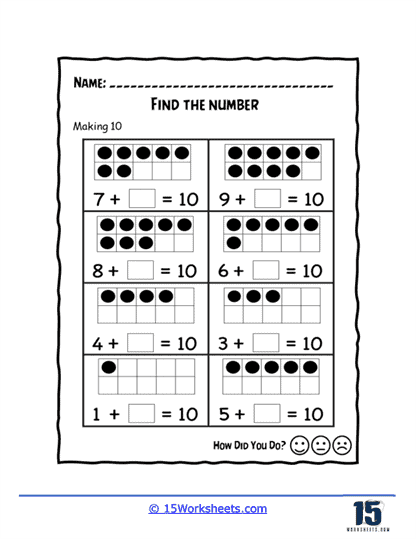
Students see groups of items in a “bowl” arrangement and figure out how many more are needed to make a total of 10. Visual, tangible, and story-like-it turns math into a real-world scene. Excellent for connecting quantities and adding skills. A visual treat that warms up number sense.
10s Ice Pops
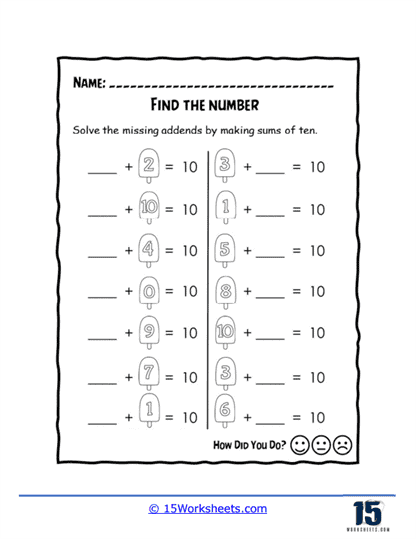
Imagine ten-pop puzzles displayed like ice pops! Kids fill in the missing number to complete the set of 10. It makes math feel cool and tangible-almost like ice-cream treats. This visual metaphor leaves a sweet learning memory.
Pasting to 10
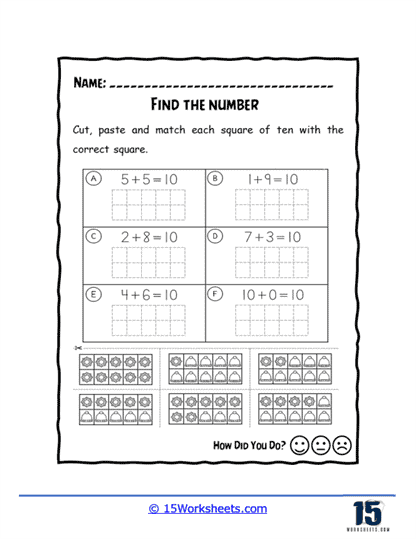
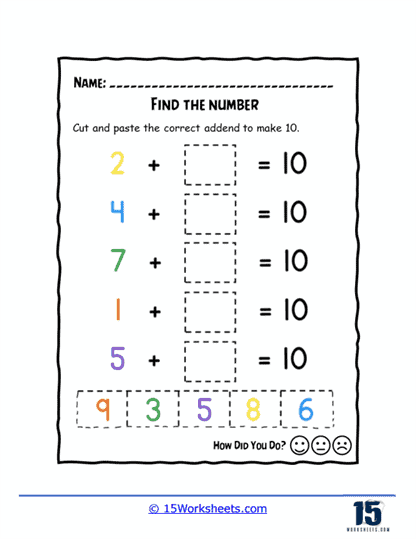
Activities likely involve pasting or adding items to reach ten, encouraging hands-on interaction. This tactile format supports learners who benefit from movement and touch. It’s less paper-and-pencil and more snack-time creativity. Ideal for kinesthetic learners.
Boxed Addends
Problems present the missing addend in a box-students write in the missing number. It’s straightforward, structured, and clear. The boxed layout helps focus attention neatly. Great for organized practice.
10 Heads Total
Kids count heads (or heads-shaped objects) and figure out how many more are needed to total 10. It’s playful and visually engaging. Super for connecting pictures and numbers in a meaningful way.
10 Checkers
This worksheet likely uses checkers (or similar tokens) to visualize sums to ten. Kids add or identify missing numbers among the checkers. It’s a game-like field that blends math with strategy imagery. Encourages counting, addition, and visual reasoning.
Missing Butterflies
Butterfly images illustrate how many are present-and students determine how many are missing to reach a certain total (like 10). It brings a gentle, whimsical touch to math. Lovely for students who respond to nature-themed visuals.
More Pilgrim Hats
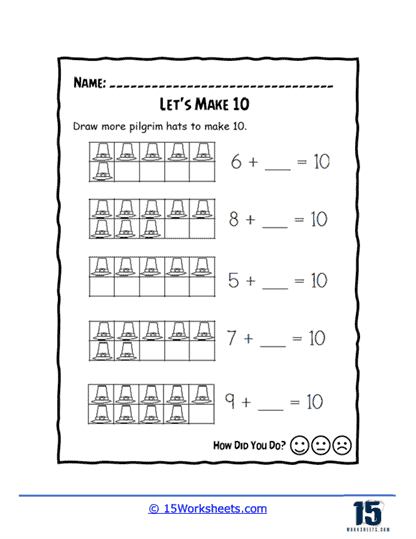
Cute pilgrim hat graphics feature in a “how many to ten” format-kids add more hats to reach the total. It makes math festive and thematic. A charming way to mix holiday vibes with number sense.
Simple Adding Bonds
Straightforward problems focused on understanding addition bonds (pairs) that make a target number (likely 10). These build core fluency and understanding of number composition. It’s fundamental, clear, and essential math building.
How to Find the Missing Addend
Finding a missing number in an addition problem involves using subtraction or other strategies to solve for the unknown value. Here’s a step-by-step guide that teachers can share with their students to help them with finding a missing number in an addition problem.
- Understand the problem: Identify the missing number in the problem and the given information.
Example: 9 + __ = 15
In this problem, the missing number is represented by the line (__).
- Use subtraction: Since addition and subtraction are inverse operations, you can use subtraction to find the missing number. Subtract the known addend from the sum to find the missing number.
Example: 15 (sum) – 9 (known addend) = __ (missing number)
- Perform the calculation: Complete the subtraction to find the missing number.
Example: 15 – 9 = 6
So, the missing number is 6.
- Check your answer: Add the known addend and the missing number to ensure that the sum is correct.
Example: 9 + 6 = 15
Since the sum is correct, the missing number is indeed 6.
For more complex problems, you can use other strategies such as algebraic equations, number bonds, or fact families. However, for most basic missing number problems in addition, using subtraction is a simple and effective method.