
Tall vs. Short Worksheets
About These 15 Worksheets
Tall vs. short might sound like a simple concept, but for little learners, it’s a whole new way of looking at the world. These worksheets break down the idea of height into fun, friendly activities where kids get to compare objects, color them, and even sort them into categories. By mixing real-life objects like candles and crayons with playful themes like chess pieces, students stay curious and engaged. It’s measurement practice that doesn’t feel like math class-it feels like playtime with a purpose.
The variety in this collection means children get plenty of chances to practice the same skill in different ways. One worksheet may have them coloring tall objects one shade and short objects another, while another asks them to spot the smallest package in a lineup. Each task reinforces the vocabulary of “tall” and “short” while sharpening visual discrimination and early math reasoning. Think of it as brain exercise with a playful twist.
And beyond the worksheets themselves, this kind of practice helps kids better understand their world. Suddenly, the short cup and the tall glass at the dinner table are more than just dishes-they’re real-world examples of what they’ve been learning. These activities help them build vocabulary, observation, and critical thinking skills that will carry over into everyday conversations and problem-solving.
Have a Look Inside Each Worksheet
Sort Things
Kids will sort pictures or objects into two groups-those that are tall and those that are short. This helps build their observation and classification skills while reinforcing the vocabulary of height. The activity is interactive and clear, giving children a chance to visually compare items. It supports early spatial reasoning in a playful way.
Outside and Inside
Learners will likely guess which items belong outside or inside and also whether they are tall or short. This strengthens their ability to think about setting and object attributes simultaneously. The worksheet feels like a fun little categorization puzzle. It builds real-world understanding along with measurement awareness.
Functional Stuff
Young learners will decide if everyday “functional” objects are tall or short-maybe comparing a lamp to a pencil. This brings measurement vocabulary into everyday life. It encourages them to reason about size in context. This supports understanding that size matters for how things work and feel.
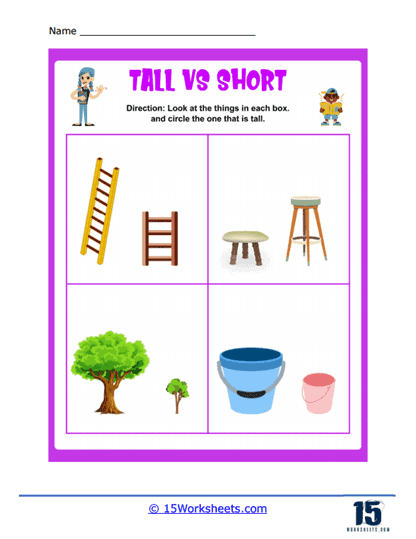
What’s Tall
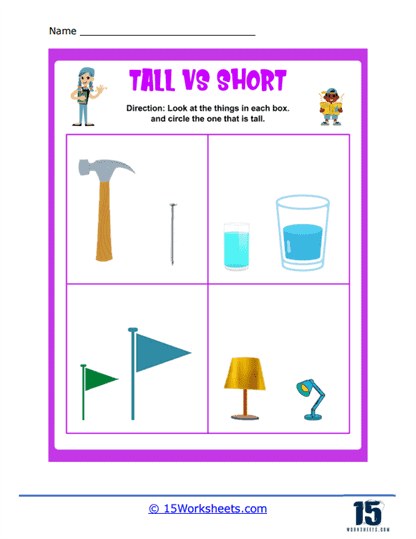
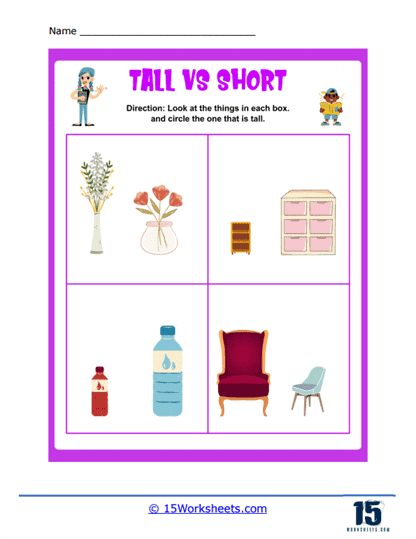
Students are asked to pick or point to taller items in a set of pictures. It’s a straightforward “spot the tall object” kind of fun. This sharpens their visual discernment and comparative language skills. The simplicity makes it approachable and effective.
Taller Objects
Similar to the above, but now kids might be comparing items and selecting which one is taller. It builds quick thinking about relative height. The activity is direct and visually driven. It helps reinforce judgment skills through immediate comparison.
More Length
This likely shows lines or objects for children to compare length-wise to decide which is longer or shorter. It’s a visual and tactile reasoning activity. Students practice measurement concepts in a hands-on way. It encourages them to count, compare, or estimate lengths.
Shorter
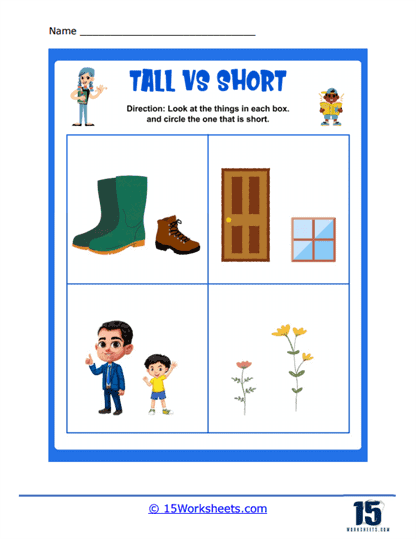
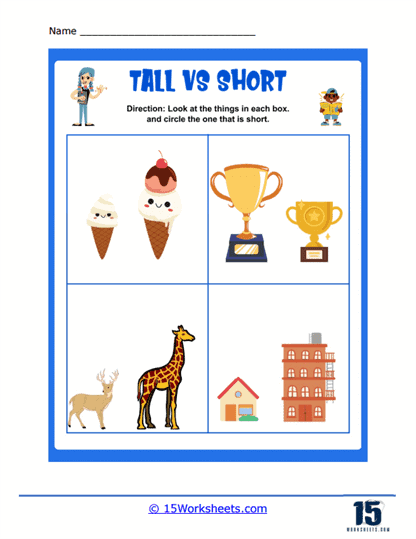
Students will identify which of two items is shorter-such as a short pencil vs. a long one. This activity teaches comparative language in a simple, direct way. It sharpens the understanding of opposites: tall vs. short. The clear visuals make learning intuitive for early learners.
Little One
Here, kids identify the small or short item in a set. It reinforces descriptive vocabulary like “little,” “small,” or “short.” The format feels playful-like choosing the littlest member of a group. It builds foundational language and size comparison skills.
Small Packages
Learners will compare “packages” or objects and choose or label those that are small or short. This injects a bit of daily-life humor into measurement-imagining tiny boxes or gifts. It’s engaging and relatable. It fosters early math thinking through everyday examples.
Color Tall and Short
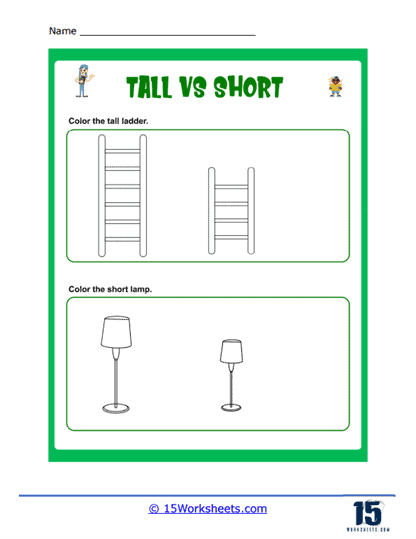
Students are asked to color objects based on whether they’re tall or short-perhaps coloring tall items one color and short items another. It combines artistic fun with critical thinking. Coloring keeps little hands busy while reinforcing classification skills. It’s both educational and enjoyable.
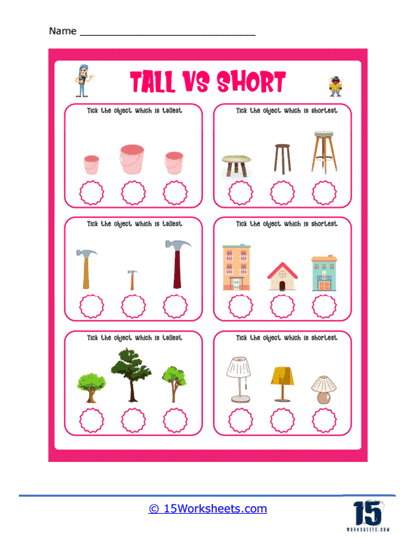
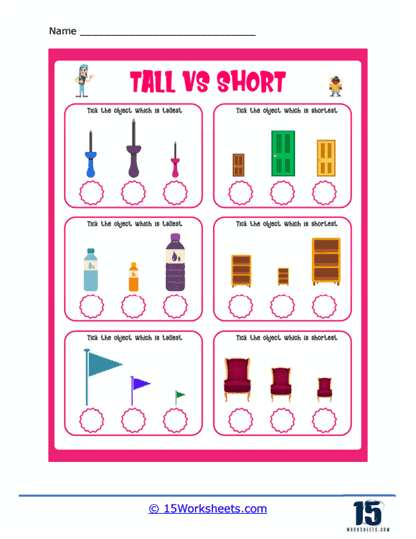
Buckets and Flags
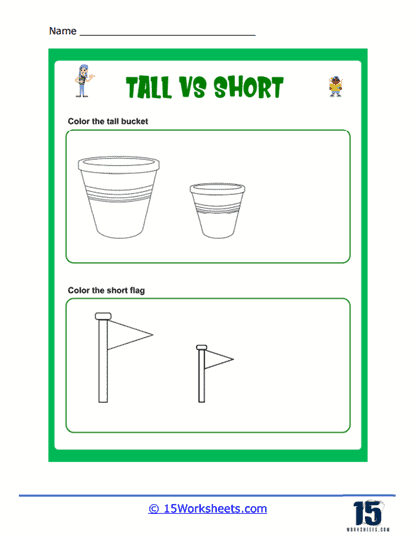
Kids compare buckets and flags-maybe deciding which bucket is taller or which flag stands higher. The comparison helps build vocabulary and height judgment. It’s themed to make measurement feel exciting. It supports understanding through themed visuals.
Candles and Crayons
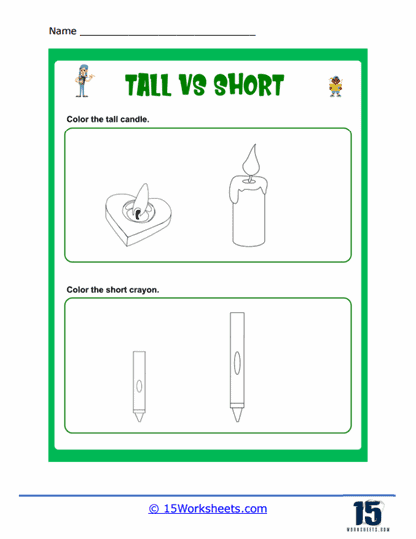
Children likely compare candles and crayons-identifying which is taller or shorter. It’s a creative theme that mixes everyday and whimsical objects. The activity helps kids practice visual comparison and descriptive language. It’s fun and skill-building at the same time.
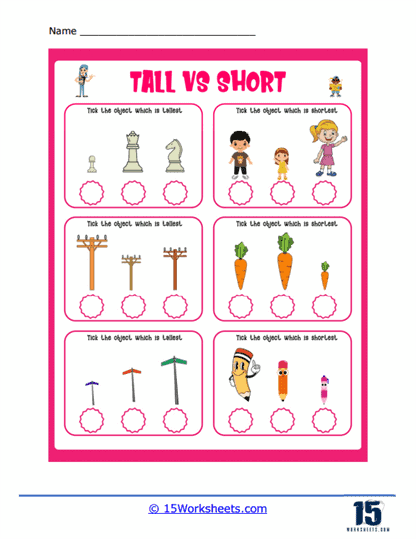
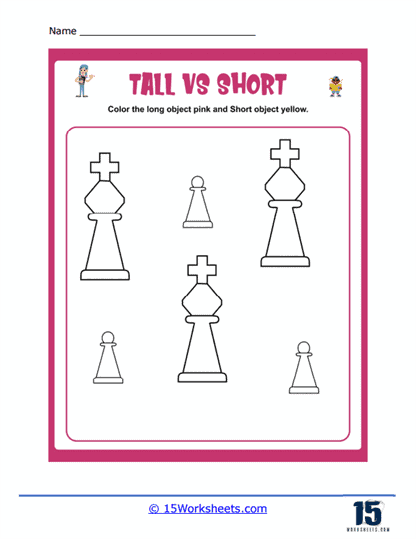
Chess Pieces
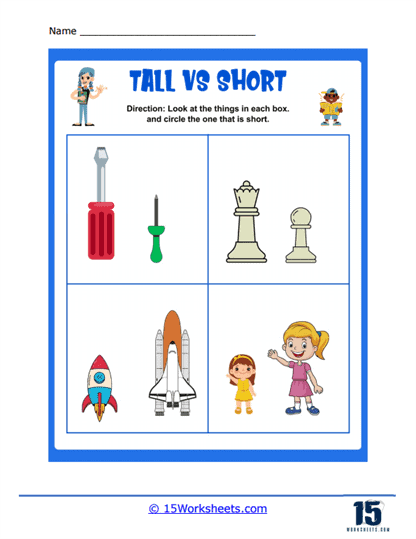
Kids compare chess pieces (say, a king vs. a pawn) to determine which is taller or shorter. This adds a playful twist with a familiar game piece theme. It builds observational skills and height vocabulary. The chess theme makes the worksheet feel special and engaging.
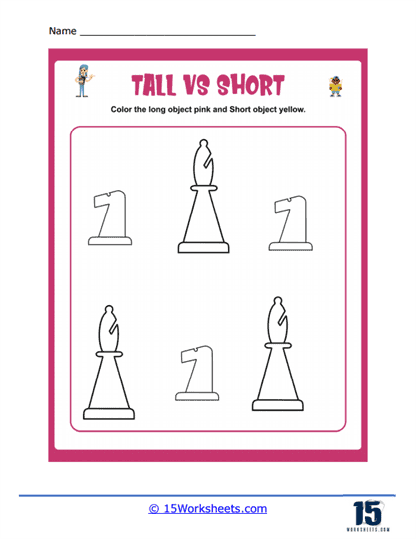
Bishop and Knights
Similar to the above, students decide if the bishop is taller than the knight or vice versa. It continues the chess-themed height comparison fun and stimulates critical thinking. The context encourages attention to detail and language use. It helps kids connect measurement to recognizable objects.
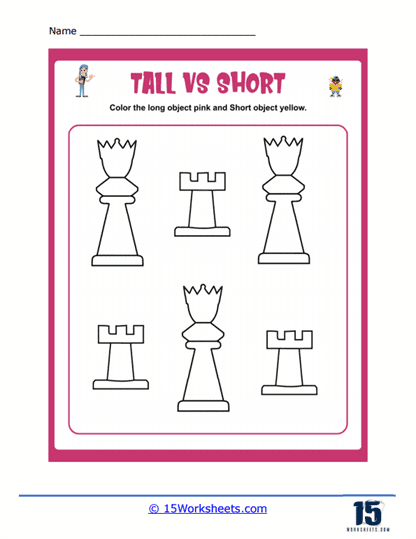
Rooks and Kings
Here, children compare rooks and kings in chess-figuring out which piece stands taller. It reinforces prior height-concept practice through another fun chess comparison. The activity is neat and context-rich. It’s an imaginative way to practice comparative vocabulary.
Teaching Kids the Difference Between Tall and Short
Teaching kids the difference between tall and short is essential for helping them understand basic measurement concepts and develop their spatial awareness. Here are some strategies to effectively teach children the difference between tall and short:
Introduce the Terms – Begin by explaining the meanings of “tall” and “short.” Tall refers to a greater height, while short refers to a lesser height. Use clear and simple language to ensure they understand these terms.
Use Visual Examples – Provide visual examples of objects that are clearly tall and short. For instance, you can use a tall stack of blocks next to a short stack or a tall bottle next to a short one. Point out the differences in height and encourage children to observe and describe them.
Hands-on Activities – Engage children in hands-on activities that allow them to compare the height of different objects. For example, ask them to find objects around the room that are tall and short, and have them place the items in two separate groups.
Sorting and Ordering – Encourage children to sort or order objects based on their height. Provide a set of objects with varying heights and ask them to arrange the items from shortest to tallest, or vice versa.
Draw and Create – Have children draw or create objects of different heights using art materials such as paper, playdough, or pipe cleaners. This will help them visualize and internalize the concepts of tall and short.
Use Real-life Examples – Reinforce the concepts of tall and short by pointing out real-life examples, such as the height of a tree, a person, or a building.
Storytime – Read stories or books that involve characters or objects with different heights. Discuss the concepts of tall and short within the context of the story to help children understand and remember the terms.
Games and Challenges – Organize games or challenges that involve identifying and comparing tall and short objects. For example, play “I Spy” with a focus on finding tall or short items or set up a scavenger hunt with clues related to height.
Use Songs and Rhymes – Teach children songs or rhymes that incorporate the concepts of tall and short. This can help make learning more fun and memorable.
Reinforce Concepts Regularly – Provide regular opportunities for children to practice identifying and comparing tall and short objects. This will help them internalize the concepts and become more comfortable with them.
Remember to be patient and provide positive reinforcement as children learn the difference between tall and short. With consistent practice and exposure to these concepts, they will develop a solid understanding of basic measurement principles.