
Place Value Worksheets
About Our Place Value Worksheets
Place value is the “aha!” moment where math finally clicks. Instead of seeing a number as one big chunk, students learn to see the architecture behind it-understanding exactly how hundreds, tens, and ones work together. Our collection of place value chart worksheets is designed to take the mystery out of the base-ten system through clear visuals and structured practice.
Whether you are looking for simple three-digit grids or challenging four-digit “thousands” tables, these free printable math resources provide a step-by-step path to fluency. Rooted in proven literacy and numeracy strategies, these activities use “number detective” themes and color-coded layouts to help kids visually organize numbers piece by piece.
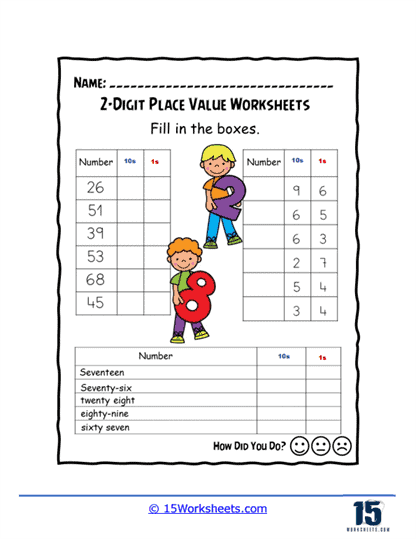
2 Digit Place Value Worksheets
Students learn how to break numbers down into tens and ones places. With a variety of topics, including place value charts and expanded notation, this series of free worksheets encourage students to develop their understanding of place value and gain confidence in working with multi-digit numbers.
These worksheets include visual aids like place value blocks or drawings to help students visualize the concept. These representations help students see the relationship between the digits and their values.
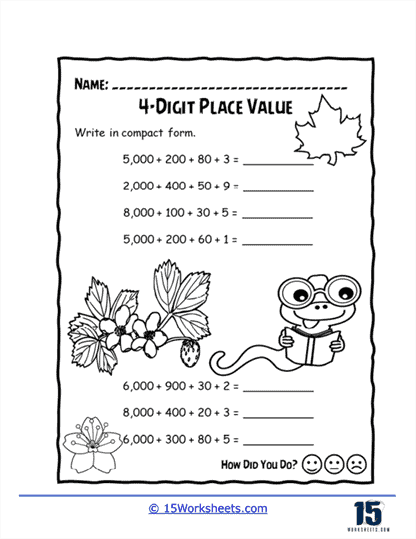
These worksheets contain a series of exercises and problems that require students to work with thousands, hundreds, tens, and ones places to represent, compare, order, and perform operations on four-digit numbers.
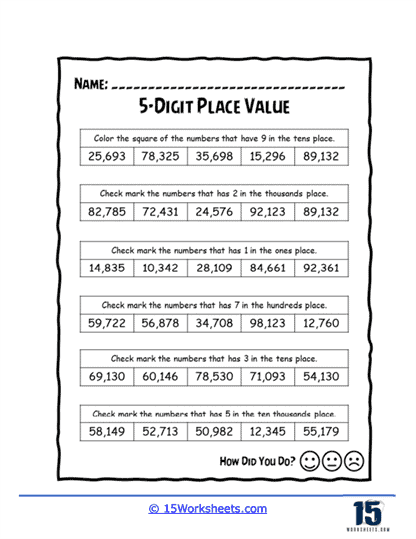
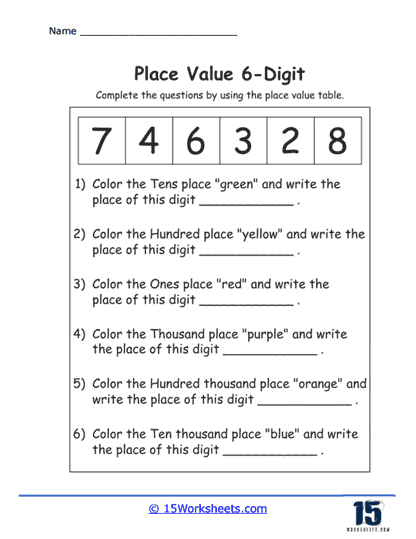
Students learn how to represent five-digit numbers using place value notation. They understand that each digit’s position in a number represents a different value (ten-thousands, thousands, hundreds, tens, or ones).
These worksheets help students build confidence reading, writing, and understanding numbers all the way into the hundred-thousands. As your child practices identifying digit values, expanded form, and comparing large numbers, they’ll strengthen the number sense skills that are essential for upper elementary math success.
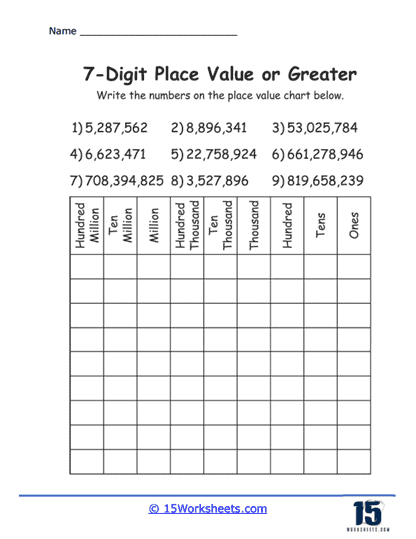
In this collection, students take the next big step by working with numbers into the millions place. Parents will love how these worksheets gently reinforce place value concepts through repeated practice, helping children become more comfortable with larger numbers used in real-world math situations.
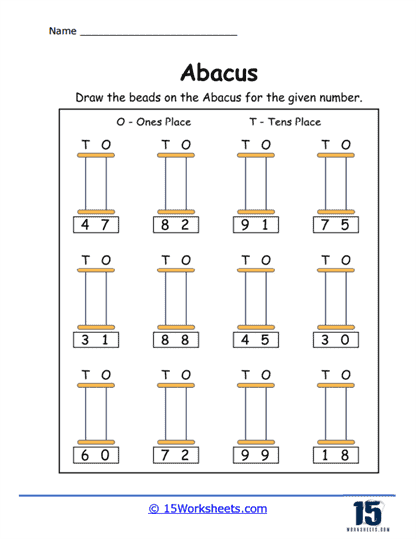
These abacus worksheets introduce children to place value in a hands-on and visual way that makes math feel approachable and fun. By connecting beads to number values, students can better understand how numbers are built, which often makes addition, subtraction, and overall number sense much easier to grasp.
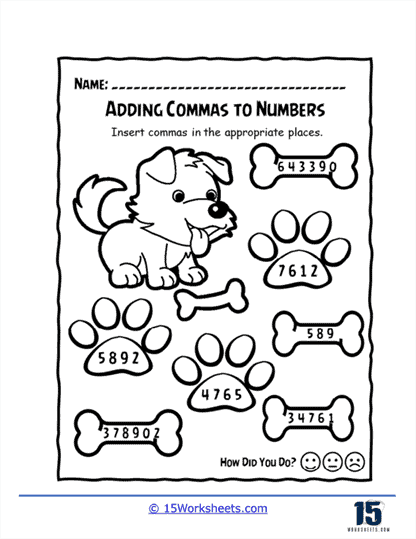
These worksheets are filled with exercises and problems that require students to correctly insert commas when writing or reading numbers with many digits. This skill is essential for writing numbers in standard form and for making large numbers more readable.
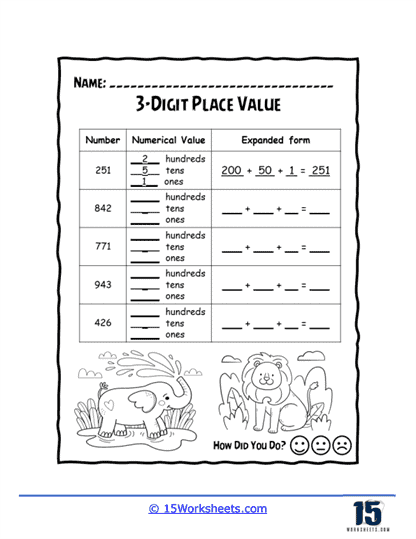
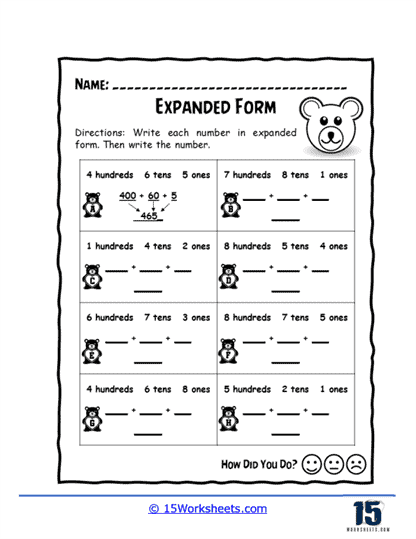
Expanded form is a fundamental concept in understanding place value and the structure of numbers. This knowledge is crucial for performing arithmetic operations accurately, solving mathematical problems, and grasping more advanced mathematical concepts as students progress in their math education.
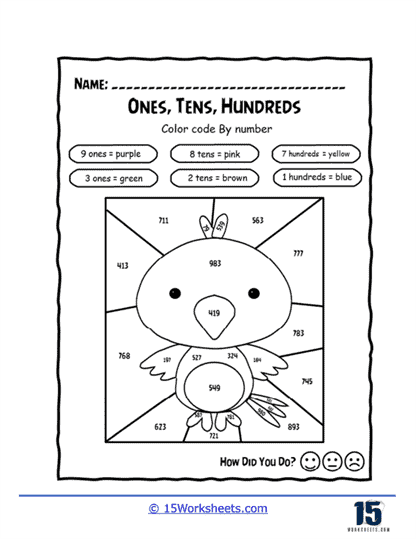
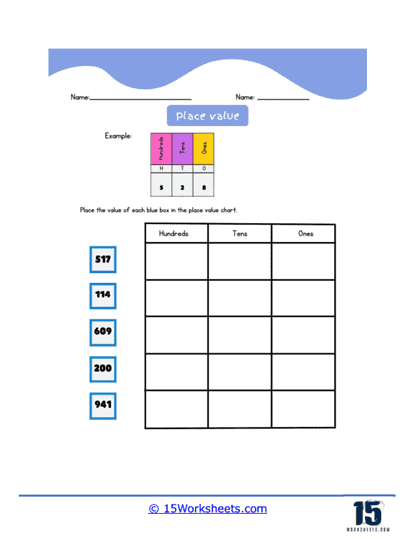
Students learn that each digit in a number has a specific value based on its position within the number. The rightmost digit represents ones, the next digit to the left represents tens, and the next digit represents hundreds.
Students learn how to separate numbers down into their individual values of the integers within the values. Through expanded notation and regrouping, these worksheets provide ample practice for students to master this important math concept and gain confidence in working with larger numbers.
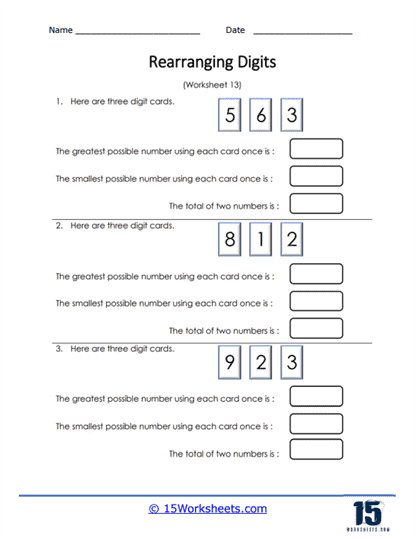
Students will order a series of digits to make them the smallest and largest value possible. These worksheets develop their logical mathematical skills, which is vital for the essential math concepts that they need to learn.
Tenth, Hundredths, Thousandths
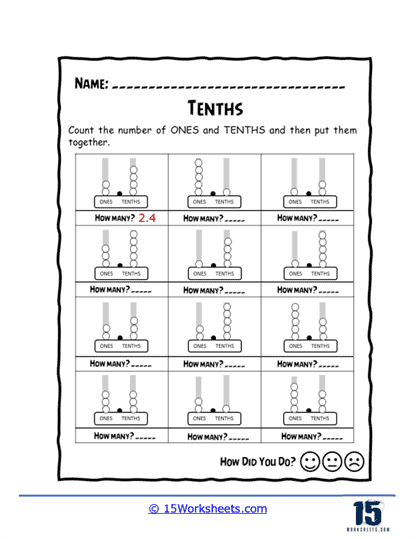
These worksheets are filled with problems that involve numbers composed of decimal places, specifically tenths (1/10), hundredths (1/100), and thousandths (1/1000). The first digit to the right of the decimal point represents tenths, the second digit represents hundredths, and the third digit represents thousandths.
What are Place Value Charts Worksheets?
Place value can sound a little intimidating at first, but it’s really just helping kids understand what each digit in a number actually means. For example, when you look at 345, that “3” isn’t just a 3-it represents three hundreds. That’s a big shift for learners, and it’s where things often start to click. Place value charts make this idea much easier by laying everything out into clear columns like hundreds, tens, and ones. Think of it like giving each digit its own labeled spot so kids can “see” how numbers are built.
For teachers and parents, this is one of those foundational skills that pays off again and again. When kids understand place value, they’re not just memorizing numbers-they’re actually understanding them. That makes future skills like addition, subtraction, and even multiplication much smoother. You’ll also notice it helps with real-life tasks, like reading prices at a store or understanding larger numbers in everyday situations. It’s one of those concepts that quietly supports almost everything else in math.
What’s especially helpful is how place value charts turn something abstract into something visual and hands-on. Kids can break numbers apart, move pieces around, and really interact with what they’re learning. Along the way, they also build confidence explaining their thinking, which strengthens both math and communication skills. Over time, patterns start to stand out, and numbers feel less overwhelming. And honestly, once that understanding clicks, you can almost see the moment when math starts to feel a lot more doable-and even a little fun.