
Months Worksheets

About These 15 Writing Prompts
Each month brings its own stories, moods, and celebrations-and these worksheets are designed to capture them all. From winter snowflakes to summer sunshine, students get prompts that connect directly to the seasons, holidays, and traditions of each month. Instead of generic writing tasks, kids are inspired to draw from real-life experiences and seasonal fun. This makes writing more engaging, personal, and meaningful.
The collection grows with students: younger learners get simple, image-based writing prompts for kids, while middle and high schoolers work on more reflective and detailed responses. Whether they’re imagining a summer adventure, describing fall leaves, or sharing what they’re thankful for, the worksheets guide them toward clearer and more expressive writing. They also give students plenty of chances to practice storytelling, descriptive language, and even persuasive ideas.
And because months mark the rhythm of our lives-new years, new school terms, holidays, and family traditions-these prompts tie writing practice to the real world. Students aren’t just writing to fill a page; they’re learning to capture the experiences and emotions that make each month unique. By the end of the year, they’ll have a calendar full of writing that mirrors the cycle of seasons and life.
Have a Look Inside Each Worksheet
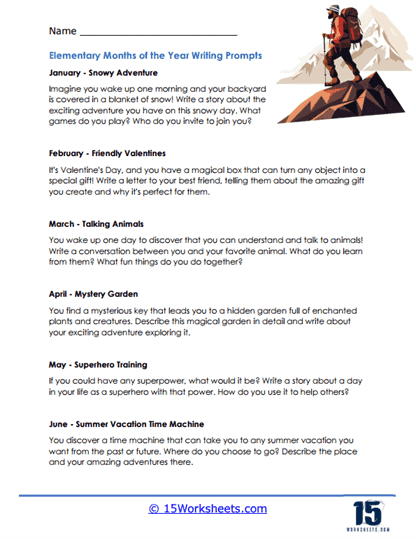
Elementary Writing Prompt Pack
This pack gives younger students simple, seasonal prompts tied to each month. Kids might describe snowy days, summer adventures, or holiday fun. The prompts are short, easy to follow, and spark imagination. Perfect for early writers just learning to expand ideas.
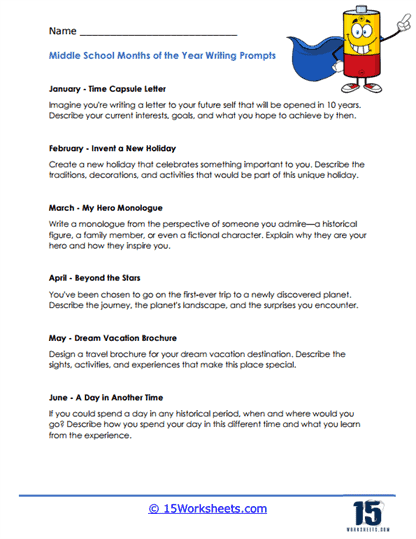
Middle School Writing Prompt Pack
Designed for tweens, these prompts are more detailed and thought-provoking. They invite students to reflect on monthly traditions, changes in nature, or personal experiences. The topics balance fun and reflection. Great for encouraging longer, more structured writing.
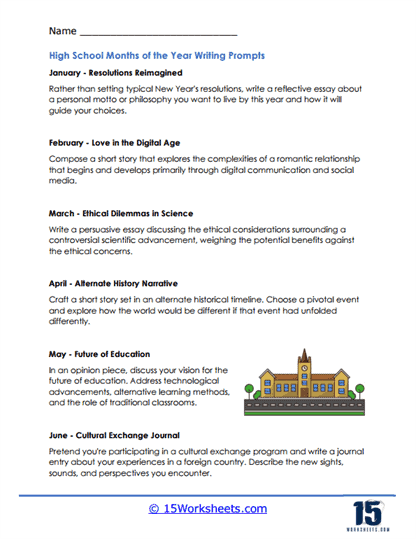
High School Writing Prompt Pack
Older students tackle prompts that are more abstract and analytical. They might explore cultural events, symbolic meanings of months, or personal growth tied to the calendar. These activities strengthen critical thinking alongside writing skills. It’s a resource that blends creativity with depth.
January
Prompts for January center around new beginnings and winter themes. Students might write about resolutions, snow scenes, or fresh starts. The month’s chilly tone inspires reflective and descriptive writing. It’s all about capturing the spirit of a new year.
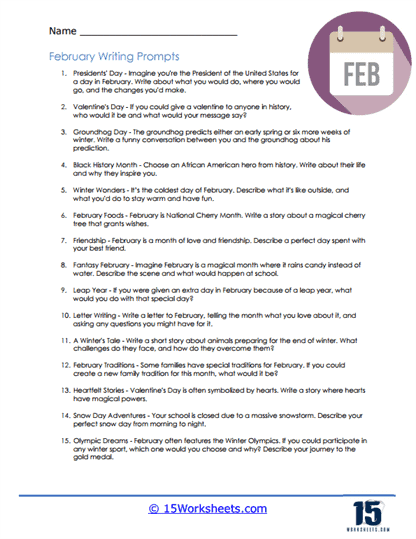
February
These prompts highlight love, friendship, and the coziness of winter. Valentine’s Day often inspires creative and heartfelt writing. Students can explore relationships, kindness, and emotions. It’s a chance to write with warmth in the coldest month.
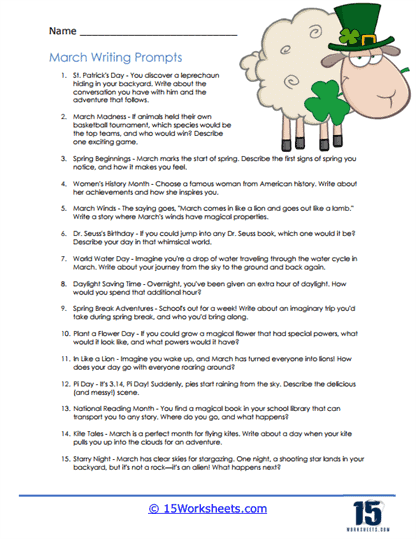
March
March prompts focus on change, luck, and spring’s arrival. Kids might write about St. Patrick’s Day, unpredictable weather, or the excitement of new growth. The mix of themes makes it playful and thoughtful. Writing becomes a way to welcome the season.
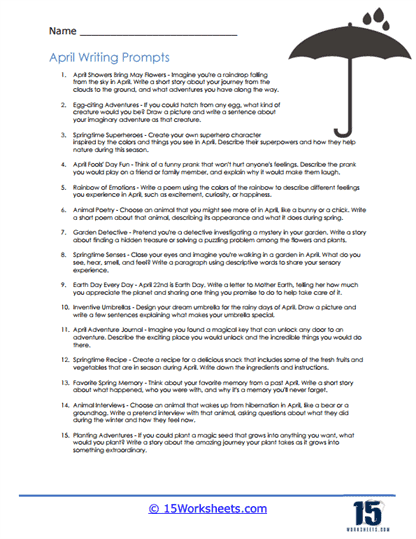
April
April brings prompts about rain, renewal, and blossoming nature. Students describe showers, flowers, and festive traditions. The month inspires rich sensory writing full of color. It’s perfect for practicing descriptive detail.
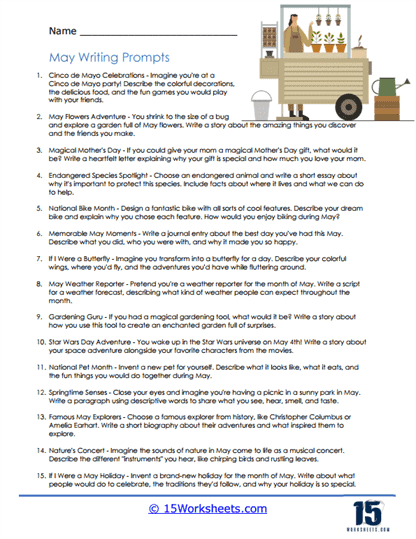
May
Prompts for May highlight growth, celebrations, and outdoor fun. Students might write about flowers, Mother’s Day, or the joy of warmer days. The tone is cheerful and lively. Writing feels like a celebration of spring.
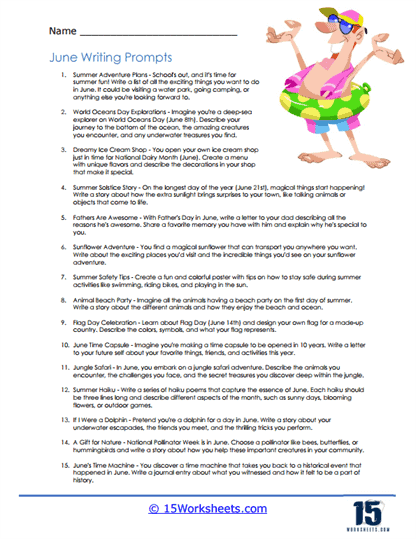
June
June prompts tap into summer beginnings and school’s end. Students can reflect on vacations, freedom, or sunny adventures. The month inspires stories full of excitement and energy. Great for personal and creative expression.
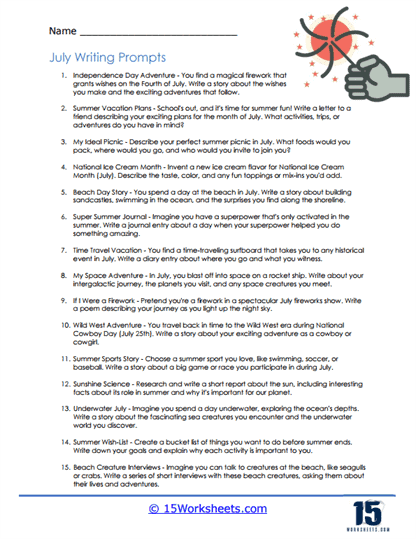
July
July is all about summer heat, fireworks, and fun. Prompts encourage students to describe vacations, independence celebrations, or summer nights. Writing often bursts with joy and vivid imagery. It’s a month that naturally sparks storytelling.
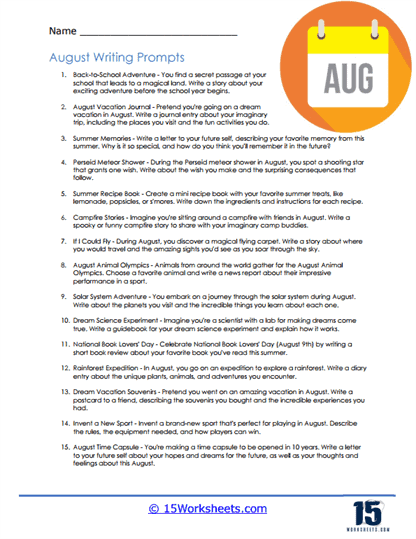
August
August prompts focus on transitions, late summer, and preparing for school. Students may write about the last adventures before fall or feelings about going back to class. It’s a reflective month with both fun and anticipation. Writing balances memory and looking forward.
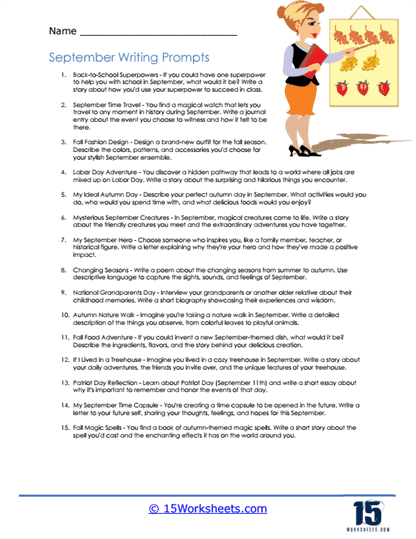
September
Prompts for September center around autumn’s arrival and new routines. Students can write about crisp air, school beginnings, or harvest themes. The topics mix cozy imagery with fresh challenges. Writing reflects the season of change.
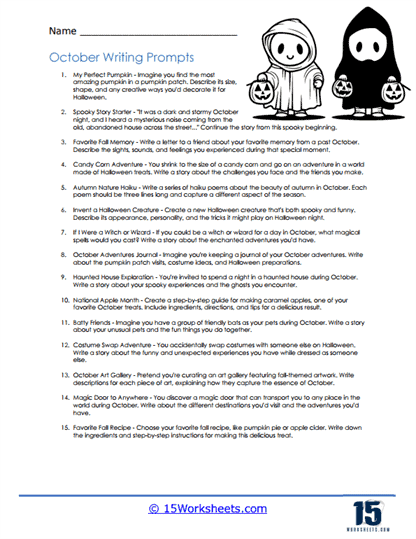
October
October prompts lean into spookiness, fall colors, and traditions. Kids might write ghost stories, describe Halloween fun, or capture the magic of falling leaves. The themes are playful and seasonal. Writing becomes both festive and imaginative.
November
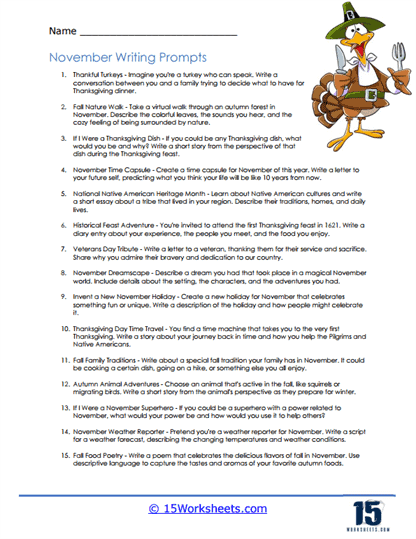
Prompts for November emphasize gratitude, reflection, and autumn’s end. Students write about Thanksgiving, family, or what they appreciate. The month encourages thoughtful, heartfelt responses. It’s writing with meaning and depth.
December Writing Prompts
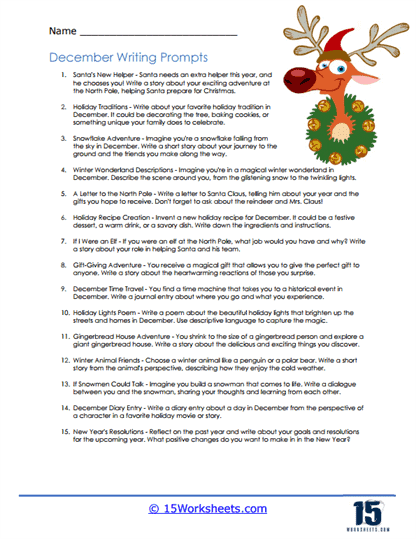
December prompts sparkle with holiday cheer and winter wonder. Students might describe traditions, snow days, or the spirit of giving. The festive tone inspires joyful and reflective writing. It’s the perfect way to end the year on a creative note.
Example Prompts and Responses
Prompt 1 – The Depths of January
January is often associated with cold winter days, snow-covered landscapes, and the promise of a new beginning. As the first month of the year, it’s a time when people make resolutions and set goals. Imagine you are an elderly person reflecting on the Januaries of your past, remembering one particular January that changed your life forever. Describe the events of that month and explain their significance.
Response to Prompt 1
I still remember January of 1965 as if it were yesterday. The town was blanketed in a thick layer of snow, the whitest I had ever seen. But more than the snow, it was the letter that arrived on a frosty morning that made the month unforgettable. It was from my childhood sweetheart, Anna, whom I hadn’t heard from in over 20 years. That letter rekindled a love I thought was lost, leading to a spring wedding, and a life filled with shared Januaries, each one a reminder of the month that changed everything.
Prompt 2 – Blooming April
April signifies the full bloom of spring. Flowers blossom, trees sprout new leaves, and the animal kingdom is abuzz with activity. In some cultures, April is also a time of celebration and festivity. Imagine a small town that has a unique tradition – every April, they hold a festival where residents compete to tell the most compelling story related to the month. Narrate the story of a young competitor who, against all odds, mesmerizes the town with her tale.
Response to Prompt 2
In the quaint town of Floraville, April wasn’t just about flowers; it was about stories. The annual April Anew Festival was the most awaited event, where tales of spring were spun with fervor. Young Lila, with her stutter, was always an eager listener but never a participant. However, this year, she mustered the courage to narrate her story. With the town square hanging onto her every word, Lila spoke of an April where every bud she touched bloomed instantly. By the end, not only had she woven a magical tale, but her confidence had blossomed too, leaving the town both teary-eyed and inspired.
Prompt 3 – The Warmth of July
July often brings with it the warmth of summer, long days, and starry nights. For many, it’s a time of vacations, beach trips, and relaxation. Imagine, in a parallel universe, July is the only month in a year when the sun shines, making it the most cherished time. Write a letter from a teenager in this universe to their pen pal, describing their feelings and activities during this special month.
Response to Prompt 3
Dear Alex,
You might find it hard to believe, but our July has just begun, and with it, the sun has graced our skies! It feels like the world wakes up in this month. The otherwise gray landscapes are now awash with hues of gold, and the rivers glisten under the sun’s rays. We’ve planned endless beach trips, and nighttime barbecues under the starlit expanse are a must. I’ve taken up sun painting this year, capturing the sun’s golden kiss on everything it touches. Every July, I’m reminded of the beauty of warmth and light. How I wish I could bottle up this sunshine and send it your way!
Warmly,
Ella.