
Horror Worksheets
All About These 15 Worksheets
Horror writing is all about giving readers goosebumps, chills, and that little thrill of “what happens next?” These worksheets offer a safe and creative way for students to explore the spooky side of storytelling. Each prompt introduces a creepy scenario-like a mysterious locket, a haunted guide, or a stranger in town-that students can run with in their own unique way. It’s less about scaring for real and more about practicing how to create mood, tension, and exciting plot twists.
The real strength of this collection is how it balances structure with imagination. Each worksheet provides a clear starting point, but leaves the story wide open for kids to explore. This encourages creativity while still guiding them toward key writing skills like descriptive language, suspense pacing, and character development. By working through the set, students learn how to keep readers hooked, build tension, and deliver satisfying surprise endings.
Beyond writing practice, these horror-themed prompts also connect to broader storytelling traditions. Horror has always been a way for people to explore fears, mystery, and even morality through stories. When students engage with these worksheets, they’re not just writing for fun-they’re dipping into a genre that reflects how humans process the unknown. That makes these worksheets both creative practice and a small window into the cultural power of scary stories.
Have a Look Inside Each Worksheet
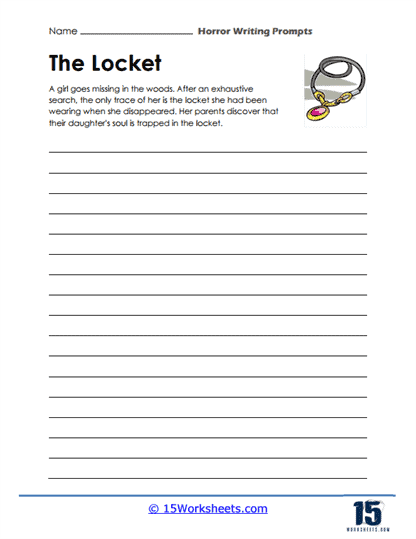
The Locket
This prompt begins with a mysterious locket that holds a dark secret. Students are asked to imagine what happens when someone opens it and unleashes what’s inside. The activity encourages descriptive writing and suspense building. It’s perfect for practicing eerie settings and cliffhangers.
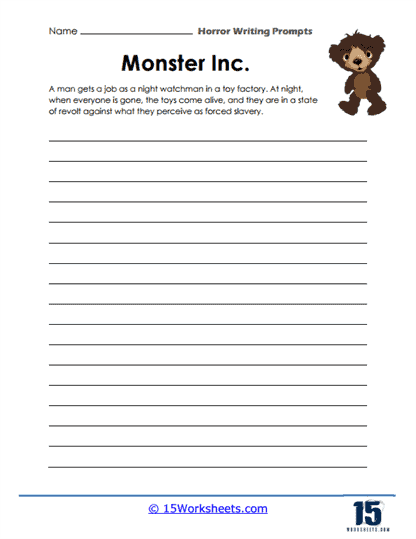
Monster Inc.
Kids create a story where monsters are more than they first appear to be. The prompt sparks imagination by mixing everyday life with creepy twists. It helps learners build characters with both scary and surprising traits. This is a fun way to combine humor with horror elements.
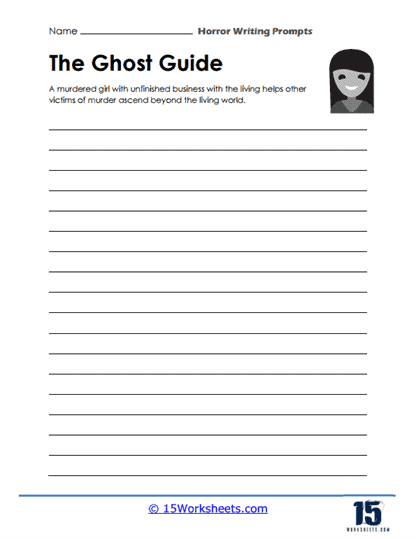
The Ghost Guide
This worksheet asks students to imagine a ghost that leads the living through haunted places. The task pushes them to describe spooky settings and the emotions of following a spectral guide. It emphasizes atmosphere and mood in storytelling. It’s a great chance to practice building tension.
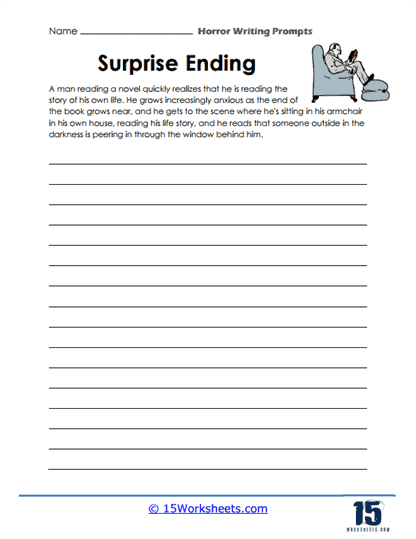
Surprise Ending
Writers are challenged to create a tale that flips expectations at the very end. The prompt focuses on suspense and plot twists. Students will practice leading readers in one direction and then shocking them. It’s an engaging way to sharpen narrative creativity.
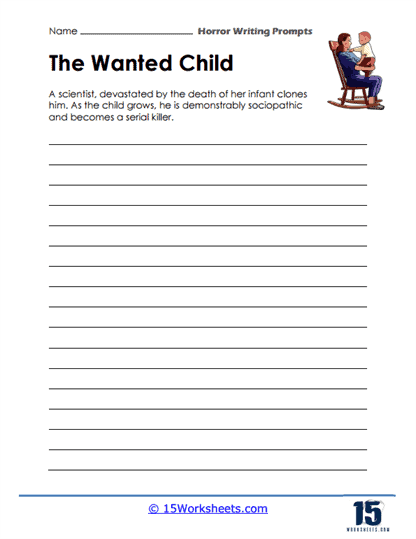
The Wanted Child
This worksheet invites students to write about a child who is being hunted-but why? The prompt is open-ended, sparking curiosity and tension. It teaches learners how to build mystery into their writing. It’s an ideal way to combine fear with intrigue.
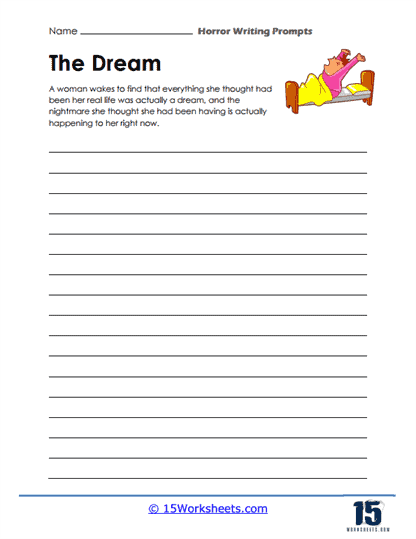
The Dream
Here students use a nightmare as the foundation of their horror story. The activity encourages vivid descriptions and symbolic details. It blurs the line between dream and reality, adding to the tension. Kids get to explore how fear can grow in the imagination.
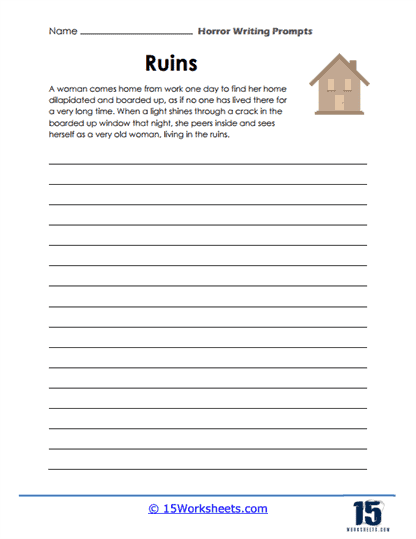
In The Ruins
This prompt places characters in abandoned ruins filled with danger. Students write about eerie sounds, shadows, and discoveries. It highlights setting as a key tool in horror writing. Learners practice weaving suspense into descriptive passages.
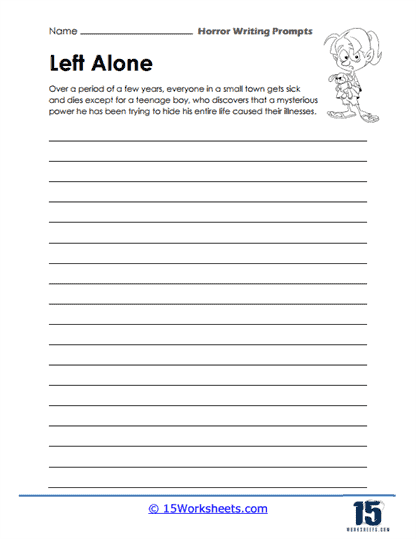
Left Alone
Students imagine being stranded somewhere completely alone-until they realize they’re not. The prompt builds isolation and suspense. It encourages inner monologues and sensory details. This activity strengthens character-driven horror writing.
The Storm
This worksheet uses a storm as the unsettling backdrop for horror. Students are guided to describe lightning, thunder, and power outages. The natural setting becomes a tool for building suspense. It’s a great exercise for mood-driven storytelling.
The Door
Writers explore what happens when a mysterious door appears where it shouldn’t. The task pushes them to imagine what’s on the other side. It encourages suspenseful pacing and descriptive clues. Students practice the art of holding back information to build tension.
Solar Flare
This prompt mixes science fiction with horror by imagining a solar flare causing strange events. Students might write about technology failing or supernatural chaos. It helps them practice blending genres. The activity sparks big, creative “what if” thinking.
Second Life
Here students invent a story where someone gets a second chance at life-with eerie consequences. The prompt explores themes of identity and the unknown. It emphasizes character development alongside suspense. This makes it a thought-provoking horror starter.
The Stranger
Kids write about an unfamiliar person who appears in a town or neighborhood. The focus is on building suspicion and fear. It encourages descriptive details about behavior, looks, and mystery. Students practice foreshadowing to keep readers hooked.
Power Of The Mind
This worksheet explores horror rooted in mental abilities, like telepathy or hallucinations. The prompt encourages stories where reality blurs with imagination. It pushes learners to play with psychological suspense. It’s perfect for developing chilling, thought-heavy narratives.
Child Spirit
Students are guided to write about a ghostly child who lingers for unknown reasons. The prompt balances innocence with creepiness. It encourages empathy as well as eerie description. This activity helps young writers capture the emotional side of horror.
What Is Horror?
Horror is a type of storytelling designed to thrill, scare, or unsettle the audience. It often involves spooky settings, mysterious characters, and surprising twists that keep readers on the edge of their seats. Think haunted houses, unexplained noises, or a shadow that moves when no one is there. Horror is the art of turning the ordinary into something extraordinary-and terrifying.
It matters because horror gives us a safe way to explore fear and tension. Readers can dive into spooky worlds, feel the excitement of danger, and still close the book knowing they’re safe. Horror also makes us think about deeper themes, like courage, morality, or what it means to face the unknown. That’s why it’s such a lasting and popular genre across cultures.
These worksheets make horror approachable for students, offering just the right mix of creepy and creative. By practicing with them, kids learn how to use setting, character, and plot twists to create suspenseful stories. Over time, they’ll not only feel more comfortable writing in the horror genre but also more confident in storytelling in general.
Horror writing prompts are creative ideas or starting points that inspire a writer to compose a story within the horror genre. These prompts often contain themes or elements typical of horror stories, like suspense, fear, supernatural elements, or eerie atmospheres.
A horror writing prompt might set a scene, propose a character, outline a premise, or ask a question to kick-start your imagination. They are designed to spark a narrative that elicits feelings of fear, unease, and suspense in the reader.
For example:
“Your main character awakes in the middle of the night to strange noises in their house. They soon realize they’re not alone.”
“Write a story where the character can see and interact with ghosts, but one day, the ghosts suddenly seem terrified of something.”
“Your protagonist finds an old key in their grandmother’s attic. It opens a door in the house that wasn’t there before.”
“A group of friends goes camping in a notorious forest, known for unexplained disappearances. As night falls, things start to go wrong.”
These prompts encourage writers to explore different facets of horror, from psychological fear to supernatural terror. Writing from prompts can be a great way to practice building suspense, crafting chilling narratives, and developing complex characters faced with terrifying situations.