
4th Grade Worksheets
All About These 15 Worksheets
Fourth grade is when students really start to stretch their writing muscles, and these prompts give them the perfect workout. From imagining life in an igloo to reflecting on work habits or cultural traditions, kids get the chance to explore both real experiences and make-believe adventures. The mix of fun topics and thoughtful reflection keeps them engaged and helps them practice different kinds of writing. Writing stops being just an assignment-it becomes a way for students to discover who they are and how they think.
This collection is designed to balance creativity, reflection, and structure. Some prompts are lighthearted, like describing a dream vacation or favorite video game, while others dive deeper, asking kids to think about lessons from the past or the influence of grandparents. That variety means there’s something here for every type of learner. Teachers and parents can easily adapt the prompts for quick writes, longer essays, or even class discussions.
The real magic of these worksheets is how they connect writing with life. Students learn that writing isn’t just for tests-it’s a tool for telling stories, sharing opinions, and recording memories. By practicing with relatable and imaginative prompts, kids develop confidence, fluency, and a sense of joy in expressing themselves. These worksheets give them the stepping stones toward stronger communication and creativity.
Have a Look Inside Each Worksheet
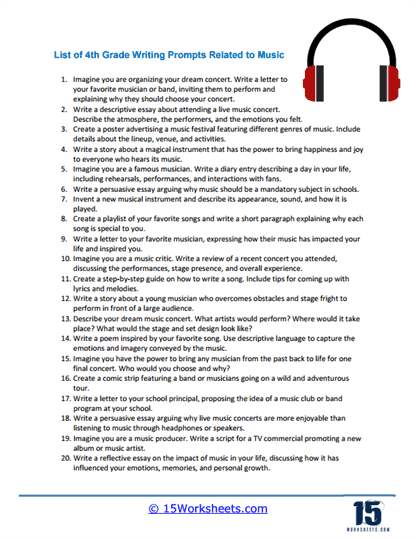
Music And Concerts
Students write about a concert they’ve attended or imagine one they’d love to see. They practice descriptive writing by capturing sounds, feelings, and atmosphere. This activity also lets them connect personal interests to storytelling. Writing becomes a stage for their favorite music moments.
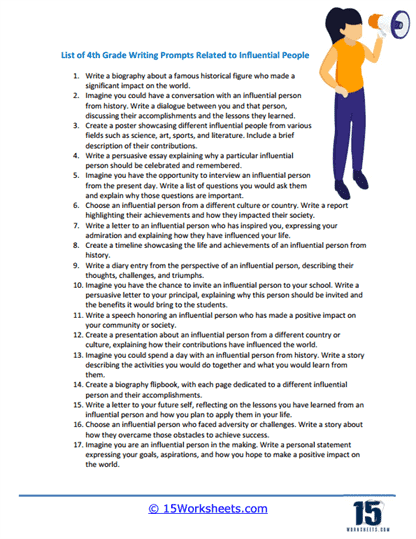
Influential People
Here, students choose an influential person and explain why they admire them. They practice expository writing with supporting details and examples. The prompt builds research and reflection skills. It’s a chance to connect role models to personal values.
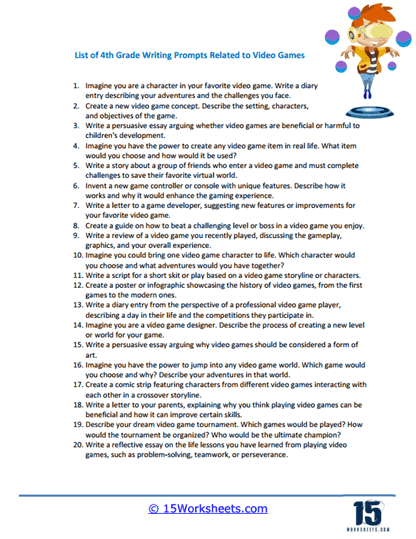
Video Games
Kids write about favorite video games, characters, or the impact games have on their lives. They practice opinion and persuasive writing while connecting to something they enjoy. This activity sharpens reasoning and descriptive detail. Writing about games makes schoolwork feel fun and relatable.
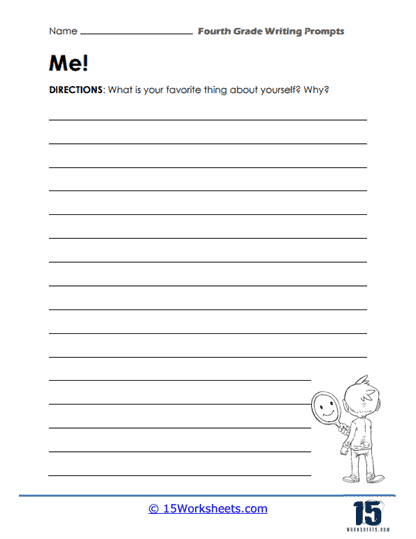
About Me!
Students reflect on their own lives by writing about hobbies, interests, or personal qualities. This builds confidence and self-awareness while strengthening narrative skills. The prompt encourages organization and detail. It’s a great way for kids to tell their own story.
Dream Vacation
This prompt asks students to describe their perfect trip. They practice sequencing events and using sensory details to bring the vacation to life. The activity builds narrative and descriptive writing. Writing feels like traveling with imagination as the ticket.
A Gift To Give
Students write about a meaningful gift they would like to give someone. They practice explanatory writing by explaining their choice and its importance. The activity also builds empathy and reflection. Writing becomes a way to think about kindness and generosity.
Lessons Of The Past
This prompt encourages students to reflect on an important lesson they’ve learned. They practice narrative and reflective writing with clear sequencing. It helps kids see writing as a tool for processing experiences. The activity combines wisdom with storytelling.
Self-Reflection
Students write about their strengths, weaknesses, and goals. This activity builds self-awareness and critical thinking. It encourages honesty while strengthening expository writing. Writing becomes a mirror for personal growth.
Memory Vs. Imagination
Here, students compare a real memory with an imagined version of the same event. They practice both narrative and creative writing while noticing differences between fact and fiction. The activity sharpens organization and creativity. Writing becomes an exploration of truth and imagination.
Work Habits
Students reflect on their work habits in school and how they could improve. This builds opinion and explanatory writing skills. It also promotes responsibility and goal-setting. Writing connects directly to their classroom success.
Cultural Traditions
This prompt asks kids to write about a tradition from their culture or family. They practice expository writing with descriptive details. The activity builds pride in identity while encouraging curiosity about others. Writing celebrates diversity and belonging.
Play Time
Students write about their favorite way to play-sports, games, or imagination. They practice descriptive and narrative skills. The activity also connects writing to their everyday joy. It makes writing lighthearted and fun.
Knowing Grandparents
Students write about their grandparents’ lives, stories, or qualities they admire. This encourages narrative and reflective writing. It also builds connections between generations. Writing becomes a bridge between family history and the present.
Storytelling Element
This worksheet asks students to focus on one element of storytelling, such as character, setting, or plot. They practice building stronger narratives by developing that piece. It strengthens craft and creativity in writing. Kids learn how small details make big stories.
In The Spotlight
Students imagine being famous or recognized for something special. They write about what it’s like and how they’d handle it. The prompt builds narrative and opinion writing skills. It’s a fun way to dream while practicing structured writing.
Growing Up
Here, students reflect on how they’ve changed and grown over the years. They practice sequencing and reflective writing. The activity encourages self-awareness and storytelling. Writing becomes a celebration of personal growth.
Kids In The Family
Students write about their role as a sibling, cousin, or family member. They practice expository and narrative writing through real experiences. The activity strengthens reflection and empathy. Writing highlights the importance of family connections.
Igloo Life
This imaginative prompt asks kids to describe living in an igloo. They practice descriptive writing with sensory details about cold, snow, and daily routines. The activity blends creativity with structured storytelling. Writing becomes an arctic adventure on paper.
Why Do Students Have Difficulty with 4th Grade Writing Skills?
Students may encounter difficulties with 4th grade writing skills due to a variety of factors. It seems more extreme than previous grade levels because there is large jump in the required knowledge base and the complexity of the work at this level.
Fourth grade writing often requires students to use more complex sentence structures, including coordinating conjunctions, subordinating conjunctions, and dependent clauses. Understanding and applying these structures can be challenging for some students. It also demands a broader range of vocabulary. Some students may struggle to find the right words to express their ideas effectively or may lack exposure to a variety of words and phrases.
This level of writing often requires students to organize their ideas logically and coherently. This includes developing an introduction, supporting details, and a conclusion. Some students may struggle with structuring their writing in a clear and organized manner. Coming up with original and engaging ideas can be challenging for some students. They may struggle with brainstorming or have difficulty developing ideas with depth and creativity.
4th grade also requires attention to detail, including proofreading for spelling errors, revising for clarity, and editing for grammar mistakes. Some students may struggle with these tasks, leading to errors and a lack of polished writing. Students who have not had consistent opportunities to practice and develop their writing skills may face challenges in 4th grade. Lack of practice can result in slower progress and difficulty meeting grade-level expectations.
Students who lack confidence in their writing abilities or have negative attitudes towards writing may be hesitant to take risks or fully engage in the writing process. Low motivation can hinder their progress in developing writing skills. It is important for educators to provide explicit instruction, scaffolded support, and ample practice opportunities to help students overcome these difficulties. Providing individualized feedback, modeling effective writing strategies, and fostering a positive and encouraging classroom environment can also contribute to students’ growth in 4th grade writing skills.