
Estimating Time Worksheets



About These 15 Worksheets
Have you ever been in a situation where you had to guess how long it would take to complete a task, or maybe had to plan a series of activities in a limited amount of time? If so, you have already used estimation skills in relation to time. Today, we’re going to talk about a tool to help you improve those skills with the help of the worksheets that are found above.
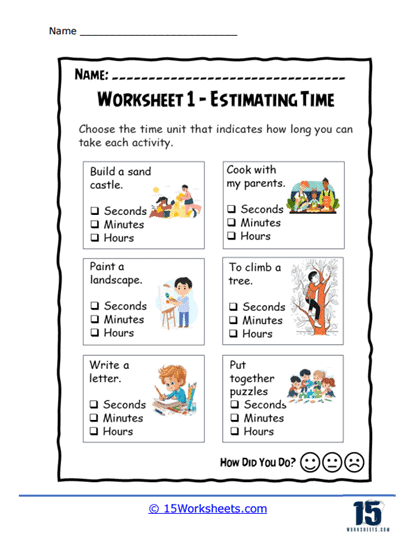
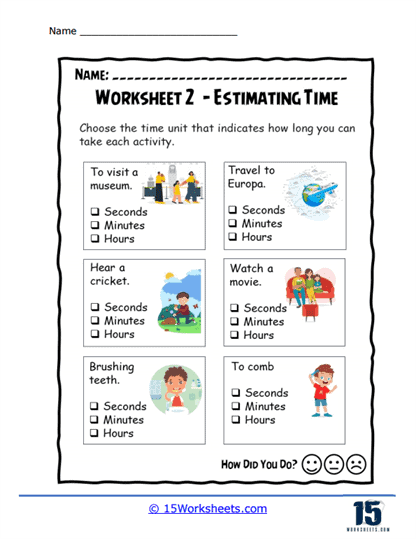
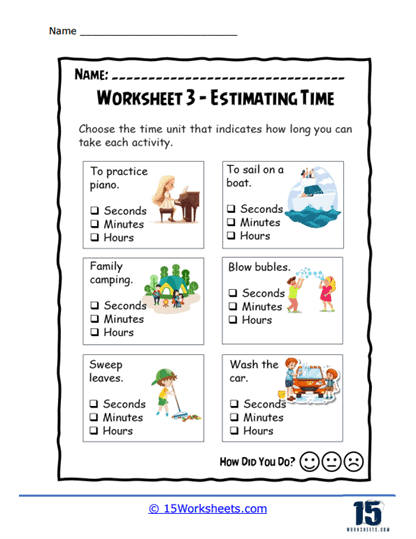
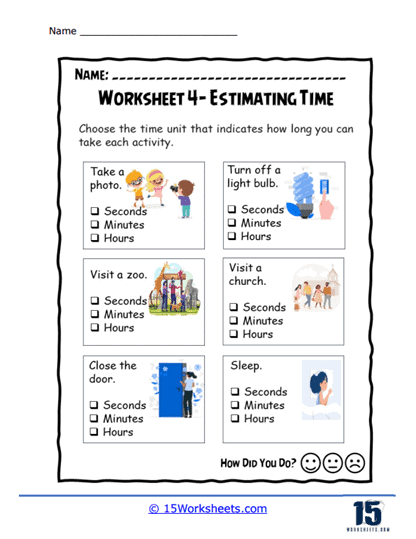
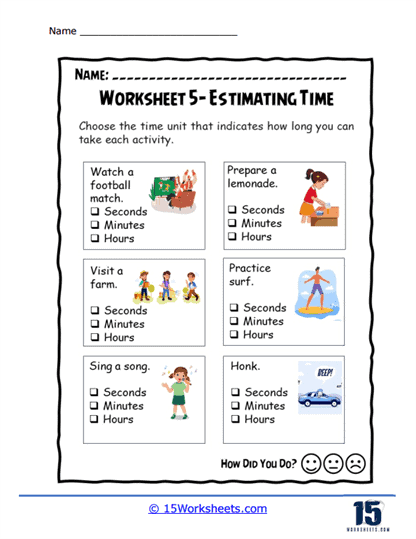
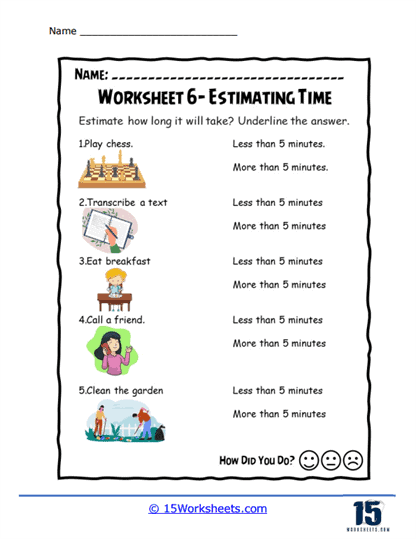
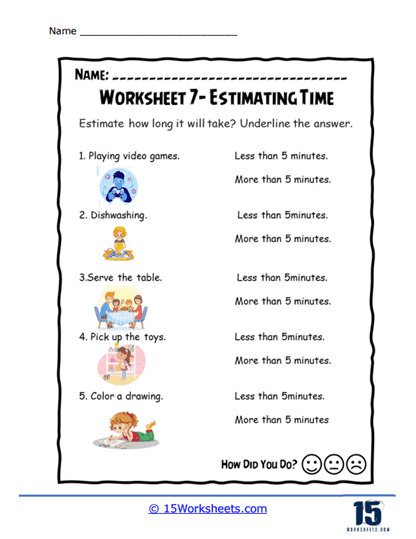
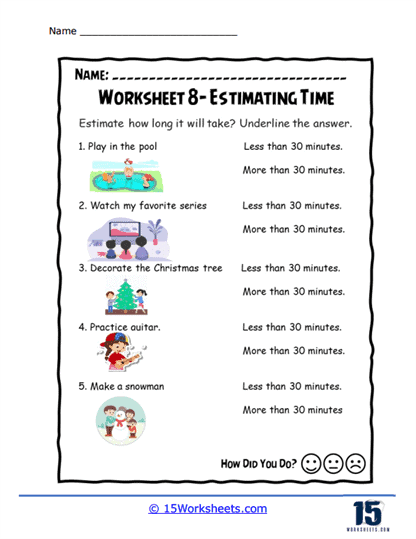
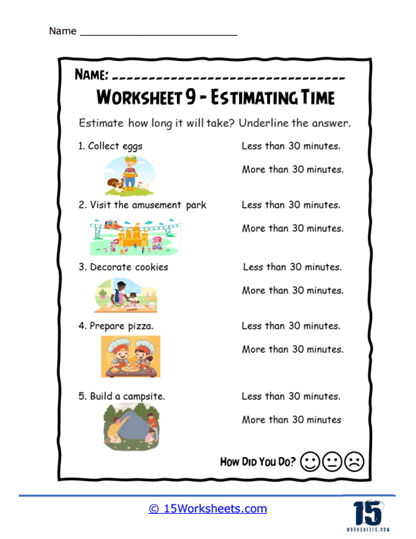
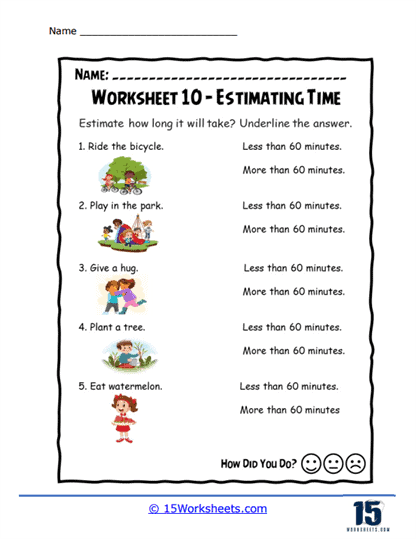
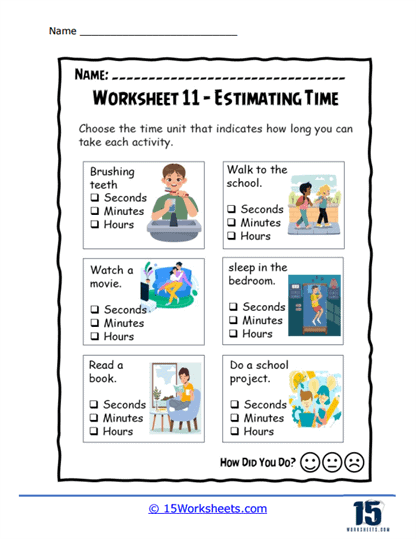
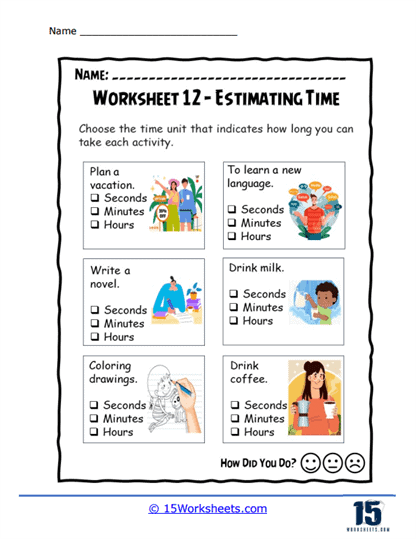
These worksheets contain problems that require you to predict or approximate the duration of various activities or events, or the time it would take to do something. Understanding how to estimate time accurately can be very beneficial in managing your daily activities and planning ahead effectively.
Let’s now dive into the types of problems you could encounter on these worksheets:
In the whimsical world of estimating time, students step into a realm where numbers meet intuition and math becomes a game of “about how long?” rather than “exactly when.” The worksheets in this collection cleverly teach students how to read, round, and reason through time-with some deep thought and a good laugh along the way.
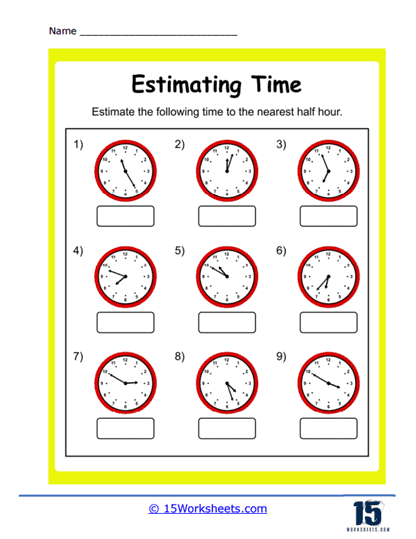
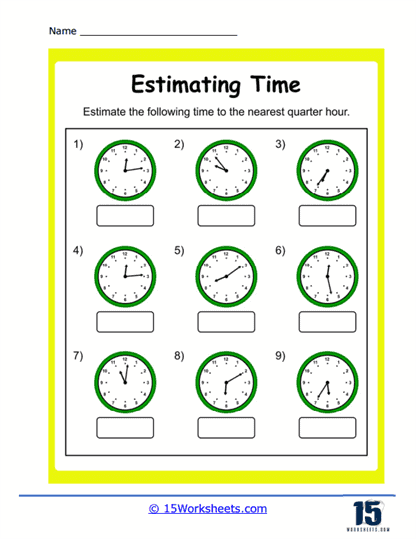
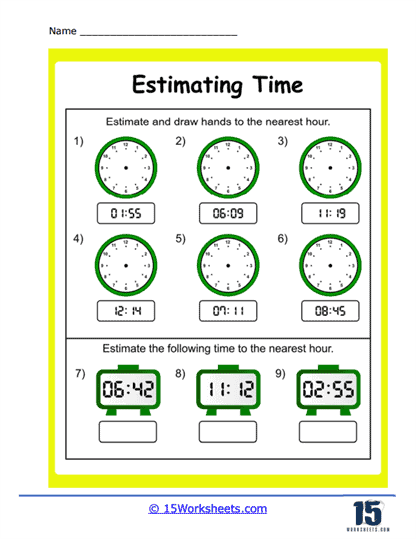
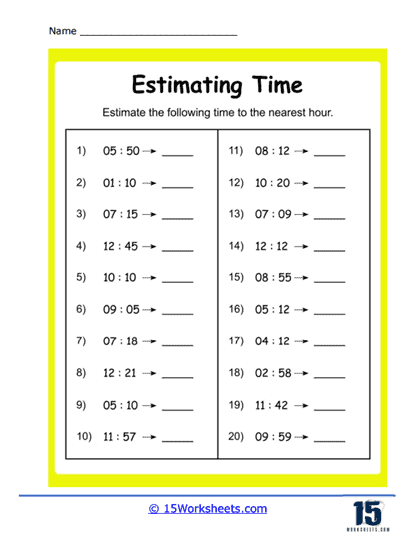
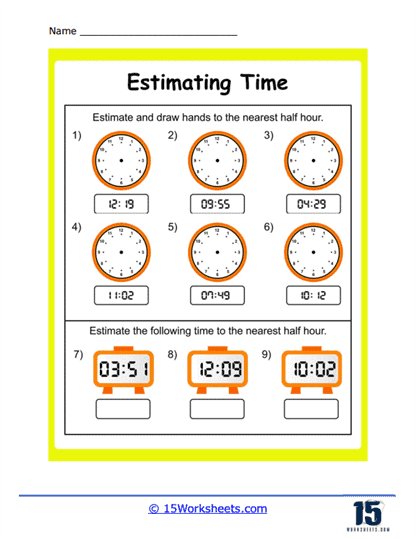
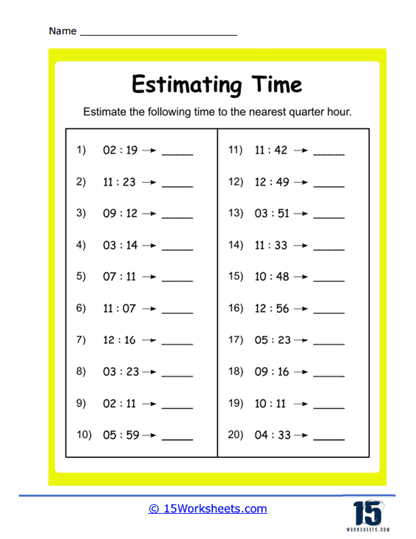
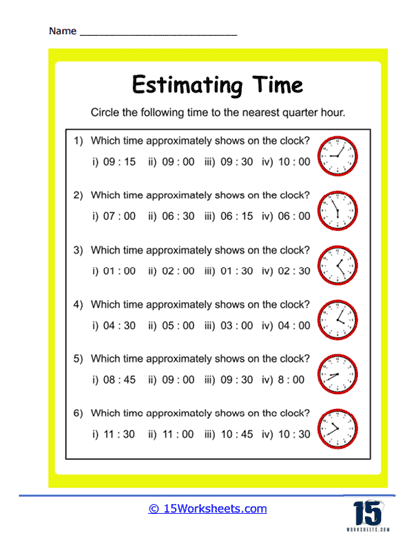
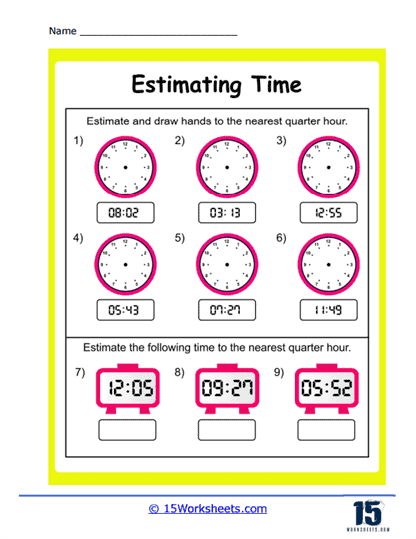
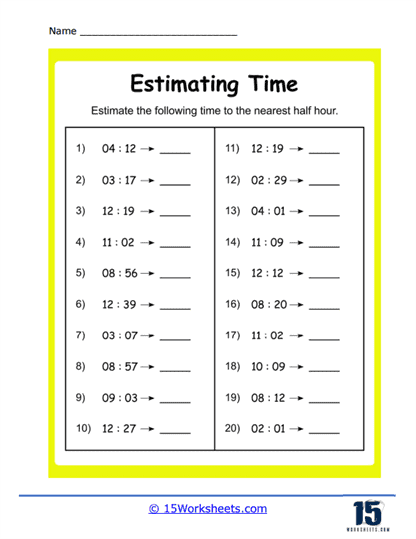
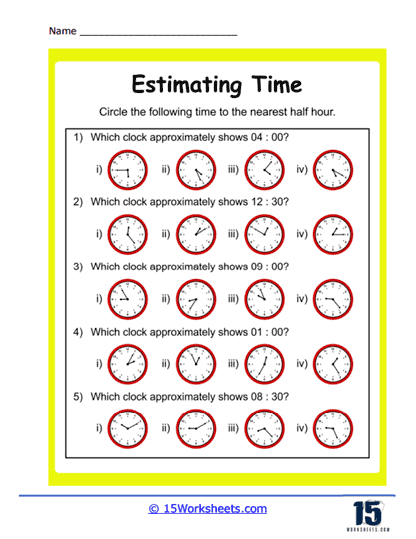
Students begin to master the language of clocks through exercises like Nearest Hour, Nearest Half Hour, Nearest Quarter Hour, Round to Quarter Hour, Rounding Half Hours, Half Hours Digital and Analog, Digital and Analog Clocks, and Read the Clock. These aren’t just about figuring out what time it is-they’re about knowing how close is close enough. With each worksheet, students gain confidence in saying, “I’m gonna round that to three o’clock” and feeling good about it. It’s about being bold with your best guess and knowing that precision sometimes lives in a rounded corner.
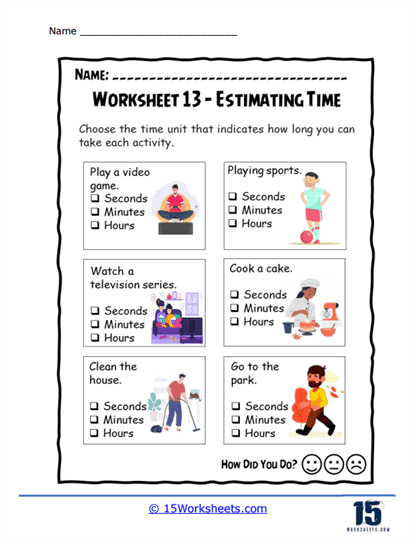
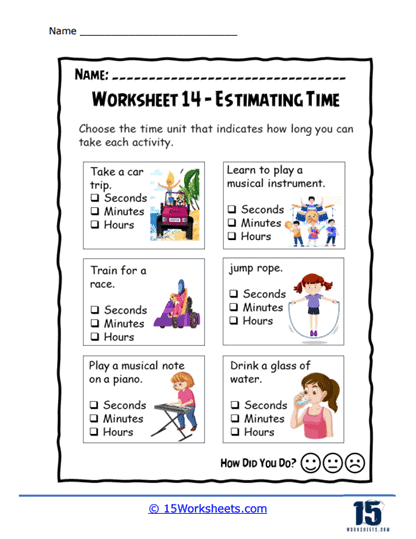
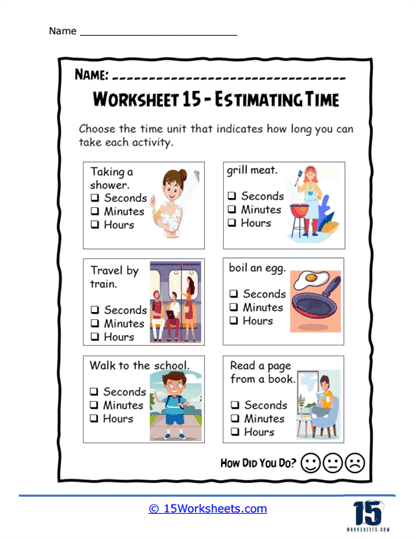
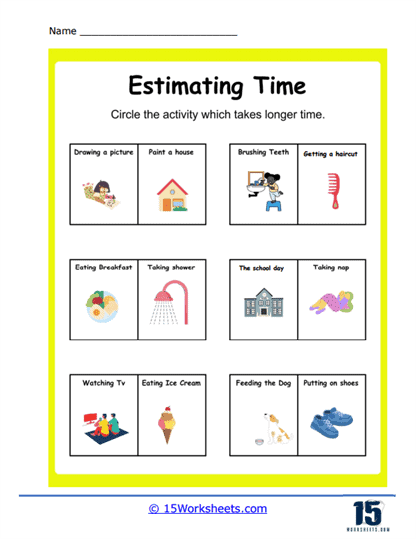
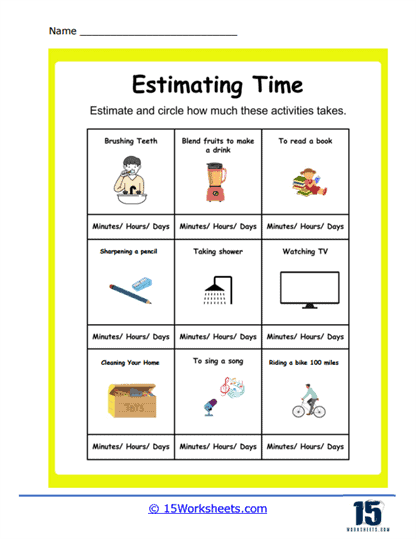
The worksheets How Long It Takes, Which Takes Longer, Which Clock Does It, Takes Less Time, Clock Guessing, Time Estimations, Temporal Estimation, Duration Decipher, and Flat Time Estimation ask students to dig deeper into their sense of how time flows. Is brushing your teeth really faster than walking the dog? Does it feel like it takes longer to clean your room or write a thank-you note? These problems challenge students to think critically about duration, comparison, and real-life timing-leading to philosophical debates like, “Do chores actually warp time?” and “Was that really just five minutes?”
Students develop scheduling prowess and strategic time smarts through Schedule Skills, Timing Tricks, Time Tinker’s Tasks, Chrono Challenge, Chrono Count, Timing Tally, Time Trials, Minute Measures, Minute Mastery, and Instant Insight. These worksheets hand students the planner’s pen and say, “Go ahead, run the day.” They’re asked to estimate task durations, compare possible schedules, and build internal stopwatches. In doing so, students not only practice math-they manage life. They start predicting how long it takes to do homework, eat lunch, and maybe even avoid it all with a quick nap. Their brains become calendars in training.
Worksheets like Clock Guessing, Instant Insight, and Time Estimations challenge the fine art of estimation itself. They nudge students toward becoming confident guessers, sharp judges, and brave risk-takers. It’s a quiet triumph to look at a clock, squint thoughtfully, and say, “I think it’s about 1:43,” while knowing you could be delightfully wrong. It’s about learning that “almost right” can still be entirely useful.
Each worksheet in this series weaves together practical skills, self-reflection, and a touch of comedy. Timing Tally might have a student tracking how long it takes to eat a sandwich, while Time Trials pits them against the clock in epic personal races. With every estimation and rounded answer, they learn a little more about time-and a lot more about how they move through it.
Benefits of These Worksheets
These worksheets offer numerous benefits to students. One of the most significant advantages is that they help students develop a better understanding of time management. By practicing estimation, students learn to allocate their time more effectively, which is a valuable skill in both academic and personal settings.
These worksheets also enhance students’ mathematical abilities, particularly in the areas of arithmetic, unit conversion, and estimation. They provide a practical application of math skills, making math more relevant and engaging for students. As a result, students are more likely to retain what they have learned and apply it in real-world situations.
Estimating time worksheets encourage critical thinking and problem-solving. Students must assess various tasks, make comparisons, and draw conclusions based on their estimates. This process helps develop their analytical skills and their ability to make informed decisions.
Now, let’s talk about where you might need to estimate time in your daily life:
School and Homework – Estimating how long each homework assignment or study session will take can help you manage your time efficiently.
Sports and Play – If you play a sport or game, estimating how long the game or practice might take can help you plan your other activities accordingly.
Travel – When you’re going on a trip, estimating travel time, including considering different time zones if necessary, can help you arrive on time and plan your activities.
Chores – By estimating how long it will take to complete chores, you can manage your time better and possibly fit in more fun activities.
Project Planning – If you’re working on a project, being able to estimate how long each part of the project will take can help you plan your work efficiently and meet your deadline.
Cooking – If you’re helping to prepare a meal, estimating how long each part of the meal will take to cook can ensure everything is ready at the same time.
Entertainment – When deciding what movie to watch or game to play, knowing how long it will take can help you make sure you have enough time to enjoy it without being late for other things.
Time Zone Adjustments – If you’re communicating with friends or family in different time zones, or planning a future trip across time zones, being able to estimate the time difference is essential.
These worksheets can be powerful tools to help you improve these real-life skills. As you work through them, you will get better and more efficient at estimating time. This will not only help you in solving math problems, but it will also enhance your ability to manage your daily activities effectively.
Example Problem – Sarah is baking cookies. She spends 10 minutes mixing the ingredients, 5 minutes preparing the baking tray, and 15 minutes baking the cookies in the oven. Estimate the total time Sarah spends on baking cookies.
Step-by-Step Solution
1. Identify the time spent on each activity
a. Mixing ingredients: 10 minutes
b. Preparing the baking tray: 5 minutes
c. Baking the cookies: 15 minutes
2. Add the times together
Start by adding the time spent mixing and preparing:
10 minutes + 5 minutes = 15 minutes
Next, add the time spent baking:
15 minutes + 15 minutes = 30 minutes
3. Total time spent
Sarah spends a total of 30 minutes baking cookies.