
Time Worksheets
About These 15 Worksheets
These worksheets are used to help students understand and master the concept of time. These worksheets cover a variety of topics, ranging from basic time-telling skills to more complex concepts like calculating elapsed time or converting between different time formats. Time worksheets are commonly used in elementary and middle school curricula to develop students’ time management skills, numerical proficiency, and ability to perform arithmetic operations involving time. They provide a structured way for students to practice and reinforce their knowledge through a variety of exercises and problems.
Types of Exercises and Problems
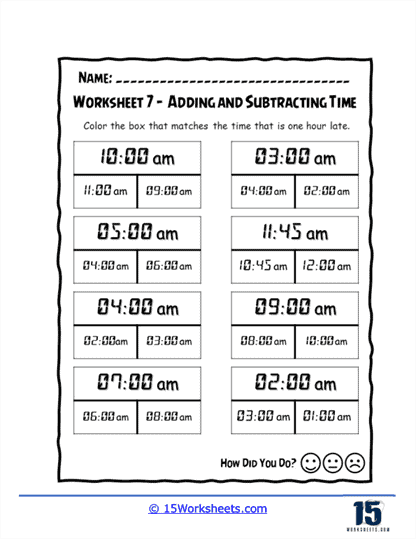
Adding and Subtracting Time
These worksheets help students practice adding and subtracting hours and minutes in real-life situations, such as figuring out how long an activity lasts or what time something ends. Parents will appreciate how these exercises strengthen both math skills and everyday time management in a practical, easy-to-understand way.
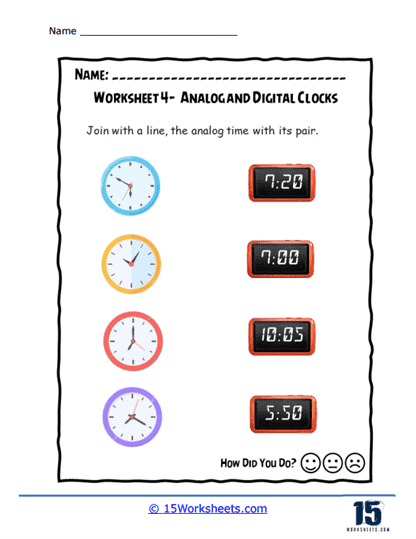
Analog and Digital Clocks
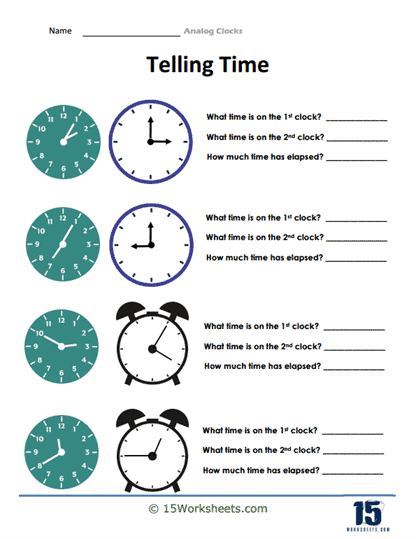
This collection gives children the opportunity to connect analog clock faces with digital time displays. By practicing both formats together, students build confidence reading time no matter how it is presented at school, at home, or in daily life.
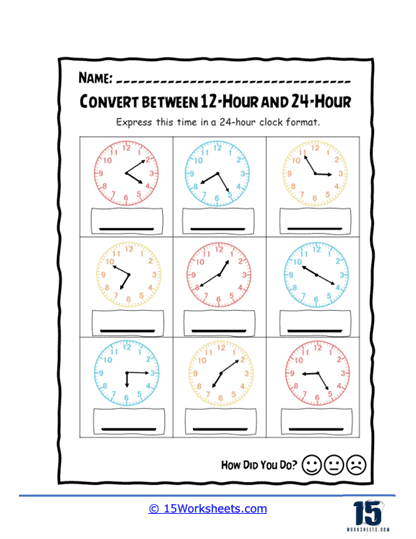
Convert Between 12-Hour and 24-Hour
These worksheets guide students through converting standard clock times into 24-hour military time and back again. It’s a wonderful way to prepare learners for schedules, travel, technology, and real-world situations where both systems are commonly used.
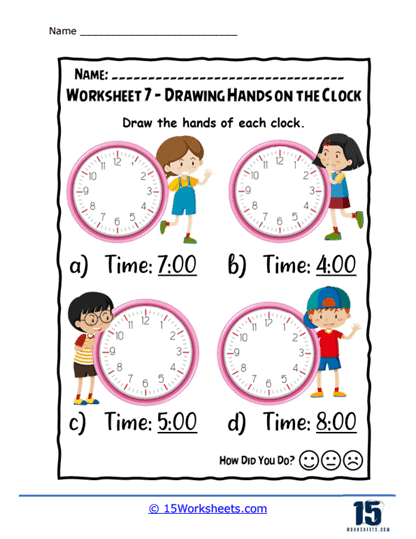
Drawing Hands on the Clock
In this set, students practice placing the hour and minute hands correctly on blank clock faces. This hands-on approach encourages children to truly understand how clocks work instead of simply memorizing times.
Elapsed Time
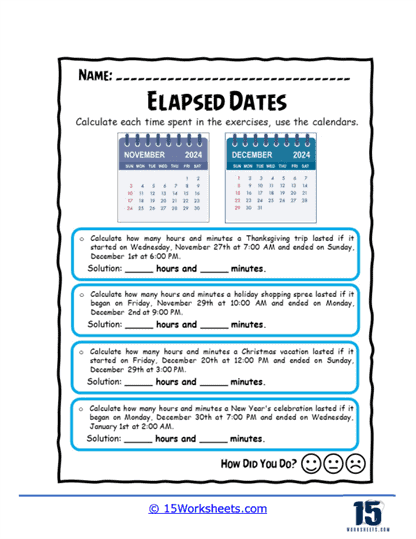
These worksheets help children determine how much time has passed between two events, an important life skill used every day. Students gradually build the ability to solve time problems involving schedules, activities, and planning ahead.
Reading Calendars
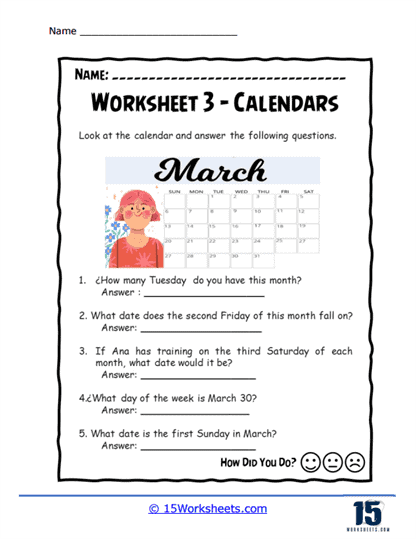
This collection teaches students how to interpret calendars, identify dates, and understand the organization of weeks and months. Parents often find these activities especially useful for helping children become more aware of routines, holidays, and upcoming events.
Telling Time
These worksheets provide foundational practice in reading clocks and understanding how time is measured throughout the day. The activities are designed to make learning time feel approachable, helping students gain confidence one step at a time.
Time Based Word Problems
These worksheets help students apply their understanding of time to real-world situations through engaging story problems and practical scenarios. Children practice skills like calculating elapsed time, reading schedules, and solving everyday timing challenges, all while strengthening their critical thinking and problem-solving abilities.
Time to the Half Hour
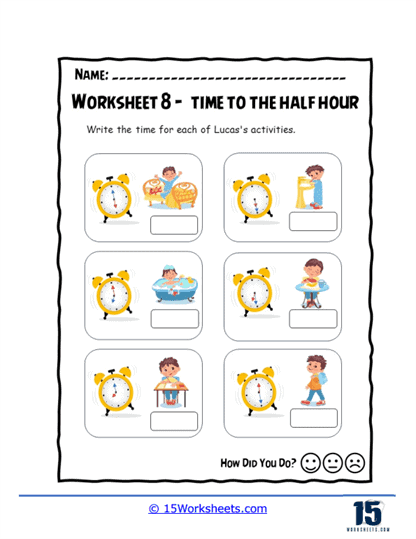
Students focus specifically on recognizing and writing times that fall on the half hour. This targeted practice helps children master an important stepping stone before moving on to more detailed time concepts.
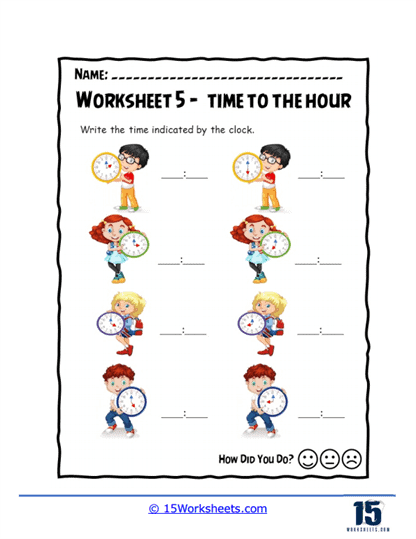
Time to the Hour
This worksheet collection introduces learners to reading clocks at the top of each hour. It’s perfect for beginners who are just starting to understand how the hour hand moves and how daily schedules are organized.
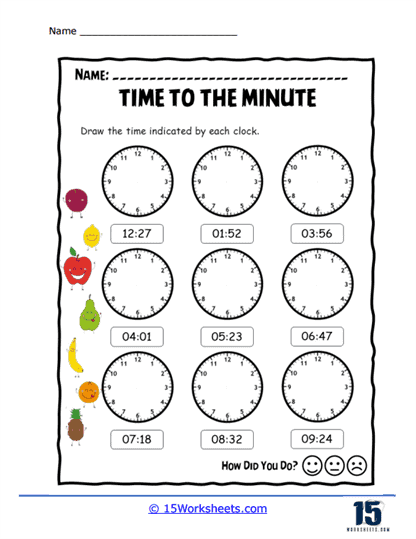
Time to the Minute
These worksheets challenge students to read clocks with exact minute precision, helping them move beyond basic hour and half-hour practice. With repeated exposure, children become more accurate and comfortable reading detailed times independently.
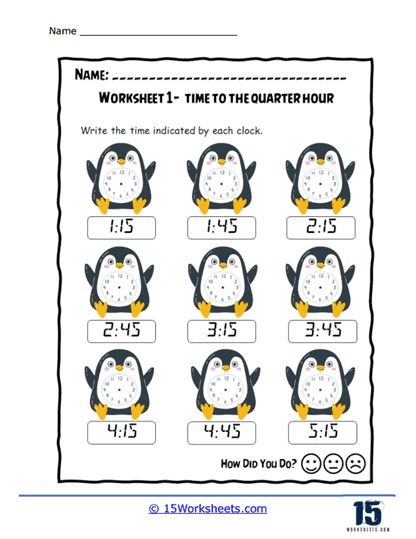
Time to the Quarter Hour
In this set, students learn to identify “quarter past” and “quarter to” times on analog and digital clocks. The activities build a deeper understanding of how minutes are grouped and how time is commonly spoken in conversation.
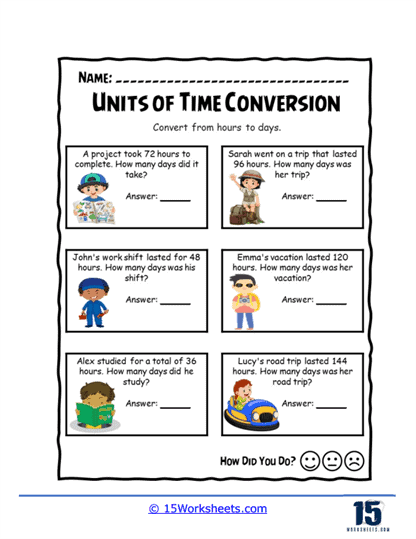
Units of Time Conversion
These worksheets give students practice converting between seconds, minutes, hours, days, weeks, and months. Parents will love how these exercises strengthen both math reasoning and a child’s understanding of how time is organized.
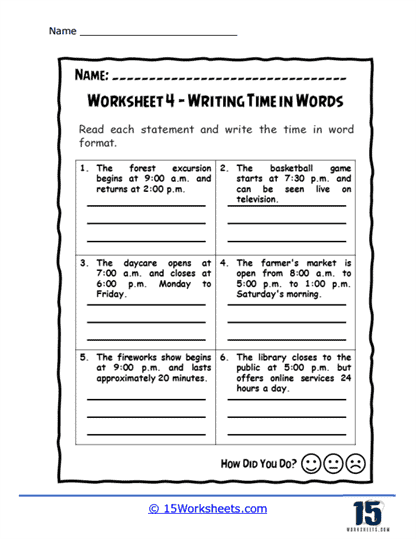
Writing Time in Words
This collection encourages students to express time using written language, such as “half past three” or “quarter to eight.” It’s an excellent way to reinforce vocabulary, reading comprehension, and overall understanding of time concepts together.
The Importance of Understanding Time
Understanding how to tell time and measure it accurately is an essential skill that permeates virtually every aspect of our daily lives. At the most fundamental level, telling time enables us to organize our days effectively. From waking up in the morning to going to bed at night, our activities are structured around specific times. Knowing how to tell time ensures that we can adhere to schedules, whether it’s getting to work or school on time, meeting deadlines, or attending appointments. This ability to manage and allocate time efficiently is crucial for maintaining order and productivity in our lives.
Beyond personal scheduling, the ability to tell time plays a critical role in social coordination and interaction. Our social lives are heavily dependent on time agreements. Meeting friends for dinner, attending a family gathering, or participating in community events all require a shared understanding of time. Without the ability to tell time, it would be nearly impossible to coordinate such activities, leading to confusion and missed opportunities for social engagement. This shared temporal understanding fosters cooperation and community, allowing people to synchronize their activities and interact harmoniously.
In the professional realm, time management is an indispensable skill. The workplace demands punctuality, adherence to deadlines, and efficient task management, all of which hinge on the ability to tell time accurately. Professionals use time to structure their workday, prioritize tasks, and achieve goals. For instance, project managers must create timelines and schedules to ensure projects are completed on time. Healthcare professionals rely on precise timing to administer treatments and schedule patient appointments. Thus, a strong grasp of time measurement directly impacts productivity and effectiveness in professional settings.
In our personal lives, time management influences our health and well-being. Knowing how to measure and allocate time allows individuals to balance work, leisure, and rest effectively. It helps in establishing routines, such as regular exercise, meal times, and sleep schedules, which are crucial for maintaining physical and mental health. Effective time management reduces stress by providing a sense of control and predictability in daily activities.