
Apostrophe Worksheets
About These 15 Worksheets
Apostrophes may be small, but they pack a big punch in writing. These worksheets take what can be a confusing punctuation mark and break it down into fun, easy-to-follow activities. Whether it’s showing ownership or shrinking phrases into contractions, kids get plenty of practice with real examples. By mixing detective-style hunts with writing challenges, this collection makes grammar feel less like a chore and more like a puzzle game.
What makes this set so helpful is the variety of approaches. Some worksheets let kids play editor, spotting and correcting mistakes, while others ask them to rewrite sentences or make quick choices. The repeated exposure to different sentence styles builds confidence and keeps students engaged. By the time they’ve worked through these, they’ll feel much more comfortable deciding when and where to use an apostrophe.
Beyond the mechanics, these worksheets also connect grammar to real-life contexts. Kids learn to show ownership in everyday situations, like who a backpack belongs to, or practice contractions they hear in daily conversations. That means apostrophes aren’t just an abstract rule-they become a tool for clear, natural communication. It’s learning punctuation with a practical twist.
Have a Look Inside Each Worksheet
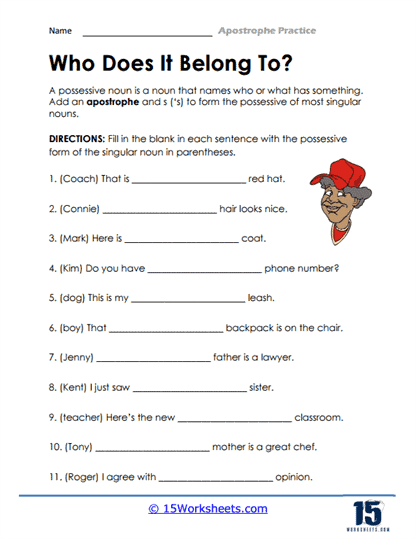
Who Does It Belong To?
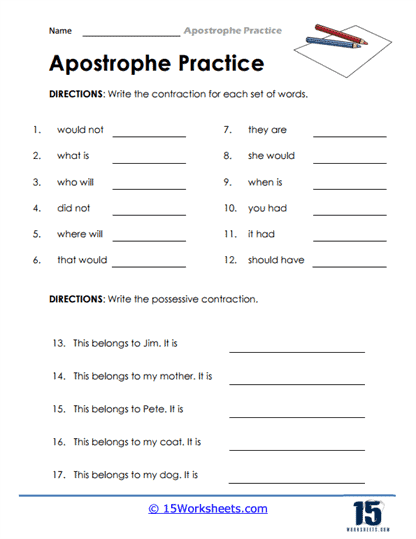
This worksheet helps students practice showing ownership with apostrophes. Kids will look at objects and decide who they belong to, reinforcing the possessive form. It’s a fun way to make grammar feel like detective work. By the end, students will confidently identify possession in everyday sentences.
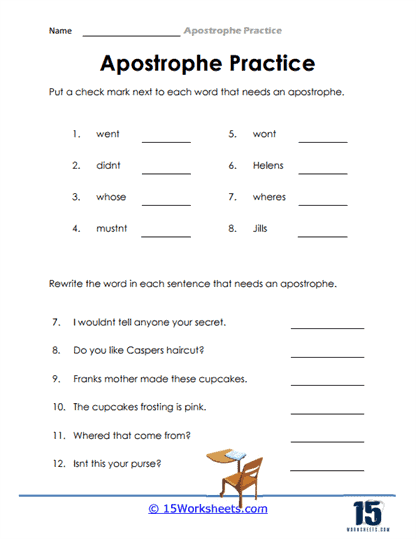
Add And Write
Students get hands-on with writing as they add missing apostrophes to words and sentences. This activity sharpens their proofreading skills while building confidence in using contractions and possessives. The worksheet feels like a puzzle, challenging them to spot what’s missing. It’s a perfect way to boost both grammar awareness and writing accuracy.
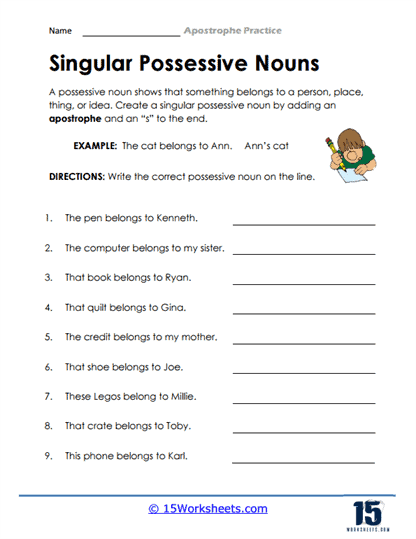
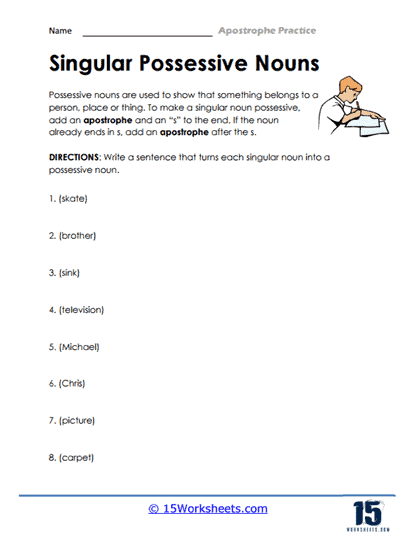
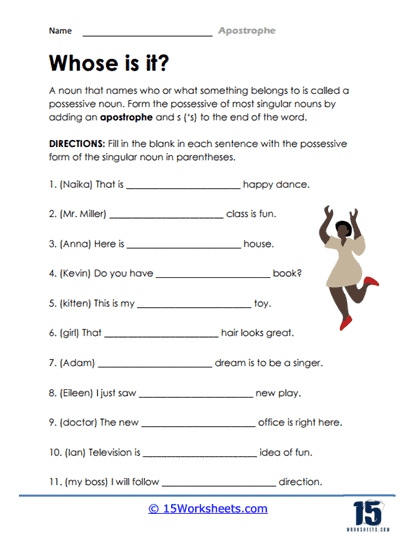
Singular Possessive Nouns
Here, learners focus on the simple but tricky rules for singular possessive nouns. They’ll practice placing the apostrophe in just the right spot to show ownership. The exercise turns grammar into a clear and step-by-step skill. By practicing, students learn to avoid the common mix-ups that trip writers up.
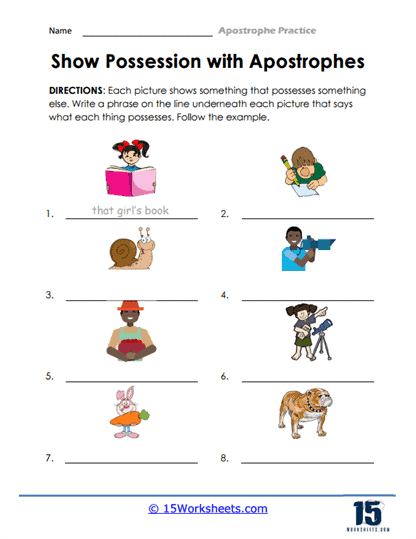
Showing Possession
This worksheet dives deeper into expressing ownership with apostrophes. Students match items with their rightful owners and rewrite sentences correctly. The activity makes grammar interactive and easy to grasp. It builds strong foundations for writing with precision.
Subjects And Verbs
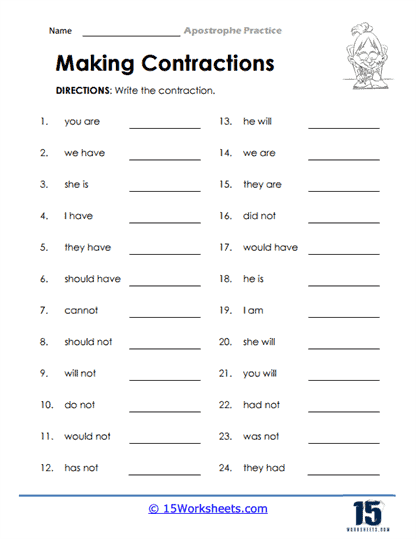
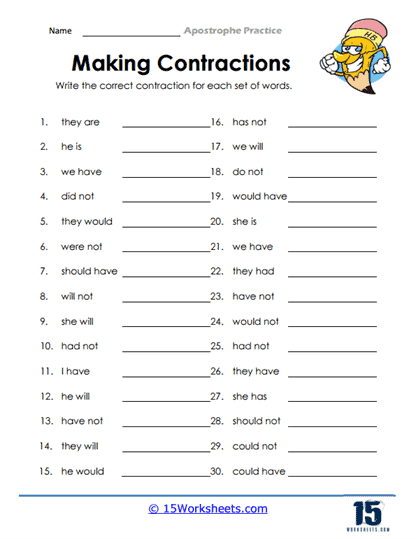
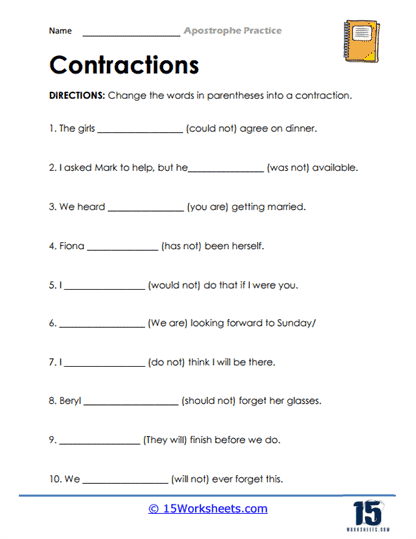
In this activity, students explore how apostrophes interact with subjects and verbs, especially in contractions. They’ll replace longer word forms with neat shortened ones like don’t and can’t. It feels like word magic-shrinking big phrases into quick forms. This practice makes reading and writing smoother and more natural.
Word Replacement
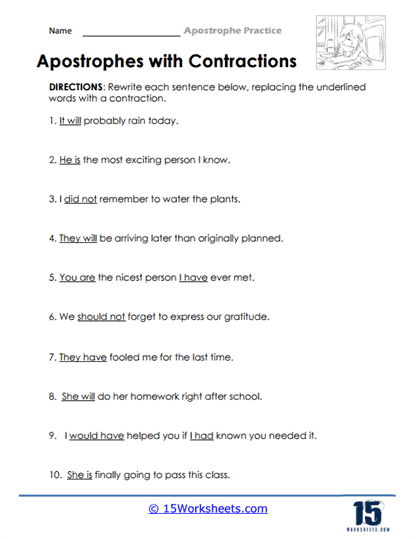
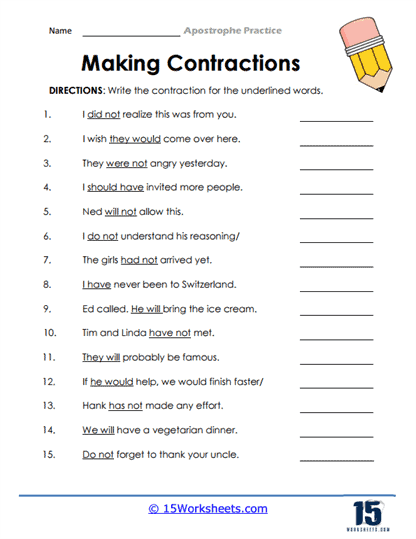
Students will replace underlined words with their shorter, contracted forms using apostrophes. It’s a playful editing task that makes writing concise and modern. The worksheet is like giving sentences a “makeover.” Kids learn to balance casual and correct language skills.
Contractions Quiz
This worksheet tests knowledge of contractions in a fun quiz-style format. Students must pick the correct contraction or rewrite phrases to include them. It feels like a challenge game while building solid grammar habits. By practicing, they’ll stop second-guessing themselves on contractions.
Underlined Words
Learners practice identifying spots where contractions or possessives are needed. They’ll edit underlined words to show the right apostrophe use. The activity feels like a secret code-breaking mission. It’s a practical way to train the eye for common grammar mistakes.
Change And Learn
This worksheet invites students to change sentences by adding apostrophes where needed. They’ll discover how a single punctuation mark changes meaning. The activity is interactive and eye-opening, like a grammar experiment. Kids gain a better understanding of how writing communicates ownership and contractions.
Two-Part Exercise
Students get a double challenge in this worksheet-first identifying mistakes, then rewriting sentences correctly. It’s like two worksheets rolled into one for double the practice. The structure keeps learners engaged and focused. By the end, they’ll be sharper editors of their own work.
Read And Correct
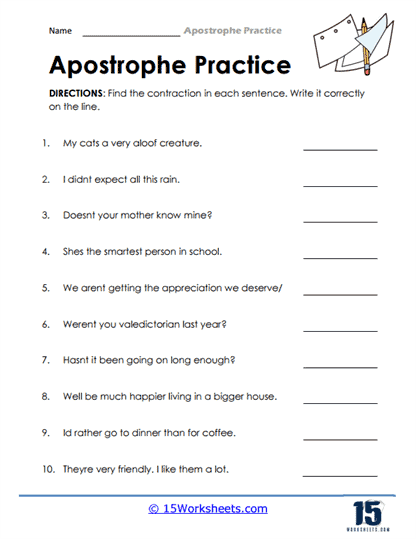
In this activity, kids read sentences and hunt for apostrophe errors. They’ll act like grammar detectives, fixing mistakes as they go. It encourages close reading and attention to detail. This practice makes them stronger proofreaders in all areas of writing.
Dual Use
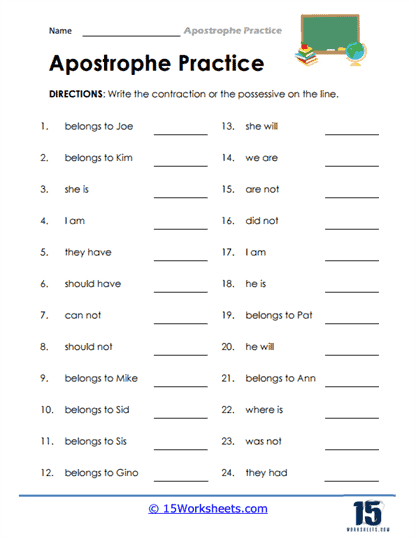
This worksheet shows students how apostrophes serve two main roles-contractions and possession. They’ll compare examples and decide which usage fits each sentence. It’s a great way to clear up common confusion. Kids learn to recognize both jobs of the apostrophe in everyday writing.
Is It A Must?
Students decide whether sentences really need an apostrophe or not. This critical-thinking exercise keeps them from overusing apostrophes where they don’t belong. The activity feels like a grammar debate. By practicing, learners become more confident in making smart writing choices.
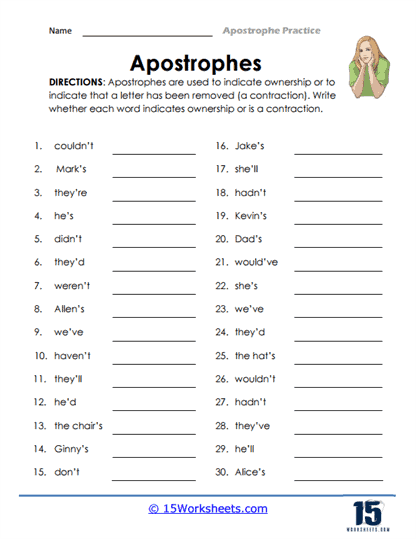
Ownership Or Contraction?
This worksheet asks kids to choose whether the apostrophe shows possession or contraction. It’s like a grammar “either/or” game that clears up tricky confusions. The activity helps kids slow down and think about sentence meaning. They’ll leave with stronger editing and grammar decision-making skills.
Whose Is It?
Students practice identifying the correct owner of items and rewriting sentences with proper apostrophes. It’s an engaging way to connect grammar to real-life contexts of “who owns what.” The activity feels like a story puzzle with characters and their belongings. It makes learning about possession fun and memorable.
When Should We Use Apostrophes?
1. Possessiveness
Use an apostrophe to showcase maximum possessiveness. Its primary function is to indicate ownership. The rule of thumb is to use an apostrophe for plurals and a s for singulars.
Words like Charles, which end in the letter s, can be a bit of a challenge. In this case, you can either use a simple apostrophe (Charles’) or a combination of an apostrophe and s (Charles’s), depending on your preferred writing style. Thus, all are viable options; however, the addition of an apostrophe and s is preferred.
One typical error is adding “ies” to the end of words that end in a y, such as a symphony, to form symphonies. It is unnecessary unless you intend to make the word plural. Add an apostrophe and a s to the symphony to deem it possessive.
What Should You Do with Irregular Plurals?
Irregular plural nouns, such as children and teeth, are another frequent mistake. The apostrophe and s are added to certain nouns, as in children’s toys and teeth’s roots.
2. Contractions
Another fantastic but somewhat perplexing usage of apostrophes is in contractions. The capacity of apostrophes to merge words in a literal sense is fantastic. However, it is often misused. You can combine they and are into they’re with the help of an apostrophe.
Moreover, do not becomes “don’t”; you are becomes “you’re”, and who is becomes “who’s.” Likewise, the two syllables of cannot can also be dealt with with the use of an apostrophe. It can be abbreviated to can’t.
Does it Always Work?
The use of its or it’s is at the center of a debate. The fundamental rule is that it’s can be written as it is, and that its indicates ownership. Sounding the statement with it is as the first letter can help you get it right.
Similarly, in some cases, people mistake they’re for their or who’s for whose when writing. This is a catastrophic failure. Once again, sounding out the sentence with the contraction separated into two words is a quick and straightforward method to grasp the issue at hand. Pronouncing they’re company as if it were they are company is obviously incorrect.
Avoid Pluralization
You can pitch the apostrophes for plurals, with one notable exception. Using an apostrophe to make a word plural is the most frequent yet worst case of the error.
Avoid using apostrophes for pluralization, with one possible exception that is unlikely to arise in everyday use. In English, we say brothers instead of brother’s. Reports is the correct plural form, not report’s. Statuses is the correct plural form of status, not status’s, and so on.
Similarly, abbreviations are not exempt from this rule. When referring to master’s degrees, the plural is MDs (not MD’s).