
Plant Power
Worksheet Description
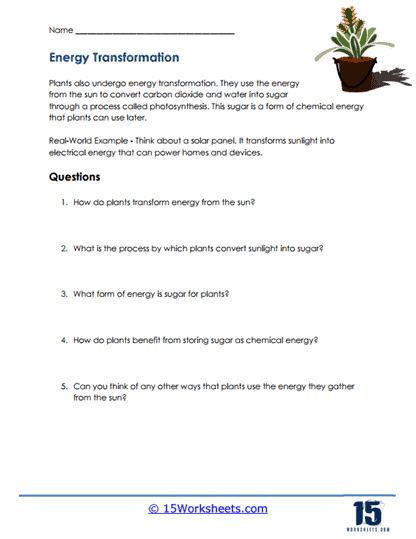
This worksheet delves into the concept of energy transformation within plants. It highlights how plants utilize sunlight, converting it into chemical energy via the process of photosynthesis. By transforming carbon dioxide and water into sugar, plants store energy that they can tap into later. A real-world analogy is drawn with solar panels, which also capture sunlight but convert it into electrical energy to power homes and devices.
To understand energy transformation in plants, one begins by observing the plant’s exposure to sunlight. Recognizing that the sun provides essential energy, we then explore how plants internally harness this energy using photosynthesis, a biochemical reaction. In this process, plants take in carbon dioxide from the air and water from the soil, converting them into glucose (sugar) and releasing oxygen. This stored glucose serves as a reservoir of chemical energy, which plants can utilize for growth and other vital functions.
The central objective of this worksheet is to enlighten students about the fascinating world of energy transformations in nature, specifically within plants. By explaining the intricate process of photosynthesis, it showcases how plants ingeniously convert and store sunlight as usable energy. The questions further prompt students to reflect upon the importance of this transformation, its benefits to plants, and other potential ways plants might utilize gathered solar energy. Ultimately, this worksheet aims to foster a deeper appreciation for nature’s processes and the parallels drawn between technological advancements, like solar panels, and natural phenomena.