
Left or Right Worksheets


About These 15 Worksheets
Knowing left from right might sound simple, but for young learners, it can be a surprisingly big hurdle. These worksheets make the skill fun by weaving it into engaging themes like cars, dinosaurs, snowmen, and even dragons. Instead of just memorizing “this is left” and “that is right,” kids get to see it in action-animals moving, objects placed on different sides, and holiday scenes that feel more like stories than drills. That way, left/right practice turns into a game they actually enjoy.
Each worksheet brings a new twist, so kids don’t get bored. One day they’re looking at a kangaroo hopping to the right, and the next they’re laughing at monsters or spotting raccoons twisting around. This variety not only keeps them entertained but also reinforces the concept across different contexts. The more they practice, the more automatic left/right becomes-so they’ll be ready to use it confidently in everyday life.
And here’s the bonus: mastering left and right helps kids with way more than just following directions. It’s an essential part of reading (left to right!), sports and dance, and even real-world navigation. By the time they finish these worksheets, kids won’t just know which hand is which-they’ll have a strong foundation in spatial awareness that will keep showing up in their learning journey.
Have a Look Inside Each Worksheet
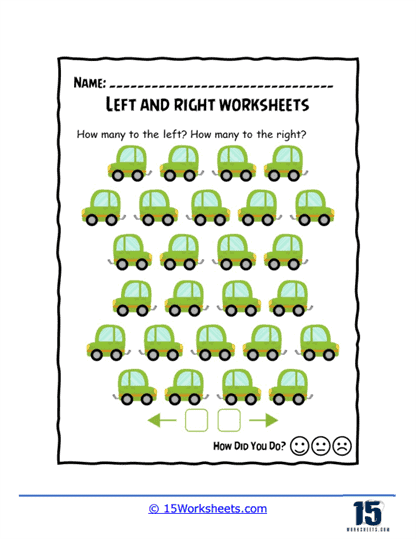
Green Car Parking Lot
Kids look at a lot full of cars and decide which ones are parked on the left or the right. It’s a great way to practice spatial awareness while tying it to a real-world scene. The parking theme makes it fun and familiar. Students build confidence in distinguishing left from right through repetition.
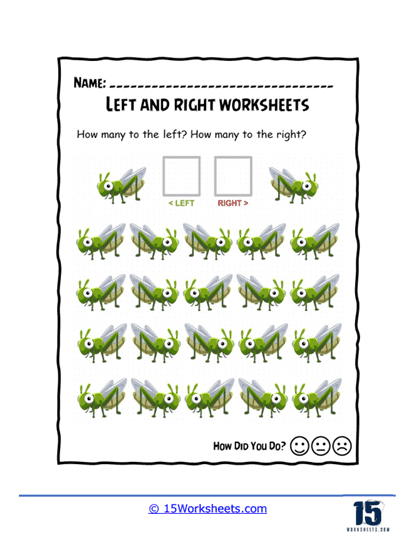
Sides of Grasshoppers
This worksheet has kids identify whether grasshoppers are facing left or right. It turns a simple skill into a lively insect adventure. Learners practice careful observation and directional language. The bug theme keeps things playful while reinforcing left/right recognition.
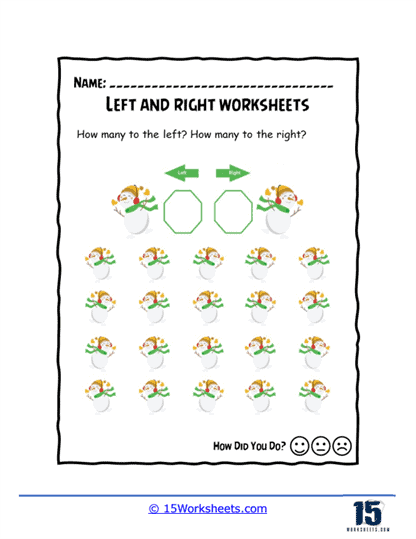
Skating Snowmen
Snowmen on ice skates glide left and right, and kids must tell which way each one is facing. The wintry theme adds seasonal charm to the exercise. Children work on left/right identification while enjoying a festive picture. Perfect for combining spatial skills with holiday fun.
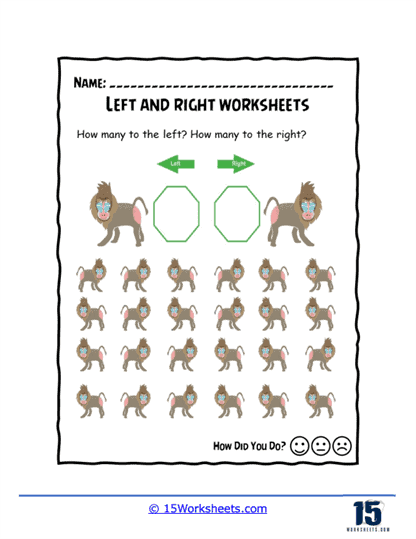
Baboons
Students observe baboons moving or facing different directions and decide if it’s left or right. The animal theme adds excitement and curiosity. Kids sharpen visual discrimination while laughing at silly baboon antics. This activity makes directional learning feel like a trip to the zoo.
Lizard Crawls
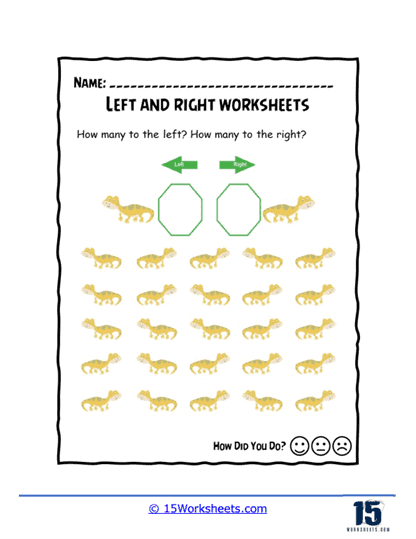
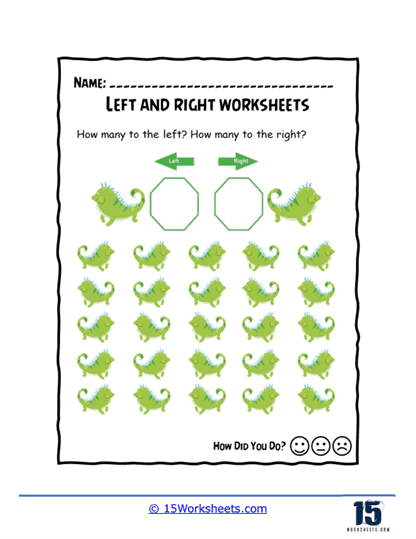
Lizards crawling across the page give children a chance to practice spotting left- or right-facing critters. The reptile theme is eye-catching and fun. This strengthens awareness of direction and orientation. It’s an imaginative way to tie nature into early learning.
Sliding Snakes
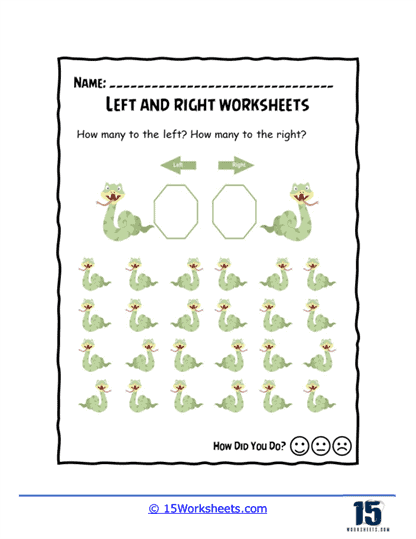
Snakes slither in different directions, and kids identify left or right. The curvy snake bodies add an extra challenge to keep learners alert. This worksheet encourages focus and observation. It’s a slithery, silly way to practice spatial concepts.
Bald Eagles
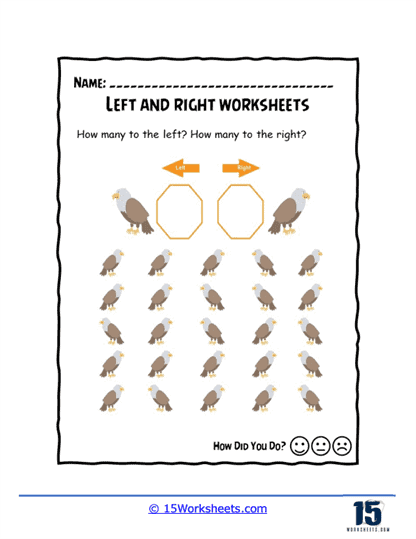
Children spot eagles soaring to the left or right, adding a majestic theme to learning. The flying motion makes it easy to visualize direction in action. Kids practice matching words (“left” and “right”) to the way the eagles face. It’s both patriotic and skill-building.
Perched Toucans
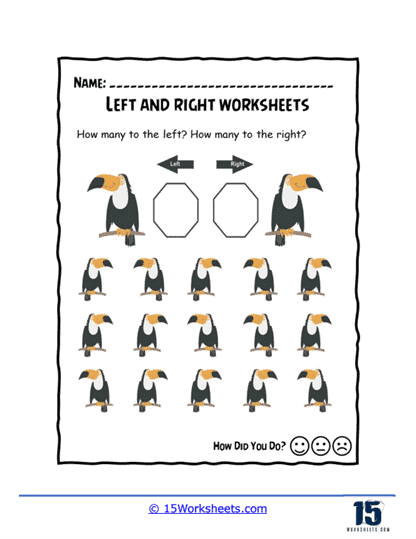
Brightly colored toucans perch while facing different ways, and students must identify direction. The bold visuals help kids focus on orientation. Learners gain both vocabulary and spatial awareness. The tropical bird theme adds fun and flair.
Kangaroo Hops
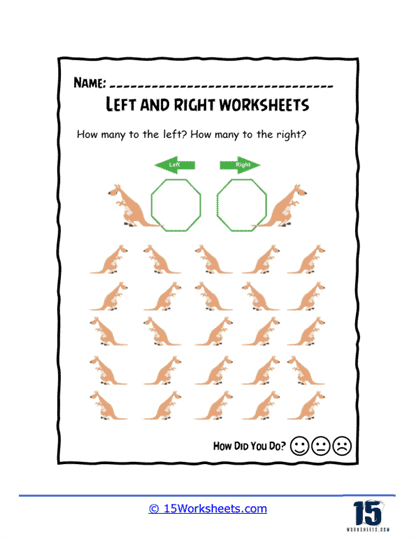
Kangaroos leap left and right, and kids figure out which way they’re going. The energetic images capture attention quickly. This worksheet boosts observation skills while connecting to animals children love. Left and right become second nature through movement.
Raccoon Twists
Students watch raccoons twisting left or right and label accordingly. The mischievous raccoon theme adds humor and relatability. Kids get extra practice with careful attention to body position. A fun animal-based reinforcement of spatial direction.
Zebra Leaps
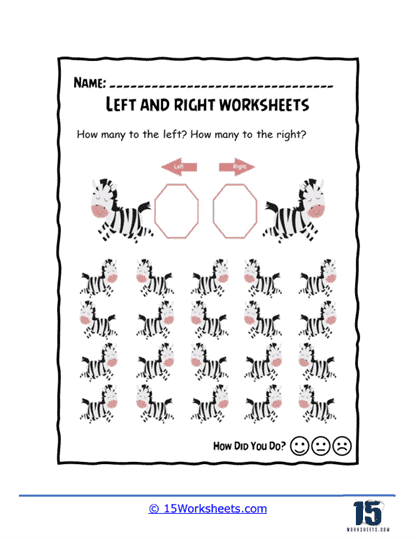
Zebras leaping across the page give learners practice deciding which direction they’re headed. The black-and-white stripes make it visually distinct. This helps kids focus on details when deciding left versus right. It’s like a mini safari with a math-meets-reading twist.
Happy Monsters
Silly monsters face left or right, and children label them accordingly. The playful artwork takes away any pressure from the task. Students practice orientation skills in a stress-free way. It’s all about laughing and learning at the same time.
Dragon Fireballs
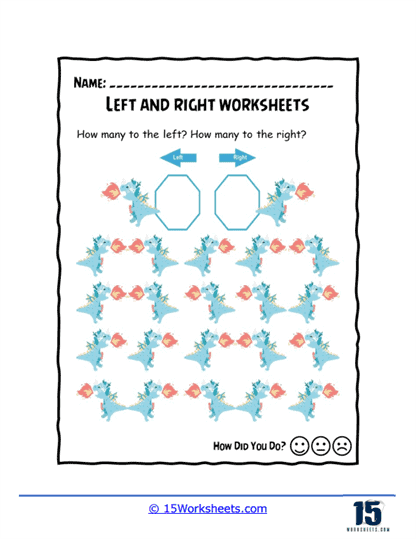
Dragons breathing fire either left or right provide an adventurous challenge. Kids use context clues (fire direction) to answer correctly. This worksheet builds spatial vocabulary while sparking imagination. It’s a fantasy-filled way to learn an everyday skill.
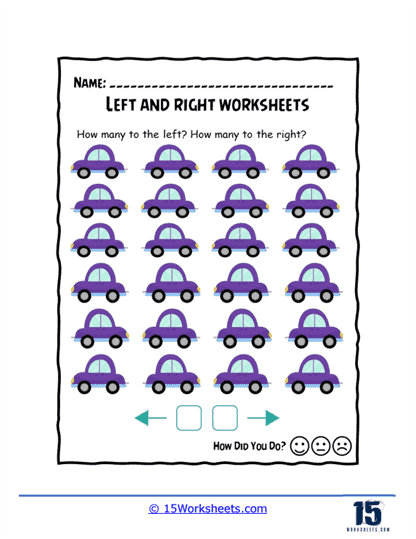
Purple Car Lot
Similar to the green car version, but this time with purple cars, giving kids another round of parking practice. Learners must again decide which cars are left or right. It reinforces directional thinking in a real-world context. The variation keeps the task fresh while doubling the practice.
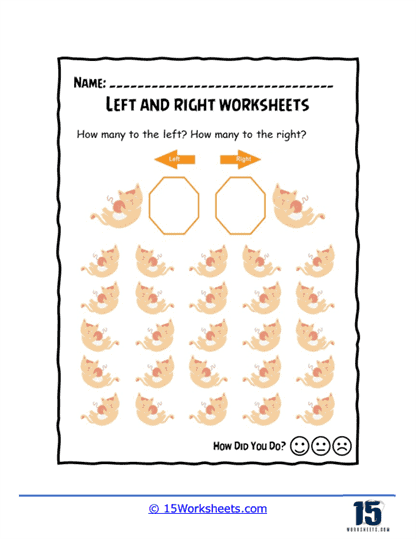
Cats and Balls of Yarn
Cats chase yarn balls in different directions, and kids say if it’s left or right. The cat theme is instantly appealing to children. This worksheet combines observation, fun, and fine-motor skills if tracing lines is included. Directional skills never looked so cozy.
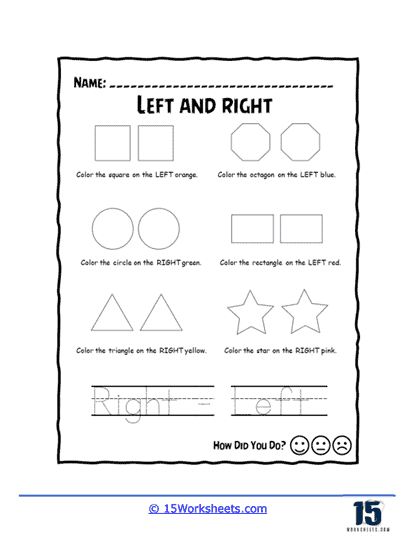
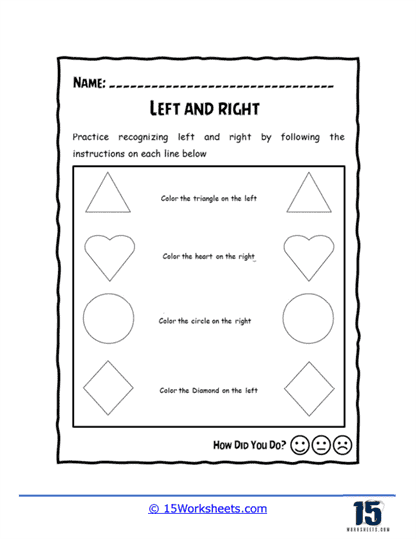
Directional Shapes
Shapes like triangles, arrows, or other simple graphics face left or right. This strips away decoration and focuses only on orientation. Kids learn to apply left/right in pure geometric form. It’s a solid foundation-builder for spatial reasoning.
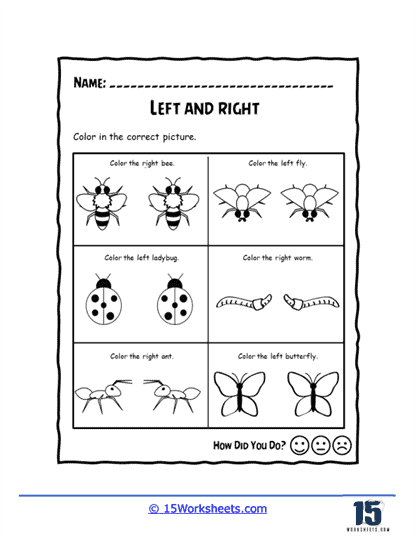
Compare Insects
Children compare pairs of insects and decide which is on the left and which is on the right. It encourages careful attention to placement on the page. This worksheet blends counting, comparison, and direction skills. The insect theme keeps it fun and exploratory.
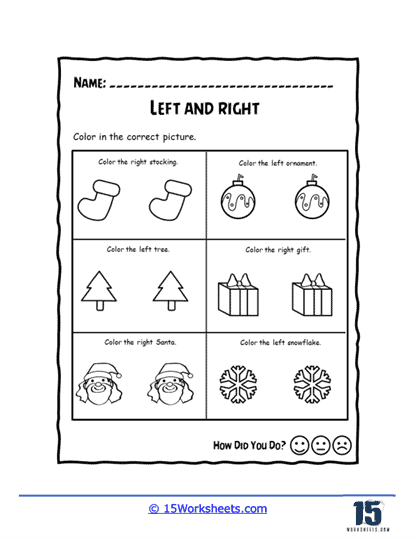
Christmas Items
Holiday-themed objects like stockings, trees, or gifts appear left or right. Kids identify placement while enjoying a seasonal touch. It’s festive, fun, and educational all at once. Perfect for December practice that doesn’t feel like work.
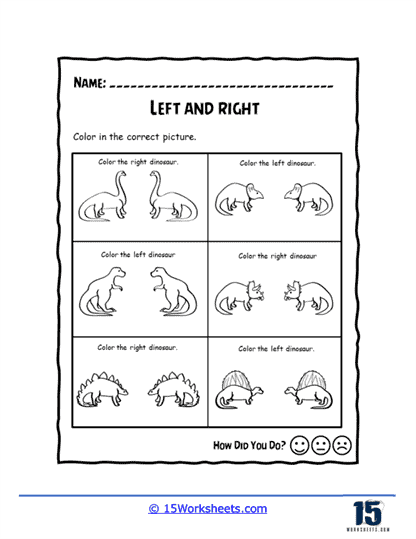
Dinosaur Thoughts
Dinosaurs facing left or right give students a prehistoric spin on direction learning. The bold dinos make left and right easier to notice. This worksheet builds orientation skills with a theme kids adore. A roaring good way to practice left and right!
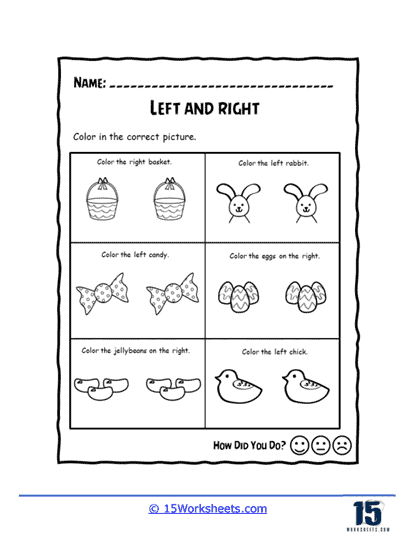
Easter What’s Left
This holiday worksheet uses Easter eggs or bunnies for children to spot left and right. The seasonal imagery keeps things lively. Kids strengthen directional vocabulary while celebrating springtime. It’s a cheerful way to master left and right through holiday fun.
How Do You Teach The Concept Of Left And Right?
Teaching the concept of left and right is an important spatial awareness skill for young children. Here are some strategies and activities that can help you teach this concept effectively:
Awareness and Visual Cues
Begin by helping children develop a clear understanding of their own left and right sides. Encourage them to identify and point to their left hand, right hand, left foot, right foot, etc. Provide verbal cues and demonstrations to reinforce the concept. Use visual aids to represent left and right. You can draw or create simple signs, such as a large “L” for left and a large “R” for right, and display them prominently in the classroom or learning environment.
Movement and Games
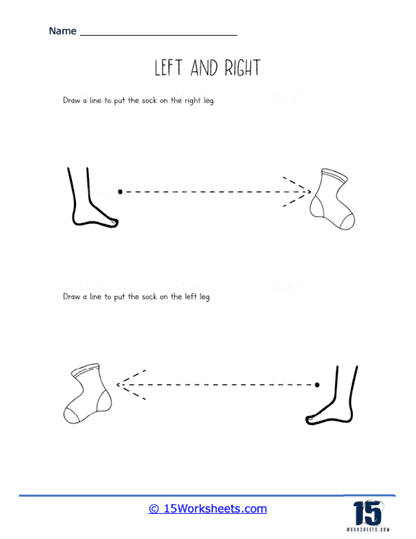
Engage children in movement-based games that require them to follow left and right directions. Activities like Simon Says, Follow the Leader, or Red Light, Green Light can help reinforce the concept of left and right while encouraging physical activity. Use a mirror to help children visualize and understand left and right. Stand with them in front of the mirror and ask them to raise their left hand. They will see their reflection raising the hand on the same side, reinforcing the concept. Encourage children to use left and right in practical contexts. For instance, when putting on shoes or socks, discuss which foot each item goes on. During mealtime, discuss where items are located on the table relative to the child’s left or right side.