
2nd Grade Spelling Words Worksheets
All About These 15 Worksheets
Second grade is a big year for spelling-kids are moving past the basics and tackling longer, trickier words. These worksheets make that challenge feel approachable and even fun. Instead of just memorizing lists, students get to solve puzzles, match pictures, and fix errors, all while practicing their weekly spelling words. The variety of activities keeps them engaged while ensuring steady progress throughout the year.
This collection mixes creativity, critical thinking, and repetition. Some worksheets focus on visual recognition, like matching pictures to words, while others emphasize editing and proofreading skills. There are also playful challenges like riddles, word scrambles, and boxy letter exercises. With so many ways to practice, kids develop stronger spelling skills without feeling like they’re stuck doing the same drill over and over.
The best part? These worksheets show kids how spelling connects to real life. Whether they’re writing sentences, solving riddles, or spotting mistakes, students see their word lists in action. This not only builds confidence in their writing but also helps them use spelling as a tool for clearer communication. By the time they’ve worked through these activities, second graders will have built both skill and confidence for the next stage of their literacy journey.
Have a Look Inside Each Worksheet
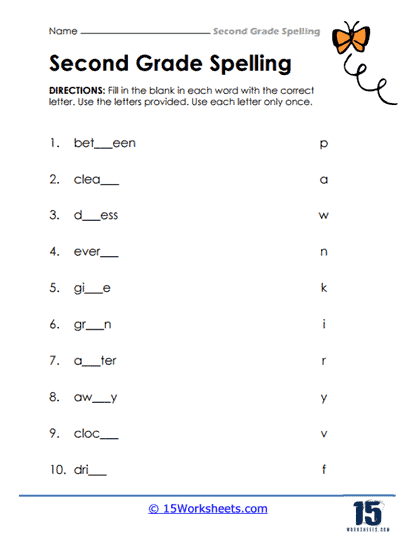
Missing Letters
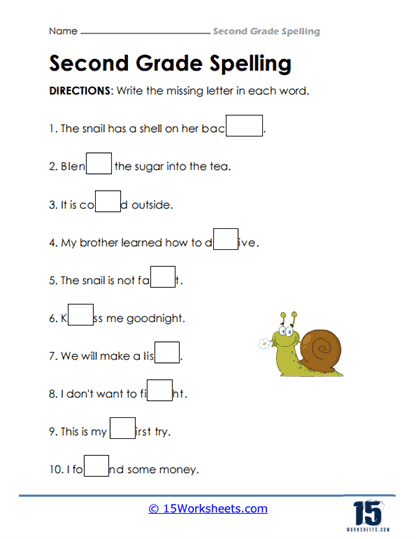
Students fill in the blanks to complete spelling words. This activity sharpens letter recognition and memory. It feels like solving mini puzzles while reinforcing word structure. Kids practice accuracy and attention to detail in spelling.
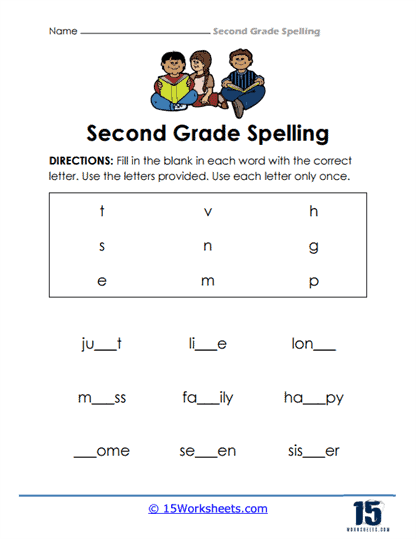
Boxy Letters
Learners write spelling words inside block-style boxes. This makes spelling practice feel like art-meets-grammar. The visual element helps students remember word shapes. It’s especially great for visual learners who like structure.
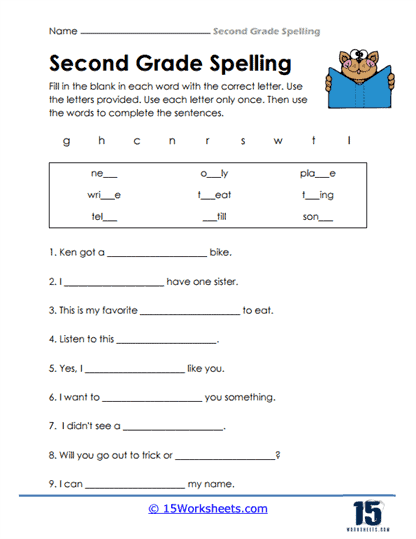
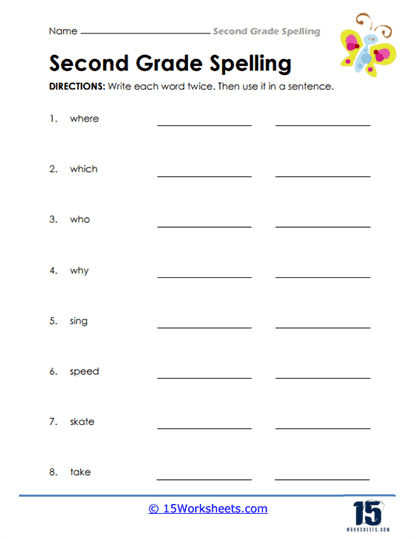
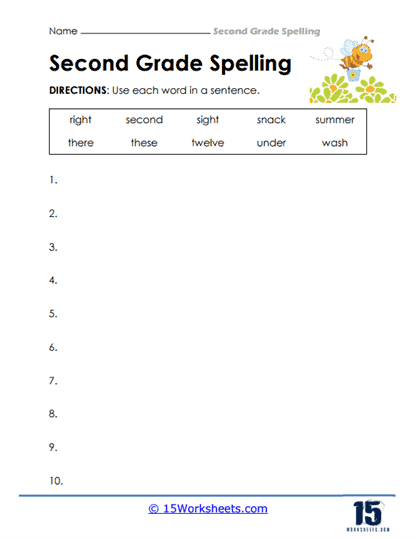
Words to Sentences
Students take their spelling words and use them in complete sentences. This moves practice beyond memorization into real application. It encourages creativity and grammar awareness. Kids see how spelling words come alive in everyday language.
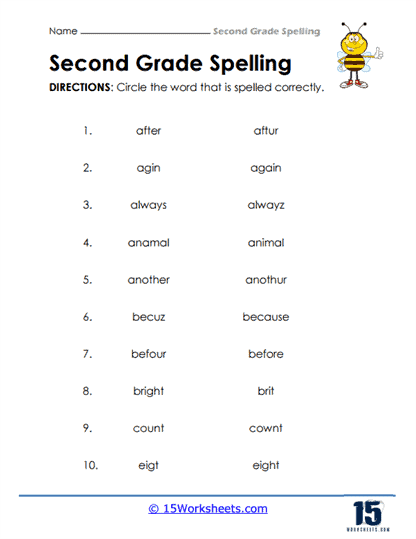
Which is Right?
Learners choose the correctly spelled word from options. This activity teaches proofreading and word recognition. It feels like a game of “spot the mistake.” Students improve accuracy while building confidence in spelling.
Spelling Rewrites
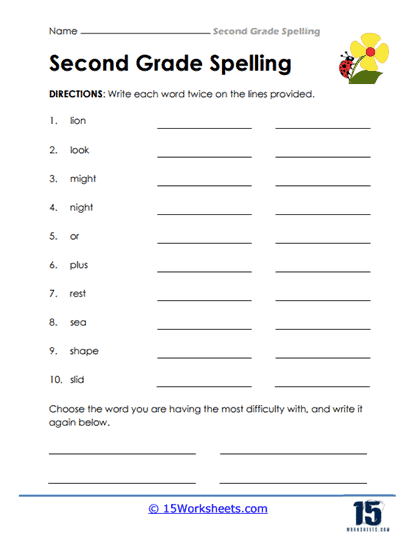
Students rewrite misspelled words into their correct form. It reinforces careful observation and correction skills. The worksheet feels like editing practice made simple. Kids learn the importance of precision in writing.
2nd Grade Sentences
This worksheet asks students to complete or correct sentences using spelling words. It combines reading comprehension with spelling accuracy. Learners see how words fit into sentence structure. It boosts both literacy and word mastery.
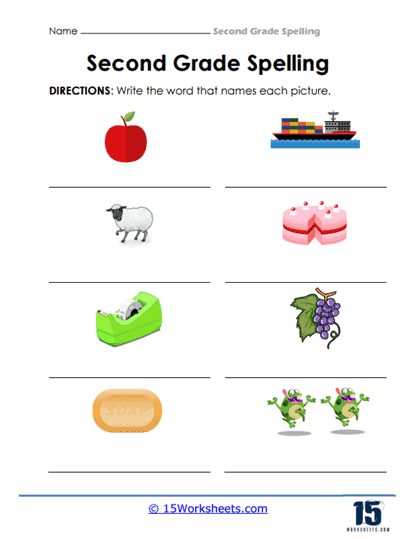
Picture to Words
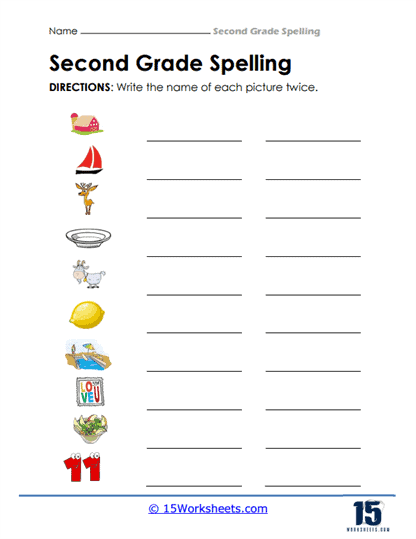
Students look at pictures and write the correct spelling word to match. The activity makes learning visual and interactive. It connects vocabulary to real-world objects. Kids enjoy spelling when it feels like picture play.
Too Little and Too Much
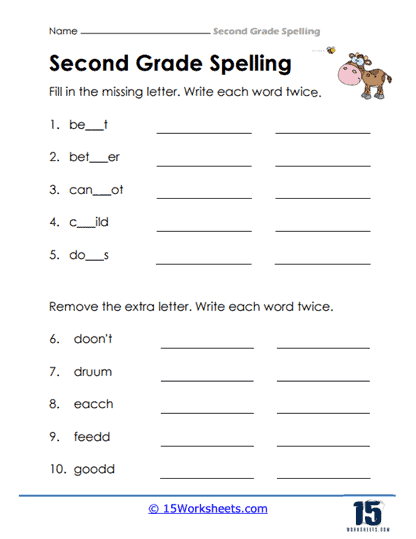
Learners identify when letters are missing or extra in a word. It’s a fun way to sharpen error-spotting skills. The activity trains attention to detail. Students strengthen accuracy in spelling tricky words.
In A Sentence
Students complete sentences with the correct spelling word. It encourages reading comprehension alongside spelling. The activity shows how words work in real communication. Kids practice vocabulary, grammar, and spelling all in one go.
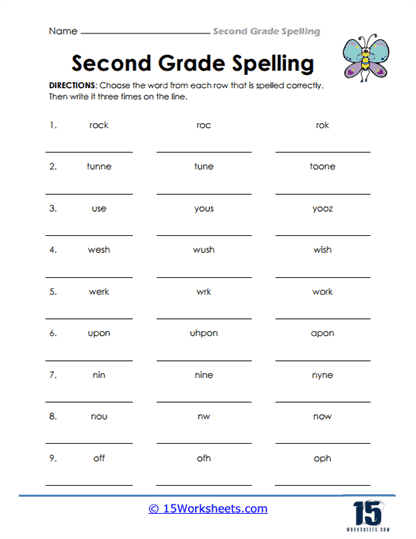
Choose 1 of 3
This worksheet gives three spelling options, and students pick the correct one. It feels like a mini multiple-choice quiz. Kids sharpen recognition of correct spelling patterns. The activity builds quick-thinking confidence.
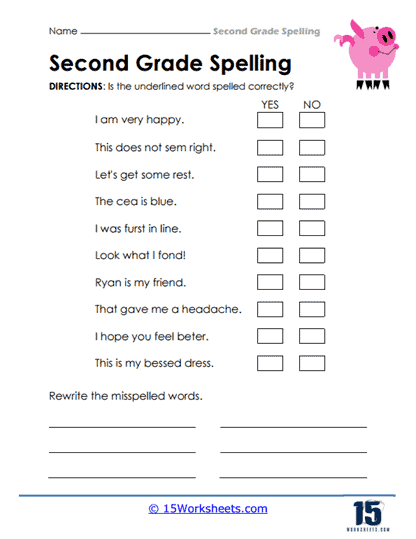
Misspelled Words
Students correct common spelling mistakes presented in sentences. The worksheet builds editing and revision habits. It feels like detective work with words. Kids develop sharper eyes for spotting and fixing errors.
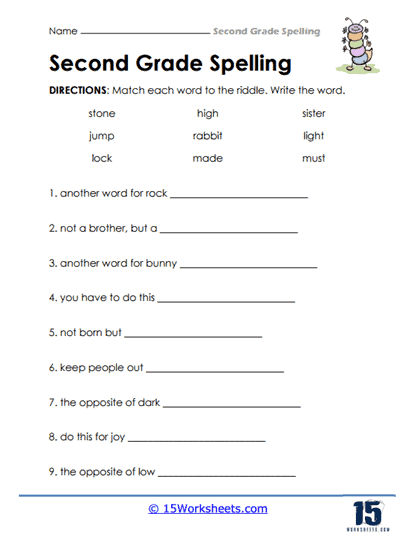
Riddle Match
Learners solve riddles where the answers are spelling words. This adds fun and creativity to spelling practice. Students connect meanings with words in an engaging way. It makes vocabulary building playful and memorable.
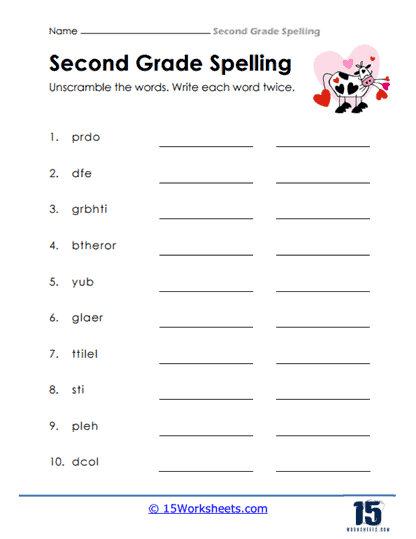
Second Grade Scramble
Students unscramble mixed-up letters to form their spelling words. The activity strengthens sequencing and word memory. It feels like a puzzle game. Kids practice spelling while building problem-solving skills.
2nd Grade Pictures to Words
Students match pictures to their correct spelling word. It links visual learning with vocabulary practice. The worksheet keeps learning playful and hands-on. It’s especially helpful for younger learners still building word-image associations.
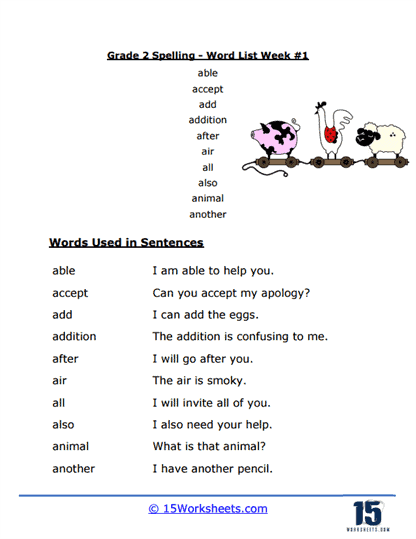
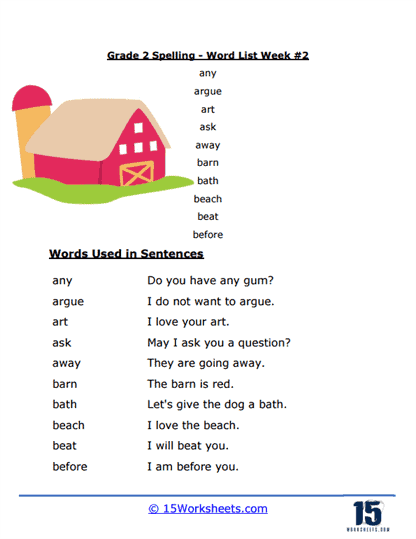
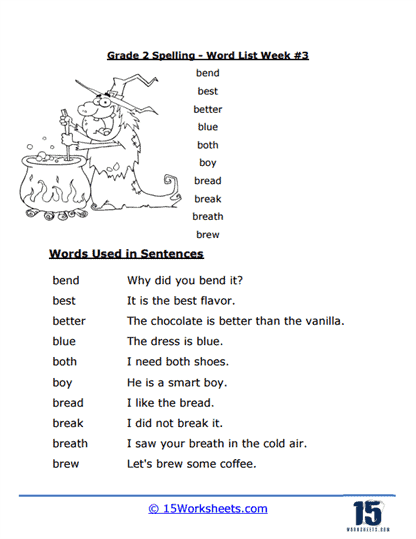
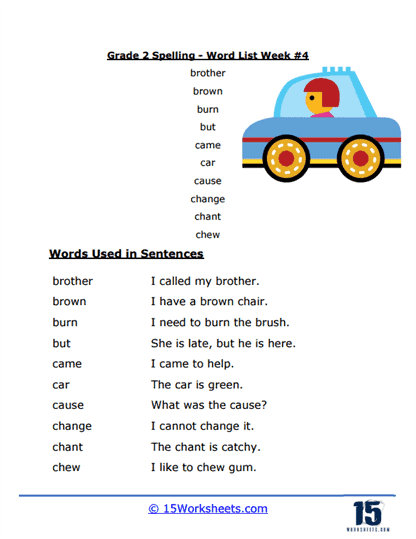
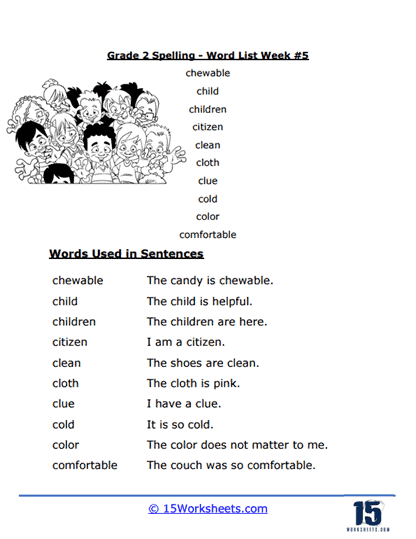
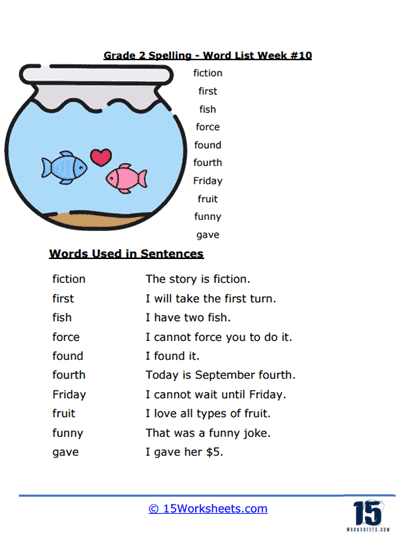
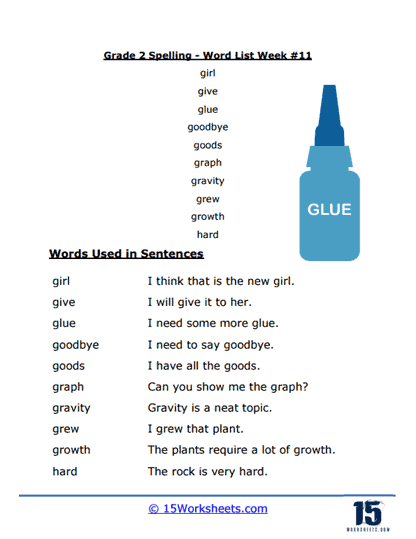
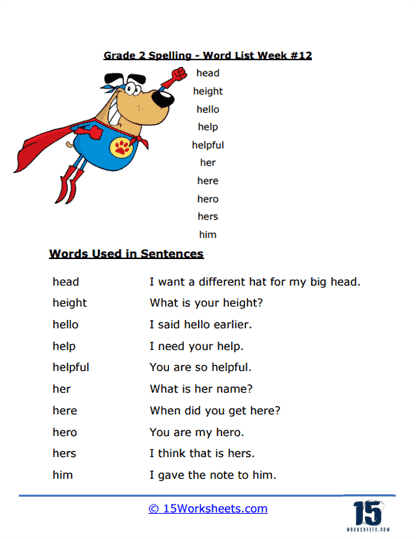
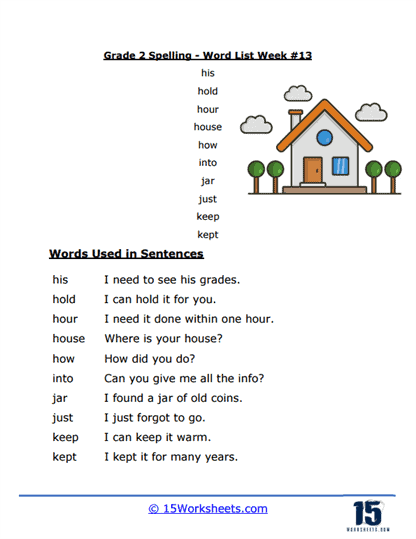
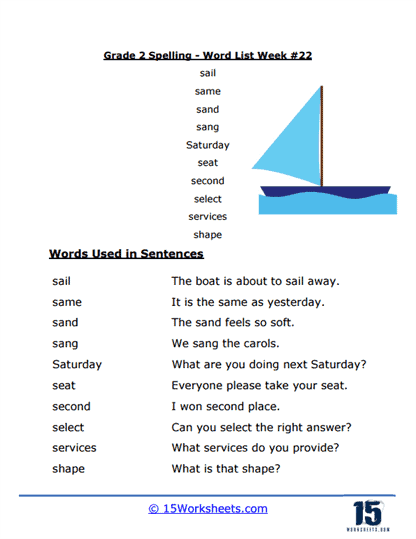
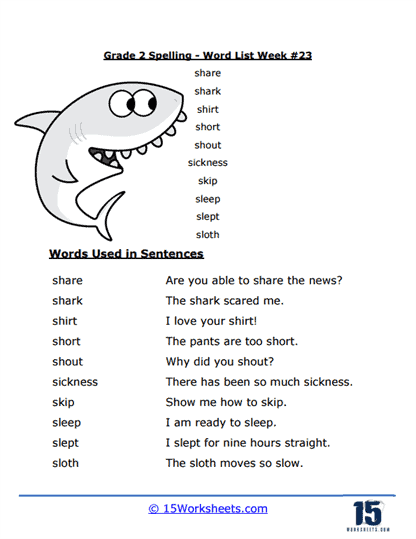
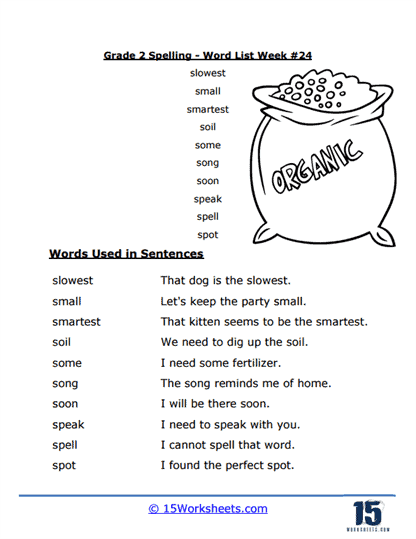
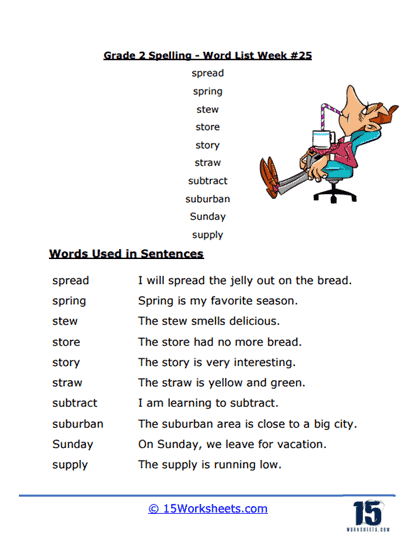
Weekly Word Lists (Weeks 1-30)
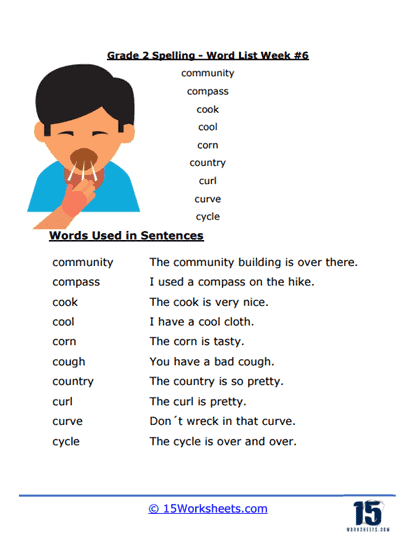
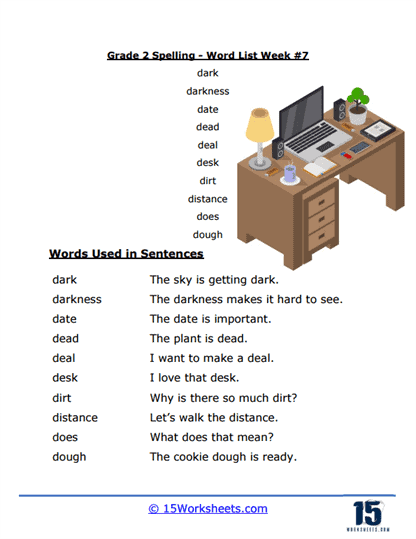
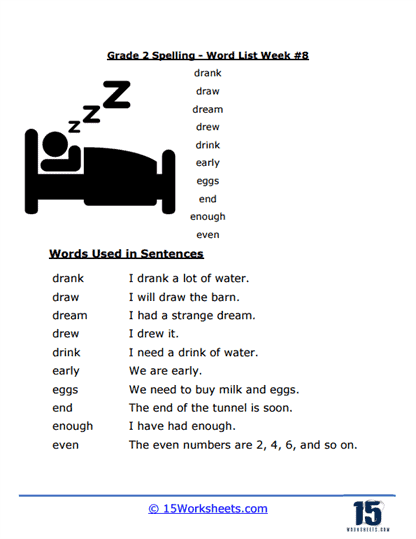
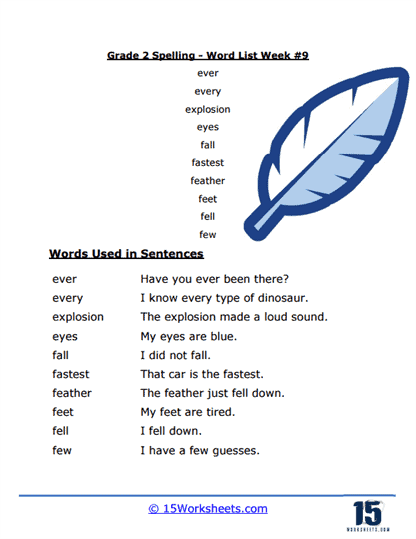
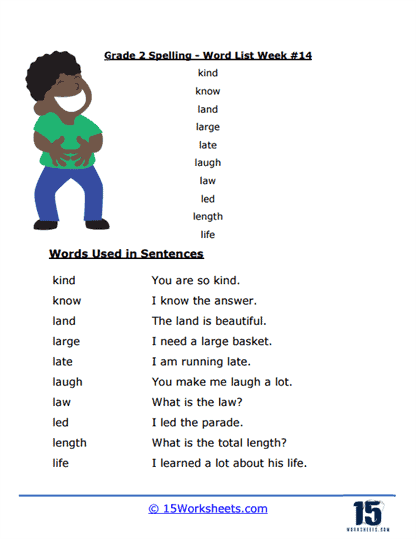
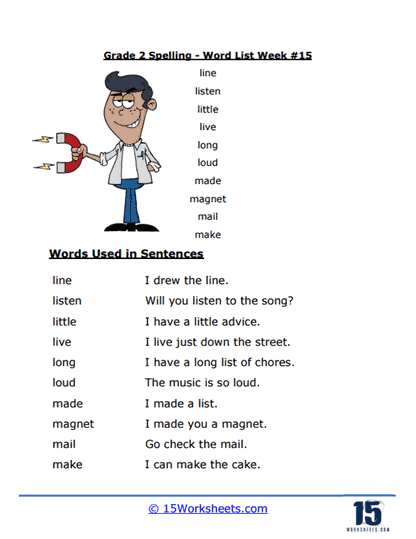
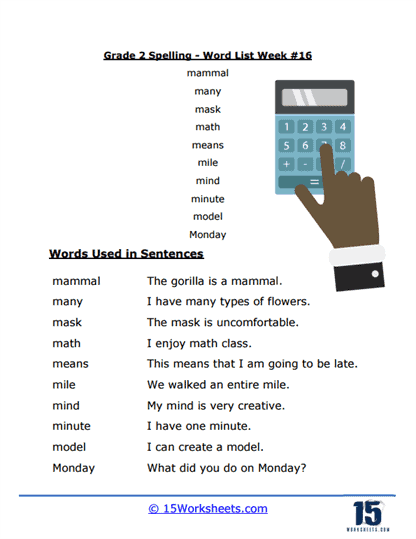
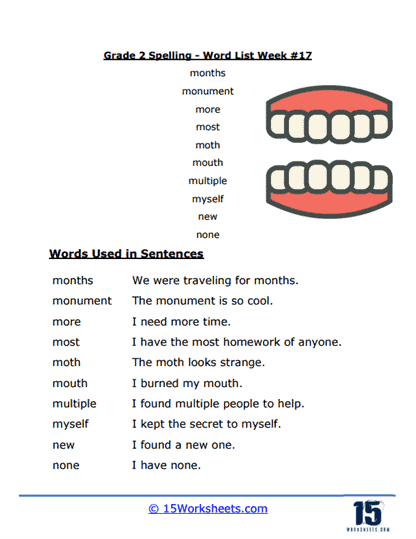
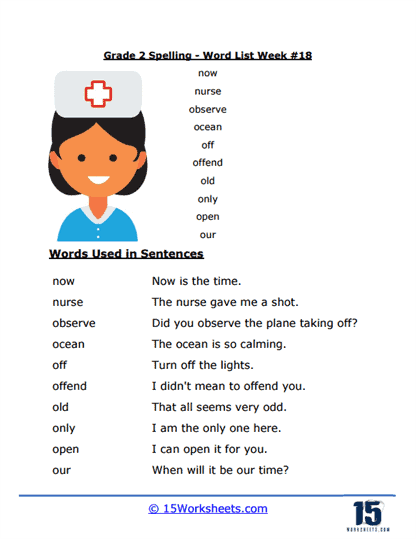
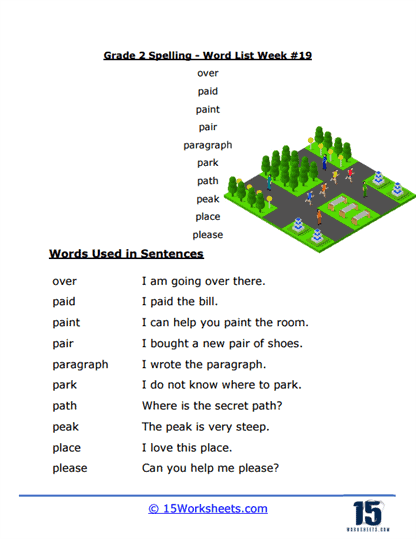
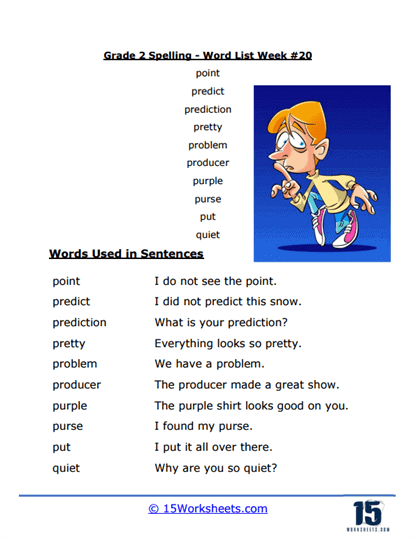
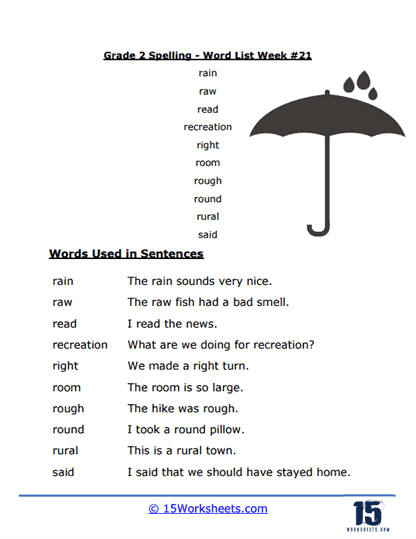
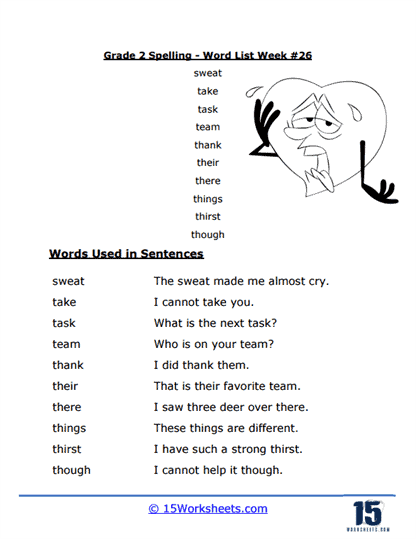
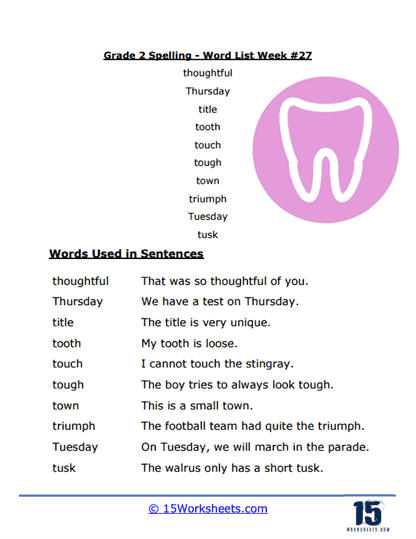
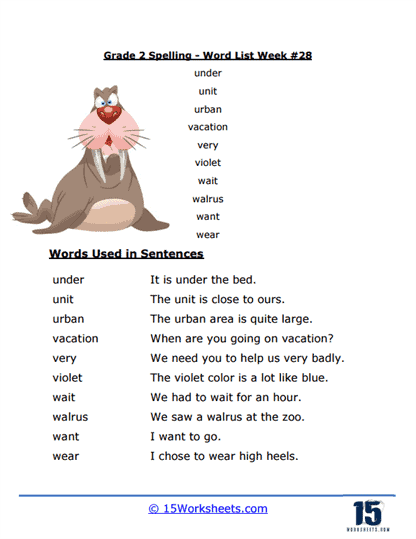
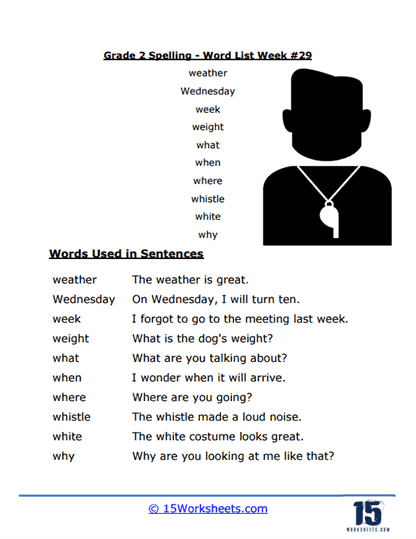
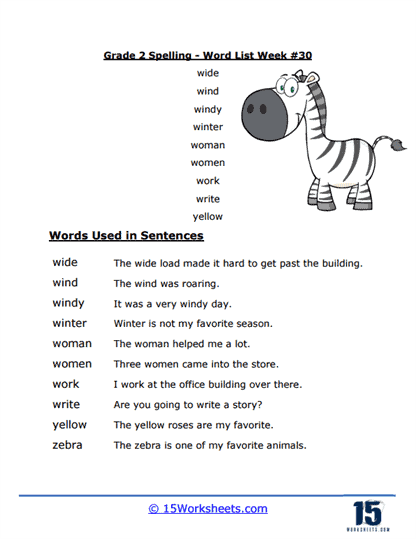
Each week introduces a fresh set of themed spelling words (A-Z coverage). Students practice them through writing, reading, and sentence work. The lists provide structured progression across the year. It ensures consistent growth in spelling confidence and vocabulary.
Complete Grade 2 Word List
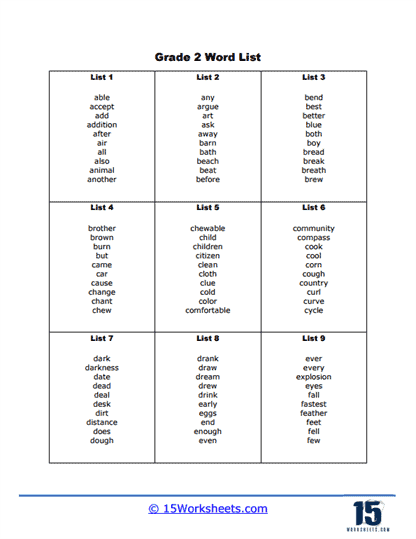
This master list collects all second-grade spelling words in one place. It’s a handy reference for review or extra practice. Parents and teachers can use it as a year-round resource. Kids benefit from seeing their full spelling journey laid out.
Teaching 2nd Grade Spelling Words
Spelling is a crucial component of a child’s literacy journey, as it builds the foundation for reading, writing, and communication skills. The second grade is a pivotal year in developing a child’s spelling skills, as students start to encounter more complex words and patterns.
Before diving into teaching strategies, it’s important to understand the spelling development of second-grade students. At this age, children are usually between 7 and 8 years old and have already acquired some basic spelling skills. They are ready to tackle more complex words, patterns, and rules. Common characteristics of second graders’ spelling development include:
Increased Phonetic Awareness
They have a better understanding of letter-sound relationships and can use this knowledge to spell words.
Developing Sight Words
Students are expanding their repertoire of high-frequency words that they can recognize and spell without needing to sound them out.
Emerging Understanding of Spelling Rules
They are beginning to learn common spelling patterns and rules that govern the English language, such as silent letters and vowel combinations.
Effective 2nd Grade Spelling Teaching Methods
A variety of teaching methods can be employed to help second graders improve their spelling skills. Some effective strategies include:
Explicit Instruction
Begin by directly teaching spelling rules, patterns, and word families to your students. Explain the rules, provide examples, and then give them opportunities to practice the newly acquired knowledge.
Word Sorting
Encourage students to sort words based on their similarities and differences. This activity helps them recognize patterns and develop a deeper understanding of the English language’s structure.
Multisensory Approach
Incorporate visual, auditory, and kinesthetic elements into your spelling lessons. By engaging multiple senses, students can better retain the information and create stronger connections to the words they are learning.
Personalized Spelling Lists
Tailor spelling lists to each student’s individual needs, strengths, and weaknesses. This will ensure that students are challenged appropriately and can progress at their own pace.
Frequent Practice and Review
Provide opportunities for students to practice their spelling skills regularly, both in the classroom and at home. Review their progress and offer feedback to help them improve.