
The Role of Child Labor
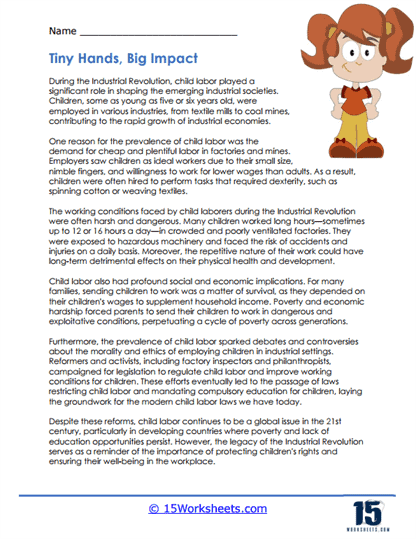
Worksheet Description
This worksheet explores the complex issue of child labor during the Industrial Revolution, focusing on how it was integral to the era’s burgeoning industries. It discusses the various roles children played in factories, mines, and mills, often under harsh conditions for minimal pay. The worksheet explains the economic rationale behind child labor-cheaper, adaptable labor that could be extensively exploited to increase production and profits. It also addresses the societal and familial pressures that perpetuated this system, with children as young as five years old being employed to contribute to family income.
The worksheet is designed to teach students about the harsh realities and implications of child labor during the Industrial Revolution. It highlights the impact of child labor on physical and mental health, the economic dependence of families on children’s earnings, and the societal norms that allowed such practices to continue. Students will learn about the reform movements that eventually led to changes in labor laws, emphasizing the importance of advocacy and legislation in improving worker conditions. By studying this, students are encouraged to appreciate the progress made in labor rights and the ongoing challenges in ensuring children’s rights and welfare globally.