
Details And False Clues
Worksheet Description
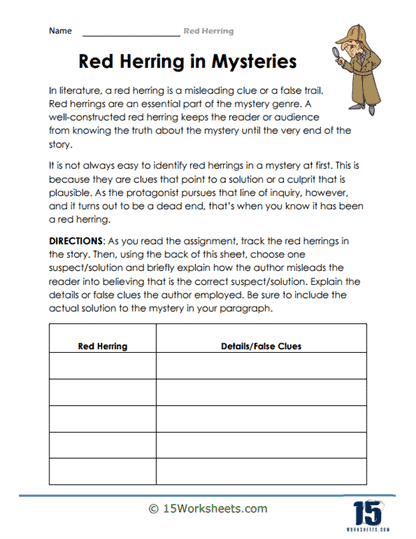
This worksheet provides a valuable exercise in the study of “Red Herrings” within the context of mystery literature. It is designed to help students understand and identify red herrings, which are misleading clues or false trails that authors use to divert readers’ attention away from the actual solution to a mystery. The worksheet underscores the role of red herrings as a staple in the mystery genre, emphasizing how these false leads keep readers and audiences guessing until the very end of the story.
Students are instructed to track the red herrings they encounter while reading. As they progress, they are challenged to analyze how the author has woven these deceptive elements into the narrative, requiring them to choose and write about one particular red herring. They must explain how it misleads the reader, describing the details or false clues provided, and relate it to the actual solution of the mystery. This analytical exercise is not only crucial for developing critical reading skills but also for gaining insight into the craft of writing, particularly in how to create suspense and engage readers in the genre of mystery. Through this task, students learn to be discerning readers who can navigate through narrative complexities with a keen eye for detail.