
Fiction Study
Worksheet Description
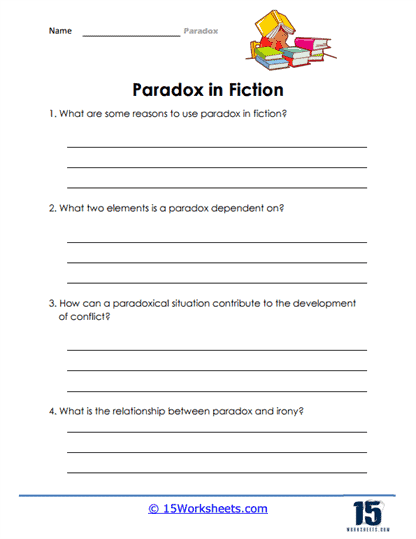
This educational worksheet is titled “Paradox in Fiction,” aimed at enhancing students’ literary understanding and appreciation of paradoxes within narrative works. The worksheet prompts learners to reflect on various aspects of paradoxes in storytelling, encouraging them to delve deeper into literary analysis.
The first question asks students to consider the reasons authors might use paradoxes in their writing, which could include adding depth to the narrative, challenging readers’ perceptions, or highlighting complex themes. The second question focuses on identifying the two elements upon which a paradox is dependent, emphasizing the need for contrasting ideas that exist in a state of tension yet interdependence.
Students are then asked to articulate how paradoxical situations can contribute to the development of conflict within a story, an aspect that underscores the dynamic nature of paradoxes in driving plots and character development. Lastly, the worksheet encourages a comparison between paradox and irony, two literary devices that often intertwine but serve different narrative purposes. This comparison helps students understand the subtleties of literary techniques used to enrich fiction. Overall, the worksheet serves as a valuable tool for developing students’ analytical skills and fostering a deeper understanding of literary devices.