
Organization of the Table
Worksheet Description
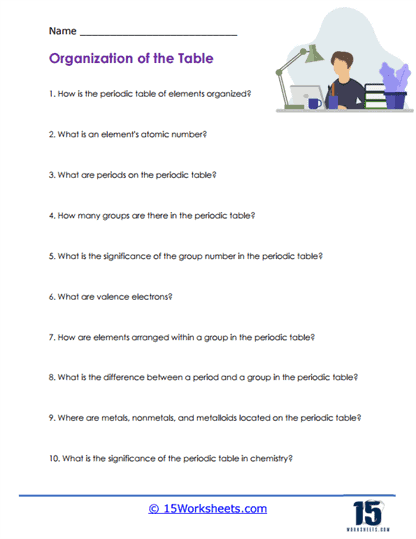
The worksheet jumps into the intricate structure and organization of the Periodic Table of Elements. It presents questions that encompass foundational aspects such as the overall arrangement of the table, the definition and importance of atomic numbers, the concept of periods and groups, and the locations of various element types, including metals, nonmetals, and metalloids. Additionally, the worksheet highlights the significance of valence electrons and prompts students to distinguish between periods and groups. The visual depiction of a scientist reinforces the theme, emphasizing the importance of understanding the Periodic Table in scientific endeavors.
To adeptly tackle this worksheet, students should familiarize themselves with the basic layout of the Periodic Table, understanding that elements are organized based on increasing atomic numbers. They should recognize that vertical columns represent groups, which share chemical properties due to similar valence electron configurations, while horizontal rows, or periods, reflect elements with increasing atomic numbers and energy levels. To differentiate between periods and groups or locate specific types of elements, students can refer to labeled sections on a standard Periodic Table. A deep dive into the history, development, and significance of the Periodic Table, along with its patterns, will enable students to understand and appreciate its role in the field of chemistry.
The primary objective of the worksheet is to impart a foundational understanding of the Periodic Table’s structure and its significance in the realm of chemistry. By presenting a range of questions, the worksheet encourages students to think critically about the table’s arrangement, the properties of elements based on their position, and the distinction between various sections of the table. By exploring the importance of atomic numbers, valence electrons, and the distinction between metals, nonmetals, and metalloids, students are provided with a holistic overview. Essentially, this worksheet aims to lay the groundwork for more advanced chemical studies, ensuring students have a firm grasp of one of chemistry’s fundamental tools.