
Mitosis and Meiosis in the Body
Worksheet Description
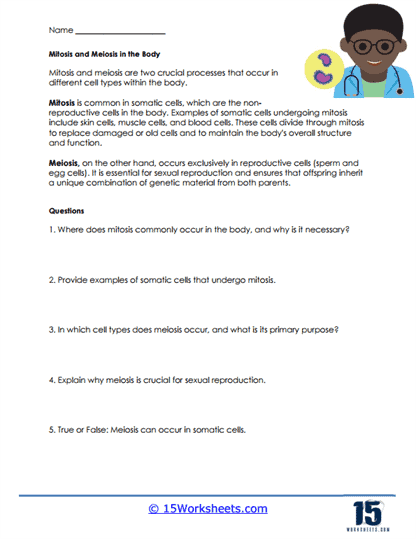
This worksheet focuses on the intricate processes of mitosis and meiosis and how they function within various cell types in the body. Mitosis is highlighted as a common occurrence in somatic cells, responsible for repairing or replacing damaged or old cells, thus maintaining the body’s structure. In contrast, meiosis is depicted as exclusive to reproductive cells, ensuring genetic diversity in offspring. Through descriptive text and accompanying questions, students are prompted to explore the nuances, locations, and importance of these two cellular processes in the human body.
To adeptly address the worksheet’s requirements, students should start by reading the provided content thoroughly, ensuring a clear understanding of the distinctions between mitosis and meiosis. Drawing upon the text, they can then systematically answer the questions, which range from pinpointing cell types associated with each process to discerning their individual purposes. Reflecting upon real-life examples can help students identify somatic cells undergoing mitosis. For deeper comprehension, students may benefit from cross-referencing their classroom notes or textbooks, particularly for more detailed or specific examples.
The overarching aim of this worksheet is to impart a foundational understanding of the roles of mitosis and meiosis within the human body. It seeks to highlight the differentiating factors between the two processes, such as their respective locations in the body and their overarching purposes. By posing thought-provoking questions, the worksheet challenges students to not only recall factual information but also to connect the dots, seeing the broader implications of these processes in maintaining bodily function and ensuring genetic diversity in progeny. Through this exploration, students are primed to appreciate the intrinsic balance and design of human biology.