
Similarities and Differences
Worksheet Description
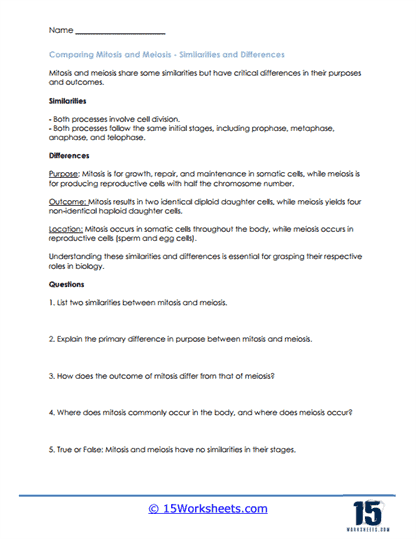
This worksheet aims to elucidate the distinctions and commonalities between the two primary cell division processes: mitosis and meiosis. The content is structured to first highlight the shared features, such as both being cell division methods, and then delves into the significant differences in their purposes, outcomes, and locations. By offering a clear juxtaposition, the worksheet provides a comprehensive overview of how these two processes operate within the realm of biology, with an emphasis on their implications for growth, repair, and reproduction.
To adeptly navigate this worksheet, students should begin by understanding the core similarities between mitosis and meiosis. Next, they should contrast the primary differences laid out in terms of purpose, outcome, and location. This involves correlating the process of mitosis with growth, repair, and maintenance, and associating meiosis with sexual reproduction and genetic variation. Drawing from the provided information, they can then respond to the questions, ensuring they’ve grasped the intricate details of each process.
The principal objective of this worksheet is to foster a deeper comprehension of the intricacies and distinctions between mitosis and meiosis. It encourages students to identify shared aspects of these cellular processes while also recognizing their unique roles and outcomes. The set of questions serves as a tool to reinforce this knowledge, prompting students to reflect on and articulate their understanding. By the end, learners should be equipped with a nuanced perspective on the pivotal roles these processes play in cellular biology and their broader significance in the continuity of life.