
Meiosis Cell Cycle
Worksheet Description
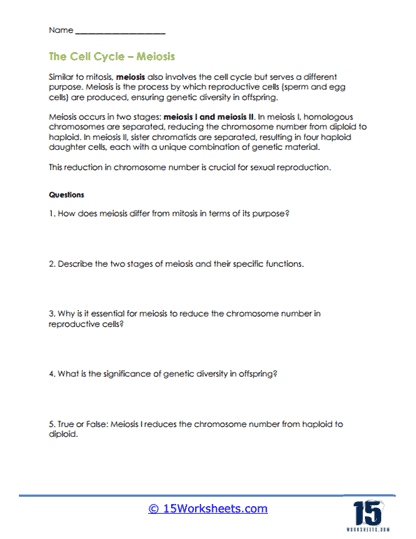
The worksheet provides an in-depth exploration into the process of meiosis, a distinct cell cycle serving the specific purpose of creating reproductive cells. It differentiates meiosis from mitosis by emphasizing its role in generating genetic diversity in offspring through the production of haploid reproductive cells, or gametes. The content outlines the two pivotal stages of meiosis: meiosis I and meiosis II, detailing their functions and the importance of reducing the chromosome number from diploid to haploid. Accompanying questions prompt students to critically analyze and understand the distinctions between meiosis and mitosis, the significance of genetic diversity, and the mechanics of chromosome reduction.
To proficiently tackle this worksheet, students should begin by reading the provided content carefully, ensuring they grasp the nuances of meiosis and its distinction from mitosis. They should pay particular attention to the intricacies of meiosis I and II, noting the changes in chromosome numbers and the genetic implications. To answer the questions, students need to synthesize this information, focusing on the purpose and significance of meiosis in genetic diversity and sexual reproduction. If needed, students can refer to classroom materials or textbooks for further elucidation to strengthen their answers.
The primary aim of this worksheet is to impart knowledge about the meiotic process, highlighting its importance in sexual reproduction and genetic diversity. Students are encouraged to differentiate between meiosis and mitosis, understanding the specific roles and outcomes of each process in cell biology. Through a series of thought-provoking questions, the worksheet challenges students to ponder the significance of chromosome reduction and the inherent need for genetic variability in offspring. By the conclusion of this exercise, students should have a foundational understanding of meiosis and its pivotal role in shaping genetic diversity and producing reproductive cells.