
Marine Creatures
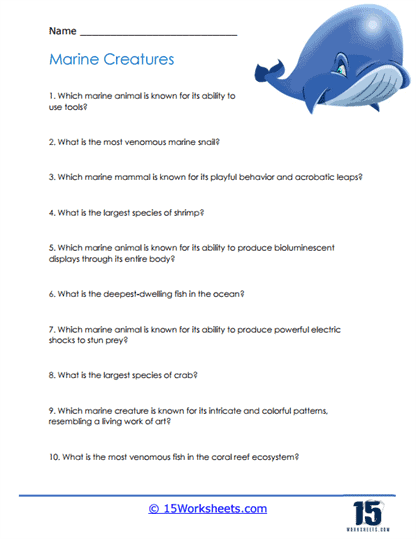
Worksheet Description
Marine creatures, often referred to as marine organisms or aquatic life, encompass a wide and diverse array of living organisms that inhabit the Earth’s oceans, seas, and other saltwater environments. These organisms have evolved over millions of years to adapt to the challenging and dynamic conditions found in aquatic ecosystems. In this exploration, we will delve into what marine creatures are, their classification, biodiversity, adaptations, and ecological significance.
1. Definition and Classification
Marine creatures encompass all living organisms that reside in saltwater environments. They are classified into various taxonomic groups, including bacteria, protists, fungi, plants, and animals. The animal kingdom alone comprises an extensive range of marine creatures, including fish, mollusks, crustaceans, marine mammals, sea birds, and many more.
2. Biodiversity in Marine Ecosystems
Marine ecosystems are incredibly biodiverse, hosting a multitude of species adapted to diverse niches. The biodiversity of marine creatures is staggering, with scientists estimating that a large proportion of Earth’s species reside in the oceans. Coral reefs, for example, are among the most biodiverse marine ecosystems, supporting a myriad of species ranging from colorful fish to tiny invertebrates.
3. Adaptations to Aquatic Environments
Marine creatures have evolved a wide range of adaptations to thrive in their underwater habitats. These adaptations can include streamlined body shapes for efficient swimming, specialized respiratory systems like gills to extract oxygen from water, and unique feeding strategies. Some marine creatures have evolved bioluminescence for communication, while others have developed camouflage to avoid predators or ambush prey.
4. Reproductive Strategies
Reproduction strategies among marine creatures vary significantly. Many species release eggs and sperm into the water, where fertilization takes place externally. Some marine creatures, such as sea turtles, return to specific beaches to lay their eggs, while others, like some sharks, give birth to live young. The life cycles of marine organisms can be complex, involving various larval stages before reaching adulthood.
5. Ecological Significance
Marine creatures play pivotal roles in marine ecosystems. They are integral to food chains and webs, serving as both predators and prey. For instance, large marine mammals like whales feed on krill and other small organisms, while smaller fish are preyed upon by a variety of marine predators, including sharks and dolphins. Filter-feeding organisms like corals and bivalve mollusks help maintain water quality by filtering particles and algae from the water.
6. Conservation Challenges
Marine creatures face a range of threats due to human activities. Habitat destruction, overfishing, pollution from land-based sources, and climate change pose significant risks to marine ecosystems and the creatures that inhabit them. Conservation efforts are crucial to mitigate these threats and protect marine biodiversity.
7. Exploration and Scientific Discovery
The study of marine creatures continues to be a source of scientific discovery and fascination. New species are continually being discovered in the depths of the ocean, challenging our understanding of life on Earth. Technological advancements, such as remotely operated vehicles (ROVs) and submersibles, have enabled scientists to explore and document the diverse and mysterious world of marine life.
In summary, marine creatures encompass a vast and diverse array of living organisms that inhabit the world’s oceans and seas. They have evolved a myriad of adaptations to thrive in aquatic environments, contribute significantly to marine ecosystems, and play pivotal roles in food webs and nutrient cycling. However, they also face numerous conservation challenges, highlighting the need for sustainable practices and conservation efforts to protect these incredible and vital components of our planet’s biodiversity.