
Inspecting Passages
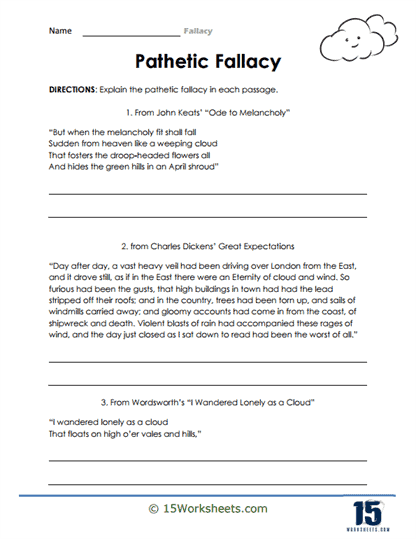
Worksheet Description
This educational worksheet is titled “Pathetic Fallacy” and is designed to help students understand and explain the use of pathetic fallacy in different passages from English literature. The worksheet provides three extracts from well-known works for analysis, with a cloud graphic at the top, possibly symbolizing the attribution of human emotions to weather, a common use of pathetic fallacy.
The first passage is from John Keats’s “Ode to Melancholy,” which personifies melancholy as a cloud that falls from heaven and affects the landscape, symbolizing how sadness can overshadow life’s vibrancy. Students are prompted to explain how the pathetic fallacy is employed in this context. The second passage is from Charles Dickens’s “Great Expectations,” describing a bleak weather scene that mirrors the turbulent emotions and circumstances in the narrative. The third excerpt is from William Wordsworth’s poem “I Wandered Lonely as a Cloud,” which describes the speaker’s solitary wandering as a cloud over vales and hills, asking students to explore the emotional resonance of the natural imagery used. This worksheet serves as a practical tool for students to practice literary analysis, focusing on the intersection of emotion and the natural world within texts.