
Emotional Appeal
Worksheet Description
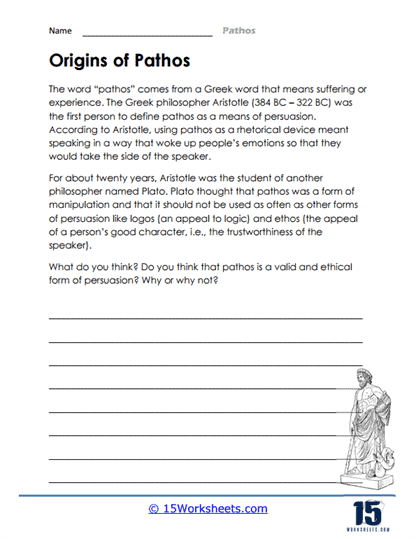
This worksheet dives into the etymology and historical perspective of ‘pathos,’ a term derived from Greek, meaning suffering or experience, as introduced by Aristotle. It describes Aristotle’s view of pathos as a rhetorical device that awakens the audience’s emotions to align them with the speaker’s position. The worksheet also touches upon Plato’s critique, viewing pathos as manipulative and less favorable than logos or ethos for persuasion. Finally, it encourages students to form and express their opinions on whether pathos is a valid and ethical persuasive method.
“The Emotional Appeal Exploration” worksheet is teaching students about the origins and debate surrounding the use of emotional appeal in persuasion. It provides a brief historical background on Aristotle’s and Plato’s views on pathos, setting the stage for students to critically engage with the concept. The worksheet encourages students to reflect on the ethical implications of using emotion in arguments. It aims to foster a deeper understanding of how pathos fits within the broader spectrum of rhetorical devices and to cultivate students’ ability to evaluate the ethicality of persuasive strategies.