
Making Sense of Energy Pyramids
Worksheet Description
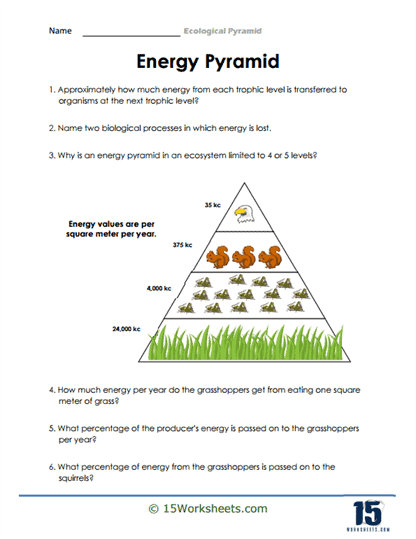
You are given a pyramid and asked a series of questions about such as:
- Approximately how much energy from each trophic level is transferred to organisms at the next trophic level?
- Name two biological processes in which energy is lost.
- Why is an energy pyramid in an ecosystem limited to 4 or 5 levels?
This worksheet focuses on how energy is transferred and diminished across different trophic levels. The pyramid provides a visual representation of energy amounts, measured in kilocalories per square meter per year, at each level starting from producers like grass to primary consumers like grasshoppers, and moving up to higher-order consumers like squirrels and hawks. Accompanying the pyramid are a series of questions that probe into the specifics of energy transfer, loss mechanisms, and the limitations in the number of trophic levels in an ecosystem. The emphasis of the worksheet is to provide a comprehensive understanding of energy dynamics in ecological systems.
To successfully navigate this worksheet, students should begin by familiarizing themselves with the concept of energy transfer in ecosystems, generally accepting that only about 10% of energy is transferred from one trophic level to the next. They should then analyze the energy values provided for each level in the pyramid and apply this knowledge to calculate the energy available to each organism, understanding that energy is lost through various biological processes. For questions about the limitations of energy pyramids and trophic levels, students should reflect on the cumulative energy loss and its impact on supporting organisms at higher trophic levels. Mastery in this worksheet entails not just rote calculations but a deeper comprehension of the energy dynamics at play.
The worksheet is designed to impart a nuanced understanding of the energy dynamics within an ecosystem to students. It aims to drive home the point that energy transfer is never 100% efficient, and significant energy is lost at each trophic level, predominantly due to metabolic processes and heat loss. By visualizing this through the pyramid and answering the posed questions, students grasp why only a small fraction of the energy from producers reaches tertiary or quaternary consumers. Ultimately, the worksheet seeks to foster a holistic understanding of energy flow, making students appreciate the delicate balance and intricate relationships that sustain ecosystems.